Echinodorus cordifolius
Aquarius cordifolius
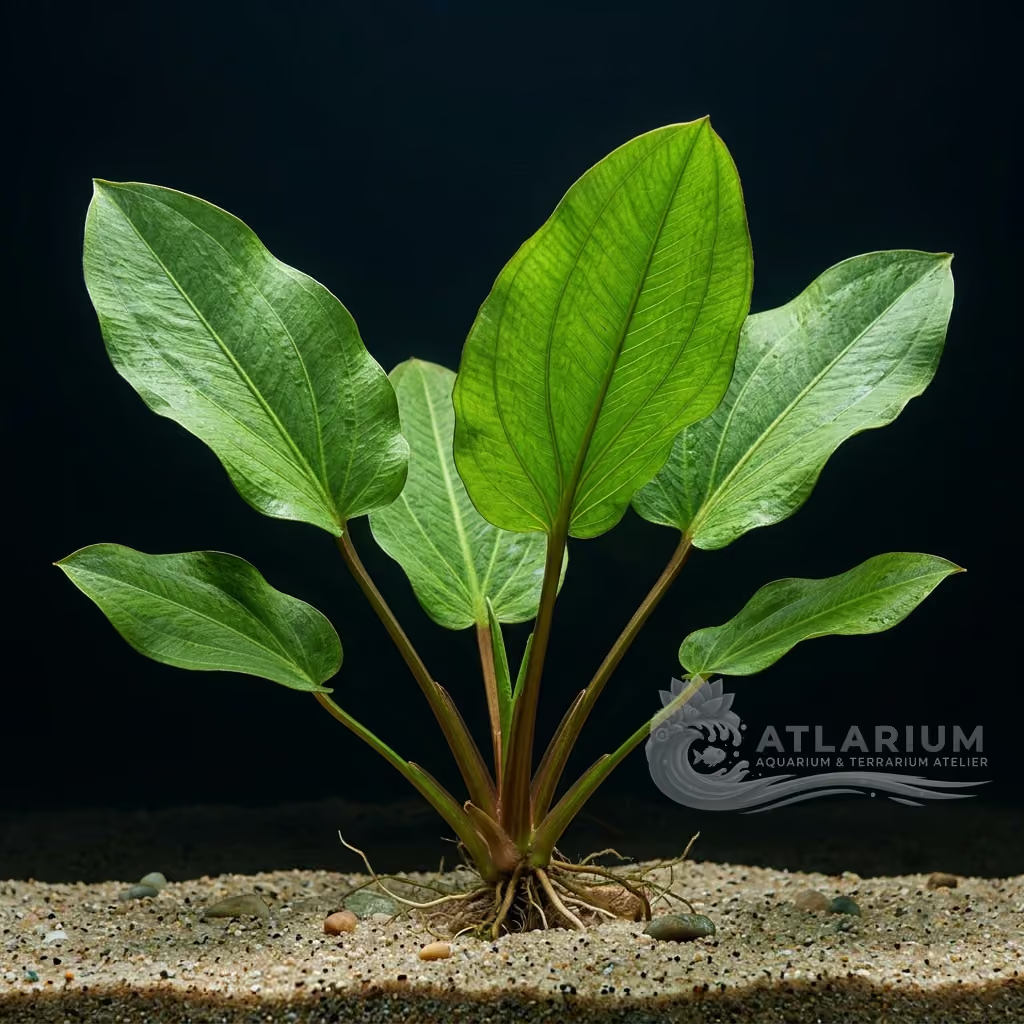
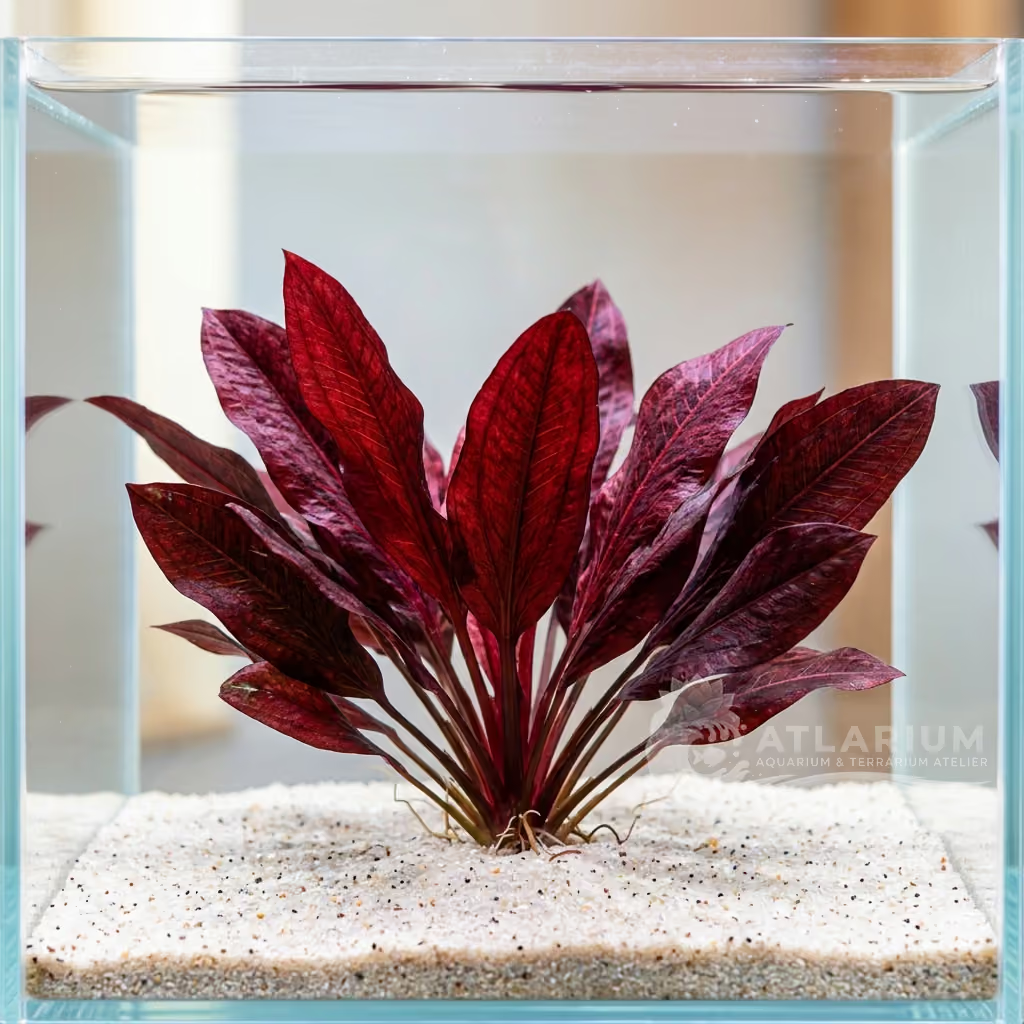
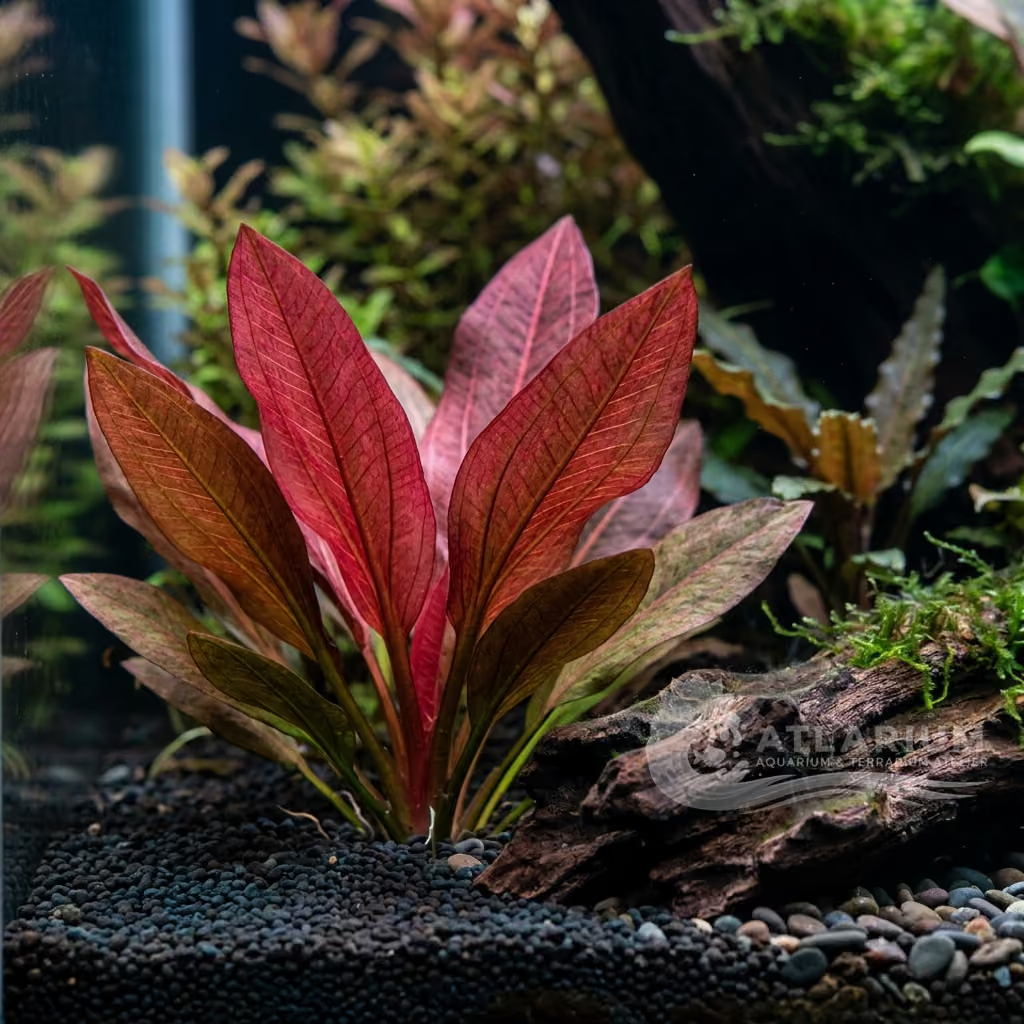
Echinodorus cordifolius is a towering swamp plant with exceptionally large, solid apple-green heart-shaped leaves designed to dominate the aquarium background.
Wassertemperatur
15 - 30 °C
pH-Wert
5 - 8
Wassertyp
Süßwasser
Licht
Da media ad alta
CO2
Mittel
Erwartete Höhe
100 cm
Erwartete Breite
50 cm
GH
4 - 20 dGH
KH
0 - 21 dKH

Artbeschreibung
Geographical Origin and Habitat: Endemic to a massive geographical range stretching across the southeastern United States, Mexico, and deep into the Caribbean and South America. Echinodorus cordifolius, known as the "Radican Sword" or "Spade-leaf Sword," is a towering, fiercely fast-growing aquatic swamp plant. It dominates temporary ponds, deeply flooded marshlands, and slow-moving river margins. It is a wildly aggressive survivor, perfectly evolved to survive completely submerged during heavy rains, and violently thrusting out of the water to become a massive terrestrial shrub during droughts.
Taxonomy & Genetics: Scientifically classified within the Alismataceae family, it is a massive, true wild-type Echinodorus species. Taxonomically, it derives its specific name ("cordifolius") directly from the distinct heart-shaped (cordate) morphology of its massive adult leaves. Genetically, it is completely hard-wired for absolute gigantism and extremely rapid vertical growth. Unlike dwarf hybrid swords, its genetics actively force the plant to rapidly breach the water's surface. It completely lacks the biological mechanism to produce any red, brown, or purple anthocyanin pigments.
Physical Structure: The architectural structure of E. cordifolius is overwhelmingly dominant, violently fast-growing, and towering. It is a gigantic rosette plant completely lacking vertical stems. The foundation is a massive, tuberous subterranean rhizome that deploys an aggressive, incredibly deep-reaching root system. The leaves emerge directly from the crown on exceptionally thick, long petioles designed to rapidly push the leaf upward. The foliage is the defining structural feature: perfectly heart-shaped (cordate) to broadly ovate, monstrously huge (up to 40 cm), and perfectly flat.
Color & Texture: The coloration is distinctly pure, solid, and incredibly vibrant. Grown submerged under standard lighting, the massive, broad leaves are a solid, glowing bright apple-green to a vivid, neon yellow-green. Because it completely lacks red pigments, it remains an unwavering, intensely bright pure green even under blasting high-intensity light. The texture is intensely smooth, highly rigid, and heavily leathery, completely lacking the dimples or ruffled edges seen on other species. The massive leaves feel exactly like thick, rigid green canvas.

Pflege, Zucht und Mitbewohner
Lighting & CO2: It is an incredibly demanding, energy-hungry titan. To sustain its terrifyingly rapid, towering growth rate, blasting, high-intensity LED lighting is absolutely mandatory. If shaded, the massive green leaves will instantly turn pale yellow, rot, and the plant will rapidly melt. Because it is biologically programmed to aggressively breach the surface, pressurized CO2 drastically accelerates its vertical race. Once it breaches the surface, the massive emerged leaves will completely shadow the entire aquarium, killing the submerged plants below.
Nutrition & Substrate: As a colossal, wild-type Amazon Sword, E. cordifolius is a terrifyingly aggressive, obligate root feeder. Its massive root system strictly demands a very deep (minimum 10 cm / 4 inches), heavily nutrient-dense substrate. It absolutely demands premium aquasoil heavily enriched with iron and macro-nutrient root tabs directly beneath the massive tuber. It will rapidly strip a standard gravel bed of all nutrients within weeks. If starved of root nutrients, the towering green leaves will quickly turn white, rot, and dissolve into mush.
Water Chemistry: Originating from a massive geographical range including the US and Caribbean, it is practically invincible regarding standard water parameters. It thrives effortlessly in heated tropical aquariums (22-28°C) but is also completely comfortable in unheated or cold-water setups (down to 18°C). It is exceptionally adaptable, tolerating both soft, acidic water and rock-hard, highly alkaline tap water (pH 6.0 - 8.5). The single most critical environmental requirement is intense, continuous nutrient supplementation. It prefers slow to moderate water flow.
Space Management & Placement: Due to its absolute monstrous size (capable of reaching 60-100 cm in height) and wildly dominant nature, this plant is strictly reserved as an extreme background centerpiece for very large, open-top aquariums or paludariums (minimum 300 liters). It MUST be planted singularly. If you allow it to mature, it will violently breach the surface, producing massive, rigid, heart-shaped emerged leaves that will aggressively block out all light to the tank below while sending out massive, towering flower stalks covered in white blossoms.
Pruning: Pruning is a constant, brutal, and necessary procedure if you wish to keep the plant fully submerged. Because the plant naturally wants to breach the surface, you must constantly, aggressively prune off the taller, mature leaves before they reach the air. To prune, you must reach down to the absolute base of the massive rosette and cleanly slice the incredibly thick petiole directly at the crown. If you do not ruthlessly prune the taller leaves, the plant will permanently switch to its massive emerged form.
Risks & Diseases: The absolute greatest threat to this titan is nutrient starvation and self-shading. Because its growth rate is so violently fast, it will rapidly strip the substrate of all available nutrients. The moment it runs out of food, the massive green leaves will immediately turn translucent and melt into a massive amount of slimy organic waste. The second major risk is self-shading; once the massive, leathery emerged leaves breach the surface, they completely block the light, causing all the beautiful submerged leaves to rot and die off.

Geografische Herkunft und Verbreitung
Endemic to a massive geographical range stretching across the southeastern United States, Mexico, and deep into the Caribbean and South America. Echinodorus cordifolius, known as the "Radican Sword" or "Spade-leaf Sword," is a towering, fiercely fast-growing aquatic swamp plant. It dominates temporary ponds, deeply flooded marshlands, and slow-moving river margins. It is a wildly aggressive survivor, perfectly evolved to survive completely submerged during heavy rains, and violently thrusting out of the water to become a massive terrestrial shrub during droughts.
Ursprung
NordamerikaExtra-Amazonas-SüdamerikaMittelamerika und Karibik

Pflanzenprofil
- Platzierung
- Hintergrund
- Aquarius cordifolius is best utilized as a striking midground or background plant, depending on the size of the aquarium. When planted in groups, leave enough distance between individual crowns to accommodate future growth. Its bold texture contrasts beautifully with fine-leaved stem plants and low-growing carpeting species. It should be placed where it will not excessively shade smaller foreground species with its large leaves.
- Botanische Form
- Rosette
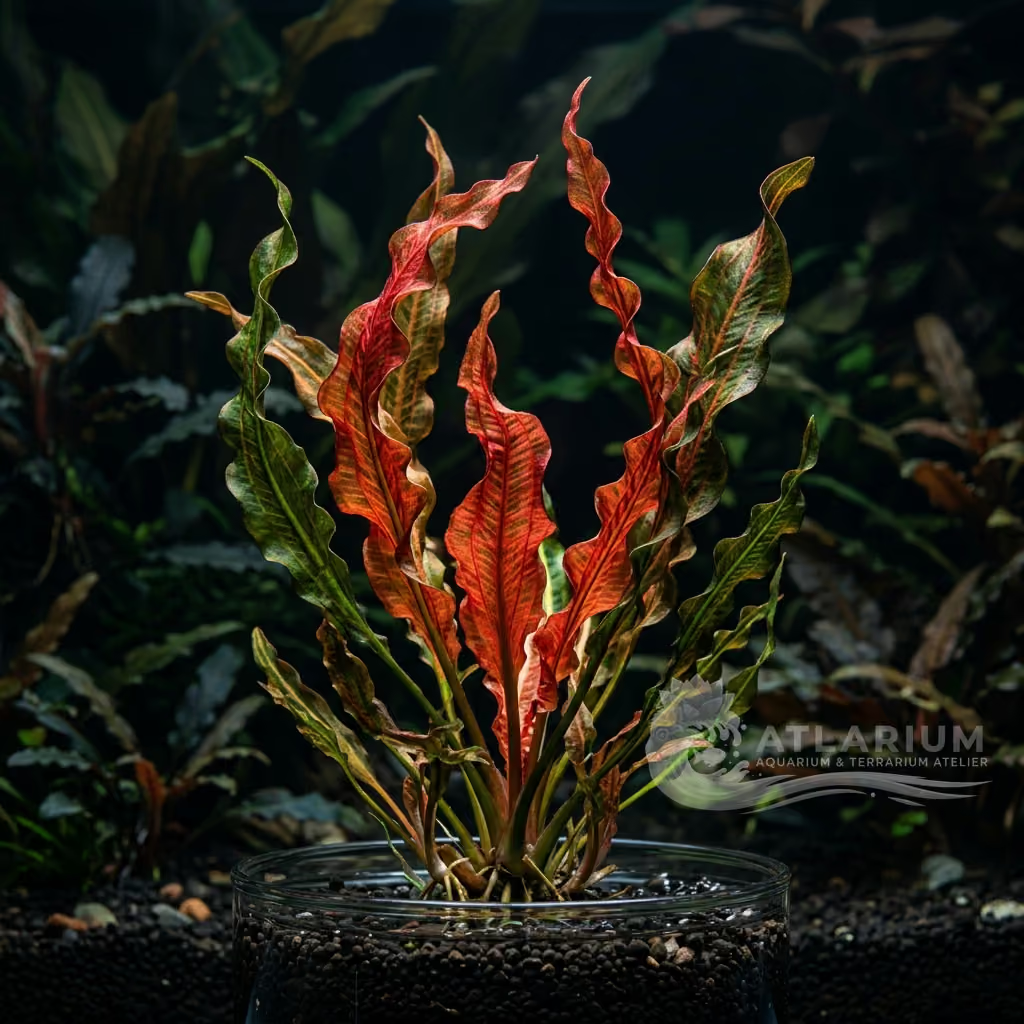
- Botanically, Aquarius cordifolius typically exhibits a classic rosette form with leaves radiating from a central crown. Depending on the exact lighting, the leaf margins may display slight undulations or varying degrees of coloration. The overall architecture of the plant provides excellent hiding spots for shy fish and aquatic invertebrates. Submersed forms often differ significantly from their emersed growth, becoming more delicate and displaying varied colors.
- Wachstum
- VERY_FAST
- The growth rate of Aquarius cordifolius is generally moderate, but it can be accelerated under optimal conditions. Its growth may temporarily stall after transplanting while it focuses energy on establishing a new root system. Once fully established, it can send out runners or reliably produce several new leaves every week. Under lower light, the growth will be noticeably slower and the plant will remain more compact.
- Substrat
- Hoch
- A nutrient-rich substrate is highly recommended for Aquarius cordifolius as it is a heavy root-feeder. The dense root system will quickly spread through the substrate, stabilizing it and absorbing deposited organics. A deep substrate bed of at least 2-3 inches allows for proper and extensive root development. Using a commercial aquasoil or a well-prepared dirted tank approach provides an excellent foundation.
- Säulendüngung
- Empfohlen
- While primarily a root feeder, Aquarius cordifolius benefits significantly from supplemental water column fertilization. Iron and trace elements are particularly easily absorbed directly through the expansive leaf surfaces. Regular dosing of a comprehensive liquid fertilizer ensures that essential micronutrients are readily available. Consistent water column dosing helps to quickly correct any minor nutrient deficiencies before they cause damage.
- Wurzeldüngung
- Erforderlich
- Root tabs are absolutely essential if Aquarius cordifolius is kept in an inert or depleted substrate. Providing heavy root fertilization allows the aquarist to keep the water column leaner, discouraging algae. The expansive root system is incredibly efficient at seeking out and absorbing localized pockets of nutrients. Even when grown in premium aquasoils, supplemental root fertilization may become necessary as the tank matures.
- Trimmen
- Regelmäßig
- Trimming Aquarius cordifolius is straightforward and involves pruning only the outermost, oldest leaves. Use sharp aquascaping scissors to cut the petiole as close to the crown as possible without damaging the center. Avoid snipping leaves in half, as the remaining portion will simply rot. Consistent pruning maintains a clean appearance and encourages the continuous emergence of new central shoots.
- Ausbreitung
- Rhizomteilung, Samen
- Propagation of Aquarius cordifolius is most commonly achieved through adventitious plantlets that form on flowering stalks. These newly separated plants should be planted directly into the substrate where they will quickly establish. Crown division requires careful handling to avoid excessive damage to the delicate central meristem. Once these daughter plantlets develop their own distinct roots and a few leaves, they can be carefully detached.
- Empfindlichkeit
- HIGH
- Overall, Aquarius cordifolius is quite hardy, but it can be sensitive to sudden, drastic shifts in water parameters. It may experience a period of melting when transitioning from emersed to submersed growth. During this acclimation phase, it is vital to keep water conditions stable and avoid uprooting the plant. It is also susceptible to spot algae if lighting is too intense without adequate CO2.
- Layoutrolle
- Mittelgrund, Hintergrund, accent, paludarium
- In an aquascape, Aquarius cordifolius serves as a magnificent structural anchor or centerpiece. Its substantial leaf mass provides a bold texture that breaks up monotonous areas of fine foliage. It is highly valued in various layout styles for its dominant presence. When positioned correctly, it naturally draws the viewer's eye and adds a sense of maturity to the tank.

Bildergalerie
Lizenzierte Bilder, die mit der Art oder, wenn markiert, mit dem nächstgelegenen repräsentativen Taxon verknüpft sind.

Verwandte Arten
Empfehlungen gruppiert nach nahen Verwandten, Auswahl von Begleitern und ähnlicher Betreuung.