Cryptocoryne wendtii 'Flamingo'
Cryptocoryne wendtii
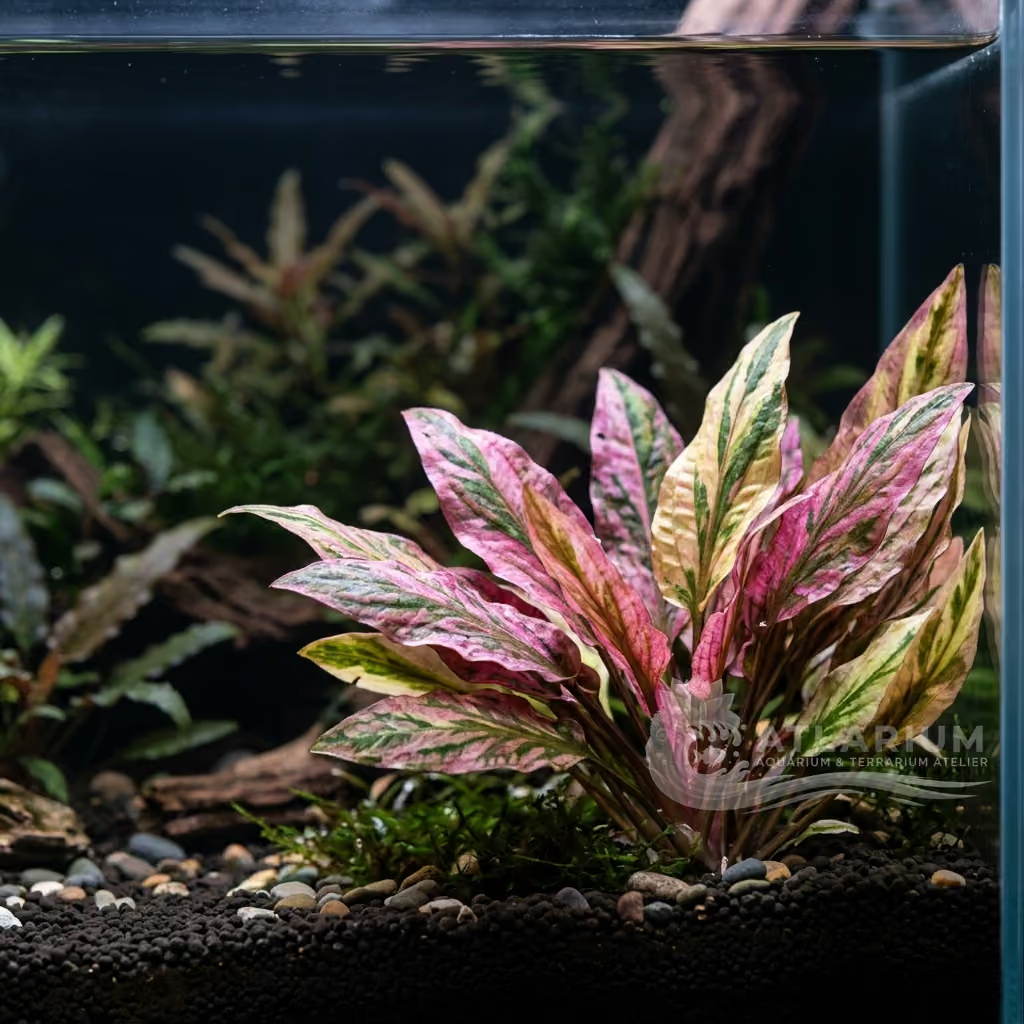
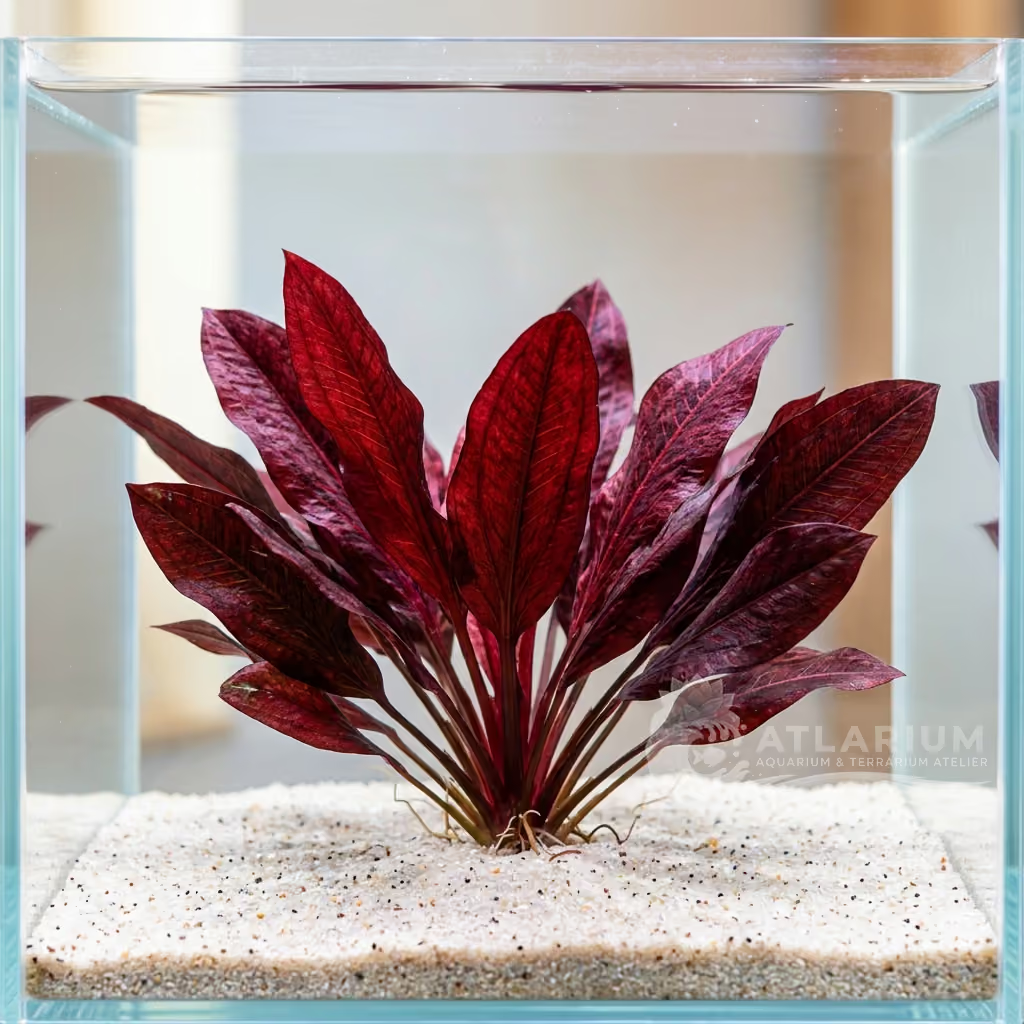
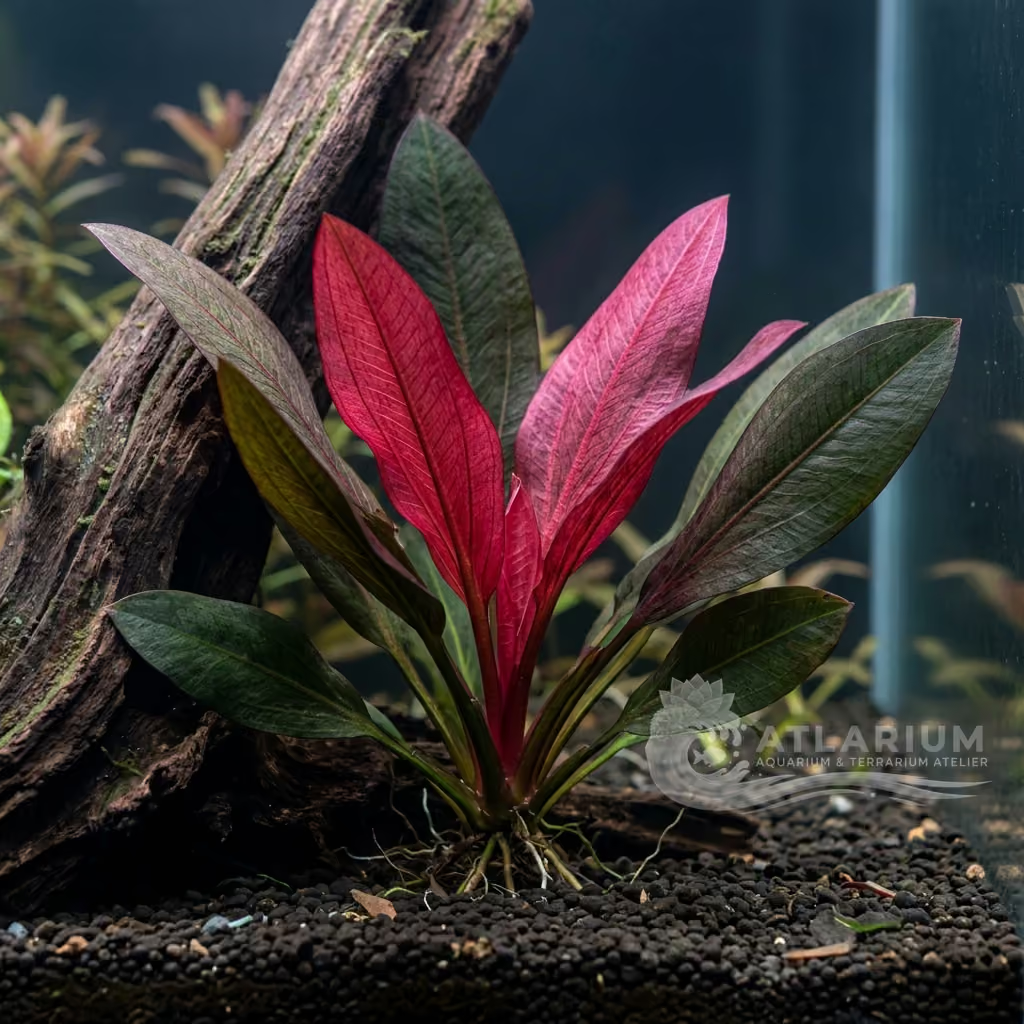
Cryptocoryne wendtii 'Flamingo' is an elite, sought-after cultivar. Its breathtaking, intensely pink, wavy leaves stand out instantly, providing a rare and spectacular focal point under good lighting.
Wassertemperatur
20 - 28 °C
pH-Wert
6 - 8
Wassertyp
Süßwasser
Licht
Mittel
CO2
Mittel
Erwartete Höhe
15 cm
Erwartete Breite
15 cm
GH
4 - 20 dGH
KH
1 - 18 dKH

Artbeschreibung
Geographical Origin and Habitat: This specific plant does not exist in nature. Cryptocoryne wendtii "Flamingo" is an exceptionally rare, purely laboratory-created genetic mutation, originating exclusively from the tissue-culture laboratories of the Dennerle nursery in Germany. It was discovered as a random, spontaneous mutation within a massive greenhouse crop of standard Cryptocoryne wendtii. Because its incredibly delicate, mutant biology prevents it from outcompeting wild flora, it is exclusively cultivated under highly controlled, high-tech aquarium conditions.
Taxonomy & Genetics: Scientifically classified within the Araceae family, "Flamingo" is taxonomically an extreme, hyper-mutated cultivar of the C. wendtii complex. Genetically, it is considered the ultimate "holy grail" of the Cryptocoryne world. Its DNA possesses a massive defect that almost entirely completely suppresses green chlorophyll production across its leaves. Instead, its genetics force the hyper-concentration of intense, blinding neon-pink anthocyanin pigments, rendering the plant an unbelievable, vibrant shade of pure pink.
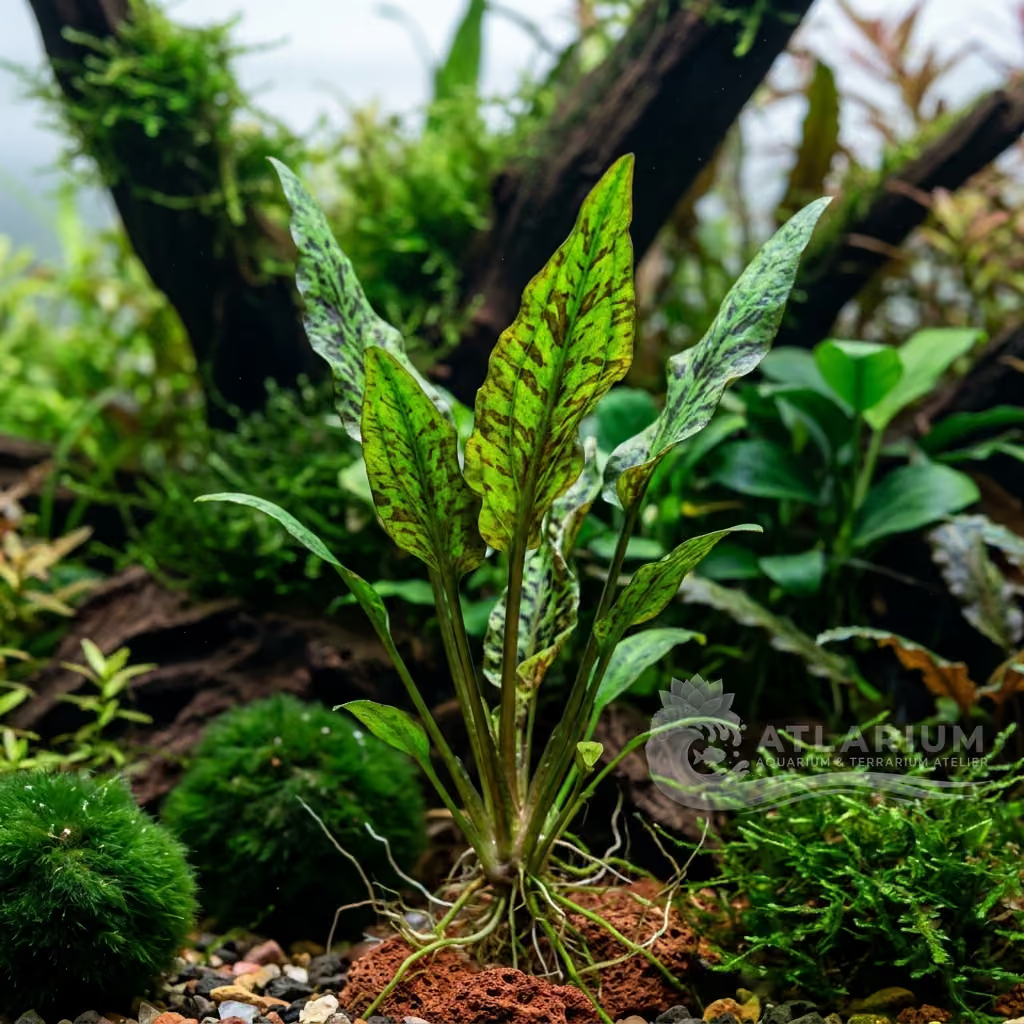
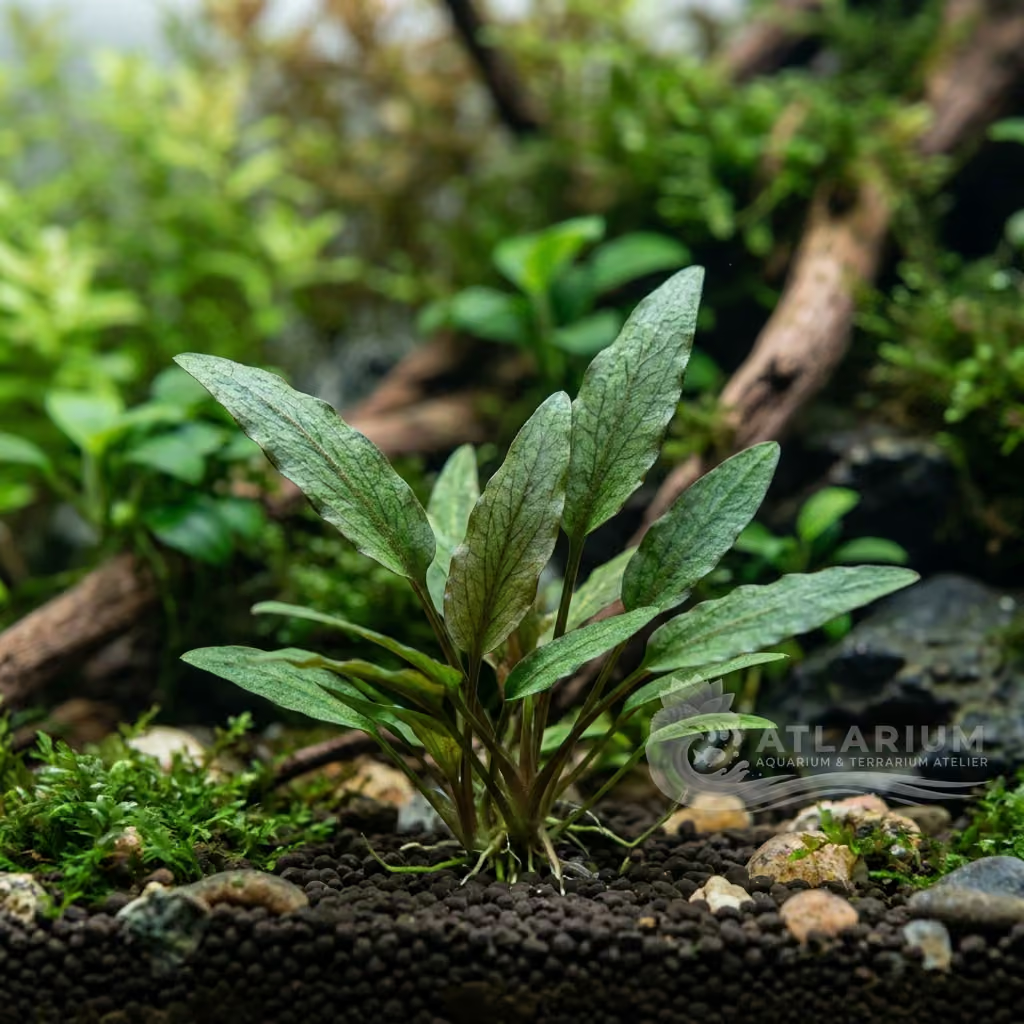
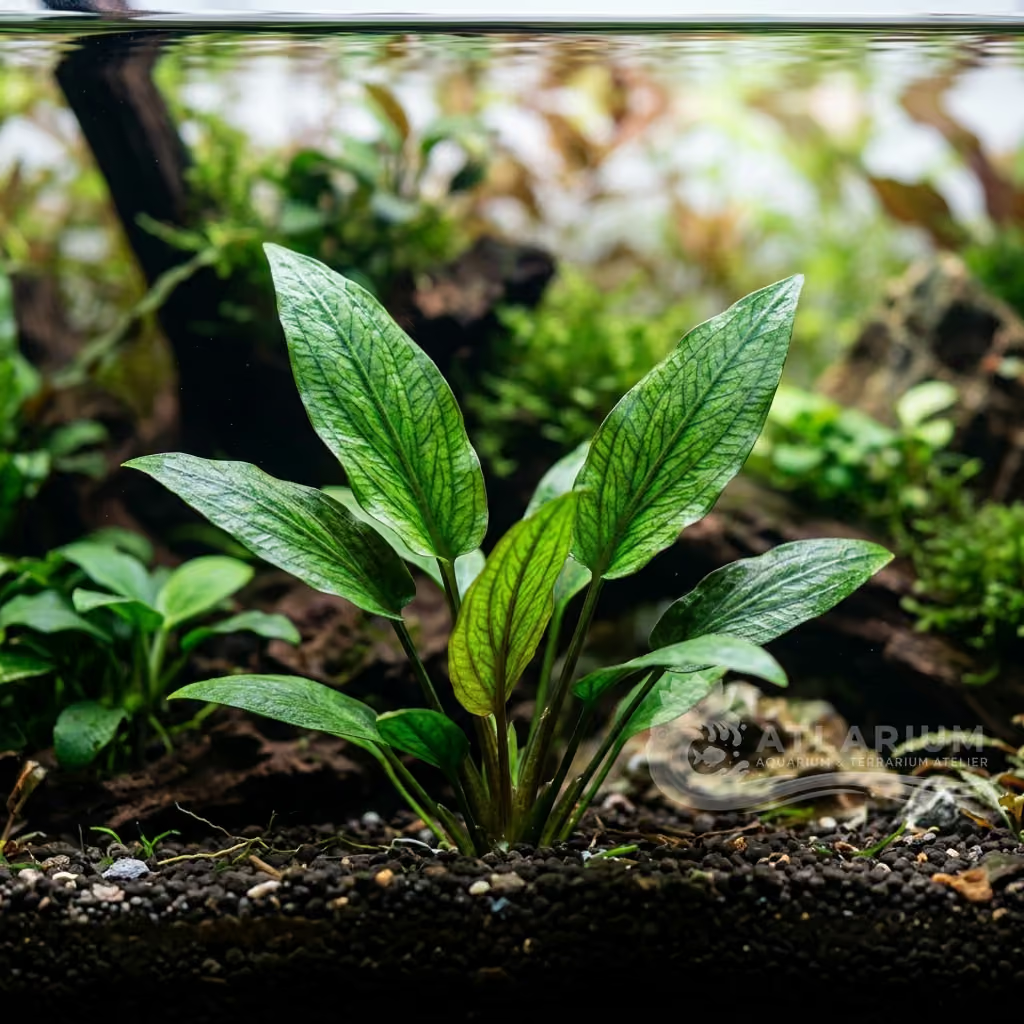
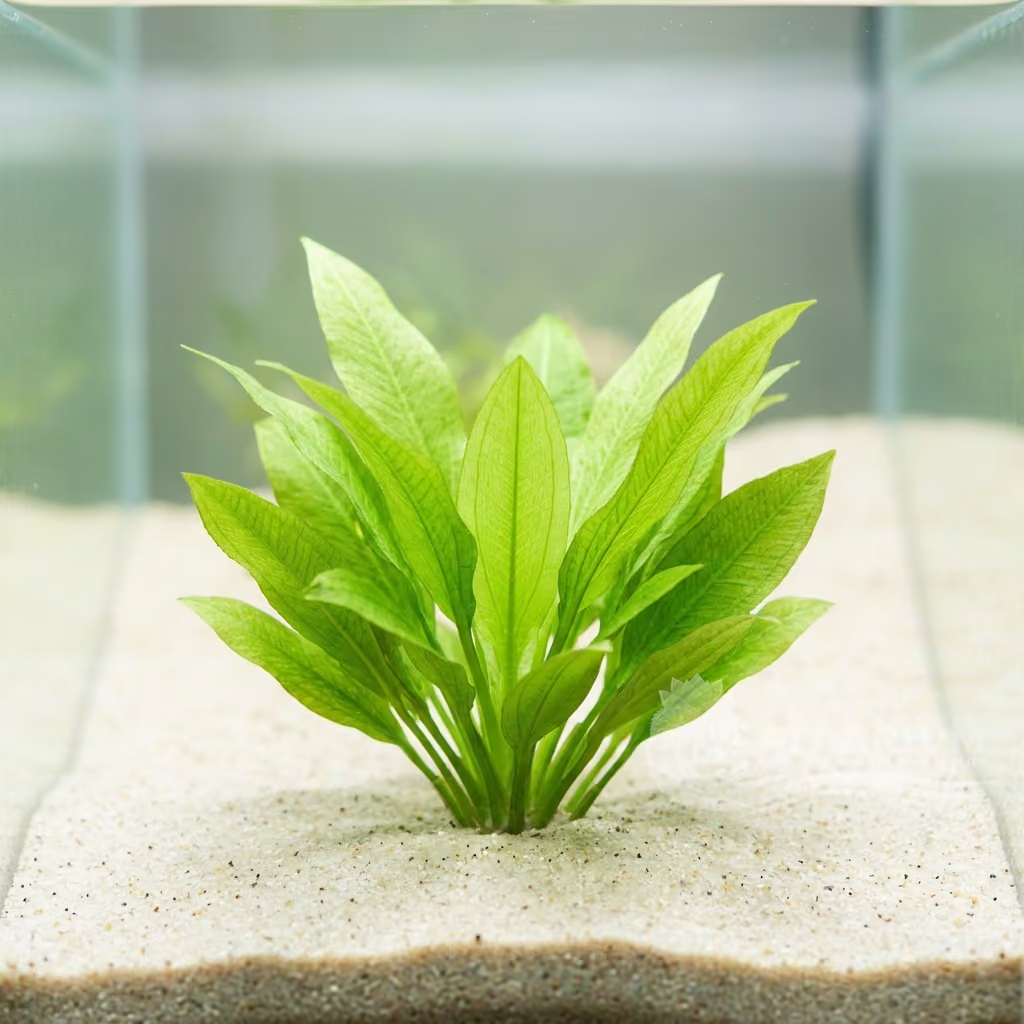
Physical Structure: The architectural structure of "Flamingo" is incredibly delicate, highly stunted, and deeply compact. It is a true rosette plant completely lacking vertical stems. The foundation is a small, woody underground rhizome that deploys a very shallow, fine white root system. The leaves emerge directly from the crown on distinct, relatively short petioles. The foliage is the defining structural feature: strictly lanceolate, significantly smaller than standard C. wendtii (only 10-15 cm), and intensely crinkled with heavily ruffled, wavy margins.
Color & Texture: The coloration is absolutely surreal, alien, and unparalleled in the aquarium hobby. Grown submerged under high-intensity lighting, every single leaf is a solid, hyper-saturated, blindingly bright flamingo-pink or intense neon magenta. It completely lacks any green or brown muddy tones. The underside of the leaves is a solid, deep violet. The texture is intensely crinkled and wavy, which perfectly catches the light and highlights the insane, glowing pink pigmentation. The plant resembles a blooming underwater flower rather than foliage.

Pflege, Zucht und Mitbewohner
Lighting & CO2: It is an incredibly demanding, agonizingly slow-growing plant that requires an elite, high-tech ecosystem. Because its genetic mutation actively suppresses chlorophyll (the engine of photosynthesis), it is horribly inefficient at producing energy. Therefore, it absolutely DEMANDS blasting, ultra-high-intensity LED lighting just to survive. If light drops, it will melt. Furthermore, massive, continuous injection of pressurized CO2 (minimum 30ppm) is strictly mandatory to force the stunted, pink mutant to metabolize and grow.
Nutrition & Substrate: As the ultimate premium rosette plant, "Flamingo" is an obligate root feeder that demands perfection. It MUST be planted in a very deep (minimum 5 cm), pristine, heavily nutrient-dense premium aquasoil substrate. It absolutely despises sterile, inert gravel and will instantly melt if planted in poor conditions. The aquasoil must be heavily supplemented with premium, iron-rich root tabs directly beneath the delicate rhizome. Iron is the absolute critical fuel required to maintain the hyper-saturated, glowing neon-pink coloration.
Water Chemistry: Originating from pristine laboratory conditions, it demands perfect water quality and absolute chemical stability. It thrives in standard tropical temperatures (22-26°C) but strongly prefers soft, slightly acidic water (pH 6.0 - 6.8) injected with CO2. It severely struggles and frequently melts in rock-hard, highly alkaline tap water. The absolute most critical requirement is stability; it must NEVER be planted in a newly cycled tank. It must only be added to mature, seasoned, highly stable high-tech aquascapes.
Space Management & Placement: Due to its extreme rarity, high price, stunted size (10-15 cm height), and blindingly bright neon-pink coloration, "Flamingo" is the absolute, undisputed focal point of any elite, high-tech aquascape. It should be planted as a singular, standalone specimen directly in the center midground, flanked tightly by dark green carpeting plants (like Monte Carlo or Eleocharis) to create an explosive, violent visual color contrast. It must never be shaded by taller plants, as it requires absolute, unobstructed access to the intense lighting.
Pruning: Pruning is a surgically delicate, extremely rare procedure due to its agonizingly slow growth rate. Never attempt to trim a pink leaf in half; the cut edge will instantly turn black, rot, and destroy the plant. To prune dead, melting, or algae-covered leaves, you must reach down to the absolute base of the rosette and cleanly snap or cut the delicate petiole directly at the gravel line. It is highly advised to avoid uprooting the mother plant at all costs, as the massive shock will almost certainly trigger a catastrophic melt.
Risks & Diseases: The absolute greatest threat to this priceless holy grail is the legendary "Crypt Melt." Because its biology is deeply handicapped by its pink mutation, "Flamingo" is violently hyper-sensitive to any environmental instability. The slightest fluctuation in pH, a drop in temperature, or forcefully uprooting the plant will cause it to panic and dissolve its spectacular neon-pink leaves into a slimy, foul mush overnight. The second major risk is Green Spot Algae (GSA), which easily colonizes its slow-growing, bright pink leaves.

Geografische Herkunft und Verbreitung
This specific plant does not exist in nature. Cryptocoryne wendtii "Flamingo" is an exceptionally rare, purely laboratory-created genetic mutation, originating exclusively from the tissue-culture laboratories of the Dennerle nursery in Germany. It was discovered as a random, spontaneous mutation within a massive greenhouse crop of standard Cryptocoryne wendtii. Because its incredibly delicate, mutant biology prevents it from outcompeting wild flora, it is exclusively cultivated under highly controlled, high-tech aquarium conditions.
Ursprung
Selektive Züchtung und SortenEuropa, Mittelmeerraum und Westasien

Pflanzenprofil
- Platzierung
- Mittelgrund
- Given its smaller stature and breathtaking color, it is best placed as a focal point in the foreground or low midground. Surrounding it with deep green or dark plants will make its pink foliage stand out dramatically. It should not be shaded by larger plants, as it requires strong light to thrive.
- Botanische Form
- Rosette
- This cultivar grows as a compact rosette with slightly wavy, lanceolate leaves. Its most defining characteristic is its striking pink to light red coloration, which varies depending on lighting intensity. The leaves are generally smaller and more delicate than standard wendtii varieties.
- Wachstum
- Langsam
- Unlike most other wendtii varieties, 'Flamingo' is a notoriously slow grower, even under optimal conditions. High lighting, CO2 injection, and pristine water quality can slightly increase its growth speed. Patience is required, as it takes considerable time for a small tissue culture plantlet to establish and form a dense bush.
- Substrat
- Hoch
- The delicate pink coloration of Cryptocoryne wendtii 'Flamingo' demands a high-quality, nutrient-dense aqua soil to thrive and maintain its vibrant hues. It forms a deep and intricate root system, requiring a substrate depth of at least 2 to 3 inches to properly anchor itself and absorb essential macro and micronutrients. If using an inert substrate, frequent replenishment with root tabs is absolutely necessary to prevent nutritional deficiencies. A stable, undisturbed root zone is especially critical for this rare cultivar, as it is highly susceptible to melting when relocated.
- Säulendüngung
- Empfohlen
- Liquid fertilization should be carefully managed to avoid algae, which can easily suffocate this slow-growing plant. Dosing chelated iron and trace elements in the water column enhances the pink coloration. However, this must be balanced with good CO2 levels and regular water changes to keep the leaves clean.
- Wurzeldüngung
- Erforderlich
- An active, nutrient-rich soil or frequent use of iron-rich root tabs is critical for the success of 'Flamingo'. The roots need an abundant supply of nutrients to support the plant's demanding physiology and slow metabolism. Good root nutrition also provides a safety net during acclimatization periods.
- Trimmen
- Gelegentlich
- Trimming is rarely needed due to its incredibly slow growth rate. Only remove fully dead, transparent, or heavily algae-infested leaves to prevent the spread of decay. Always use sharp scissors and cut at the base of the stem to avoid damaging the delicate central crown.
- Ausbreitung
- Rhizomteilung, Ausläufer
- Propagation is quite slow and occurs via runners from the mother plant. Wait until the daughter plants have developed at least four or five distinctly pink leaves and a robust root system before attempting separation. Premature separation often leads to the loss of the young plantlet.
- Empfindlichkeit
- HIGH
- It is highly sensitive and prone to severe 'Crypt melt' when parameters fluctuate, or when first introduced to a new aquarium. Stable CO2, consistent fertilization, and unchanged lighting schedules are paramount. If it melts, do not uproot it; the root system often recovers if left undisturbed in a stable environment.
- Layoutrolle
- Mittelgrund, Vordergrund
- Its primary role in aquascaping is to serve as a rare, high-contrast jewel in the foreground or midground. The brilliant pink color provides an extraordinary contrast against green carpeting plants like Hemianthus callitrichoides or Eleocharis. It is often used sparingly as a unique, eye-catching accent rather than a mass-planted background.

Bildergalerie
Lizenzierte Bilder, die mit der Art oder, wenn markiert, mit dem nächstgelegenen repräsentativen Taxon verknüpft sind.

Verwandte Arten
Empfehlungen gruppiert nach nahen Verwandten, Auswahl von Begleitern und ähnlicher Betreuung.