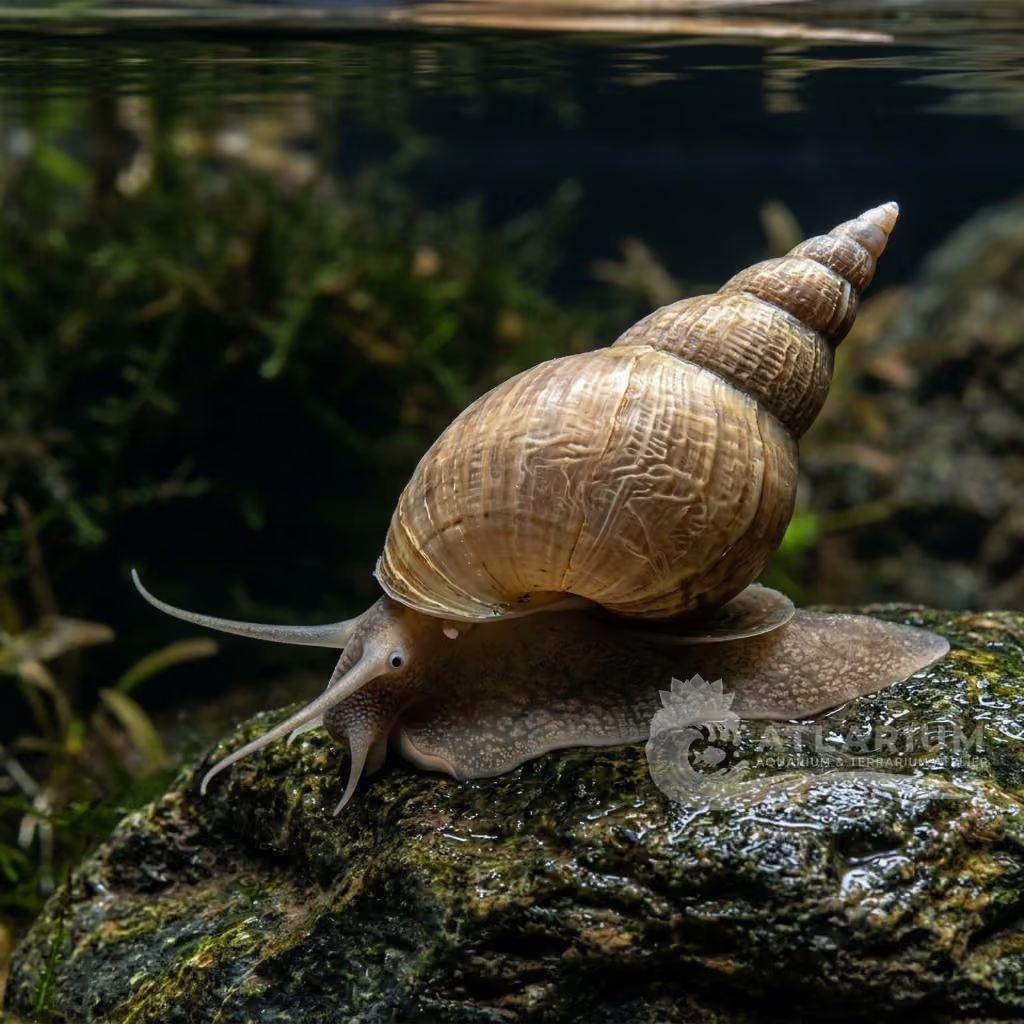
Horned Nerite Snail
Clithon corona
The Horned Nerite Snail is a small, peaceful freshwater herbivore featuring protective shell spines. It is an exceptional algae eater that cannot breed in freshwater.
Wassertemperatur
20 - 28 °C
pH-Wert
7 - 8.2
Wassertyp
Süßwasser
Wirbelloser Typ
Freshwater snail
Erwachsenengröße
2 cm
Mindestgruppe
>= 1
GH
8 - 20 dGH
KH
5 - 15 dKH
TDS
200 - 500 ppm
Ökologische Rolle
Scavenger
Kupferempfindlichkeit
High

Artbeschreibung
Geographical Origin and Habitat: Clithon corona is native to the coastal regions of the Indo-West Pacific, including the Philippines, Indonesia, and southern Japan. It inhabits the lower reaches of rivers and streams near the sea, often in tidal zones, clinging to stones and rocky substrates covered in rich micro-algae growth.
Taxonomy: Belonging to the family Neritidae, this species is defined by the presence of prominent horn-like spines protruding from the shell. It is a small snail, rarely exceeding 1-1.5 cm in diameter. It possesses a tightly fitting operculum used to protect itself from predators and drying out.
Social Behavior: Completely peaceful, non-aggressive, and harmless. It is a tireless grazer, active during both day and night. It does not bother fish or shrimp and will never feed on or damage healthy aquatic plants, making it a perfect janitor.
Coloration and Sexual Dimorphism: The shell coloration is highly variable, featuring alternating yellow and black bands or zig-zag patterns, sometimes solid olive-brown. Genders are separate but there is no external sexual dimorphism; males and females look identical to the naked eye.

Pflege, Zucht und Mitbewohner
Tank Setup: A tank of at least 15-20 liters is recommended. Decorate with smooth rocks and driftwood to provide ample grazing surface.
CRITICAL WARNING: Horned Nerite Snails are excellent climbers and will crawl out of the water; a tight-fitting cover lid is strictly required to prevent fatal escapes.
Diet and Feeding: Obligate herbivores and algae eaters. They specialize in consuming diatoms, green dust algae (GDA), and bacterial biofilm. They rarely accept commercial foods, flakes, or pellets. They must only be introduced into established aquariums with existing algae to prevent starvation.
Water Quality: Requires moderately hard to hard, alkaline water to prevent shell erosion: temperature 20-28°C, pH 7.0-8.2, GH 8-22, and KH 5-15. Acidic or soft waters dissolve the shell and lead to premature death. Keep ammonia and nitrites at zero. Copper is highly toxic.
Compatibility and Tankmates: Highly compatible with small, peaceful community fish (e.g. tetras, guppies) and dwarf shrimp. Do not house with snail-eating predators such as puffers, loaches, aggressive cichlids, or Clea helena snails.
Aquarium Breeding: Breeding in a freshwater aquarium is impossible. While females lay small, hard white egg capsules on driftwood, rocks, and glass, the hatched larvae require brackish or marine salinity to survive. Therefore, they will not overpopulate the tank.
Risks and Diseases: Starvation in overly clean or newly established aquariums is the main threat. Another risk is getting stuck upside down on soft substrates; due to their shell shape, they may struggle to upright themselves and can perish if left unattended.

Geografische Herkunft und Verbreitung
Clithon corona is native to the coastal regions of the Indo-West Pacific, including the Philippines, Indonesia, and southern Japan. It inhabits the lower reaches of rivers and streams near the sea, often in tidal zones, clinging to stones and rocky substrates covered in rich micro-algae growth.
Ursprung
Tropische Ozeane und RiffeSüd- und SüdostasienOstasien

Wirbelloses Profil
- Diät
- Herbivore
- The dietary requirements for Clithon corona revolve heavily around their constant grazing on biofilm and algae. In a mature aquarium, they will naturally find a significant portion of their food by foraging across surfaces. However, it is important to supplement their diet with high-quality commercial foods designed specifically for them. Vegetable matter, blanched spinach, or specialized sinking pellets can ensure they receive full nutrition. Providing a varied and balanced diet directly correlates to better coloration, growth rates, and overall vitality.
- Ökologische Rolle
- Scavenger
- In their natural habitat, Clithon corona plays a vital ecological role as part of the clean-up crew. They help maintain the balance of their ecosystem by breaking down decaying organic matter and consuming nuisance algae. This natural behavior translates perfectly into the home aquarium, where they serve as tireless workers keeping the environment pristine. By reducing the buildup of detritus, they indirectly improve water quality and prevent the spread of harmful pathogens. Their constant activity makes them a functional and invaluable addition to any balanced aquatic system.
- Lebenserwartung
- 2-5 years
- Erwachsenengröße
- 2 cm
- Sprungrisiko
- Yes
- Aquarists should be aware that Clithon corona has a known tendency for climbing up the glass out of the water. This usually happens if water parameters deteriorate, prompting an instinctual escape response to find better conditions. A tight-fitting lid or a custom mesh screen on the aquarium is highly recommended to prevent any dry tragedies. Keeping the water level an inch or two below the rim can also deter escape attempts effectively. If an individual is found outside the tank, returning it quickly to the water might still save it if it hasn't completely dried out.
- Stoßempfindlichkeit
- High
- It is widely documented that Clithon corona is incredibly susceptible to osmotic shock and rapid shifts in water parameters. When introducing them to a new tank, a slow drip acclimation process over several hours is strictly necessary. Sudden fluctuations in temperature, pH, or dissolved solids can lead to immediate stress, failed molts, or death. Aquarists must ensure that top-offs are done slowly and with matched water to maintain stability. Routine water changes should be smaller and more frequent rather than large, sudden replacements.
- Kalzium und Mineralien
- Very high
- Adequate calcium levels are fundamentally important for the survival and growth of Clithon corona. Calcium is the primary building block for their exoskeleton or shell, and a deficiency can lead to fatal structural issues. The water column must have a balanced general hardness (GH) to provide dissolved minerals for absorption. Additionally, offering calcium-enriched foods or specialized mineral supplements can greatly assist their biological needs. Regular testing of the water's mineral content is recommended to ensure they have enough raw materials to thrive.
- Häutung
- Yes
- The molting process is the most vulnerable time in the life cycle of Clithon corona. During this period, they shed their old exoskeleton to grow, leaving them soft and defenseless for a short window. It is crucial to provide ample hiding spaces, such as dense moss, tubes, or leaf litter, so they can retreat safely. Never remove the discarded molts from the tank, as the invertebrates will consume them to quickly reclaim lost calcium and minerals. A failed molt, often seen as the "ring of death," is typically indicative of mineral imbalances or stress in the aquarium.
- Reproduktion
- Rare / not documented
- Breeding Clithon corona in captivity can be an immensely rewarding experience for dedicated aquarists. Some species breed readily in stable parameters, while others require complex larval transitions through brackish water. Once conditions are optimal, females will generally carry the developing eggs until they hatch. Ensuring a predator-free environment and abundant microscopic food sources, like biofilm or specific larval foods, is essential for high survival rates. Observing the successive generations grow adds a dynamic and fascinating layer to keeping them.
- Kompatibilität & Tankkameraden
- Peaceful
- When selecting tank mates for Clithon corona, extreme caution must be exercised to prevent them from becoming an expensive snack. They should ideally be kept in a species-only tank, or alongside very small, peaceful nano fish that pose no threat. Any fish with a mouth large enough to swallow them will likely try to do so eventually. Bottom-dwelling competitors or overly aggressive feeders might also outcompete them for resources. A thoughtfully planned community prioritizing peaceful coexistence is the key to their long-term thriving.

Bildergalerie
Lizenzierte Bilder, die mit der Art oder, wenn markiert, mit dem nächstgelegenen repräsentativen Taxon verknüpft sind.

Verwandte Arten
Empfehlungen gruppiert nach nahen Verwandten, Auswahl von Begleitern und ähnlicher Betreuung.