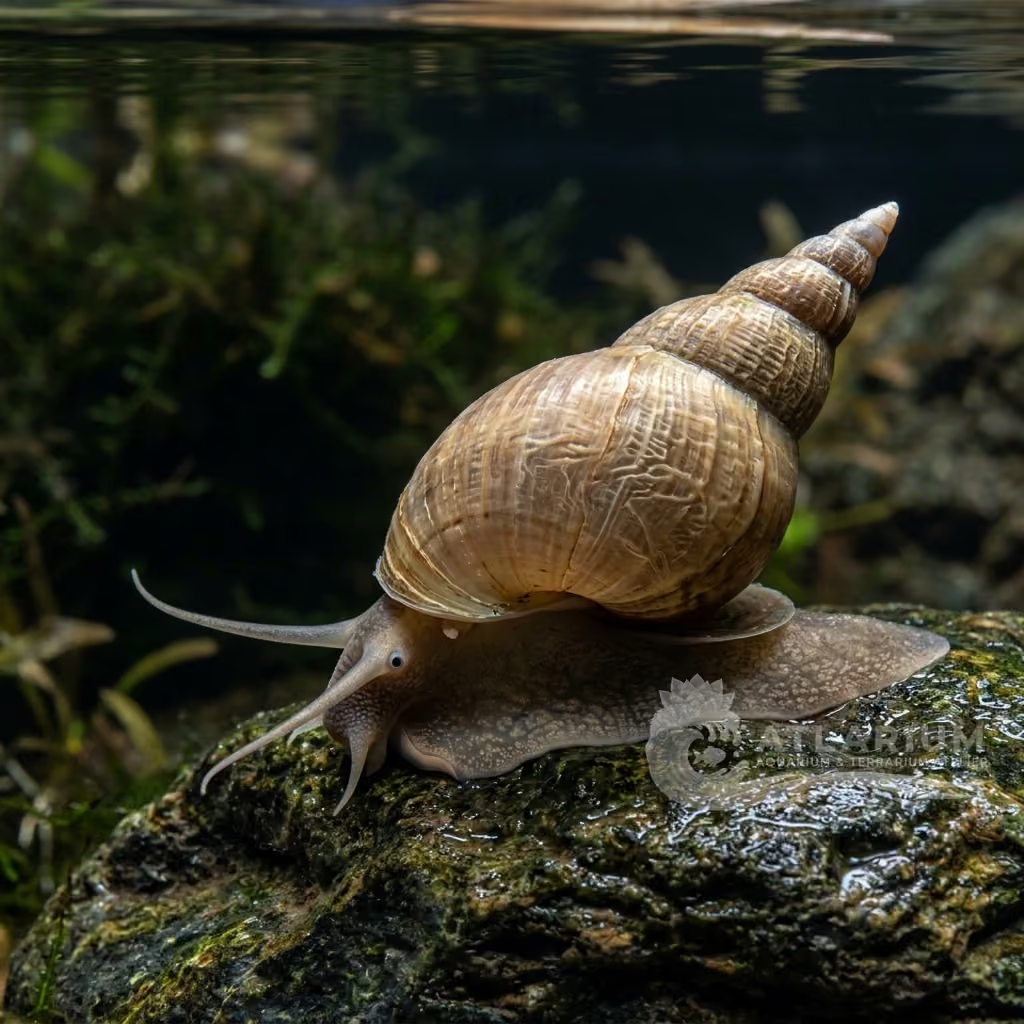
River nerite snail
Theodoxus fluviatilis
River nerite snail: aquarium gastropod in the family Neritidae, useful for biofilm, light algae, and substrate cleanup. Geographical Origin and Habitat: The European Nerite, also known as...
Wassertemperatur
20 - 28 °C
pH-Wert
7 - 8.4
Wassertyp
Süßwasser / Brackwasser
Wirbelloser Typ
Freshwater snail
Erwachsenengröße
1,2 cm
Mindestgruppe
>= 1
GH
6 - 20 dGH
KH
3 - 15 dKH
TDS
120 - 450 ppm
Ökologische Rolle
Scavenger
Kupferempfindlichkeit
High

Artbeschreibung
Geographical Origin and Habitat: The European Nerite, also known as the River Nerite (Theodoxus fluviatilis), is a tiny, incredibly robust aquatic gastropod natively endemic to the vast, temperate river systems, crystal-clear streams, and coastal brackish estuaries throughout Europe, stretching from the British Isles to the Black Sea. Their natural biotope is defined by cooler, fast-flowing, highly oxygenated water rushing over hard, limestone-rich rocky substrates. They thrive gripping tightly to smooth river cobbles, constantly grazing on thick mats of diatoms and green algae.
Taxonomy: Scientifically classified within the Neritidae family, they are a true "nano" snail and one of the smallest Nerites kept in the aquarium hobby. Fully mature adults reach a maximum of only 0.5 to 1.0 centimeters (0.2-0.4 inches) in diameter. Despite their microscopic size, they possess the signature heavy-duty biology of their tropical cousins: a thick, dense, impenetrable calcium-carbonate shell engineered to withstand crushing river currents, and a powerful, highly muscular foot for locking onto smooth stones.
Social Behavior: They are completely peaceful, fiercely industrious, and strictly utilitarian scavengers with absolutely zero aggression. Their entire lifespan is spent in a slow, relentless patrol of the aquarium's hardscapes—specifically glass and smooth rocks—relentlessly vacuuming up microscopic green algae and diatoms. Because of their incredibly tiny size, they are phenomenal at thoroughly cleaning tight crevices and small plant leaves where larger snails physically cannot reach. They ignore all other tank inhabitants.
Coloration and Sexual Dimorphism: Sexual dimorphism is visually non-existent; while they possess distinct sexes, they cannot be identified by the human eye. Their coloration is highly variable but deeply beautiful, designed for natural camouflage against river stones. The tiny, rounded shell usually features a base color of pale yellow, deep purple, or dark olive-green, intricately overlaid with hundreds of microscopic, contrasting zigzag patterns, spots, or "net-like" reticulations. Often, a thick layer of natural algae obscures their true pattern.

Pflege, Zucht und Mitbewohner
Tank Setup: The aquarium architecture MUST accommodate their biological need for hard grazing surfaces and their preference for high oxygenation. A nano tank of 10-20 liters (2.5-5 gallons) is sufficient. The tank MUST feature smooth river stones or glass surfaces.
CRITICAL WARNING: Like all Nerites, they possess a strong instinct to climb above the waterline. A perfectly sealed, tight-fitting lid is unconditionally mandatory, otherwise they will crawl out, fall behind the tank, and dehydrate to death.
Diet and Feeding: They are spectacular, highly specialized herbivorous aufwuchs grazers and absolute champions of nano-algae removal. They actively consume tough Green Spot Algae (GSA) and diatoms. However, their tiny size and massive appetite make them highly prone to starvation in pristine tanks. Their diet MUST be heavily supplemented if natural algae runs out. Regular offerings of premium sinking algae wafers, spirulina powder, and blanched vegetables (zucchini) are unconditionally mandatory for their survival.
Water Quality: Originating from temperate European rivers, they possess an uncompromising biological requirement for pristine, HARD, and cooler water. They thrive in unheated indoor tanks to mild tropical heat (15-25°C / 59-77°F); they MUST NOT be kept in very hot tropical tanks (28°C+). They STRICTLY require hard, highly alkaline water (GH 8-20, pH 7.5 - 8.5) rich in dissolved calcium. Keeping them in soft, acidic water is fatal; the acidity will rapidly dissolve their tiny shells. Flawless filtration is mandatory.
Compatibility and Tankmates: Compatibility is absolutely stellar due to their peaceful nature and thick shell. They are the perfect cleanup crew for peaceful, cooler-water nano freshwater or brackish community tanks. They completely ignore fish and dwarf shrimp. They MUST NEVER be housed with specialized snail-eating predators (like Pea Puffers, massive Loaches, or large Cichlids) that will easily crush their tiny shells. Excellent companions include White Cloud Mountain Minnows, Hillstream Loaches, and Neocaridina shrimp.
Aquarium Breeding: Unlike their tropical cousins that require saltwater to hatch, the European Nerite CAN reproduce entirely in a pure freshwater aquarium, though at an incredibly slow rate. Females will lay tiny, hard, white egg capsules on solid surfaces (rocks or glass). Each capsule contains dozens of eggs, but only one single, fully formed miniature snail will eventually hatch from it, having cannibalized its siblings inside the capsule. Because of this extremely slow reproduction rate, they will NEVER overpopulate a tank.
Risks and Diseases: The absolute greatest physical risk is agonizing death from shell degradation caused by keeping them in soft, acidic water; hard, highly alkaline water with heavy calcium is unconditionally mandatory. The second major risk is lethal starvation in clean tanks lacking algae; supplemental feeding is crucial. The third major risk is lethal metabolic exhaustion from keeping them in hot (28°C+) tropical tanks; cooler water is strongly advised. Finally, escaping out of uncovered tanks is a massive risk.

Geografische Herkunft und Verbreitung
The European Nerite, also known as the River Nerite (Theodoxus fluviatilis), is a tiny, incredibly robust aquatic gastropod natively endemic to the vast, temperate river systems, crystal-clear streams, and coastal brackish estuaries throughout Europe, stretching from the British Isles to the Black Sea. Their natural biotope is defined by cooler, fast-flowing, highly oxygenated water rushing over hard, limestone-rich rocky substrates. They thrive gripping tightly to smooth river cobbles, constantly grazing on thick mats of diatoms and green algae.
Ursprung
Afrika und MadagaskarEuropa, Mittelmeerraum und WestasienOstasien

Wirbelloses Profil
- Diät
- Biofilm grazer
- The primary diet of Theodoxus fluviatilis consists of various types of algae, biofilm, and decaying plant matter found on aquarium surfaces. It is an excellent clean-up crew member but may require supplemental feeding. Sinking algae wafers and blanched vegetables should be provided if natural food sources are depleted.
- Ökologische Rolle
- Scavenger
- In its natural habitat, Theodoxus fluviatilis plays a crucial role as a detritivore and primary consumer, helping to process organic waste. By constantly grazing on algae and detritus, it prevents excessive nutrient buildup and keeps surfaces clean. This ecological function translates perfectly into the closed ecosystem of a home aquarium.
- Erwachsenengröße
- 1.2 cm
- Sprungrisiko
- Yes
- While Theodoxus fluviatilis lacks the ability to physically jump, it is known to occasionally climb above the water line or out of the tank entirely. This wandering behavior can sometimes lead to fatal desiccation if they fall onto the floor. A tightly fitted lid or a wide rim is highly recommended to keep them safely enclosed.
- Stoßempfindlichkeit
- High
- Theodoxus fluviatilis is remarkably sensitive to sudden fluctuations in water parameters, particularly temperature, pH, and hardness. Rapid changes can induce osmotic shock, leading to lethargy, shell damage, or death. A slow drip acclimation process over several hours is highly recommended when introducing it to a new tank.
- Kalzium und Mineralien
- High
- Adequate calcium levels are absolutely critical for Theodoxus fluviatilis to develop and maintain a strong, healthy shell. Soft, acidic water will gradually erode the shell, exposing the snail to infection and premature death. Hobbyists should supplement the water column or diet with cuttlebone, coral skeleton, or specialized mineral blocks.
- Häutung
- Shell growth
- Unlike crustaceans, Theodoxus fluviatilis is a gastropod and does not undergo a molting process to grow. Instead, it continuously adds new calcified layers to the aperture of its existing shell as it matures. Therefore, observing continuous, healthy shell growth lines without pitting or cracks is the best indicator of its well-being.
- Reproduktion
- Oviparous
- The reproductive strategy of Theodoxus fluviatilis varies, but many require specific conditions such as brackish water to successfully yield viable offspring. While they may lay eggs frequently in a freshwater aquarium, the larvae often fail to develop without the proper salinity. This trait makes them ideal for aquarists who wish to avoid overpopulation issues.
- Kompatibilität & Tankkameraden
- Peaceful
- Theodoxus fluviatilis is entirely peaceful and possesses no means to harm other tank inhabitants, making it perfect for community setups. It should not, however, be kept with aggressive loaches, pufferfish, or large crayfish that will prey on it. Ideal tank mates include small tetras, rasboras, and dwarf shrimp.

Bildergalerie
Lizenzierte Bilder, die mit der Art oder, wenn markiert, mit dem nächstgelegenen repräsentativen Taxon verknüpft sind.

Verwandte Arten
Empfehlungen gruppiert nach nahen Verwandten, Auswahl von Begleitern und ähnlicher Betreuung.