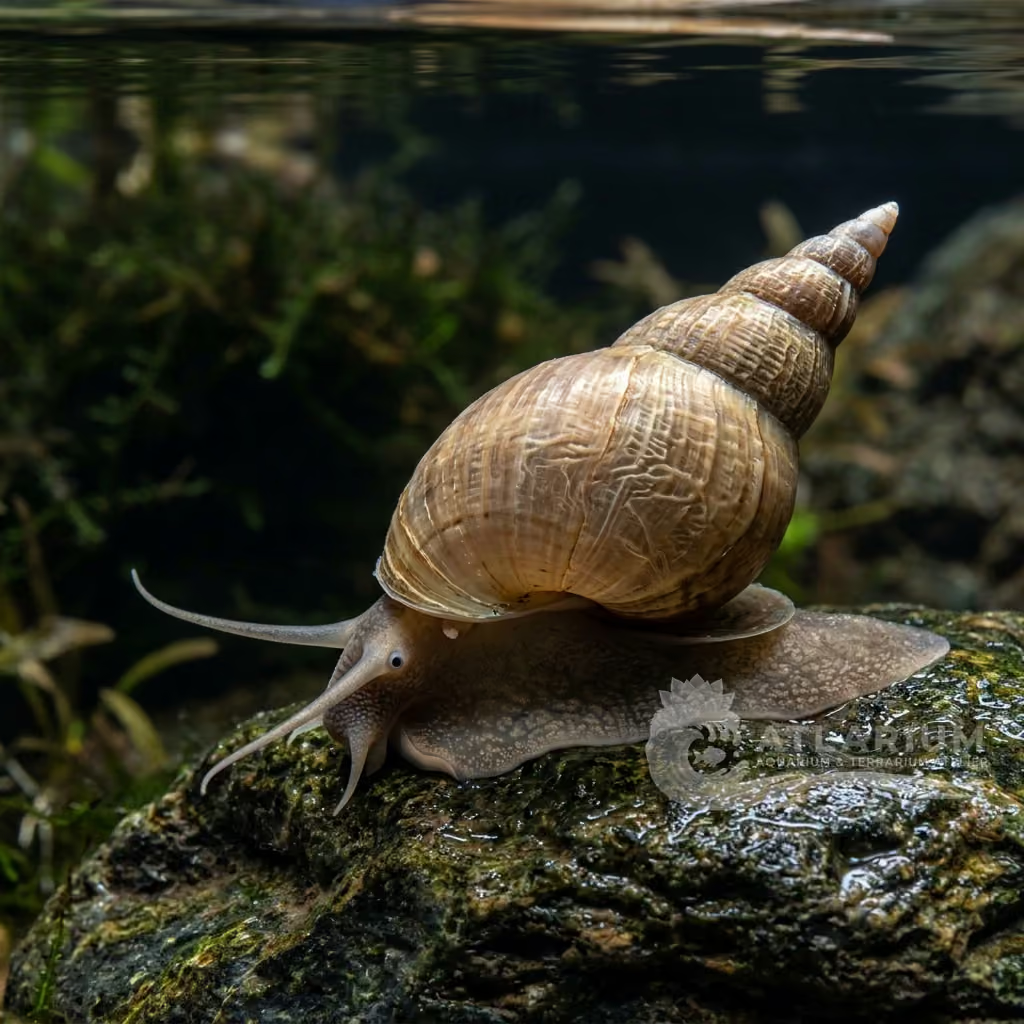
Mystery Snail
Pomacea bridgesii
The Mystery Snail, famous for its large size, bright color morphs, and long tentacles. Highly active, peaceful, and popular. Geographical Origin and Habitat: Pomacea bridgesii is native to...
Wassertemperatur
20 - 28 °C
pH-Wert
7 - 8.5
Wassertyp
Süßwasser
Wirbelloser Typ
Freshwater snail
Erwachsenengröße
5 cm
Mindestgruppe
>= 1
GH
8 - 15 dGH
KH
4 - 10 dKH
TDS
200 - 400 ppm
Ökologische Rolle
Herbivore
Kupferempfindlichkeit
High

Artbeschreibung
Geographical Origin and Habitat: Pomacea bridgesii is native to the Amazon River basin in South America, including Bolivia, Brazil, Paraguay, and Peru. It inhabits slow-moving rivers, swamps, ponds, and seasonal flooded grasslands rich in vegetation. It survives in low-oxygen waters using a respiratory siphon.
Taxonomy: Belonging to the family Ampullariidae (apple snails), this is a large freshwater snail growing to 4.5-6 cm in diameter. It features a globose shell with distinct whorls, a large muscular foot, and a tough operculum. It has a long breathing tube (siphon) that extends to the surface.
Social Behavior: Extremely peaceful, active, and curious. They are constantly moving around the tank, scaling glass and decorations. They do not bother fish or dwarf shrimp. They are famous for letting go of the glass and "parasailing" down to the bottom.
Coloration and Sexual Dimorphism: Available in many bright color morphs (golden, blue, ivory, purple, jade, magenta). Genders are separate (non-hermaphroditic), but sexing requires checking the presence of a sheath inside the mantle; they appear identical to the hobbyist.

Pflege, Zucht und Mitbewohner
Tank Setup: A tank of at least 30-40 liters per snail is recommended.
CRITICAL REQUIREMENT: Leave an air gap of 5-8 cm between the water surface and the lid. Females lay egg clutches above the water. The aquarium must have a tight, secure lid to prevent escapes.
Diet and Feeding: Voracious omnivorous scavengers. They eat leftover fish foods, sinking wafers, algae, detritus, and blanched vegetables (zucchini, carrots, spinach). Unlike some other apple snails, *P. bridgesii* will not eat healthy plants because their radula is too soft.
Water Quality: Requires moderately hard, alkaline water: temperature 20-28°C, pH 7.2-8.0, GH 8-20, and KH 5-12. Acidic water (pH below 7.0) dissolves their shell, causing erosion and pitting. Keep ammonia and nitrites at zero. Copper is highly lethal.
Compatibility and Tankmates: Safe with peaceful community fish (e.g. tetras, guppies, corydoras) and dwarf shrimp. Do not house with snail predators (puffers, loaches, Clea helena) or fish that nip at tentacles (like tiger barbs or aggressive bettas).
Aquarium Breeding: Easy if a male and female are present. The female crawls out of the water to lay a hard, pinkish-orange calcareous egg clutch. The clutch must remain humid but not wet; baby snails hatch and drop into the water after 2-4 weeks.
Risks and Diseases: Shell deterioration (pitting/thinning) due to calcium deficiency or acidic water. Climbing out of open tanks, leading to fall damage or dehydration. High sensitivity to copper-based treatments and medications.

Geografische Herkunft und Verbreitung
Pomacea bridgesii is native to the Amazon River basin in South America, including Bolivia, Brazil, Paraguay, and Peru. It inhabits slow-moving rivers, swamps, ponds, and seasonal flooded grasslands rich in vegetation. It survives in low-oxygen waters using a respiratory siphon.
Ursprung
Selektive Züchtung und SortenAmazonas, Orinoco und GuayanaTropische Ozeane und Riffe

Wirbelloses Profil
- Diät
- Omnivore
- They are enthusiastic scavengers that eagerly consume uneaten fish food, algae wafers, and dead plant matter. Unlike some other apple snails, they lack the mouthparts to consume healthy, living aquarium plants, making them fully planted-tank safe. Their diet must be supplemented with calcium-rich blanched vegetables like zucchini or spinach.
- Ökologische Rolle
- Herbivore
- Mystery snails serve as excellent cleanup crew members, quickly locating and consuming excess food before it decays and fouls the water. They constantly sift through the top layer of the substrate, preventing anaerobic pockets. However, due to their size, they also produce a notable bioload that requires adequate filtration.
- Erwachsenengröße
- 5 cm
- Sprungrisiko
- Yes
- Females will actively seek to climb out of the water to find a suitable dry spot to deposit their eggs. During these excursions, they can easily push past loose lids and fall from the aquarium, often cracking their shells fatally. A secure, tight-fitting lid with a few inches of air gap below is completely mandatory.
- Stoßempfindlichkeit
- Low
- While generally hardy, they can be shocked by sudden drops in temperature or rapid pH fluctuations. They require a fully cycled tank, as they are sensitive to ammonia and nitrite spikes. Drip acclimation is recommended to ensure a smooth transition into a new aquatic environment.
- Kalzium und Mineralien
- High
- They have substantial calcium requirements to maintain their large, heavy shells. If kept in soft or acidic water, their shells will thin, crack, and eventually develop fatal holes. Providing calcium supplements, cuttlebone, and a slightly alkaline pH (above 7.0) is essential for their long-term health.
- Häutung
- Shell growth
- Like all snails, they do not undergo molting; they continuously grow by adding new material to the shell's opening. Rapid, healthy growth is visible as smooth, distinct lines near the shell lip. A cleft or ragged edge indicates a period of poor water quality or calcium deficiency.
- Reproduktion
- Oviparous
- Mystery Snails require both a male and a female to reproduce. The female will crawl above the waterline to lay a distinctive, large, pinkish egg clutch in the humid air. The eggs must remain moist but out of the water to incubate for a few weeks before tiny snails hatch and drop into the tank.
- Kompatibilität & Tankkameraden
- Aggressive
- They are completely peaceful and have no means of defending themselves other than retreating into their shells. They make excellent tankmates for peaceful community fish like tetras, guppies, and corydoras. They should never be housed with aggressive, snail-eating species like loaches, pufferfish, or large cichlids.

Verwandte Arten
Empfehlungen gruppiert nach nahen Verwandten, Auswahl von Begleitern und ähnlicher Betreuung.