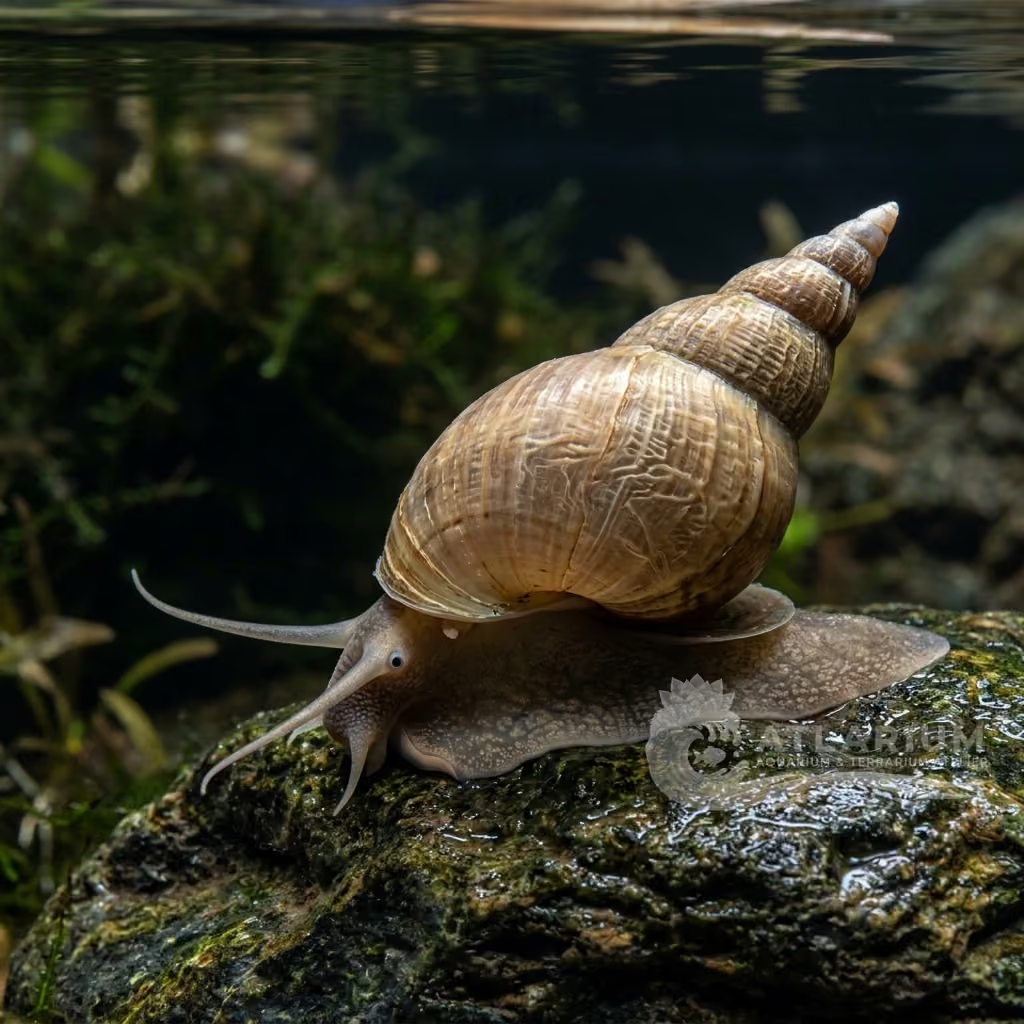
Sulcospira snail
Sulcospira testudinaria
Sulcospira snail: aquarium gastropod in the family Pachychilidae, useful for biofilm, light algae, and substrate cleanup. Geographical Origin and Habitat: The Sulcospira Snail (*Sulcospira...
Wassertemperatur
20 - 28 °C
pH-Wert
7 - 8.4
Wassertyp
Süßwasser
Wirbelloser Typ
Freshwater snail
Erwachsenengröße
4 cm
Mindestgruppe
>= 1
GH
6 - 20 dGH
KH
3 - 15 dKH
TDS
120 - 450 ppm
Ökologische Rolle
Scavenger
Kupferempfindlichkeit
High

Artbeschreibung
Geographical Origin and Habitat: The Sulcospira Snail (*Sulcospira testudinaria*) is a slender, highly adaptable freshwater gastropod natively endemic to the massive river systems, flooded agricultural paddies, and rapid mountain streams stretching across Southeast Asia, primarily Indonesia (Java, Sumatra, and Bali). Their natural biotope is defined by flowing, highly oxygenated water over muddy, sandy, or rocky substrates. They are versatile, bottom-dwelling scavengers that congregate in immense numbers where decaying organic matter accumulates.
Taxonomy: Scientifically classified within the Pachychilidae family, they are smaller, less imposing cousins to the massive *Faunus ater* (Black Devil Snail). Fully mature adults generally reach 3.0 to 4.0 centimeters (1.2-1.6 inches) in shell length. They feature a distinct, highly elongated, tapering conical shell that lacks the deep spiral grooves of a Rabbit Snail. They breathe entirely underwater via gills and possess a tough, blunted operculum (trapdoor) to seal themselves tightly against predators.
Social Behavior: They are peaceful, highly active, and exceptionally industrious substrate burrowers. While they look similar to Rabbit Snails, their behavior is much faster and more erratic. They spend their entire lives endlessly plowing through the upper layers of soft sand and mud, acting as heavy-duty biological rototillers. They use their short, highly flexible snout to rapidly dig up detritus and uneaten food. They are completely peaceful and lack any predatory instincts toward fish or dwarf shrimp.
Coloration and Sexual Dimorphism: Sexual dimorphism is visually non-existent; male and female reproductive organs are completely internal. Their coloration is designed for strict camouflage in muddy riverbeds. The elongated, mostly smooth shell is typically a deeply saturated, dark olive-green, muddy brown, or matte black, often lightly speckled with tiny brown spots (which gives them the name *testudinaria*, meaning tortoise-like). Their fleshy body and short tentacles are usually a mottled, dark yellowish-grey.

Pflege, Zucht und Mitbewohner
Tank Setup: The aquarium architecture MUST accommodate their frantic burrowing behavior. A minimum 40-liter (10-gallon) tank is required for a small group.
CRITICAL REQUIREMENT: The substrate MUST consist of soft, fine sand (at least 2 inches deep). Coarse, heavy, or jagged gravel will brutally lacerate their soft foot and completely prevent them from engaging in their natural burrowing behavior. They appreciate moderate water flow and do not require tight-fitting lids, as they rarely climb glass.
Diet and Feeding: They are ravenous, heavy-duty detritivores and opportunistic omnivores.
CRITICAL CLARIFICATION: Unlike large Rabbit Snails, *Sulcospira* are 100% reef-safe for freshwater planted tanks; they DO NOT possess the jaw structure to consume healthy, living aquarium plants. They strictly consume soft decaying plant matter, diatoms, and uneaten fish food. Their massive appetite MUST be heavily fueled daily with sinking omnivore wafers, blanched vegetables (zucchini), and spirulina powder.
Water Quality: Originating from the flowing rivers of Indonesia, they require stable tropical heat (24-28°C / 75-82°F) and highly oxygenated water. To maintain the integrity of their elongated, pointed shells, they STRICTLY require hard, alkaline water (GH 8-15, pH 7.2 - 8.2) rich in dissolved calcium. Keeping them in soft, acidic water (below pH 7.0) is absolutely forbidden; it will rapidly pit, whiten, and dissolve the tips of their shells, exposing their internal organs and causing agonizing death.
Compatibility and Tankmates: Compatibility is universally excellent due to their peaceful nature and thick, impenetrable shell. They are the perfect, harmless cleanup crew for peaceful community tanks and planted setups. They completely ignore fish and shrimp. However, they MUST NEVER be housed with aggressive, snail-eating predators (massive Loaches, large Cichlids, Pufferfish) that will relentlessly attack their vulnerable soft foot. They are excellent companions for Neocaridina shrimp and small Tetras.
Aquarium Breeding: Breeding *Sulcospira* in a standard freshwater aquarium is highly fascinating but incredibly slow. They are viviparous (livebearers). Females incubate eggs internally and give birth to fully formed, independent miniature snails. However, they reproduce extremely slowly, producing only a very small handful of young every few months. Because of this incredibly slow reproduction rate, they are highly prized and will absolutely NEVER overpopulate a tank or become a "pest."
Risks and Diseases: The absolute greatest physical risk is slow, agonizing death from massive shell degradation (pitting and whitening) caused by keeping them in soft, acidic water lacking calcium; hard, alkaline water is unconditionally mandatory. The second major risk is lethal starvation; owners fail to realize their voracious appetite and do not provide enough heavy vegetable and sinking pellet foods. Finally, keeping them on sharp gravel will cause severe, lethal lacerations to their fleshy foot.

Geografische Herkunft und Verbreitung
The Sulcospira Snail (*Sulcospira testudinaria*) is a slender, highly adaptable freshwater gastropod natively endemic to the massive river systems, flooded agricultural paddies, and rapid mountain streams stretching across Southeast Asia, primarily Indonesia (Java, Sumatra, and Bali). Their natural biotope is defined by flowing, highly oxygenated water over muddy, sandy, or rocky substrates. They are versatile, bottom-dwelling scavengers that congregate in immense numbers where decaying organic matter accumulates.
Ursprung
Tropische Ozeane und RiffeNordamerikaEuropa, Mittelmeerraum und WestasienSüd- und Südostasien

Wirbelloses Profil
- Diät
- Biofilm grazer
- Turtle snails are enthusiastic detritivores and opportunistic omnivores that spend their days slowly foraging across the substrate. They excel at cleaning up decaying plant leaves, soft algae, and leftover fish food, but will generally not harm healthy, established aquarium plants. To prevent malnourishment, their diet must be regularly supplemented with sinking algae wafers, blanched zucchini, and calcium-enriched foods.
- Ökologische Rolle
- Scavenger
- In their native riverbeds, they play an essential role in the decomposition of organic matter, recycling nutrients back into the ecosystem. Within the home aquarium, they function as an excellent clean-up crew, breaking down accumulated mulm and uneaten food that would otherwise foul the water. Their gentle burrowing also helps to slowly turn over the top layer of substrate, preventing compaction.
- Erwachsenengröße
- 4 cm
- Sprungrisiko
- Yes
- These heavy, bottom-dwelling snails possess zero ability to jump and rarely, if ever, venture above the waterline. Their dense shells keep them firmly anchored to the substrate or lower hardscape materials. While the risk of escape is practically non-existent, maintaining a secure lid is always a good practice to prevent evaporation and protect other tank inhabitants.
- Stoßempfindlichkeit
- High
- These snails favor stable, warm, and highly oxygenated water conditions typical of tropical streams. They can be quite sensitive to abrupt changes in temperature, pH, or nitrate levels, which will cause them to seal themselves tightly within their shells. A slow, methodical drip acclimation is strongly advised to help them safely transition into a newly established aquarium.
- Kalzium und Mineralien
- High
- A continuous and readily accessible source of dissolved calcium is absolutely vital to maintain the thick, textured integrity of their heavy shells. If kept in soft or acidic water, their shells will rapidly deteriorate, leading to deep pitting, structural weakness, and eventual death. The addition of crushed coral or specific invertebrate mineral blocks to the aquarium is highly recommended.
- Häutung
- Shell growth
- Like all members of the gastropod class, turtle snails do not molt or shed an exoskeleton. Instead, they continually calcify new material at the aperture of their shell, allowing for steady, uninterrupted growth throughout their lifespan. This biological process demands a consistent, lifelong supply of both environmental and dietary calcium to prevent the new shell growth from becoming brittle.
- Reproduktion
- Variable
- Sulcospira testudinaria are dioecious, meaning they have distinct male and female sexes, but they are incredibly slow breeders in captivity. Females give birth to a very small number of fully formed, live young rather than depositing massive egg clutches that plague other snail species. This extremely low reproductive rate ensures they will never become a nuisance pest in the aquarium.
- Kompatibilität & Tankkameraden
- Peaceful
- The turtle snail is a completely peaceful and defenseless invertebrate that relies entirely on its thick shell for protection. It can be safely housed with any peaceful community fish, dwarf shrimp, and other non-aggressive snails. However, they must be kept away from dedicated shell-crushers like pufferfish, large cichlids, and aggressive loaches that can easily crack their defenses.

Bildergalerie
Lizenzierte Bilder, die mit der Art oder, wenn markiert, mit dem nächstgelegenen repräsentativen Taxon verknüpft sind.

Verwandte Arten
Empfehlungen gruppiert nach nahen Verwandten, Auswahl von Begleitern und ähnlicher Betreuung.