Peacock Bass (Butterfly Cichla)
Cichla ocellaris
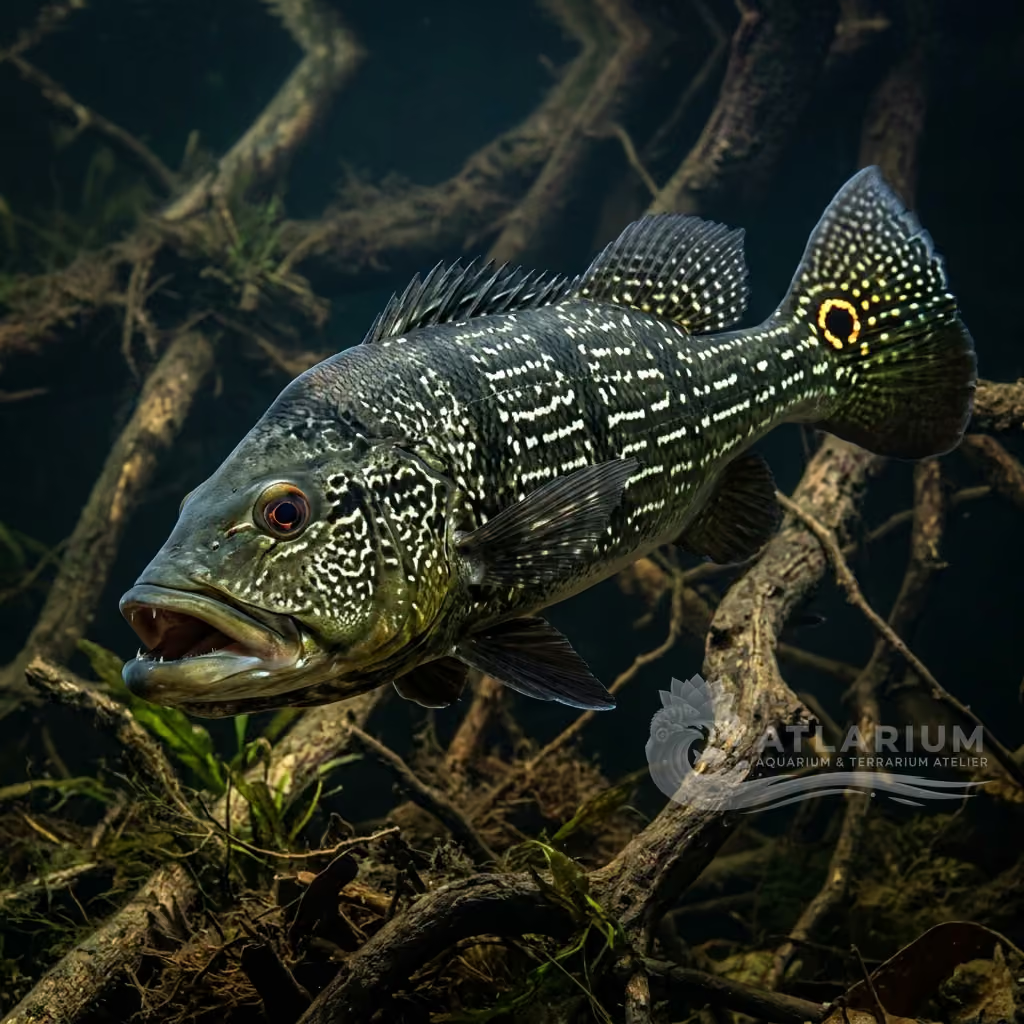
The Amazon's Explosive Pursuit Predator (60-75 cm / 24-30 inches). Despite the misleading name, it is not a bass but rather one of the largest, fastest, and most spectacular predatory Cichlids on earth. Legendary in the sport-fishing world for its violent strikes, in the aquarium, it is a stunning centerpiece. Sporting dazzling olive greens, brilliant golds, and iconic black 'peacock' eye spots, it is an incredibly active, visually-hunting predator. It reaches massive sizes, requiring 1,000+ gallon tanks, industrial filtration, and an incredibly expensive, strictly meaty diet of raw fish to prevent fatal organ failure.
24 - 29 °C
6 - 7.5
Süßwasser
Alle Ebenen
70 cm
>= 500 L
>= 1
4 - 15 dGH
2 - 7 dKH
80 - 295 ppm
125 - 461 uS/cm

Artbeschreibung

Pflege, Zucht und Mitbewohner

Geografische Herkunft und Verbreitung
Ursprung

Fischprofil
- Temperament
- Semi-aggressive
- It exhibits a strongly predatory, territorial, and moderately aggressive temperament toward other members of its own species. This cichlid is an active and explosive swimmer that requires wide open spaces to swim and perform rapid pursuits. In properly sized aquariums, it shows calm and regal behavior toward species that do not represent potential prey or territorial rivals.
- Diät
- Omnivore
- This species is an extremely efficient carnivorous and piscivorous predator that requires highly proteinaceous foods. In the aquarium, it must be fed with meaty foods such as fresh prawns, mussels, raw fish fillets, and high-quality large pellets formulated for predatory carnivores. It is advisable to avoid feeding live feeder fish to exclude the risk of transmitting parasites and diseases harmful to the tank.
- Lebenserwartung
- 10-15 years
- Erwachsenengröße
- 70 cm
- Geschlechterverhältnis
- Solitary
- Butterfly peacock bass do not strictly require a specific sex ratio in the home aquarium outside of breeding attempts. They are generally kept as solitary show fish or in small, heavily monitored groups in massive public-sized aquariums. If breeding is the goal, keeping a group of juveniles together until a natural pair forms is the best approach, as forced pairings of mature adults often lead to lethal aggression. Otherwise, sex ratio is largely an inapplicable metric for standard hobbyist setups due to their enormous tank size requirements.
- Fütterungsfrequenz
- Twice daily
- It is recommended to feed young specimens once or twice daily to support their rapid structural growth. For mature adults, the frequency should be reduced to feeding every other day or two to three times a week to avoid premature fattening of internal organs. This slowed rhythm mimics the natural hunting and prolonged digestion behavior of large predators in the wild.
- Bioload
- Extreme
- The butterfly peacock bass is a massive, predatory cichlid that produces a remarkably high biological load. Their diet consists of heavy, protein-rich foods such as whole fish, shrimp, and large pellets, which results in significant and rapid waste production. To maintain healthy water parameters, the aquarium requires heavy-duty filtration, massive biological media capacity, and frequent, large-volume water changes. They are entirely unsuitable for standard filtration systems and require specialized, high-turnover sump or canister setups.
- Fluss
- Stagnant
- It prefers slow to moderate water movement, favoring calm river bends in the wild, but requires extraordinary oxygenation and filtration. A constant and well-distributed water flow supports the elimination of waste resulting from heavy meals and ensures a healthy environment. It is essential to have monumental sumps or external canister filters to ensure water purity.
- Sprungrisiko
- Yes
- This powerful, explosive predator carries an extremely high risk of jumping out of the aquarium. When striking at surface prey, fleeing from perceived threats, or simply being startled by external shadows, they can launch their heavy bodies completely out of the water with tremendous force. A weighted, heavy-duty lid is strictly required, as standard glass or light plastic covers can easily be shattered or pushed off by a mature specimen. Ignoring this precaution almost universally results in fatal jumping incidents.
- Reproduktion
- Oviparous
- They are substrate spawners that form monogamous pairs during the breeding season in the Amazon basin. Both parents take care of preparing a smooth stone or flat surface for depositing the adhesive eggs, guarding them fiercely. Breeding in home aquariums is exceptionally rare due to the need for tanks of enormous proportions to house the breeding pair.
- Kompatibilität & Tankkameraden
- With caution
- This species is suitable only for cohabitation with monumental-sized and robust fish that cannot fit into its large protrusible mouth. Ideal tankmates include arowanas, large armored catfish, freshwater stingrays, and predatory cichlids of similar size. Any smaller fish will be considered food and swallowed instantly thanks to its lightning-fast hunting reflexes.
- Tankfüllstand
- All levels
- These dynamic predators utilize the middle to upper levels of the water column to patrol and hunt. They are highly active cruisers that require massive amounts of open swimming space to thrive. While they may rest briefly near the bottom, their predatory nature draws them upward toward the surface to scan for food and strike at top-water prey. Aquascaping should be minimal and restricted to the bottom to allow unobstructed swimming in the upper regions of the tank.

Wissenschaftliche Modelle & Parameter
Zugang zu den offiziellen wissenschaftlichen Daten der Art
- Trophäenniveau
- 4,5 ± 0,8 se
- Belastbarkeit
- Hoch (weniger als 15 Monate)
- Phylogenetische Einzigartigkeit (PD50)
- 0.5
- Bayessche Längen-Gewichts-Beziehung
- a = 0.01148, b = 3.07
- AnfälligkeitMäßige bis hohe Anfälligkeit (50 / 100)

Verwandte Arten
Empfehlungen gruppiert nach nahen Verwandten, Auswahl von Begleitern und ähnlicher Betreuung.