Zebra Tilapia / Hornet
Heterotilapia buettikoferi
The infamous 'Convict on Steroids'. A massive, 40 cm (16-inch) African colossus dressed in brilliant black and white vertical stripes. Extremely intelligent and dog-like, but famously psychopathic: as an adult, it will systematically murder tankmates regardless of their size and rip apart any aquarium decor. Strictly for isolation tanks.
Wassertemperatur
22 - 26 °C
pH-Wert
6.5 - 7.5
Wassertyp
Süßwasser
Tankfüllstand
Unten und in der Mitte
Erwachsenengröße
30 cm
Mindesttankvolumen
>= 300 L
Mindestgruppe
>= 1
GH
4 - 15 dGH
KH
2 - 7 dKH
TDS
80 - 295 ppm
Leitfähigkeit
125 - 461 uS/cm

Artbeschreibung
Geographical Origin and Habitat: Coastal rivers of West Africa (Guinea-Bissau, Liberia, Sierra Leone). Prefers large river expanses and rapid streams, swimming in neutral open waters.
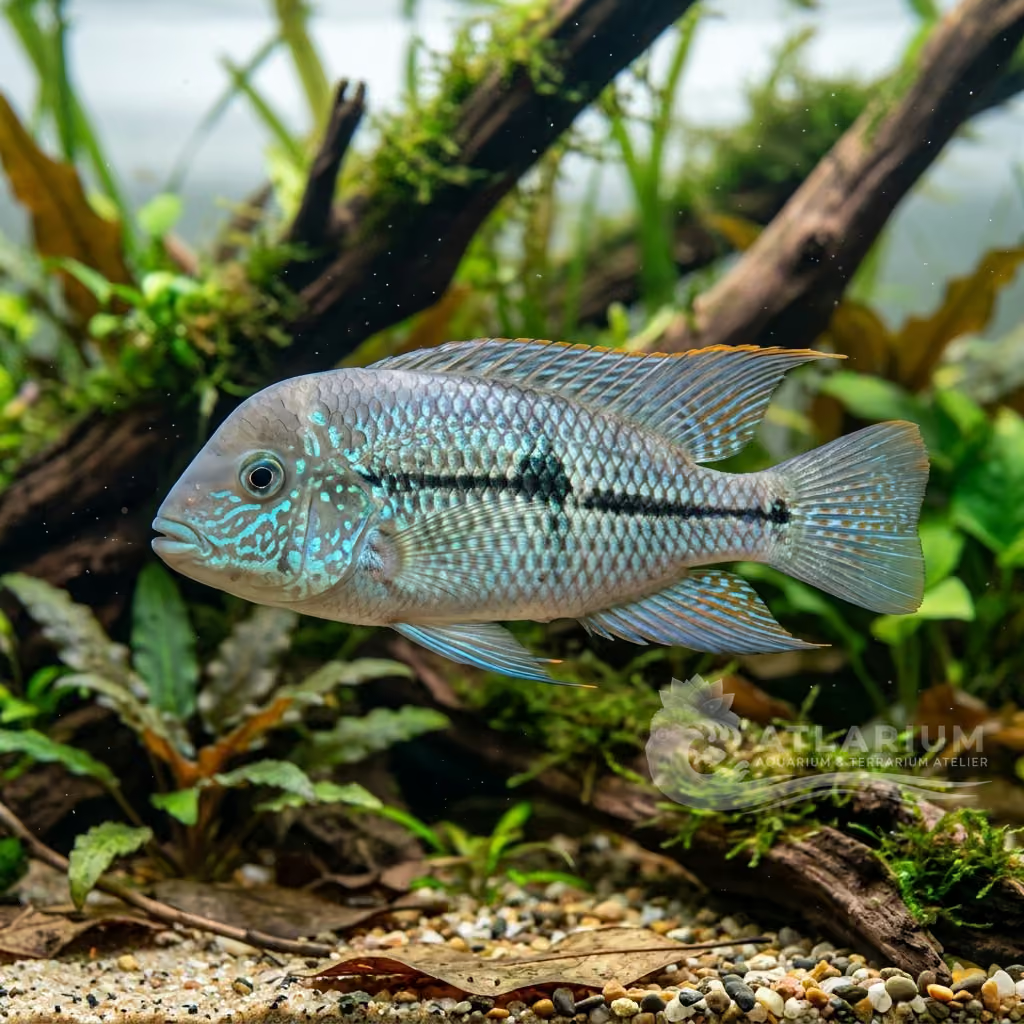
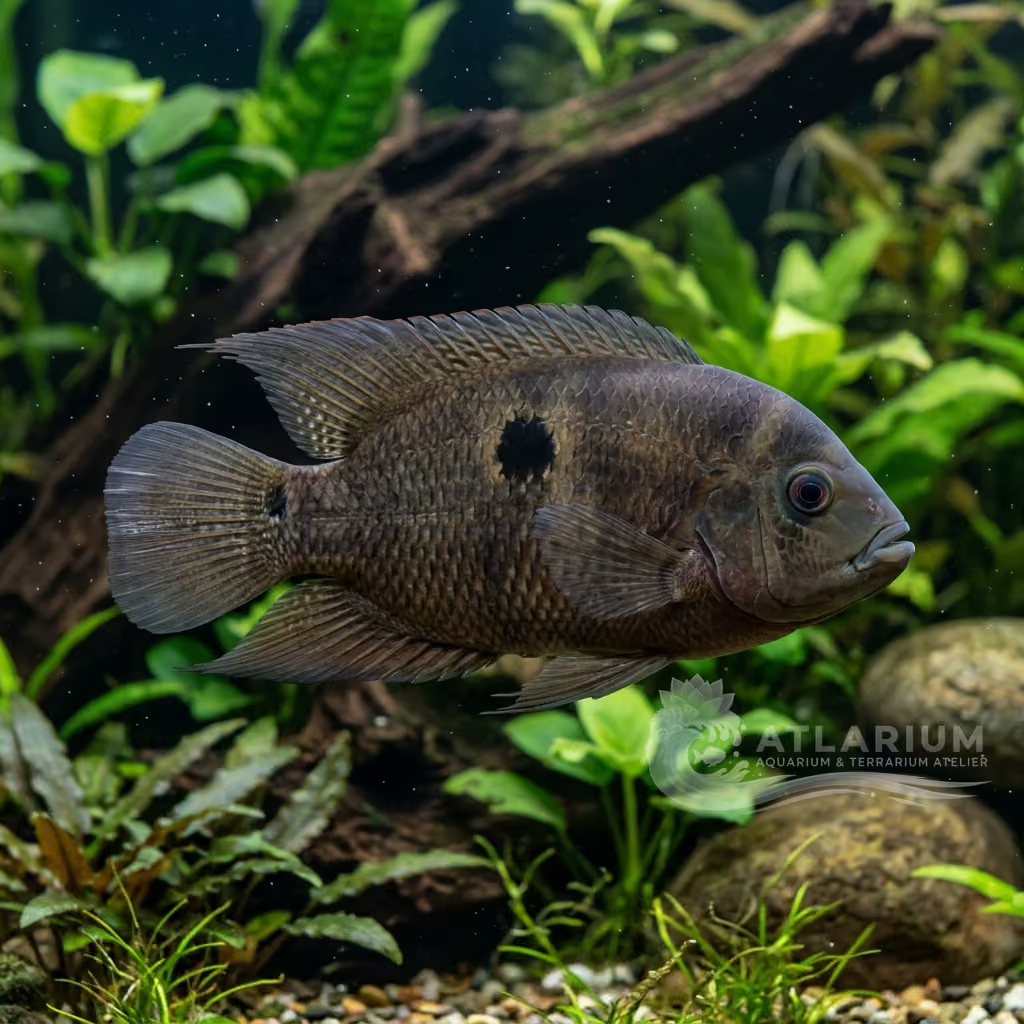
Taxonomy and Morphology: Zebra Tilapia / Hornet Cichlid (Heterotilapia buettikoferi). Formerly belonged to the genus Tilapia (food fish). It has an armored morphology, a very tall 30+ cm (12+ inches) disc, a prognathous snout and powerful rock-crushing jaws.
Social Behavior: Murderous fury and psychopathy. It is widely considered among the 5 meanest cichlids on planet Earth. Once an adult (30 cm / 12 inches), it will consider the entire tank, even 2 meters (6.5 feet) long, its exclusive property, massacring and dismembering any other fish.
Coloration and Sexual Dimorphism: Flashy: cream-white background with 8 very powerful and thick contrasting pitch-black vertical bands (Zebra). In heat the male lights up, while when scared he becomes muddy gray. Males are gigantic compared to females.

Pflege, Zucht und Mitbewohner
Aquarium Setup: Armored rocky aquarium (minimum 180 cm / 72 inches for a single specimen or pair). The rocks must not rest on the sand, but must be siliconed to the bottom glass! They are bulldozers that uproot and move 2 kg (4.5 lbs) stones for play, often breaking the aquarium glass by mistake.
Diet and Feeding: Tireless omnivore. Literally eats anything that falls into the water: whole prawns with shells, snails (which it crushes), large pleco tablets, leaves and huge pellets. Must be fed to satiety or they will devour tankmates.
Water Quality: Extremely robust. They tolerate thermal shocks, dirty water (although they suffer from extreme nitrates) and very hard values. The problem is their incredible organic load, which requires professional pond filters.
Compatibility and Cohabitation: INCOMPATIBLE WITH EVERYTHING. Do not put it with small or medium fish. The only timid hopes are 2000 liter (500 gallon) tanks with colossal monsters like Arowanas, Pacus or large Astronotus (which often end up skinned anyway).
Aquarium Breeding: Extremely prolific. Lays up to 1500 eggs on rock; the male defends the territory with blind rage, hurling himself against the glass to bite the aquarist's fingers, often chipping his mouth. Mating often ends with the female murdered if she does not have unfindable refuges.
Risks and Diseases: The unwanted monster. Thousands of these fish, bought cute at 4 cm (1.5 inches), destroy 100% of the community aquarium in 3 months and end up returned to the store (which refuses to take them back) or abandoned in rivers.

Geografische Herkunft und Verbreitung
Coastal rivers of West Africa (Guinea-Bissau, Liberia, Sierra Leone). Prefers large river expanses and rapid streams, swimming in neutral open waters.
Ursprung
Afrika und Madagaskar

Fischprofil
- Temperament
- Semi-aggressive
- It has a highly aggressive and bellicose temperament, characteristic of many large cichlids. It will not hesitate to bully or kill fish it perceives as a threat or competition. Its aggression multiplies significantly when breeding, making it a highly challenging fish for any community tank. It is strictly suited for experienced keepers prepared to manage its intense personality.
- Diät
- Omnivore
- This cichlid is a voracious omnivore with a hearty appetite, readily accepting most aquarium foods. Its diet should consist of high-quality cichlid pellets as a nutritional staple. Supplement with meaty foods like earthworms, krill, and chopped seafood to promote growth. Plant-based matter such as spirulina or blanched vegetables should also be provided to ensure a balanced diet.
- Lebenserwartung
- 10-15 years
- Erwachsenengröße
- 30 cm
- Geschlechterverhältnis
- Pair
- Males are generally larger, more colorful, and may develop a prominent nuchal hump on their head as they mature. Females are typically smaller and possess a more subdued coloration profile. They are best kept as a single compatible male-female pair in a dedicated breeding setup. Keeping multiple males in the same tank often results in fatal territorial battles.
- Fütterungsfrequenz
- Twice daily
- Adults should be fed once or twice a day with carefully portioned amounts. Juveniles benefit from more frequent feedings to support their rapid growth rate and development. Avoid overfeeding, as uneaten food will quickly foul the water quality. A varied feeding schedule ensures optimal coloration and long-term vitality.
- Bioload
- High
- This large cichlid produces a substantial bioload due to its sheer size and heavy diet. Robust, oversized filtration is absolutely necessary to handle the massive amounts of waste it generates. Frequent, large water changes are required to keep nitrate levels in check and maintain optimal health. Regular gravel vacuuming helps remove organic debris accumulating in the substrate.
- Fluss
- Stagnant
- It prefers moderate water flow that provides excellent oxygenation without overpowering the fish. Standard canister filters or sump returns usually provide adequate current for this species. It does not require highly turbulent waters like some fast-flowing river species do. Ensure there are calm resting zones among large heavy rocks and securely anchored driftwood.
- Sprungrisiko
- Yes
- While not notorious jumpers, their large size and sudden bursts of speed pose a significant risk. If startled or involved in a territorial dispute, they can easily breach the water surface with force. A heavy, secure lid is highly recommended to keep them safely inside the aquarium. Weighted covers may be necessary for fully grown, powerful adults.
- Reproduktion
- Oviparous
- They are prolific substrate spawners that become fiercely protective of their eggs and fry. A flat rock or cleared area of the substrate is usually chosen and meticulously cleaned as the spawning site. Both parents actively guard the nest and will violently attack any intruders in the tank. The fry can be fed newly hatched brine shrimp once they are free-swimming.
- Kompatibilität & Tankkameraden
- Semi-aggressive
- It is a highly aggressive and territorial species, especially as it reaches adulthood. It should only be housed with other large, robust cichlids or heavily armored catfish in a massive aquarium. Small fish will undoubtedly be viewed as food and quickly consumed. A very large tank footprint is strictly required to attempt any kind of community setup.
- Tankfüllstand
- Middle/Bottom
- This heavy cichlid utilizes all levels of the aquarium, but heavily favors the middle and bottom sections. It constantly patrols its established territory near the substrate and decor. It is known to actively dig and rearrange the layout, so plants and hardscape must be incredibly secure. Open swimming space above the territory is also appreciated.

Wissenschaftliche Modelle & Parameter
FishBase
Zugang zu den offiziellen wissenschaftlichen Daten der Art
FishBase v25.04Daten synchronisiert am: 15.06.2026
- Trophäenniveau
- 3,5 ± 0,5 se
- Belastbarkeit
- Mittel (1,4 - 4,4 Jahre)
- Phylogenetische Einzigartigkeit (PD50)
- 0.75
- Bayessche Längen-Gewichts-Beziehung
- a = 0.01445, b = 2.99
- AnfälligkeitGeringe bis mäßige Anfälligkeit (28 / 100)

Verwandte Arten
Empfehlungen gruppiert nach nahen Verwandten, Auswahl von Begleitern und ähnlicher Betreuung.