Green Line Lizard Tetra
Iguanodectes spilurus
Elongated, pencil-like tetra featuring a brilliant neon green horizontal stripe. Rapid surface swimmer that requires a tightly covered, long aquarium.
Wassertemperatur
23 - 27 °C
pH-Wert
6 - 7.5
Wassertyp
Süßwasser
Tankfüllstand
Oberfläche und Mitte
Erwachsenengröße
10 cm
Mindesttankvolumen
>= 100 L
Mindestgruppe
>= 1
GH
2 - 15 dGH
KH
1 - 7 dKH
TDS
40 - 295 ppm
Leitfähigkeit
63 - 461 uS/cm

Artbeschreibung
Geographical Origin and Habitat: Widespread across the Amazon, Orinoco, and Essequibo basins. Lives exclusively in the upper levels of slow to moderately flowing forest streams, often holding position under floating vegetation.
Taxonomy and Morphology: Highly aberrant Characin shape (10 cm). Looks like a cross between a pencilfish and a small pike: extremely elongated, cylindrical, hydrodynamic body. Mouth features multicuspid teeth for grazing plant matter or fallen insects.
Social Behavior: Schooling fish (minimum 6-8). Stays in the upper half of the tank. Extremely fast and darting swimmer. Males perform stunning parallel fin-flaring displays. Peaceful to everyone, but becomes neurotic and glass-surfs in tanks that are too short.
Coloration and Sexual Dimorphism: Silver-olive base, sliced horizontally by a brilliant, razor-thin neon green stripe, sometimes bordered by pale red/orange. Small black spot at the tail base. Males develop reddish anal/pelvic fins and microscopic mating hooks.

Pflege, Zucht und Mitbewohner
Aquarium Setup: Demands LENGTH. A school needs a 100-120+ cm long tank due to their explosive surface acceleration. TIGHT LID IS MANDATORY: they are phenomenal jumpers and will escape through tiny gaps. Floating plants (Frogbit) to dim the light and provide overhead security are highly recommended.
Diet and Feeding: Omnivore with strong Herbivorous tendencies. In nature, they eat a lot of algae and plant matter. Will eat floating flakes/pellets, but MUST be given a green component (Spirulina, blanched veg) or they will shred soft aquarium plants or duckweed.
Water Quality: Adaptable but requires clean water. Prefers acidic to neutral water: pH 5.5-7.0 (tolerates up to 7.5). Soft to medium hardness. 23-27°C. Keep nitrates low.
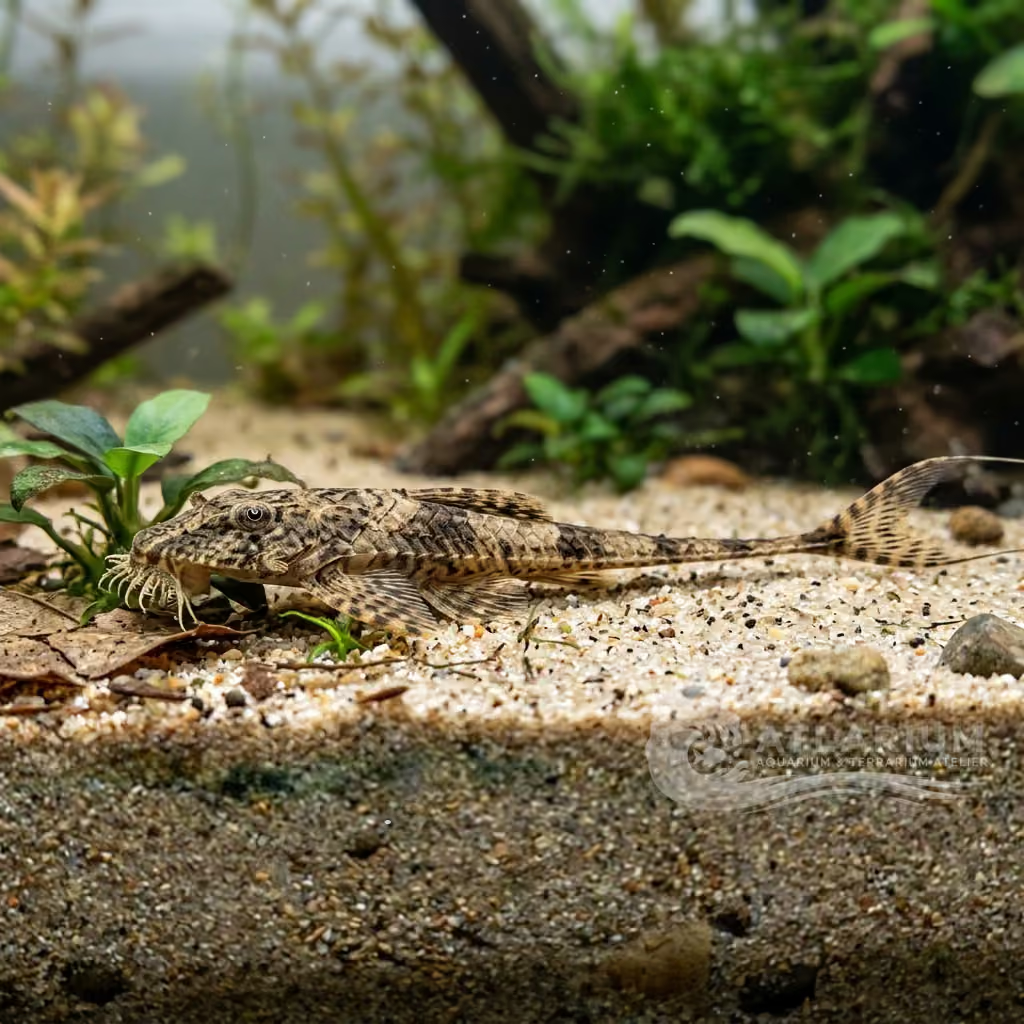
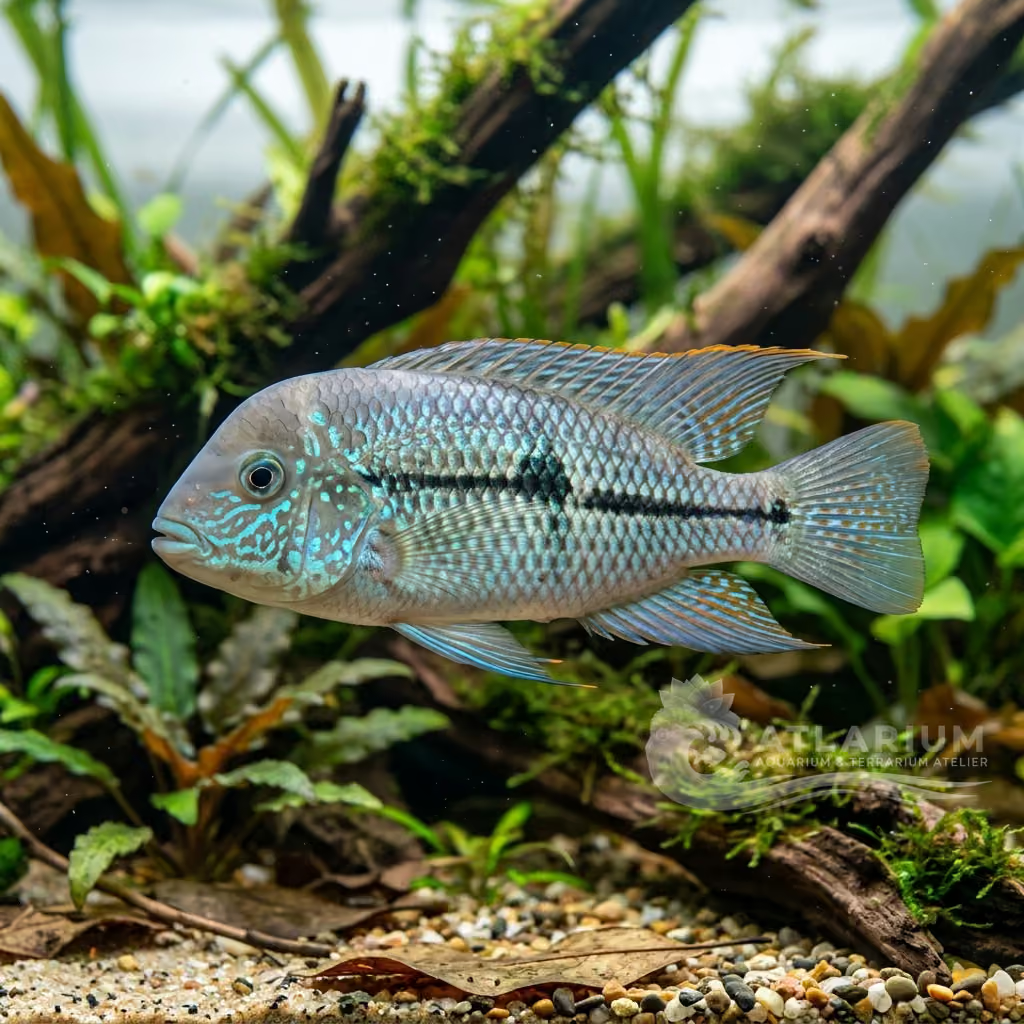
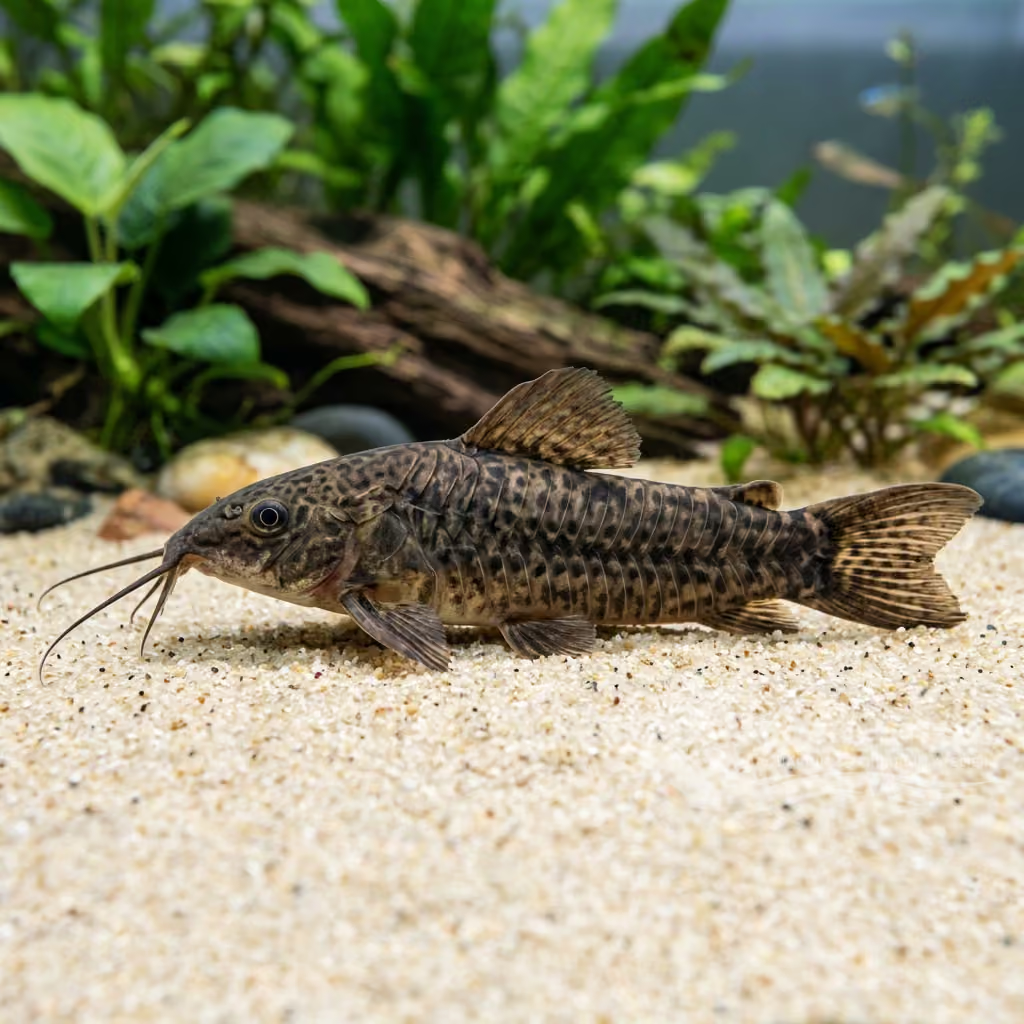
Compatibility and Cohabitation: Perfect, unusual dither fish for Amazonian communities (Corydoras, Apistogramma, Plecos). Unfit for large cichlids (Angelfish, Discus) which will view their cylindrical bodies as perfect prey.
Aquarium Breeding: Rare in home aquaria. Egg-scatterers in fine-leaved plants. Requires very soft/acidic water and immediate removal of parents.
Risks and Diseases: 1. Jumping to their death (the #1 cause of loss). 2. Fatal snout injuries from crashing into the glass when spooked in small tanks. 3. Constipation/bloat if fed an all-meat diet without greens.

Geografische Herkunft und Verbreitung
Widespread across the Amazon, Orinoco, and Essequibo basins. Lives exclusively in the upper levels of slow to moderately flowing forest streams, often holding position under floating vegetation.
Ursprung
Kosmopolitisch oder eingeführtAmazonas, Orinoco und GuayanaNordamerika

Fischprofil
- Temperament
- Semi-aggressive
- They are a timid, peaceful, and obligate schooling species. They must be kept in groups of at least eight individuals; more is always better. Without a school, they will suffer immense stress and hide away until they perish.
- Diät
- Omnivore
- They are omnivorous micro-predators that feed on small insects and zooplankton in the wild. In the aquarium, they readily take crushed flakes, micro-pellets, and frozen baby brine shrimp. High-quality dry foods supplemented with frozen foods will keep them thriving.
- Lebenserwartung
- 3-5 years
- Erwachsenengröße
- 10 cm
- Geschlechterverhältnis
- Group
- Males are slimmer and often display slightly more vivid coloration along their lateral line. Females are noticeably rounder, especially when they are carrying eggs. They are best kept in a mixed-sex group to encourage natural displays.
- Fütterungsfrequenz
- Twice daily
- Feed them tiny amounts once or twice a day, ensuring they consume it all within two minutes. They primarily feed from the water column, so slowly sinking foods are best. Take care not to overfeed, as uneaten food will spoil the water.
- Bioload
- Medium
- They produce a very low bioload, appropriate for their slender build and small size. Routine water changes and standard filtration easily handle their metabolic waste. They thrive in mature tanks where water parameters are highly stable.
- Fluss
- Stagnant
- They prefer moderate water flow that mimics the constant current of their natural streams. This flow encourages healthy exercise and tighter schooling. However, ensure there are areas of lower flow where they can rest at night.
- Sprungrisiko
- Yes
- Like their relatives, they possess a high risk of jumping, especially during maintenance or feeding. A tightly fitting lid is non-negotiable for keeping this species. Keeping floating plants can help reduce their instinct to jump.
- Reproduktion
- Oviparous
- Breeding occurs in soft, acidic water among fine-leaved plants or artificial spawning mops. They are egg scatterers and offer no parental care whatsoever. Adults will eagerly eat the eggs, so they must be removed right after spawning.
- Kompatibilität & Tankkameraden
- With caution
- This species is exceptionally peaceful and ideal for any calm community aquarium. They do well alongside small rasboras, corydoras, and other tranquil tetras. Never house them with large, boisterous, or predatory fish.
- Tankfüllstand
- Top/Middle
- They navigate the middle to upper levels of the water column almost exclusively. Provide plenty of unobstructed horizontal swimming space. Perimeter planting is ideal to provide cover without impeding their swimming lines.

Wissenschaftliche Modelle & Parameter
FishBase
Zugang zu den offiziellen wissenschaftlichen Daten der Art
FishBase v25.04Daten synchronisiert am: 15.06.2026
- Trophäenniveau
- 3,3 ± 0,4 se
- Phylogenetische Einzigartigkeit (PD50)
- 0.5039
- Bayessche Längen-Gewichts-Beziehung
- a = 0.01072, b = 3.01
- AnfälligkeitGeringe Anfälligkeit (10 / 100)

Verwandte Arten
Empfehlungen gruppiert nach nahen Verwandten, Auswahl von Begleitern und ähnlicher Betreuung.