Red-line Iguanodectes
Iguanodectes geisleri
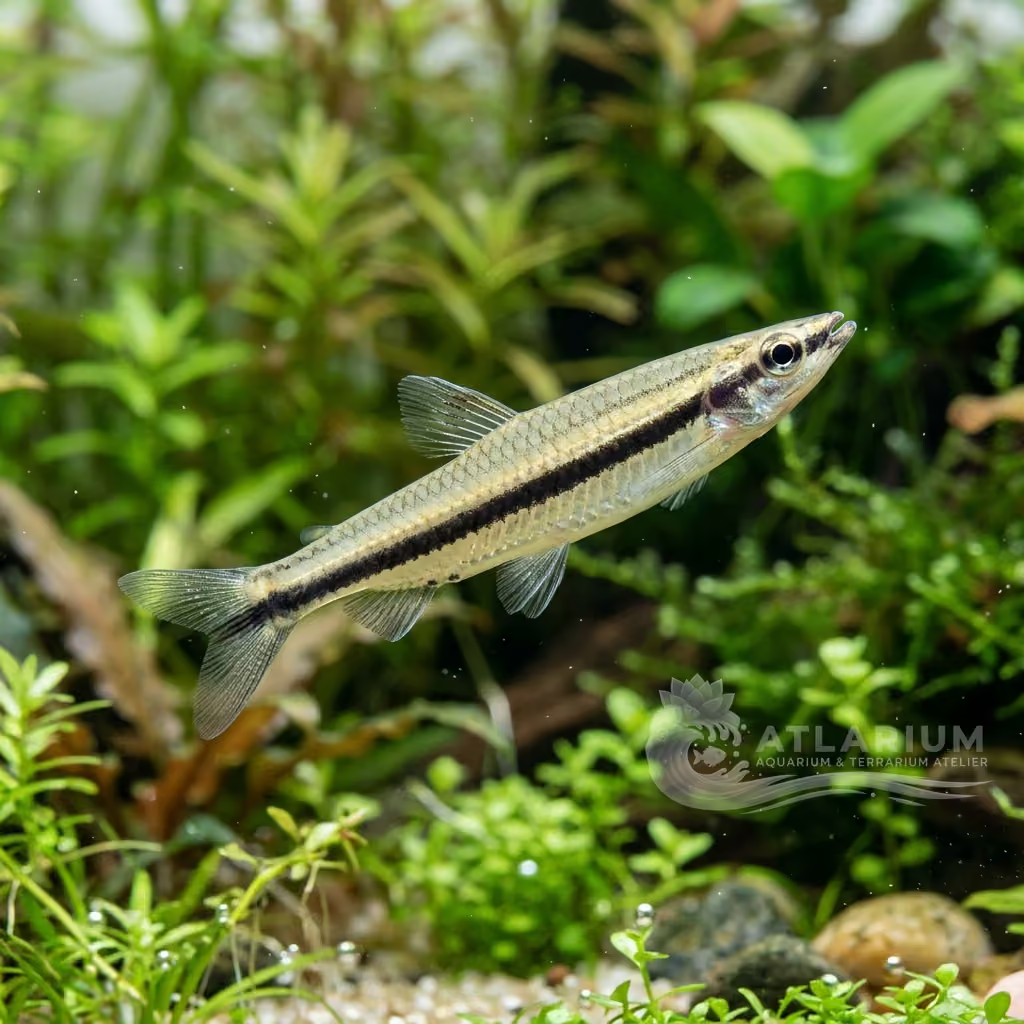
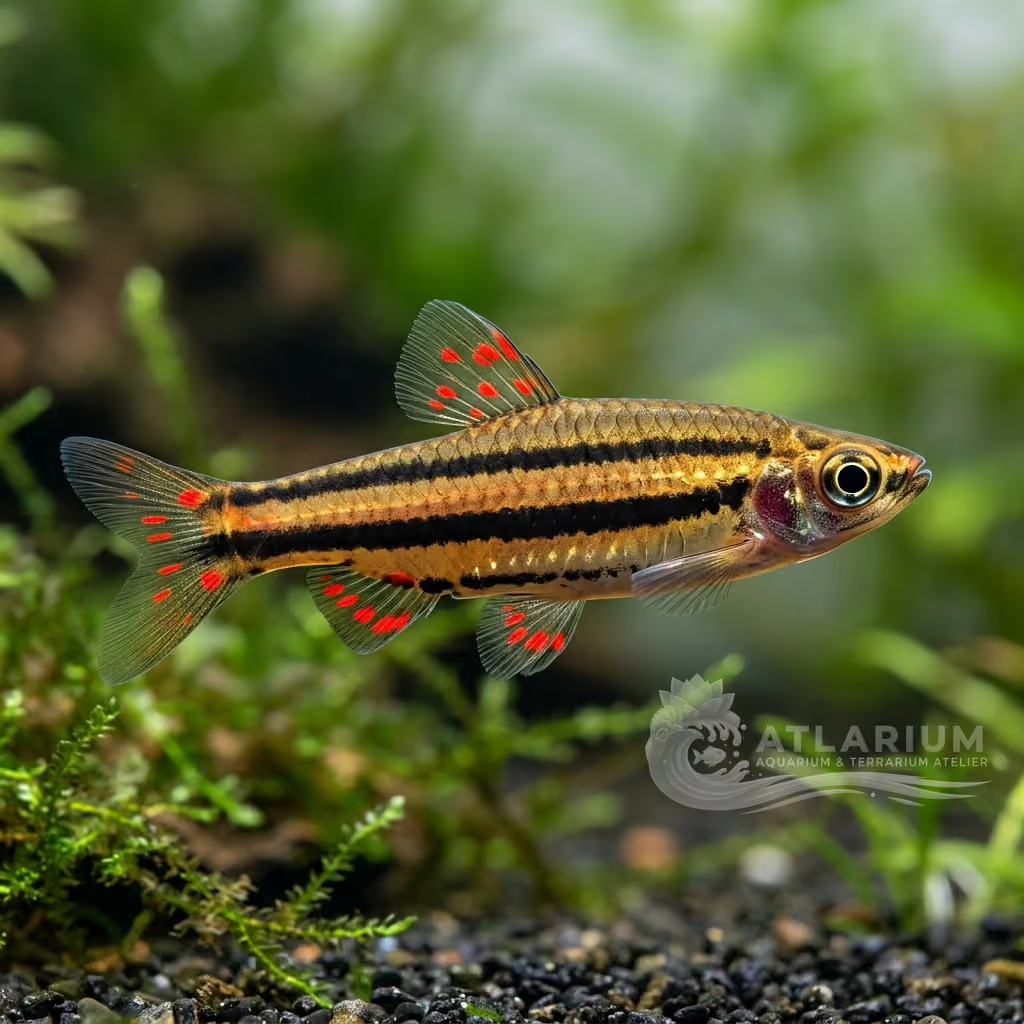
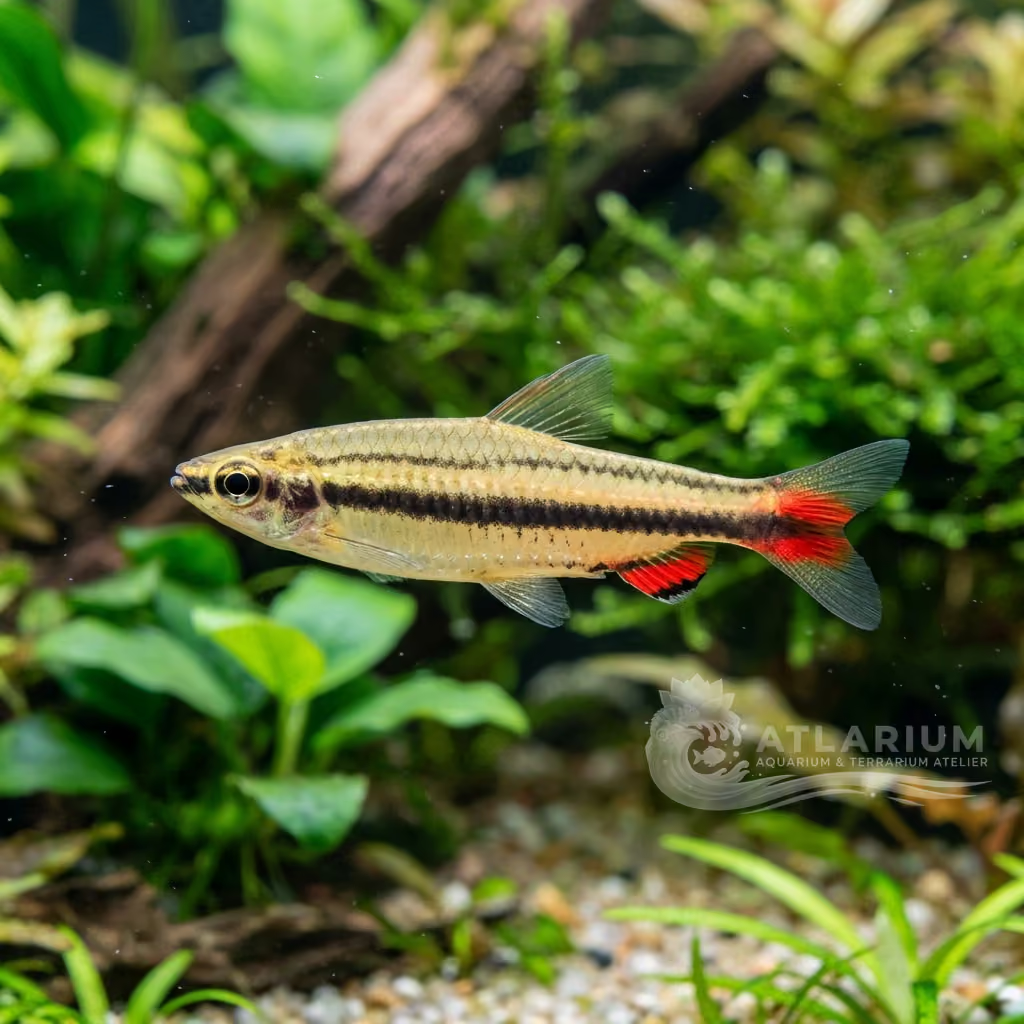
Extraordinary elongated and snake-like siluriform cypriniform. The translucent silvery body is traversed by bright golden and red horizontal neon lines.
Wassertemperatur
24 - 28 °C
pH-Wert
5.5 - 7
Wassertyp
Süßwasser
Tankfüllstand
Mitte
Erwachsenengröße
5,5 cm
Mindesttankvolumen
>= 100 L
Mindestgruppe
>= 1
GH
1 - 10 dGH
KH
1 - 6 dKH
TDS
25 - 210 ppm
Leitfähigkeit
39 - 328 uS/cm

Artbeschreibung
Geographical Origin and Habitat: Lives predominantly in the central Amazon basin (Brazil) and the Orinoco. Found along the sandy banks of slow-flowing rivers surrounded by the jungle, feeding in moderately clear waters.
Taxonomy and Morphology: Geisler's Iguanodectes (Iguanodectes geisleri). Deviates slightly from H. adujai due to its smaller size. It maintains the iconic spindle-shaped (siluriform) body, thin, indicating its gregarious habits as a fast swimmer.
Social Behavior: An extraordinarily peaceful community tankmate. Iguanodectes is a genus that loves to station united in the current, swimming gently in unison. Must be kept absolutely in a school (minimum 8-10 individuals).
Coloration and Sexual Dimorphism: The color is faint and pearly-greenish. A distinct golden/yellow lateral stripe runs along the flank, subtly marked with black underneath. It lacks the fiery red stripe of the adujai. Barely perceptible dimorphism (males are thinner).

Pflege, Zucht und Mitbewohner
Aquarium Setup: Rectangular aquarium developed in length (min. 80-100 cm / 32-40 inches). Needs an open layout: heavily planted edges with Vallisneria or giant Eleocharis, keeping the central channel totally clear for swimming.
Diet and Feeding: In nature they supplement insects, diatoms, and plant residues falling from the fronds. In the tank it will accept small crushed flakes, but must be kept vigorous by administering daphnia, live or freeze-dried brine shrimp, and small fruit flies on the surface.
Water Quality: Typically Amazonian fish, requires excellent and oxygenated conditions, as well as fresh/soft and acidic water (pH around 6.0). A slight surface water movement will keep it brisk and healthy.
Compatibility and Cohabitation: A "gentle" guest. Completely disinterested in territorial disputes. Coexists with moderately peaceful South American Cichlids (Geophagus, Uaru, Mesonauta), Loricariids (Farlowella, Sturisoma), and other large tetras.
Aquarium Breeding: Exceptional event. Free scatterers that only become active when stimulated by simulations of the rainy season (lowering of temp. and hardness, with recreated rain). Parental care is absent.
Risks and Diseases: Sensitive to nitrate-accumulating bacteria that quickly deteriorate the edges of the long anal fin. They are skilled jumpers: it is imperative to keep the aquarium completely closed with a lid.

Geografische Herkunft und Verbreitung
Lives predominantly in the central Amazon basin (Brazil) and the Orinoco. Found along the sandy banks of slow-flowing rivers surrounded by the jungle, feeding in moderately clear waters.
Ursprung
Tropische Ozeane und RiffeAmazonas, Orinoco und Guayana

Fischprofil
- Temperament
- Semi-aggressive
- They are peaceful, active schooling fish that require the company of their own kind. A minimum group of eight individuals is mandatory to prevent extreme shyness and stress. When kept in a proper school, they display fascinating coordinated swimming behaviors.
- Diät
- Omnivore
- Their diet in the wild consists of tiny invertebrates and zooplankton. In captivity, they eagerly consume crushed flakes, micro-pellets, and frozen cyclops or baby brine shrimp. A varied diet of appropriately sized foods is essential for their health.
- Lebenserwartung
- 3-5 years
- Erwachsenengröße
- 5.5 cm
- Geschlechterverhältnis
- School
- Males are noticeably more slender and often exhibit a brighter horizontal stripe. Females have a fuller, more rounded abdomen, which becomes obvious when they are gravid. Maintaining a large mixed-sex school is highly recommended.
- Fütterungsfrequenz
- Twice daily
- Provide food in small pinches once or twice a day to prevent waste accumulation. They eat from the water column, so slow-sinking micro-pellets are ideal. Remove any uneaten food after a few minutes.
- Bioload
- Low
- This small, streamlined tetra has a minimal bioload that is easily managed. They produce very little waste, making them perfect for well-planted community aquariums. Standard filtration and a regular maintenance schedule are more than sufficient.
- Fluss
- Stagnant
- They enjoy moderate water flow that replicates the moving waters of their native streams. This flow keeps them active and encourages their natural schooling formation. Avoid extremely turbulent flow that could exhaust these small fish.
- Sprungrisiko
- Yes
- Like their close relatives, they are exceptional jumpers, particularly during feeding or when startled. A completely sealed aquarium lid is required to prevent them from jumping out. Floating plants can act as a natural barrier to deter jumping.
- Reproduktion
- Oviparous
- Breeding them requires soft, slightly acidic water and a tank furnished with fine-leaved plants or spawning mops. They scatter their eggs in the vegetation and do not look after them. The breeding group must be removed after spawning to protect the eggs.
- Kompatibilität & Tankkameraden
- With caution
- They are extremely peaceful and coexist wonderfully with other small, non-aggressive species. Excellent tank mates include small rasboras, pencilfish, and peaceful bottom-dwelling catfish. They will easily be outcompeted for food by aggressive or fast-eating tank mates.
- Tankfüllstand
- Middle
- They occupy the middle to upper levels of the aquarium, swimming constantly in the open water. The aquarium should have plenty of unobstructed swimming space spanning the entire length. Periphery planting is appreciated as it offers quick hiding spots.

Wissenschaftliche Modelle & Parameter
FishBase
Zugang zu den offiziellen wissenschaftlichen Daten der Art
FishBase v25.04Daten synchronisiert am: 15.06.2026
- Trophäenniveau
- 3,2 ± 0,4 se
- Phylogenetische Einzigartigkeit (PD50)
- 0.5039
- Bayessche Längen-Gewichts-Beziehung
- a = 0.00589, b = 3.18
- AnfälligkeitGeringe Anfälligkeit (10 / 100)

Verwandte Arten
Empfehlungen gruppiert nach nahen Verwandten, Auswahl von Begleitern und ähnlicher Betreuung.