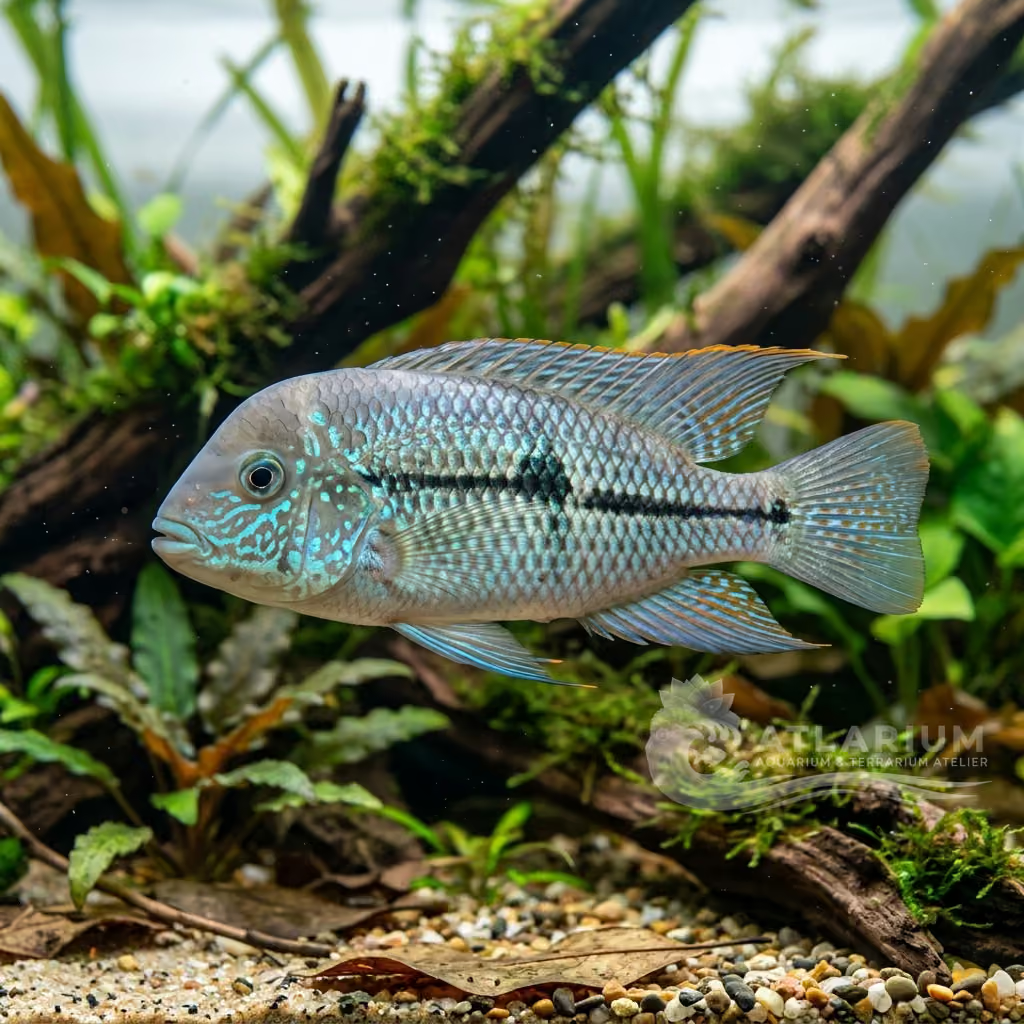
Threadfin rainbowfish
Iriatherina werneri
The Threadfin Rainbowfish inhabits slow-moving streams and swamps in Australia and New Guinea. It needs a heavily planted aquarium with fine-leafed plants, driftwood, gentle flow, and small foods.
Wassertemperatur
23 - 28 °C
pH-Wert
5.5 - 7
Wassertyp
Süßwasser
Tankfüllstand
Mitte
Erwachsenengröße
5 cm
Mindesttankvolumen
60 L
Mindestgruppe
>= 1
GH
1 - 10 dGH
KH
1 - 5 dKH
TDS
25 - 200 ppm
Leitfähigkeit
39 - 313 uS/cm

Artbeschreibung
Geographical Origin and Habitat: Iriatherina werneri, the threadfin rainbowfish, is native to northern Australia (including the Northern Territory and Queensland) and southern New Guinea. It inhabits slow-moving freshwater streams, swamps, lagoons, and billabongs. These habitats are characterized by warm, clear water with dense patches of aquatic vegetation, reeds, and submerged tree roots.
Taxonomy and Morphology: A member of the family Melanotaeniidae, this small fish reaches a maximum size of 4 to 5 centimeters (1.5 to 2 inches). It features a slender, laterally compressed body and a tiny, upward-pointing mouth with an exceptionally narrow throat, which limits the size of prey it can consume. Males display highly extended dorsal and anal fins.
Social Behavior: It is a peaceful, schooling species that should be kept in groups of at least 8 to 10 individuals. Having a good mix of males and females encourages the males to display their stunning fins in non-violent, competitive courtship dances, raising and lowering their fins rapidly to attract mates.
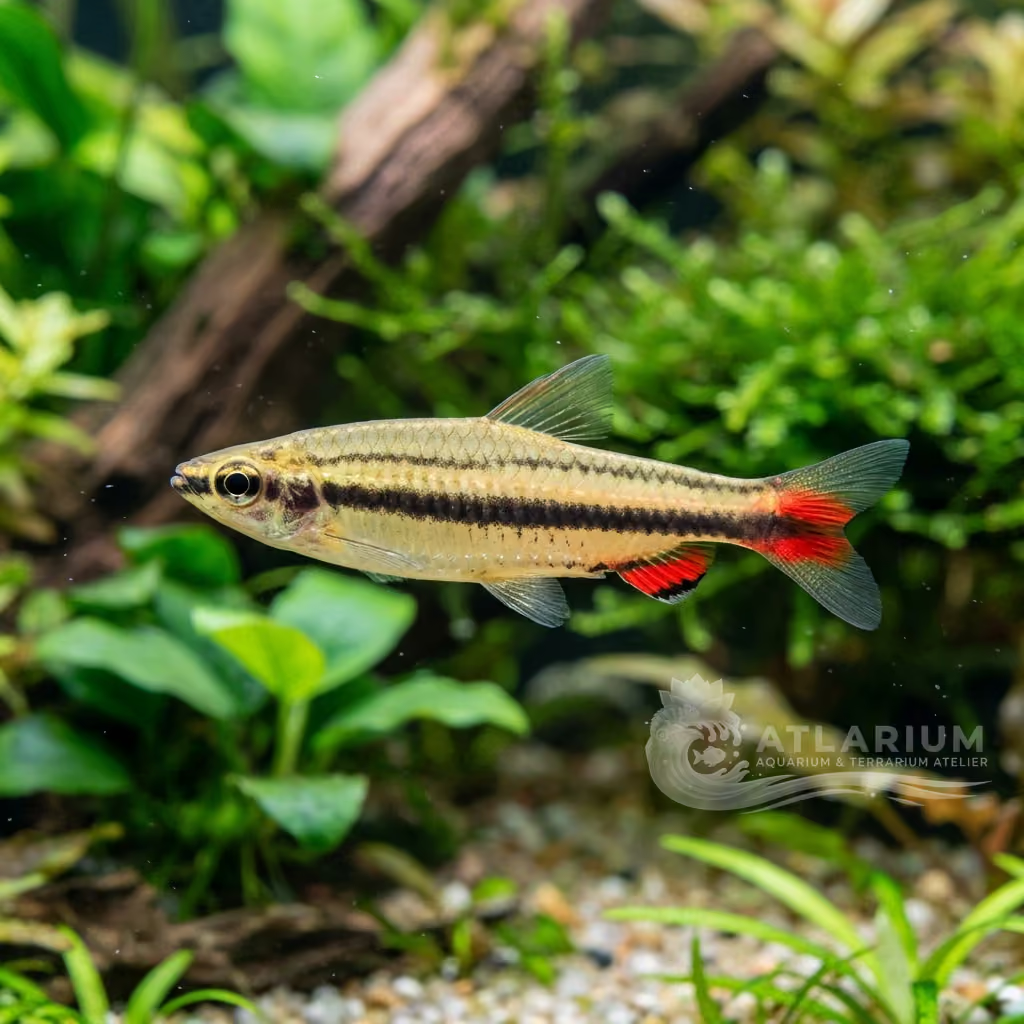
Coloration and Sexual Dimorphism: The body has a yellowish-silver coloration with blue-green iridescence. Sexual dimorphism is extreme; males possess long, dramatic, thread-like black, red, and yellow filaments on their second dorsal, anal, and pelvic fins, and a fan-like first dorsal fin. Females are smaller with short, translucent fins and plain coloration.

Pflege, Zucht und Mitbewohner
Aquarium Setup: A minimum tank size of 15 gallons (60 liters) is required. The aquarium should be heavily planted with fine-leafed plants (such as Java moss, Cabomba, or hornwort) and decorated with driftwood to mimic their natural habitat. Water movement should be gentle, and floating plants are recommended to diffuse the light.
Diet and Feeding: Due to their extremely small throats, they must be fed microscopic foods. Live or frozen baby brine shrimp (nauplii), rotifers, cyclops, daphnia, and finely crushed flakes or powdered foods are essential. They feed in the middle and upper water columns and rarely eat food that falls to the substrate.
Water Quality: Requires stable, clean water. Maintain a temperature range of 23 to 28 °C (73 to 82 °F), pH between 6.0 and 7.5, and a moderate water hardness of 5 to 12 dGH. They are sensitive to elevated nitrate levels and sudden water parameter shifts; perform small, frequent water changes.
Compatibility and Cohabitation: Best housed in a dedicated species tank or with very peaceful, small tankmates like neon tetras, galaxy rasboras, honey gouramis, and dwarf shrimp. Never keep them with fin-nipping fish (such as tiger barbs) or large, aggressive species that will easily damage their delicate fins.
Aquarium Breeding: Egg-scatterers that spawn daily among plants or spawning mops. Females lay a few eggs at a time, which are fertilized by the male. Parents do not tend to the eggs and may eat them. Move the plants containing eggs to a separate rearing tank. Rearing the tiny fry requires infusoria or liquid foods.
Risks and Diseases: The primary risk is starvation if fed standard-sized fish foods. They are also susceptible to fin rot and ich (white spot) under stressful conditions or poor water quality. Ensuring a low-flow environment and highly targeted feeding prevents most health issues.

Geografische Herkunft und Verbreitung
Iriatherina werneri, the threadfin rainbowfish, is native to northern Australia (including the Northern Territory and Queensland) and southern New Guinea. It inhabits slow-moving freshwater streams, swamps, lagoons, and billabongs. These habitats are characterized by warm, clear water with dense patches of aquatic vegetation, reeds, and submerged tree roots.
Ursprung
Tropische Ozeane und RiffeAfrika und MadagaskarAustralien, Neuguinea und Ozeanien

Fischprofil
- Temperament
- Semi-aggressive
- Their temperament is incredibly peaceful, timid, and highly social. They must be kept in a school of at least eight individuals to thrive. The males spend much of their time engaging in harmless, visually stunning mock battles.
- Diät
- Omnivore
- They are micro-predators with exceptionally narrow throats, making feeding a unique challenge. Their diet must consist of very fine foods like powdered flakes, infusoria, and newly hatched brine shrimp. Granules or standard pellets are generally too large for them to swallow.
- Lebenserwartung
- 2-5 years
- Erwachsenengröße
- 5 cm
- Geschlechterverhältnis
- Group
- Males are spectacular, sporting elongated, thread-like dorsal and anal fins, and brighter body colors. Females are much plainer, lacking the extended finnage, and have a more yellowish tint. A mixed group is necessary to witness the males' elaborate fin-flicking displays.
- Fütterungsfrequenz
- Twice daily
- Feed them tiny amounts multiple times a day to accommodate their small digestive tracts. Ensure the food stays suspended in the water column as they rarely feed from the substrate. Careful observation is needed to ensure they are getting enough to eat.
- Bioload
- Low
- These tiny rainbowfish produce an incredibly low bioload. Standard biological filtration is perfectly adequate to manage their minimal waste. However, they are sensitive to poor water quality, so weekly maintenance is essential.
- Fluss
- Stagnant
- They prefer gentle to moderate water movement that mimics slow-flowing streams. Harsh currents will easily exhaust them and damage their delicate fins. Sponge filters or baffled HOB filters are ideal choices.
- Sprungrisiko
- Yes
- They possess a high risk of jumping, especially during the intricate sparring displays of the males. A tight-fitting lid is absolutely required. Floating vegetation can significantly reduce their tendency to jump.
- Reproduktion
- Oviparous
- They are continuous egg scatterers, depositing a few eggs daily among fine-leaved plants or spawning mops. They do not guard the eggs and may consume them if not well-fed. Raising the microscopic fry requires infusoria and pristine water conditions.
- Kompatibilität & Tankkameraden
- Peaceful
- They are extremely peaceful but very delicate due to their long, trailing fins and small mouths. They should only be housed with very small, docile nano fish and peaceful invertebrates. Never keep them with fin-nippers, fast eaters, or large fish.
- Tankfüllstand
- Middle
- They primarily occupy the middle and upper levels of the aquarium. The tank should be densely planted, particularly with tall background and floating plants to provide security. They also need open space in the top-middle for the males to display.

Wissenschaftliche Modelle & Parameter
FishBase
Zugang zu den offiziellen wissenschaftlichen Daten der Art
FishBase v25.04Daten synchronisiert am: 15.06.2026
- Trophäenniveau
- 2,8 ± 0,34 se
- Belastbarkeit
- Hoch (weniger als 15 Monate)
- Phylogenetische Einzigartigkeit (PD50)
- 1
- Bayessche Längen-Gewichts-Beziehung
- a = 0.01122, b = 3.04
- AnfälligkeitGeringe Anfälligkeit (10 / 100)

Bildergalerie
Lizenzierte Bilder, die mit der Art oder, wenn markiert, mit dem nächstgelegenen repräsentativen Taxon verknüpft sind.

Verwandte Arten
Empfehlungen gruppiert nach nahen Verwandten, Auswahl von Begleitern und ähnlicher Betreuung.