Lamontichthys
Lamontichthys filamentosus
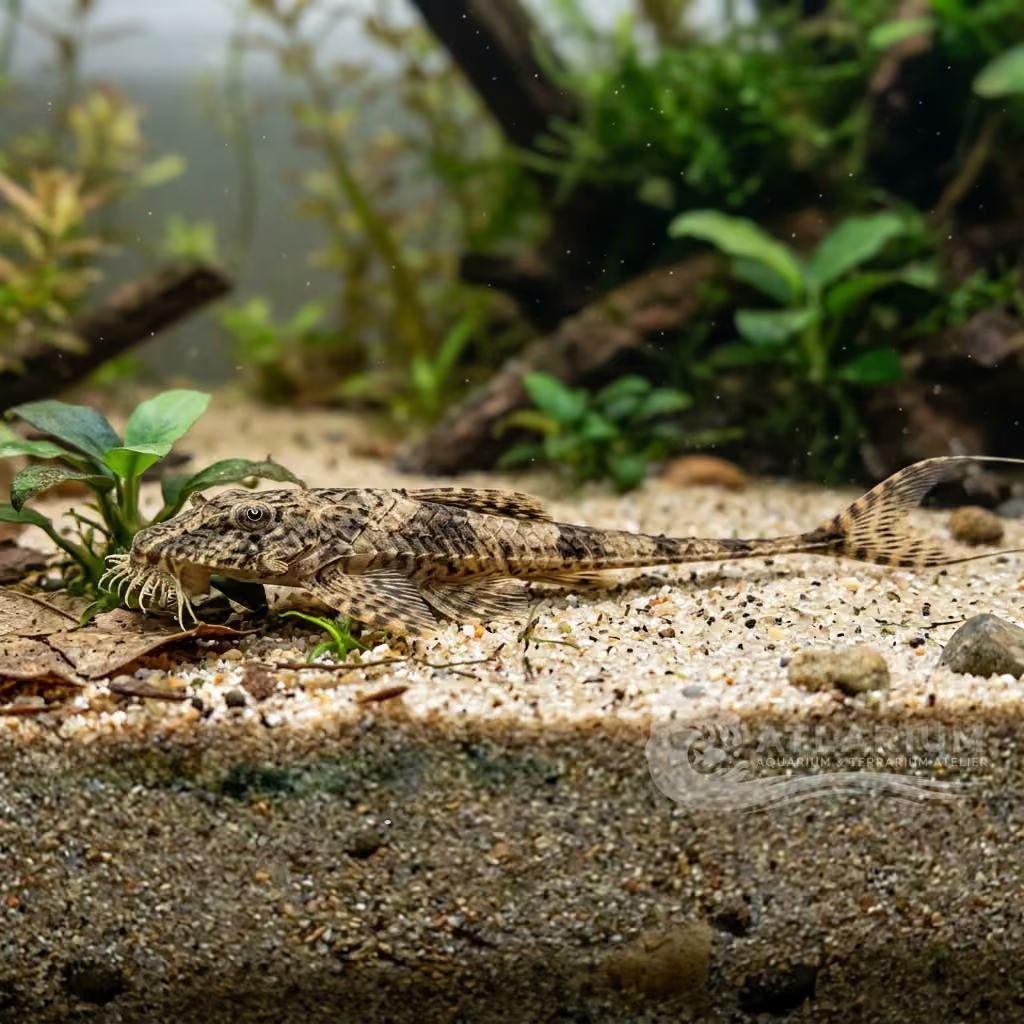
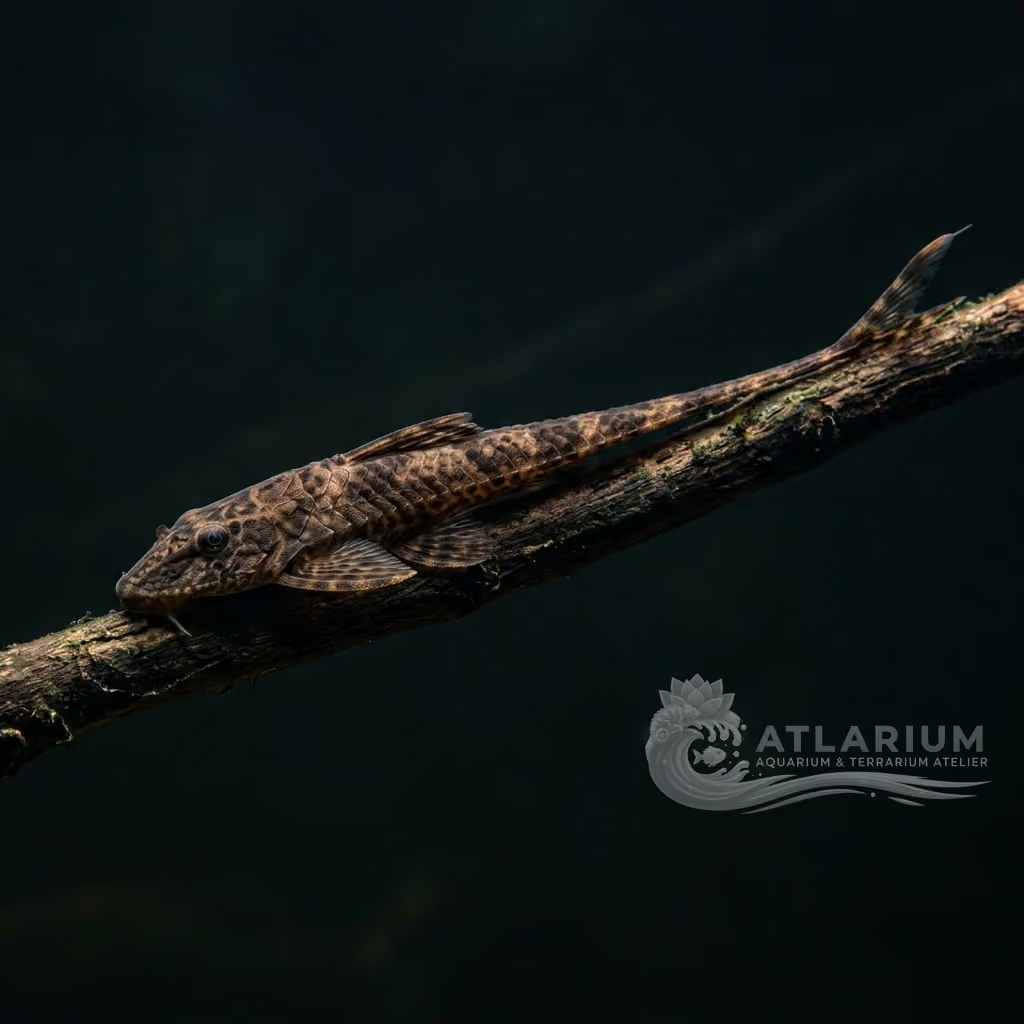
A silvery 15-20 cm algae-eater known for the extensive filaments of its fins. Lives in turbulent and pristine waters, constantly feeds on biofilm. Very rare.
Wassertemperatur
24 - 28 °C
pH-Wert
6 - 7.2
Wassertyp
Süßwasser
Tankfüllstand
Unten
Erwachsenengröße
20 cm
Mindesttankvolumen
>= 180 L
Mindestgruppe
>= 1
GH
1 - 10 dGH
KH
1 - 5 dKH
TDS
25 - 200 ppm
Leitfähigkeit
39 - 313 uS/cm

Artbeschreibung
Geographical Origin and Habitat: Upper Amazon Basin (Peru, Brazil). Lives in rivers (White and Clear water) characterized by very strong currents, sandy/pebbly bottoms and extremely high oxygen saturation.
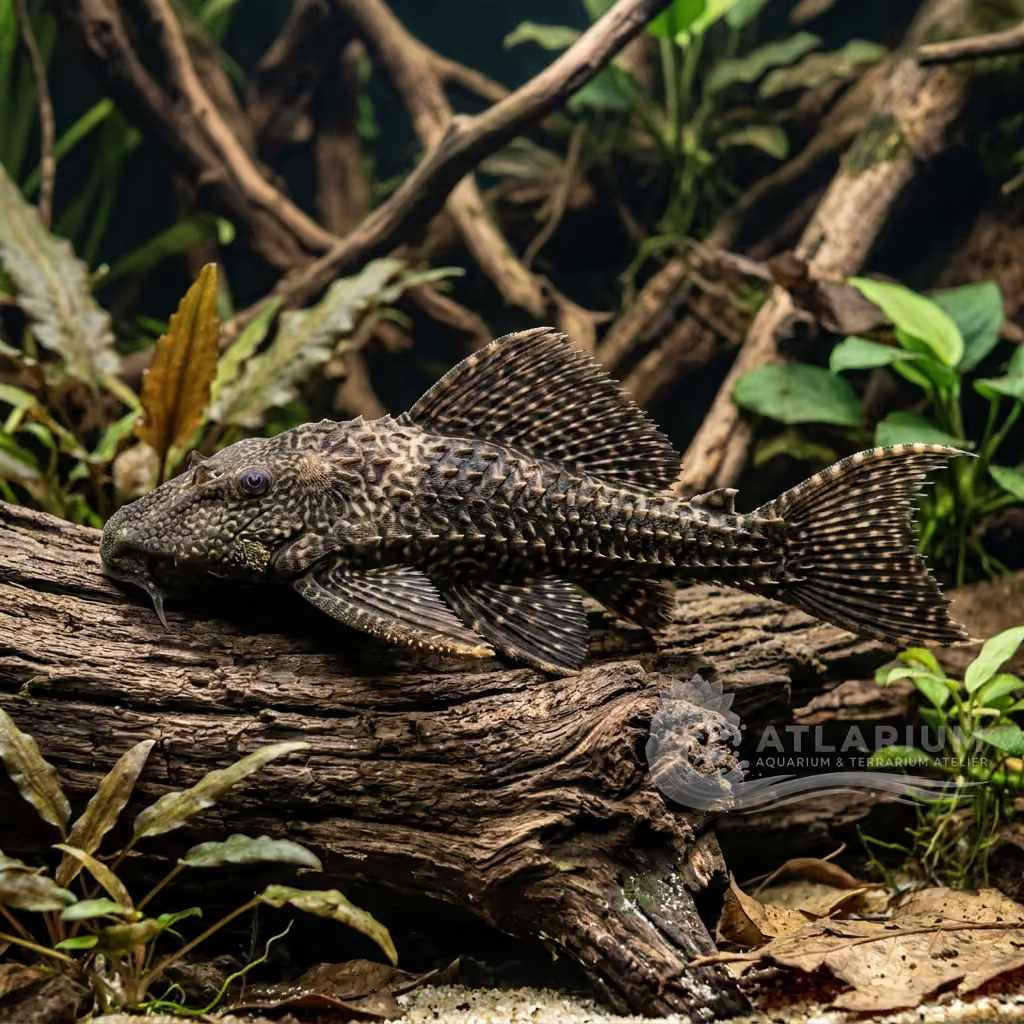
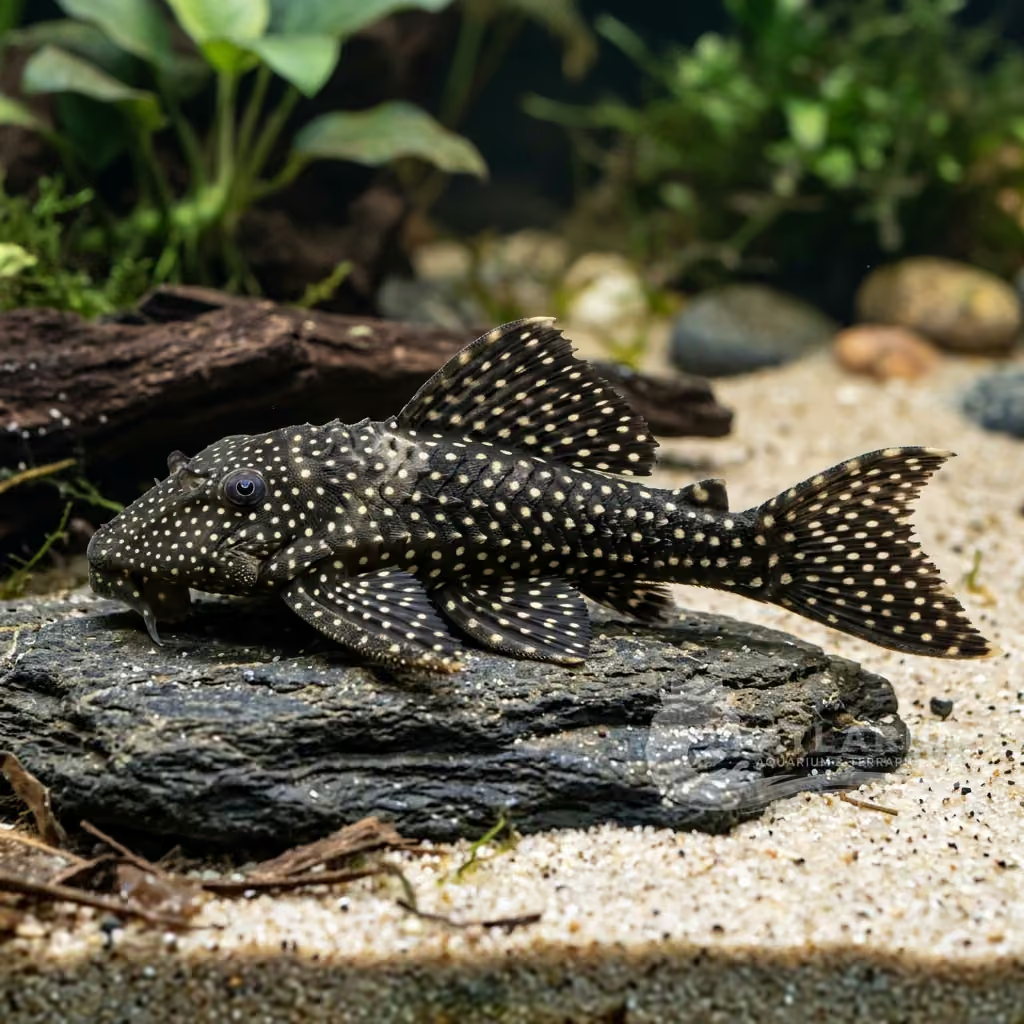
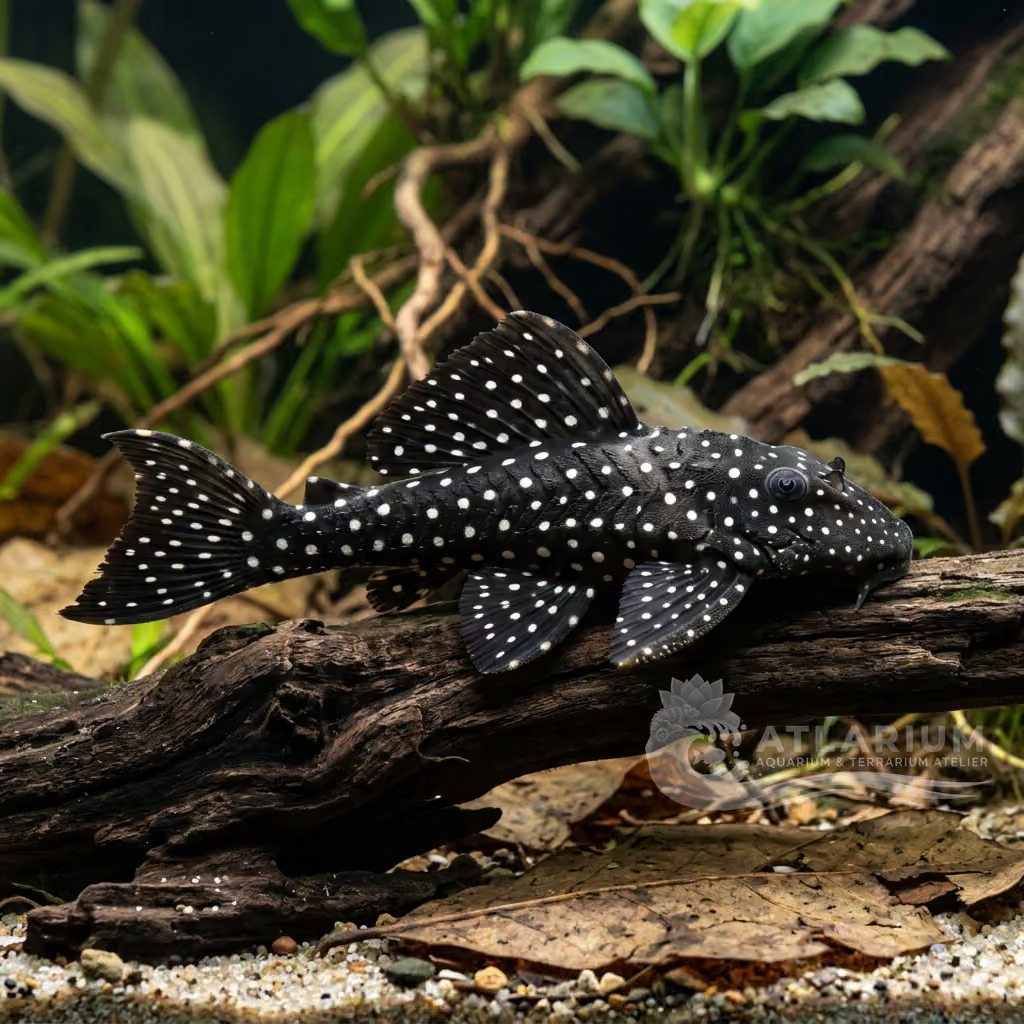
Taxonomy and Morphology: Filament Loricaria (Lamontichthys filamentosus). Amazing Loricariid with a flattened and extremely elongated body. The main feature are the first rays of the pectoral, dorsal and upper caudal lobe fins which extend into very long filaments.
Social Behavior: Totally inoffensive and peaceful, both with other species and with conspecifics. Unlike many loricariids, it is not a cave-dwelling loner but prefers to station in groups on woods lapped by the strong current.
Coloration and Sexual Dimorphism: Light sand-brown base (perfect camouflage on the bottom), often with a delicate checkered or vermiculated pattern along the back. Sexually mature males develop odontodes ("fuzz") on the margins of the head.

Pflege, Zucht und Mitbewohner
Aquarium Setup: Stream fish tank (River manifold/Hillstream). Very fine sand, rounded river pebbles, sunken smooth woods. One or more oversized wavemakers (continuous uni-directional flow) are categorically required.
Diet and Feeding: Herbivore/Aufwuchs gleaner. In nature it scrapes the organic film (algae and micro-organisms) on stones exposed to the current. Provide sinking spirulina tablets, raw zucchini, and occasionally frozen bloodworms.
Water Quality: Extreme cleanliness requirements. Intolerant to ammonia and nitrites (tolerates nitrates only < 10ppm). The water must be hyper-oxygenated; a drop of O2 in the tank will be fatal in a few hours.
Compatibility and Cohabitation: Do not insert in generic community aquariums. Excellent with current-loving fish such as small stream Characins, Corydoras (e.g. arcuatus), and Sturisoma. Avoid aggressive cichlids that would damage its delicate filaments.
Aquarium Breeding: Rare. Open surface spawners: they lay a cluster of large amber eggs on smooth surfaces (e.g. glass or large leaves) in a strong current. The male takes care of ventilation until hatching.
Risks and Diseases: Starvation due to immature tank. Often imported wild, they struggle to recognize industrial feeds. If placed in sterile tanks without a consolidated algal carpet on the glass, they will starve within a month.

Geografische Herkunft und Verbreitung
Upper Amazon Basin (Peru, Brazil). Lives in rivers (White and Clear water) characterized by very strong currents, sandy/pebbly bottoms and extremely high oxygen saturation.
Ursprung
Tropische Ozeane und RiffeAmazonas, Orinoco und Guayana

Fischprofil
- Temperament
- Semi-aggressive
- This is a profoundly peaceful and somewhat reclusive fish that focuses entirely on grazing. They are highly sensitive to deteriorating water conditions and aggressive tank mates. Providing a specialized riverine setup will ensure they remain active, healthy, and visible.
- Diät
- Omnivore
- They are specialized aufwuchs grazers that feed heavily on biofilm, algae, and micro-organisms growing on hard surfaces. In the aquarium, their diet must be supplemented with high-quality algae wafers, spirulina, and fresh blanched vegetables. Occasional meaty foods like frozen bloodworms can be offered sparingly as a treat.
- Lebenserwartung
- 8-10 years
- Erwachsenengröße
- 20 cm
- Geschlechterverhältnis
- Specific M:F ratio
- They are generally indifferent to conspecifics, and sex ratios are not a major concern in the aquarium. Multiple individuals can be kept together if the tank is large enough to provide ample grazing surfaces. Territorial disputes between males are incredibly rare and mostly involve harmless displays.
- Fütterungsfrequenz
- Twice daily
- Because they are continuous grazers, food should always be available in the form of biofilm or sinking wafers. Dropping food into the tank daily, preferably just before lights out, aligns with their nocturnal foraging habits. Ensure they are actively eating, as they can easily starve in newly established aquariums.
- Bioload
- Medium
- This large loricariid produces a significantly high bioload due to its constant grazing and robust metabolism. Powerful biological filtration and excellent oxygenation are absolutely crucial to handle their waste. Frequent, substantial water changes are required to keep nitrates low and maintain their health.
- Fluss
- Stagnant
- Originating from fast-flowing rivers, they absolutely demand a very strong current and highly oxygenated water. Powerheads or specialized river-manifold systems are required to replicate their natural habitat. Inadequate flow will quickly lead to lethargy, stress, and eventual death.
- Sprungrisiko
- Yes
- They are not natural jumpers, but their powerful tails can propel them out of open tanks if startled. Strong water flow can also occasionally cause splashing or accidental breaches of the water surface. A secure lid is recommended to ensure they stay safely contained.
- Reproduktion
- Oviparous
- Breeding in captivity is exceptionally rare and poorly documented for this specific species. They are presumed to be cave or crevice spawners like many related loricariids. Replicating highly specific seasonal changes in water temperature and flow is likely necessary to induce spawning.
- Kompatibilität & Tankkameraden
- Community
- They are remarkably peaceful towards other fish and ignore most tank mates completely. They can be kept with medium to large peaceful community fish that appreciate similar high-flow environments. Avoid highly aggressive bottom-dwellers that might compete with them for grazing territory.
- Tankfüllstand
- Bottom
- They are almost exclusively bottom-dwellers that cling to rocks, driftwood, and the aquarium glass. They rely heavily on their specialized suckermouths to anchor themselves in strong currents. They will rarely, if ever, venture into the open middle or upper water column.

Wissenschaftliche Modelle & Parameter
FishBase
Zugang zu den offiziellen wissenschaftlichen Daten der Art
FishBase v25.04Daten synchronisiert am: 15.06.2026
- Trophäenniveau
- 2,5 ± 0,2 se
- Belastbarkeit
- Mittel (1,4 - 4,4 Jahre)
- Phylogenetische Einzigartigkeit (PD50)
- 0.5156
- Bayessche Längen-Gewichts-Beziehung
- a = 0.00398, b = 3.11
- AnfälligkeitGeringe Anfälligkeit (10 / 100)

Verwandte Arten
Empfehlungen gruppiert nach nahen Verwandten, Auswahl von Begleitern und ähnlicher Betreuung.