Whiptail Catfish
Rineloricaria lanceolata
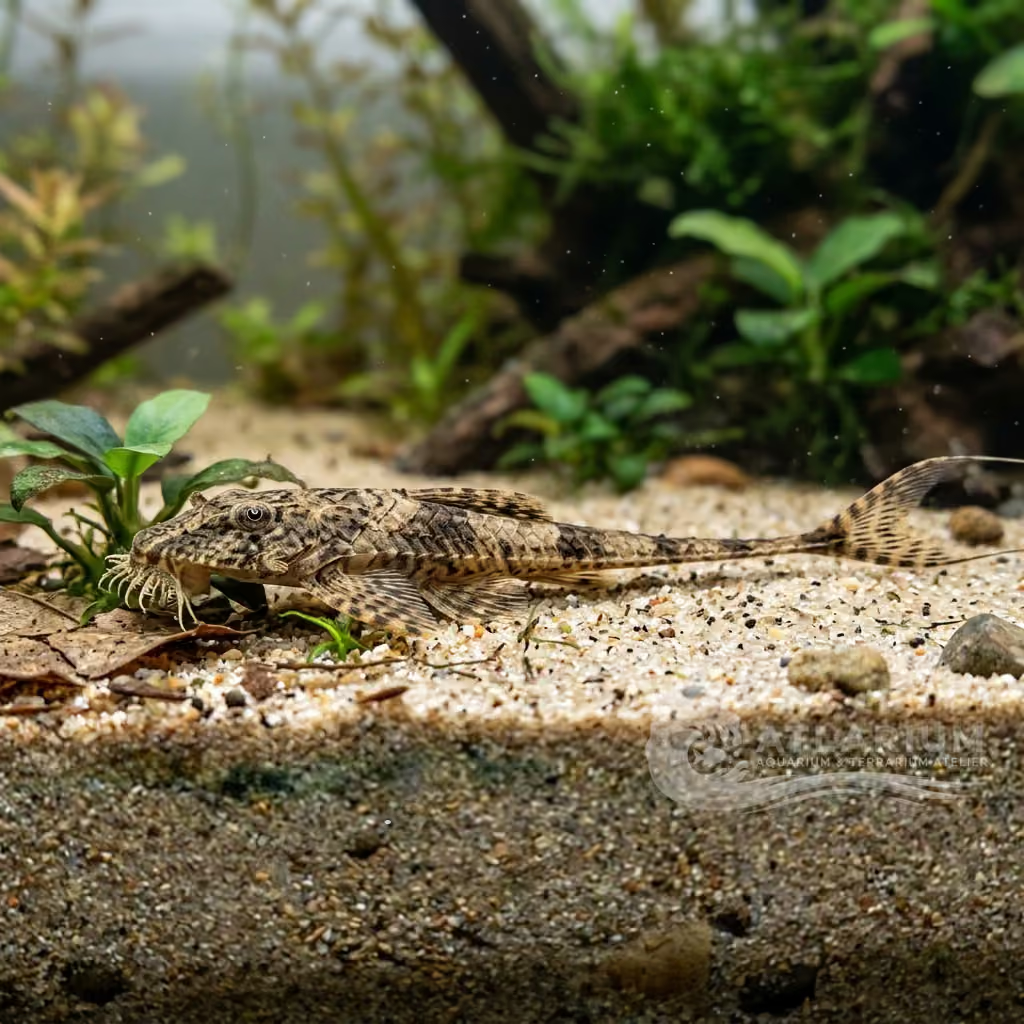
An ultra-elongated, flat body like a whip — up to 12 cm — with a filamentous tail that tapers to nothing. Perfect camouflage: on a sandy bottom it becomes virtually invisible. An algae and detritus eater, it sifts the substrate with meticulous efficiency. The male cares for eggs attached to his lower lip. Perfect for planted tanks as a discreet 'cleaning crew.'
Wassertemperatur
22 - 28 °C
pH-Wert
6 - 7.5
Wassertyp
Süßwasser
Tankfüllstand
Unten
Erwachsenengröße
12 cm
Mindesttankvolumen
>= 60 L
Mindestgruppe
>= 1
GH
2 - 15 dGH
KH
1 - 7 dKH
TDS
40 - 295 ppm
Leitfähigkeit
63 - 461 uS/cm

Artbeschreibung
Geographical Origin and Habitat: Features one of the widest distributions among Whiptail Catfish in South America (Peru, Ecuador, Bolivia, Brazil). Inhabits a vast array of micro-habitats, congregating in very shallow forest streams loaded with decaying leaf litter (both blackwater and clearwater) and submerged roots.
Taxonomy and Morphology: An elegant, heavily armored, completely flattened "Whiptail" Loricariid. Very similar to R. fallax, but distinguished by a slightly stockier anterior profile, different banding patterns, and the typical absence of the extremely long trailing caudal filament (or having a much shorter one). Reaches 10-13 cm (4-5 inches).
Social Behavior: Lazy, shy, and a master of cryptic camouflage. During the day, it remains totally motionless for hours, adhering perfectly flat to dead wood or resting on leaf-littered sand. Extremely tolerant of all fish, thriving either solitary or in small, peacefully hierarchical groups.
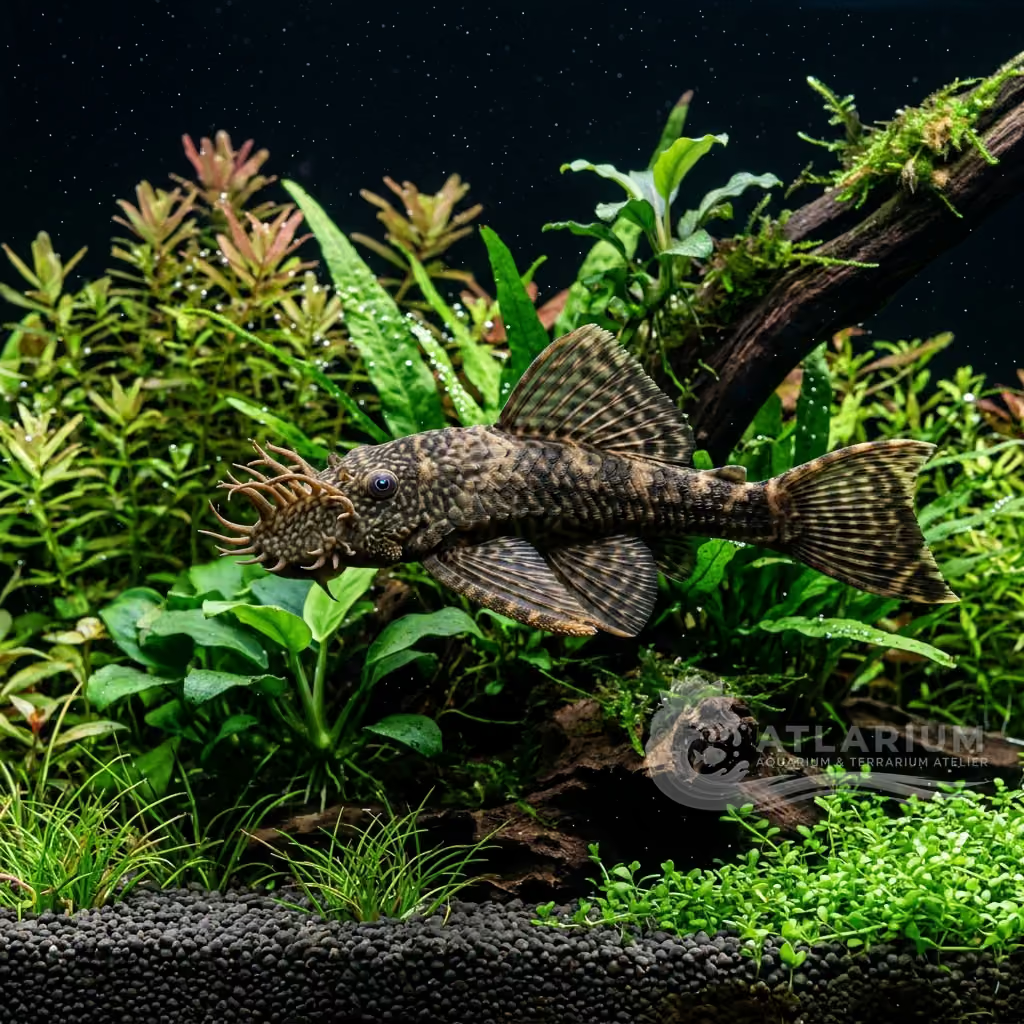
Coloration and Sexual Dimorphism: Frequently sold in the stunning "Chocolate" or "Red" morph (likely a captive-bred line-breeding result, featuring solid brick-red coloration). The wild form is a rich, dark chocolate brown broken by irregular light chevron bands and darkly veiled fins. Mature males sprout prominent, bristly odontodes ("facial hair") along their cheeks and pectoral fins, whereas females remain completely smooth.

Pflege, Zucht und Mitbewohner
Aquarium Setup: Exclusively requires fine sandy substrates to protect its bare belly and allow it to slightly bury itself if threatened. The core hardscape must consist of smooth driftwood, tangled thin branches, and heavy layers of dead Oak/Catappa leaves. Narrow, blind-ended ceramic tubes are absolutely indispensable for hiding and breeding.
Diet and Feeding: Omnivore/Detritivore with a strong carnivorous preference, fatally mislabeled as a pure algae eater. Demands sinking high-protein foods. It scours the sand in the dark for bloodworms, mosquito larvae, mysis, brine shrimp, and meaty carnivore pellets. Vegetables are accepted occasionally but must never form the staple diet.
Water Quality: Highly adaptable due to its immense geographic range in the wild. Tolerates broad parameters: pH 6.0 - 7.5, GH 2-15. Standard tropical temperatures of 24-28°C (75-82°F). Appreciates moderate flow and filtration, but critically requires the sandy bottom to be kept free of anoxic dead zones and heavy bacterial rot.
Compatibility and Cohabitation: A docile and delicate creature. Perfect tankmates for small South American Tetras, Pencilfish, Dwarf Cichlids (Rams, Apistogramma), and peaceful Corydoras. STRICTLY avoid housing with large, aggressive Botia (Loaches) or massive Plecos, who will instantly bully them and steal all their sinking protein foods.
Aquarium Breeding: An excellent beginner species for breeding Loricariids. The male claims a narrow, tight-fitting ceramic breeding tube, meticulously cleaning it. A female deposits dozens of bright emerald-green eggs inside, which the male then fanatically guards and fans for about 10 days. The tube (with the male inside) can be gently transferred to a fry tank prior to hatching.
Risks and Diseases: 1. Starvation: the classic beginner mistake is buying them to "eat algae"; without frozen or meaty sinking foods, they wither and die. 2. Ventral necrosis: sharp quartz gravel will slice their bare, flat bellies open, leading to fatal bacterial infections. 3. Nipped fins: fast, nippy tankmates (like Tiger Barbs) will constantly harass their delicate tail fins.

Geografische Herkunft und Verbreitung
Features one of the widest distributions among Whiptail Catfish in South America (Peru, Ecuador, Bolivia, Brazil). Inhabits a vast array of micro-habitats, congregating in very shallow forest streams loaded with decaying leaf litter (both blackwater and clearwater) and submerged roots.
Ursprung
Selektive Züchtung und SortenExtra-Amazonas-Südamerika

Fischprofil
- Temperament
- Peaceful
- They are docile, shy, and masters of camouflage. They rely on their twig-like appearance to hide from predators. They are a fascinating and peaceful addition to any suitable community aquarium.
- Diät
- Detritivore
- They are omnivorous scavengers that feed on biofilm, algae, and small organisms. Their diet should be heavily supplemented with sinking algae wafers, blanched vegetables, and sinking meaty pellets. They will not survive on leftover fish food alone.
- Lebenserwartung
- 8-12 years
- Erwachsenengröße
- 12 cm
- Geschlechterverhältnis
- Flexible
- They are peaceful towards each other and can be kept in small groups. Males generally develop small 'whiskers' or odontodes along the sides of their head and pectoral fins. A group allows for natural pairing to occur without aggression.
- Fütterungsfrequenz
- Twice daily
- Feed them once a day, preferably in the evening just before lights out. They are largely nocturnal and prefer to graze in peace. Dropping food near their favorite hiding spots ensures they get their share.
- Bioload
- Low to Medium
- The Whiptail Catfish produces a relatively low bioload for a bottom-dweller. They are sensitive to poor water quality, so standard, efficient filtration is required. Weekly water changes are necessary to keep the substrate clean and nitrates low.
- Fluss
- Moderate
- They prefer moderate water flow with excellent oxygenation. They naturally inhabit streams and rivers with sandy bottoms. A canister filter providing steady but gentle flow is ideal for their well-being.
- Sprungrisiko
- No
- Reproduktion
- Oviparous
- Breeding occurs in narrow PVC pipes or bamboo caves. The male assumes all parental duties, guarding and fanning the eggs until they hatch. The fry are delicate and require immediate access to soft algae and specialized micro-foods.
- Kompatibilität & Tankkameraden
- Peaceful
- They are extremely peaceful and somewhat timid. They make excellent tank mates for small tetras, rasboras, and peaceful dwarf cichlids. Aggressive bottom-dwellers should be avoided as they will easily outcompete them for food.
- Tankfüllstand
- Bottom
- They are exclusive bottom-dwellers that spend their time resting on the substrate, driftwood, or broad leaves. They require a soft sand substrate to prevent damage to their delicate barbels. They only swim into the water column if severely stressed.

Wissenschaftliche Modelle & Parameter
FishBase
Zugang zu den offiziellen wissenschaftlichen Daten der Art
FishBase v25.04Daten synchronisiert am: 15.06.2026
- Trophäenniveau
- 2,6 ± 0,2 se
- Phylogenetische Einzigartigkeit (PD50)
- 0.5
- Bayessche Längen-Gewichts-Beziehung
- a = 0.00331, b = 3.15
- AnfälligkeitGeringe Anfälligkeit (10 / 100)

Bildergalerie
Lizenzierte Bilder, die mit der Art oder, wenn markiert, mit dem nächstgelegenen repräsentativen Taxon verknüpft sind.

Verwandte Arten
Empfehlungen gruppiert nach nahen Verwandten, Auswahl von Begleitern und ähnlicher Betreuung.