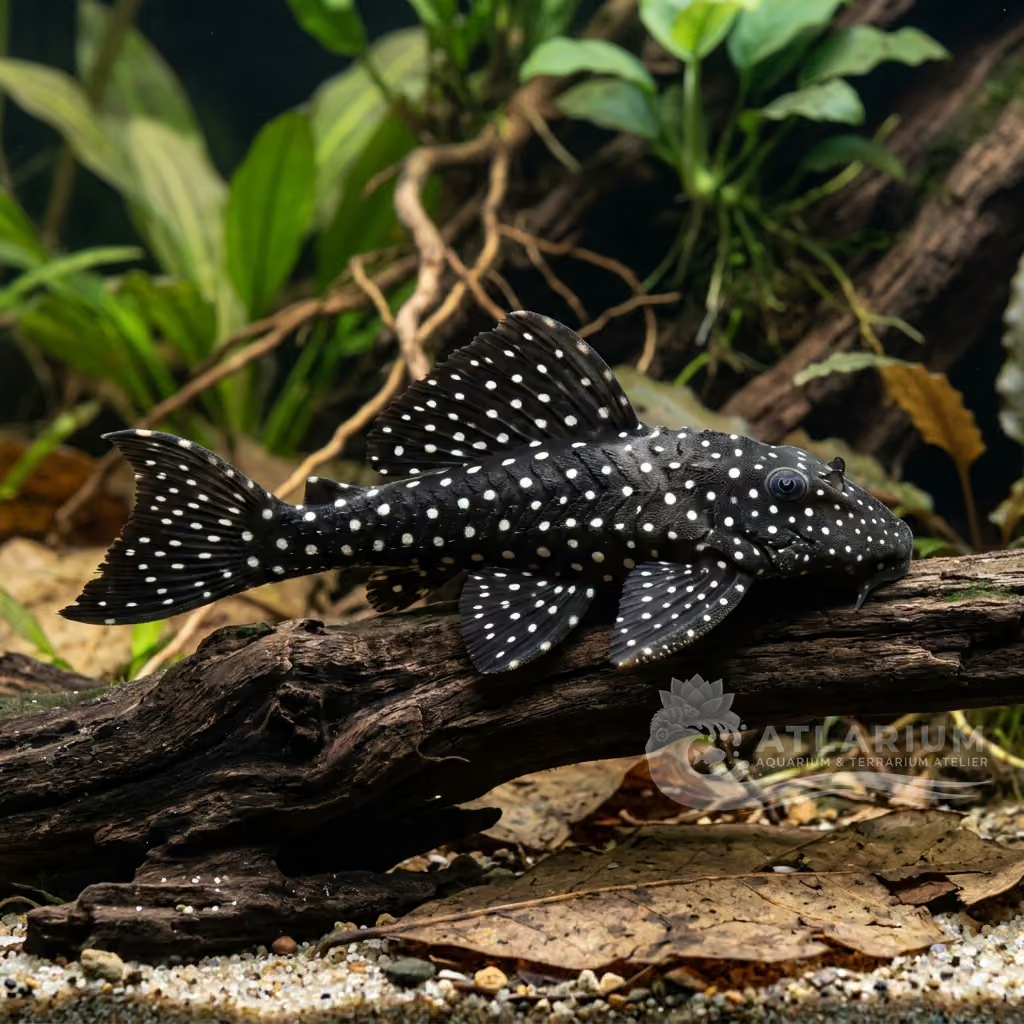
Marble Whiptail
Loricaria simillima
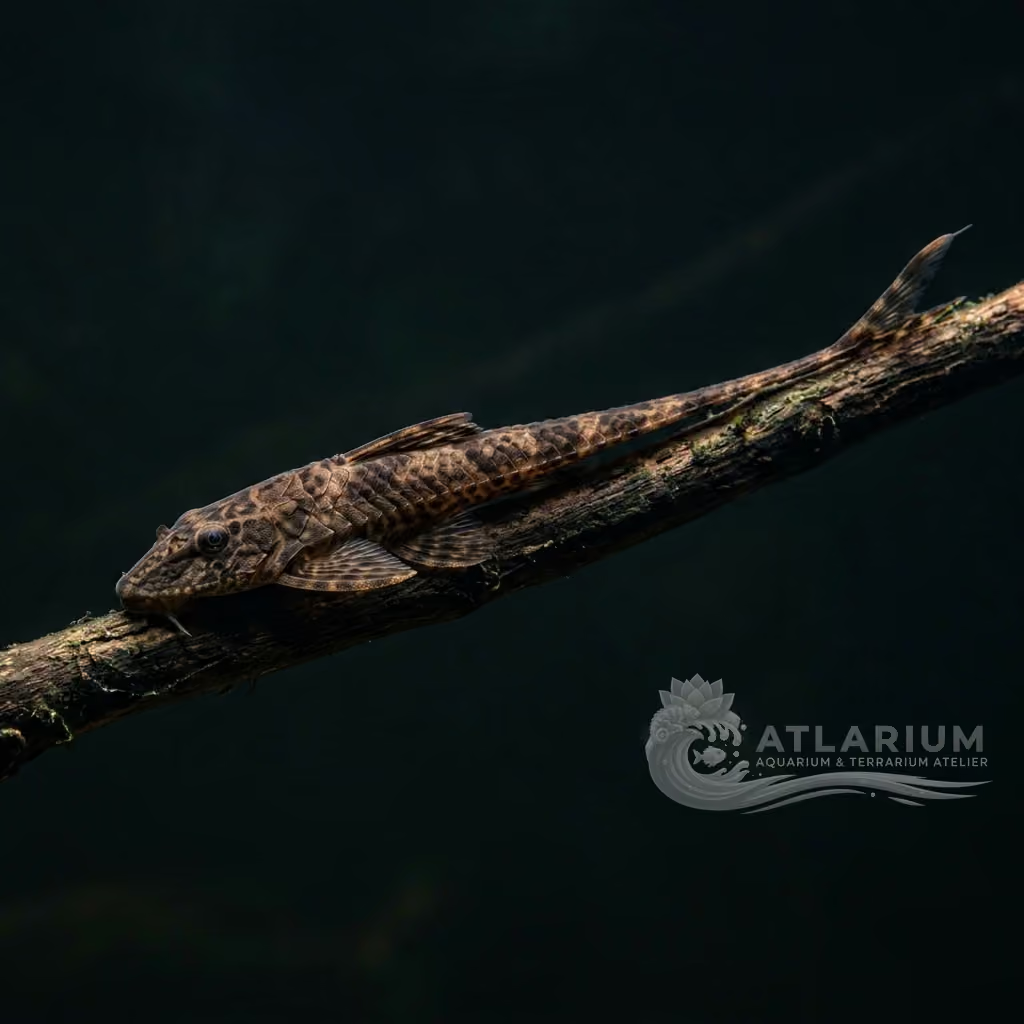
Extraordinary camouflaged Loricariid (25 cm) that spends its time buried. Differs due to pronounced fringed 'lips' used to root around. Male is a lip-brooder.
Wassertemperatur
24 - 28 °C
pH-Wert
6 - 7.5
Wassertyp
Süßwasser
Tankfüllstand
Unten
Erwachsenengröße
25 cm
Mindesttankvolumen
>= 300 L
Mindestgruppe
>= 1
GH
2 - 15 dGH
KH
1 - 7 dKH
TDS
40 - 295 ppm
Leitfähigkeit
63 - 461 uS/cm

Artbeschreibung
Geographical Origin and Habitat: Species with a vast range in South America (Orinoco, Amazon, Paraná basin). Prefers sandy or muddy bottoms in slow river stretches, stream banks, and open lagoons, where it buries itself almost completely to hide.
Taxonomy and Morphology: Loricariinae subfamily. Elongated and flattened shape, reaches 25 cm (10 inches). The key feature is the mouthparts: the lips are expanded and equipped with countless long fleshy tentacles (fringes), evolved to detect food by sifting sand. The tail has a very long upper filament.
Social Behavior: Peaceful and indolent. Spends the day camouflaged or buried in the sand leaving only the eyes out. At night it comes out and patrols the bottom in search of debris. Harmless to fish and plants, gregarious with its own kind.
Coloration and Sexual Dimorphism: Exceptional camouflage: beige, sand, or light brown with large dark spots and marbling. Dimorphism evident in breeding: males have hyper-developed lower lips (to carry eggs) and a broader, more hirsute snout.

Pflege, Zucht und Mitbewohner
Aquarium Setup: Essential 120 cm (48 inches) tank with FINE SAND BOTTOM. Sharp gravel or stones ruin their lips and belly. Leave wide open spaces without plants on the bottom to allow burying. Branched wood and oak leaves on the bottom.
Diet and Feeding: Detritivore micro-predator. In nature, it sifts mud for worms and crustaceans. In the aquarium offer frozen bloodworms, tubifex, mixed bottom tablets. It DOES NOT feed solely on algae on the glass.
Water Quality: Very adaptable: tolerates pH 6.0-7.5 and hardness up to 15 GH. Ideal temperatures 24-28°C (75-82°F). Requires a clean bottom (siphon regularly) to avoid bacterial infections of the barbels.
Compatibility and Cohabitation: Excellent with Characins (Tetras), Corydoras, Apistogramma. Not to be combined with large territorial Loricariids, aggressive Cichlids, or highly ravenous fish that would consume all bottom food.
Aquarium Breeding: Very rare species due to its behavior: it is a lip-brooder. The female lays a cluster of adhesive eggs. The male collects them and glues them to his enlarged lower lip, carrying and fanning them continuously for 10-15 days until hatching. The young need immediate micro-food.
Risks and Diseases: Starvation and atrophy in tanks with fast fish. Risk of fungal infections if barbels are scratched on rough gravel or dirty, anoxic bottoms.

Geografische Herkunft und Verbreitung
Species with a vast range in South America (Orinoco, Amazon, Paraná basin). Prefers sandy or muddy bottoms in slow river stretches, stream banks, and open lagoons, where it buries itself almost completely to hide.
Ursprung
Tropische Ozeane und RiffeAmazonas, Orinoco und Guayana

Fischprofil
- Temperament
- Semi-aggressive
- They are exceptionally docile and retiring. They rely on camouflage to stay safe. They show zero aggression towards other fish.
- Diät
- Omnivore
- Loricaria simillima is an omnivore needing a balanced diet. Provide sinking wafers and fresh vegetables. They also enjoy frozen bloodworms.
- Lebenserwartung
- 10-15 years
- Erwachsenengröße
- 25 cm
- Geschlechterverhältnis
- Group
- Keep one male and one female. Small groups can also coexist peacefully. Males develop distinct whiskers when mature.
- Fütterungsfrequenz
- Twice daily
- Feed them once a day in the evening. They are slow eaters and need time. Ensure food reaches their resting spots.
- Bioload
- Medium to High
- Loricaria simillima generates a very low bioload. They are inactive and produce little waste. Normal filtration is entirely adequate.
- Fluss
- Stagnant
- They appreciate a gentle to moderate flow. Highly oxygenated water is very beneficial. Do not use overpowering currents.
- Sprungrisiko
- No
- Reproduktion
- Oviparous
- They are lip-brooders. The male carries the eggs on his lip. The fry are large and easy to raise.
- Kompatibilität & Tankkameraden
- Peaceful
- They are completely peaceful and harmless. Keep them with small, calm tank mates. Aggressive bottom dwellers will outcompete them.
- Tankfüllstand
- Bottom
- Loricaria simillima is strictly a bottom dweller. They need a soft sandy substrate. Driftwood and flat rocks are appreciated.

Wissenschaftliche Modelle & Parameter
FishBase
Zugang zu den offiziellen wissenschaftlichen Daten der Art
FishBase v25.04Daten synchronisiert am: 15.06.2026
- Trophäenniveau
- 2,4 ± 0,2 se
- Belastbarkeit
- Mittel (1,4 - 4,4 Jahre)
- Phylogenetische Einzigartigkeit (PD50)
- 0.5
- Bayessche Längen-Gewichts-Beziehung
- a = 0.00398, b = 3.11
- AnfälligkeitGeringe Anfälligkeit (22 / 100)

Verwandte Arten
Empfehlungen gruppiert nach nahen Verwandten, Auswahl von Begleitern und ähnlicher Betreuung.