Spatula Whiptail Catfish
Spatuloricaria sp.
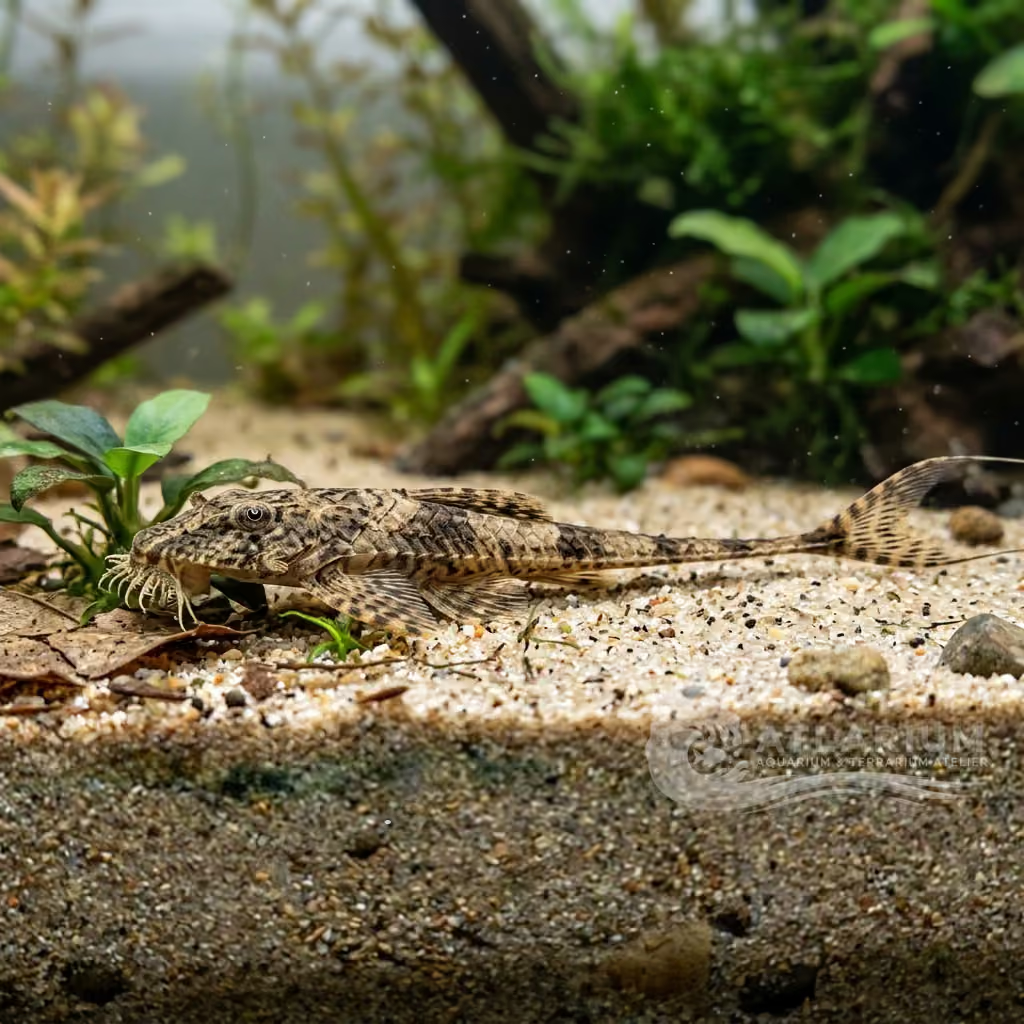
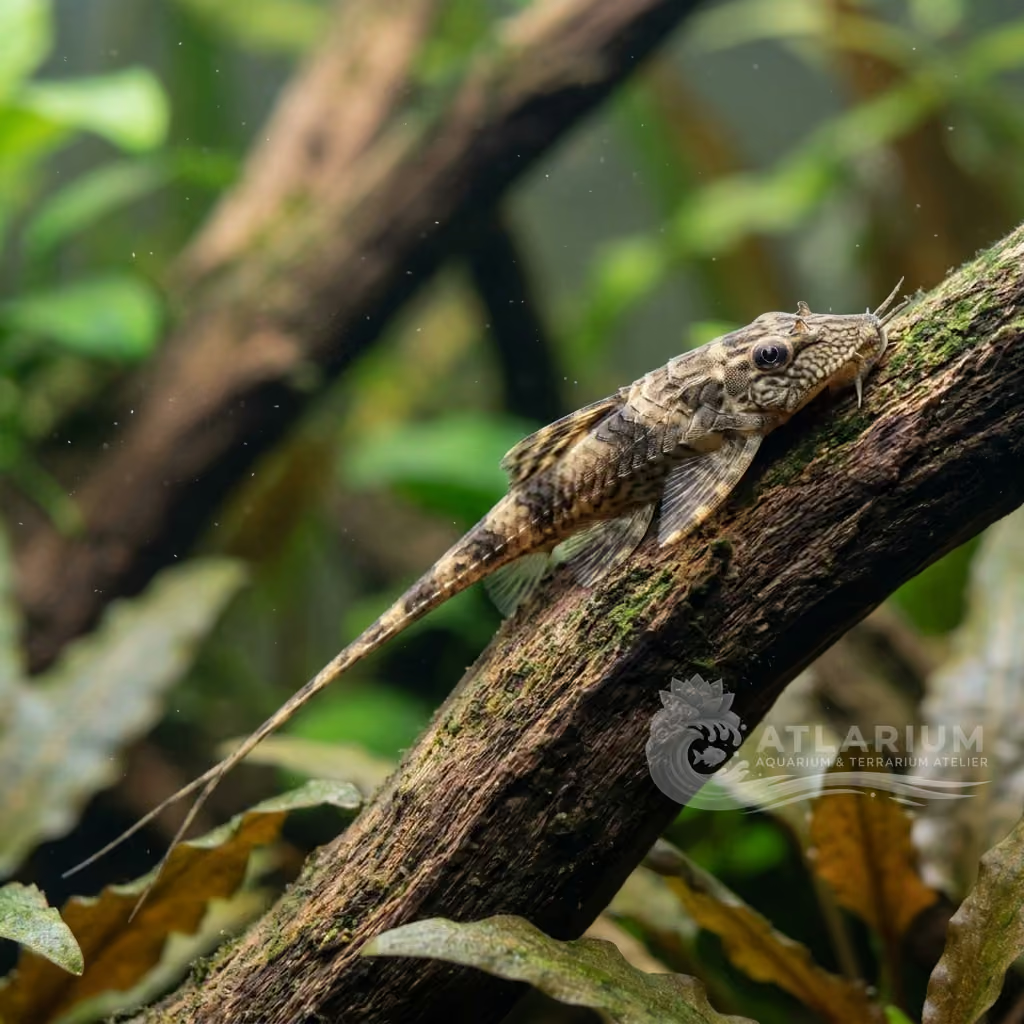
A rare and large whiptail catfish from South America, notable for its spatula-like mouth, long tail filament, and the impressive cheek bristles in mature males.
Wassertemperatur
24 - 28 °C
pH-Wert
6.5 - 7.5
Wassertyp
Süßwasser
Tankfüllstand
Unten
Erwachsenengröße
35 cm
Mindesttankvolumen
300 L
Mindestgruppe
>= 1
GH
4 - 15 dGH
KH
2 - 7 dKH
TDS
80 - 295 ppm
Leitfähigkeit
125 - 461 uS/cm

Artbeschreibung
Geographical Origin and Habitat: Species of the genus Spatuloricaria are native to South America, widely distributed across major river systems including the Amazon, Orinoco, and Paraguay basins. They can be found in Brazil, Peru, Colombia, and Paraguay. These catfish inhabit flowing streams and rivers with moderate to fast currents, typically staying on sandy bottoms or substrates composed of fine gravel, organic sediment, and fallen leaves.
Taxonomy and Morphology: Classified within the family Loricariidae, subfamily Loricariinae. These large whiptail catfish can reach an adult length of 30 to 40 centimeters. The body is highly elongated and dorso-ventrally compressed, ending in a very thin caudal peduncle with a long filament extending from the upper caudal fin ray. The ventral mouth is a suction disc with fringed lips, forming a spatula shape.
Social Behavior: A peaceful, bottom-dwelling species that is generally inactive during daylight, often burying itself partially in the sand. However, they can display food aggression or territorial behavior toward other bottom-dwellers, especially during feeding times. They exhibit a solitary nature but can be kept in groups if the aquarium is large enough.
Coloration and Sexual Dimorphism: Features a mottled brown, grey, and black cryptic pattern that blends perfectly with riverbed sand and leaf litter. Sexual dimorphism in mature individuals is highly pronounced: adult males develop extensive, thick odontodes (bristle-like hairs) on the cheeks (sides of the head) and along the pectoral fin spines, which are absent in females.

Pflege, Zucht und Mitbewohner
Aquarium Setup: Requires a large aquarium with a minimum capacity of 300 liters. The substrate must consist of fine, smooth sand to prevent scratches on their delicate bellies and mouthparts; coarse gravel can cause severe infections. Furnish the tank with large pieces of smooth driftwood, flat slate rocks, and preserve large open sandy zones.
Diet and Feeding: An omnivorous scavenger that requires a varied diet. Provide high-quality sinking wafers and pellets alongside meaty frozen foods such as bloodworms, mysis shrimp, and chopped krill. They also benefit from fresh blanched vegetables like zucchini and cucumber. Driftwood in the tank is essential for providing dietary cellulose.
Water Quality: Demands pristine water quality with efficient biological filtration. Keep the pH between 6.0 and 7.5, GH from 5 to 15, and temperatures steady between 22 °C and 28 °C. High dissolved oxygen levels and moderate water flow are required. They are very sensitive to elevated ammonia, nitrite, and nitrate levels.
Compatibility and Cohabitation: Excellent tankmates for peaceful midwater and upper-water fish such as tetras, discus, angelfish, and geophagus cichlids. Avoid housing them with fast, hyperactive bottom feeders or overly aggressive territorial catfish (like large synodontis or highly aggressive plecos) which may outcompete them for food.
Aquarium Breeding: Breeding is triggered by cool, soft water changes. They spawn inside hollow tubes, pipes, or flat crevices. The male is responsible for guarding and fanning the egg clutch, which he protects aggressively from other fish. Eggs hatch in approximately 7 to 10 days, after which the fry must be fed rotifers or powdered food.
Risks and Diseases: Highly susceptible to bacterial or fungal skin infections if kept on sharp substrate. They have a low tolerance for copper-based medications and chemical treatments; if treatment is required, ensure it is administered at half strength or in a dedicated quarantine tank. Ensure they are getting enough food to prevent starvation.

Geografische Herkunft und Verbreitung
Species of the genus Spatuloricaria are native to South America, widely distributed across major river systems including the Amazon, Orinoco, and Paraguay basins. They can be found in Brazil, Peru, Colombia, and Paraguay. These catfish inhabit flowing streams and rivers with moderate to fast currents, typically staying on sandy bottoms or substrates composed of fine gravel, organic sediment, and fallen leaves.
Ursprung
Amazonas, Orinoco und Guayana

Fischprofil
- Temperament
- Semi-aggressive
- The overall temperament of the Whiptail Catfish can be best described as peaceful. Their disposition makes them a unique addition to the appropriate aquatic community, provided their specific needs are respected. Stressful conditions, such as poor water quality or overcrowding, can drastically alter their typical behavioral patterns. A quiet environment and a stable routine will bring out the most confident and engaging personality from this species.
- Diät
- Omnivore
- Feeding the Whiptail Catfish properly requires acknowledging its natural role as a benthic omnivore. A staple diet of premium flakes or pellets should be supplemented with nutrient-rich treats to replicate natural foraging. It is advisable to soak dry foods beforehand to prevent digestive issues and swim bladder complications. Consistently offering a diverse menu will significantly boost their immune system and overall vitality.
- Lebenserwartung
- 10-15 years
- Erwachsenengröße
- 35 cm
- Geschlechterverhältnis
- Specific M:F ratio
- To prevent undue stress, it is recommended to keep the Whiptail Catfish in a carefully managed sex ratio. Providing more females than males reduces the constant harassment that a single female might endure. If keeping multiple males, the aquarium must be sufficiently large to allow for the establishment of distinct territories. Careful observation during the first few weeks will dictate if any aggressive individuals need to be rehomed.
- Fütterungsfrequenz
- Twice daily
- To mimic its natural foraging behavior, the Whiptail Catfish should be fed small portions two to three times a day. Overfeeding can lead to severe health issues and quickly degrade the water quality. It is crucial to only provide an amount of food that the fish can consume within a few minutes. Adjusting the feeding frequency based on the fish's age and activity level is a best practice for long-term care.
- Bioload
- Medium to High
- The Whiptail Catfish (Spatuloricaria) produces a low to moderate bioload in the home aquarium. Proper filtration is an absolute necessity to handle the waste output generated by this species. Enthusiasts should be prepared to maintain a strict water change regimen to keep parameters stable. Monitoring the biological capacity of the tank will ultimately prevent unwanted algae spikes and water quality deterioration.
- Fluss
- Stagnant
- Providing a moderate to strong current is highly recommended for the overall well-being of the Whiptail Catfish. Adequate water circulation not only mimics their natural ecosystem but also ensures high dissolved oxygen levels throughout the aquarium. Hobbyists should avoid creating localized dead spots where debris might accumulate. Adjusting the filtration output angle can help achieve the perfect balance between steady circulation and calm resting areas.
- Sprungrisiko
- Yes
- Aquarists should be aware that the Whiptail Catfish presents a low jump risk, especially when initially introduced or startled. A tightly fitting lid or a mesh screen cover is absolutely essential to prevent accidental escapes. Keeping the water parameters stable and avoiding aggressive tankmates will minimize the stress that often triggers jumping behavior. Ensuring the tank is kept in a relatively quiet environment can also help keep them securely in the water.
- Reproduktion
- Oviparous
- As a known cave spawner, the Whiptail Catfish exhibits fascinating breeding behaviors when conditions are optimal. Providing a separate, specialized breeding setup is often the best approach to ensure a high yield of fry. Parents may require removal post-spawning depending on the specific parental care traits of the species. Raising the young demands pristine water parameters and a steady supply of infusoria or newly hatched artemia.
- Kompatibilität & Tankkameraden
- With caution
- When considering tankmates, the Whiptail Catfish is generally considered excellent with non-aggressive species. It is important to avoid housing them with overly aggressive or large predatory fish that could bully them or outcompete them for food. Careful observation during the initial introduction period is highly recommended to ensure harmony within the community. Selecting species that occupy different levels of the water column can further reduce territorial disputes.
- Tankfüllstand
- Bottom
- This species is predominantly a bottom dweller within the aquarium setup. Providing the appropriate spatial layout with open swimming areas or dense vegetation where they feel secure is highly beneficial. By understanding their preferred depth, aquarists can carefully select complementary species that occupy other regions of the tank. This spatial separation helps to reduce competition for food and minimizes unnecessary territorial disputes.

Verwandte Arten
Empfehlungen gruppiert nach nahen Verwandten, Auswahl von Begleitern und ähnlicher Betreuung.