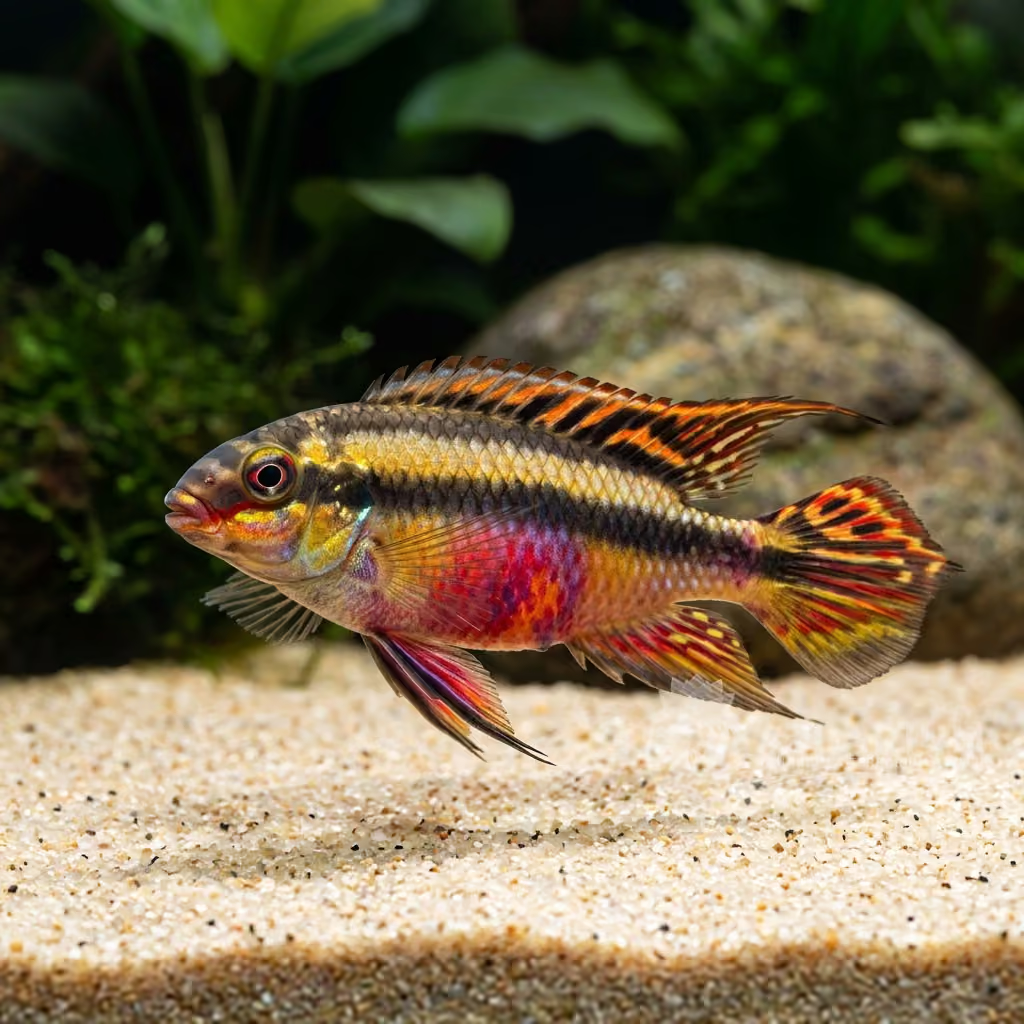
Diamond Tetra
Makunaima pittieri
The aquatic equivalent of a crystal chandelier. A chunky, robust tetra whose scales develop incredible mirror-like iridescence as it ages, sparkling violet, gold, and green. A stunning, hardy centerpiece for any tank.
Wassertemperatur
24 - 28 °C
pH-Wert
6 - 7
Wassertyp
Süßwasser
Tankfüllstand
Mitte
Erwachsenengröße
6 cm
Mindesttankvolumen
>= 60 L
Mindestgruppe
>= 6
GH
2 - 12 dGH
KH
1 - 6 dKH
TDS
40 - 240 ppm
Leitfähigkeit
63 - 375 uS/cm

Artbeschreibung
Geographical Origin and Habitat: Lake Valencia and neighboring river basins (Venezuela). Inhabits very shallow, turbid or vegetation-rich waters along sandy shores, shielded from light.
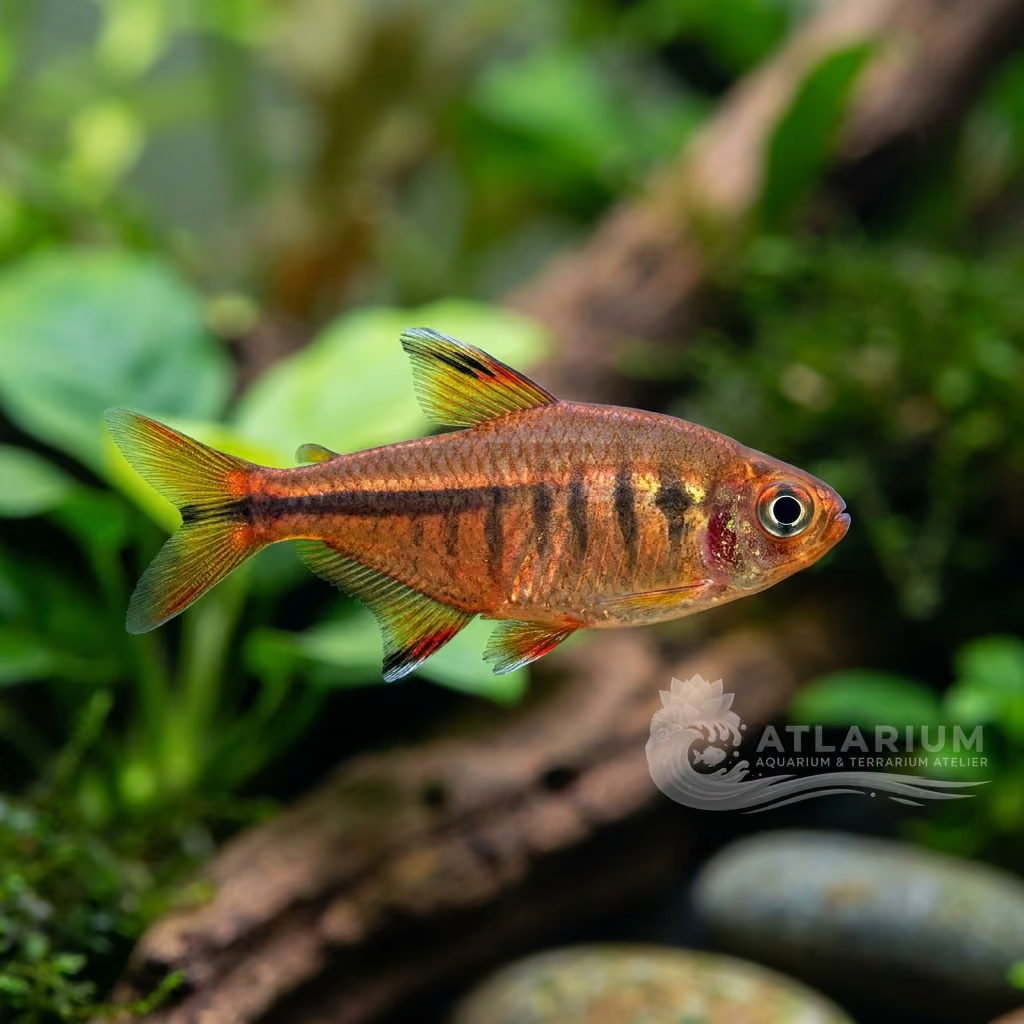
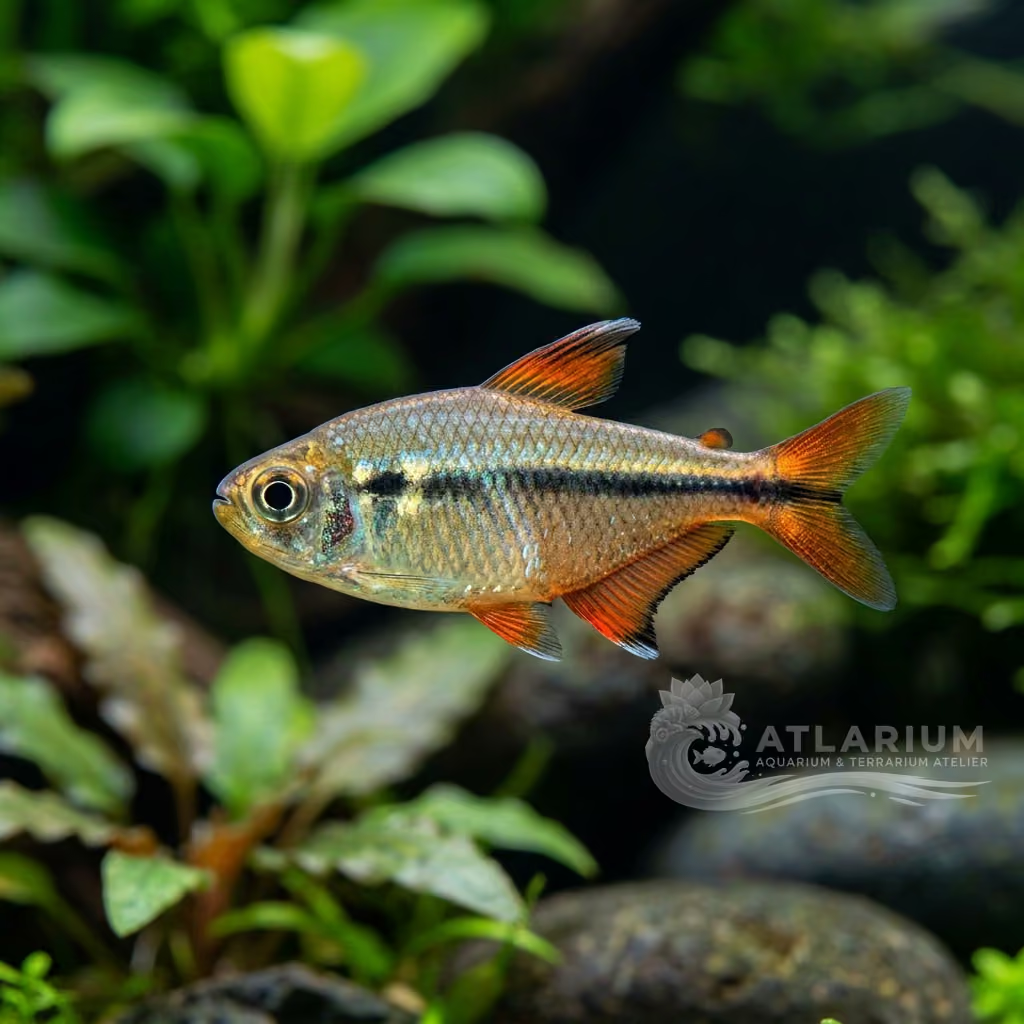
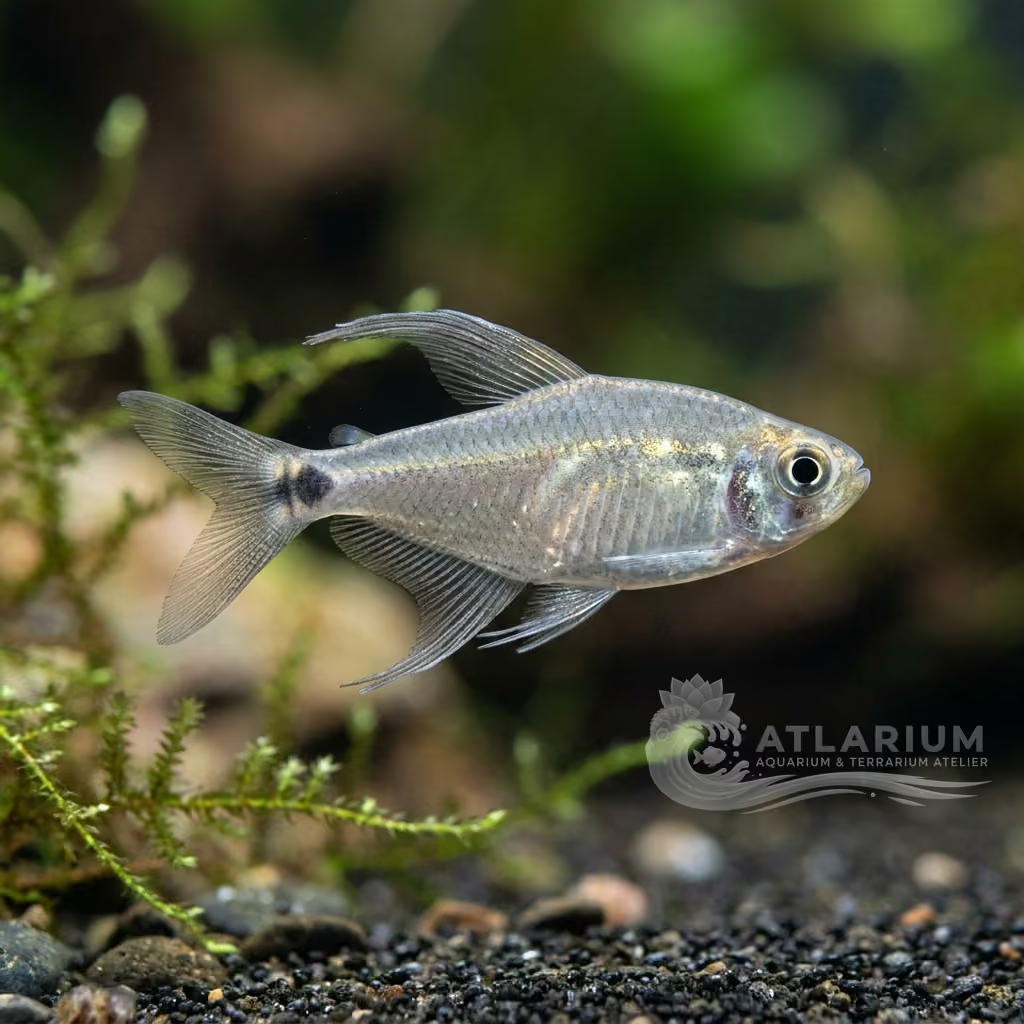
Taxonomy and Morphology: Diamond Tetra (Makunaima pittieri). Bodied South American Tetra (sturdy and diamond-shaped). Has significantly larger and raised scales compared to other small characins, perfect for refracting light.
Social Behavior: Schooling species (min. 8-10 specimens). Males establish fake hierarchical skirmishes by spreading their majestic fins without hurting each other. It is a very active mid-water swimmer.
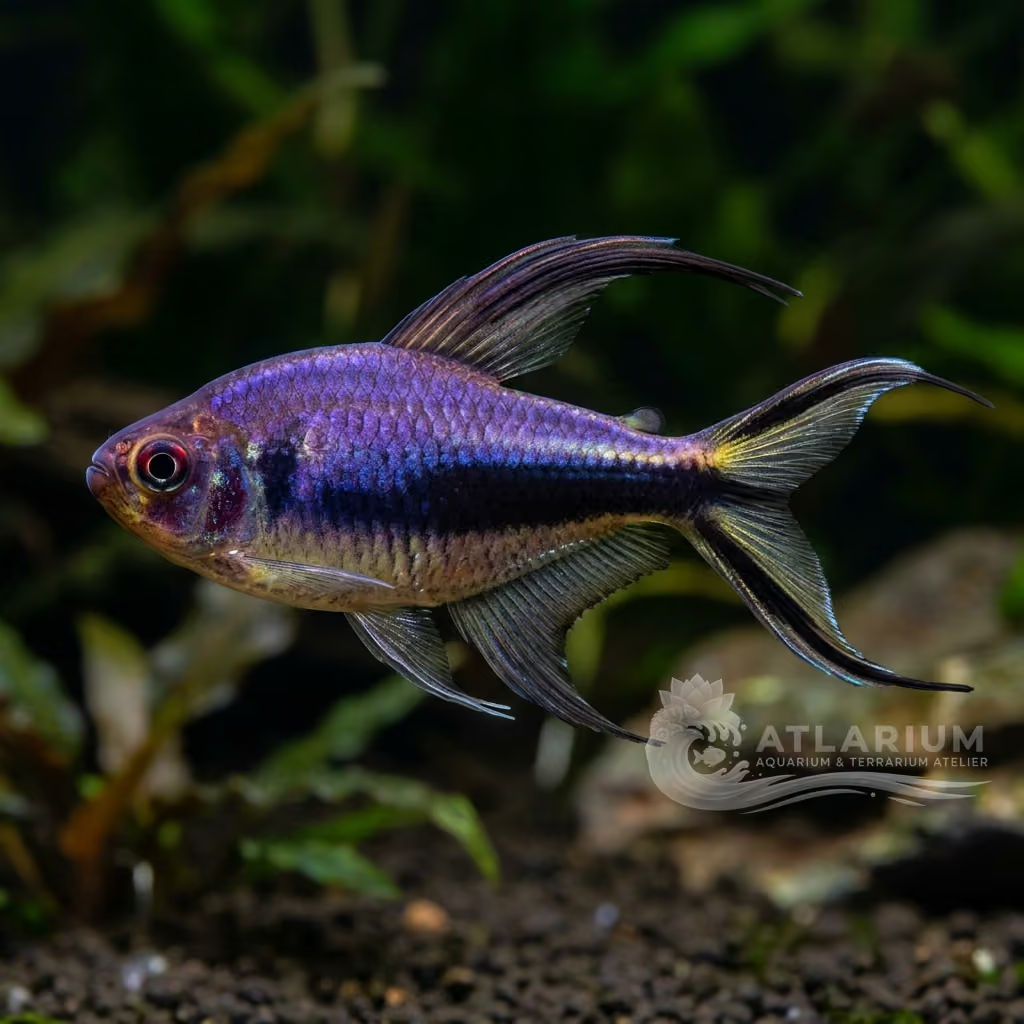
Coloration and Sexual Dimorphism: Living spectacle at maturity: the scales reflect light like tiny iridescent green/gold/blue diamonds (Diamond Tetra). Adult males have extremely long and flowing dorsal and anal fins, often tinged with deep purple.

Pflege, Zucht und Mitbewohner
Aquarium Setup: They stand out only under studied lights. Use dark substrate, dimmed lights (or filtered by floating plants) to make the refraction of their "diamond" scales shine. Tanks from 90 cm (36 inches) upwards.
Diet and Feeding: Voracious and greedy omnivore. Flakes and granules will be swept away in a few seconds at the surface or mid-water. Offer drosophila, freeze-dried brine shrimp and 30% vegetable feeds (Spirulina) to preserve the colors.
Water Quality: Hardier than the average South American characin. Tolerates moderately hard water well, although the best colors are seen with a slightly acidic pH (6.5) and peat in the filter.
Compatibility and Cohabitation: Community but with a strong tendency to "fin-nipping" if kept in small numbers. Avoid fish with veiled fins (Guppies, Bettas, Angelfish) and opt for Corydoras, Ancistrus and fast dwarf cichlids (Apistogramma).
Aquarium Breeding: Free spawners. By shielding an aquarium and inserting moss or synthetic wool mops, pregnant females will release dozens of eggs that will fall safely. Immediately remove the cannibalistic parents.
Risks and Diseases: Over-feeding. Driven by an atavistic hunger, they will compete hard for food, quickly becoming obese or ending up starving the slower species of the community (e.g. the more timid cichlids will waste away from hunger).

Geografische Herkunft und Verbreitung
Lake Valencia and neighboring river basins (Venezuela). Inhabits very shallow, turbid or vegetation-rich waters along sandy shores, shielded from light.
Ursprung
Extra-Amazonas-Südamerika

Fischprofil
- Temperament
- Semi-aggressive
- They are very peaceful, active, and occasionally playful fish. While males will frequently posture and flare their fins at one another to establish dominance, this rarely results in any physical injury. Their constant movement and sparkling scales make them a stunning visual addition to any planted community tank.
- Diät
- Omnivore
- They are unfussy omnivores that readily accept a wide variety of aquarium foods. A high-quality micro-pellet or flake food should serve as their staple diet to ensure proper nutrition. To bring out their stunning iridescent scales, frequent feedings of live or frozen foods like brine shrimp and daphnia are highly recommended.
- Lebenserwartung
- 3-5 years
- Erwachsenengröße
- 6 cm
- Geschlechterverhältnis
- School
- Sexing adult Diamond Tetras is relatively straightforward; males are more intensely colored, possess significantly longer dorsal fins, and are generally slimmer than females. It is important to keep them in schools of at least six, preferably more, to encourage natural schooling behavior. A balanced sex ratio or a slight female majority works best to disperse male posturing.
- Fütterungsfrequenz
- Twice daily
- Feeding them small amounts two times a day is the optimal routine. They are enthusiastic eaters that will quickly dart around the tank during feeding time, snatching food from the water column. Ensure that they consume everything offered within a few minutes to prevent excess food from decaying.
- Bioload
- Low to Medium
- The Diamond Tetra produces a relatively low bioload, typical of small to medium-sized characins. They are active schooling fish, so the cumulative waste of a large school must be accounted for when sizing the filter. Standard aquarium filtration and a consistent schedule of weekly water changes are perfectly adequate.
- Fluss
- Stagnant
- They originate from Lake Valencia and its surrounding slow-moving tributaries in Venezuela. They prefer a gentle to moderate water flow that provides adequate oxygenation without forcing them to constantly swim against a strong current. Utilizing a spray bar to diffuse the filter output creates a very comfortable environment.
- Sprungrisiko
- Yes
- Like many active tetras, they present a moderate jump risk, especially when first introduced to a new tank or if startled. They are particularly prone to jumping if kept in tanks that are too small or lack sufficient plant cover. A standard aquarium lid is strongly advised to prevent accidental losses.
- Reproduktion
- Oviparous
- They are egg scatterers that provide no parental care and will readily eat their own eggs. Breeding requires a separate, dimly lit tank with soft, slightly acidic water and plenty of fine-leaved plants or a spawning mop. The parents must be promptly removed the morning after spawning to protect the eggs.
- Kompatibilität & Tankkameraden
- With caution
- They are peaceful schooling fish that make excellent residents in a community aquarium. They do well with other similarly sized tetras, peaceful bottom dwellers like corydoras, and dwarf cichlids. Due to their relatively deep bodies, they can even be safely kept with some larger, mild-mannered cichlids that might eat smaller, slender tetras.
- Tankfüllstand
- Middle
- They are highly active swimmers that predominantly occupy the middle and upper levels of the aquarium. They appreciate plenty of open swimming space in the center of the tank to display their schooling behavior. Dense planting around the perimeter will provide them with necessary cover and make them feel secure.

Wissenschaftliche Modelle & Parameter
FishBase
Zugang zu den offiziellen wissenschaftlichen Daten der Art
FishBase v25.04Daten synchronisiert am: 15.06.2026
- Trophäenniveau
- 3,2 ± 0,37 se
- Belastbarkeit
- Hoch (weniger als 15 Monate)
- Phylogenetische Einzigartigkeit (PD50)
- 0.5625
- Bayessche Längen-Gewichts-Beziehung
- a = 0.01995, b = 3.01
- AnfälligkeitGeringe Anfälligkeit (10 / 100)

Bildergalerie
Lizenzierte Bilder, die mit der Art oder, wenn markiert, mit dem nächstgelegenen repräsentativen Taxon verknüpft sind.

Verwandte Arten
Empfehlungen gruppiert nach nahen Verwandten, Auswahl von Begleitern und ähnlicher Betreuung.