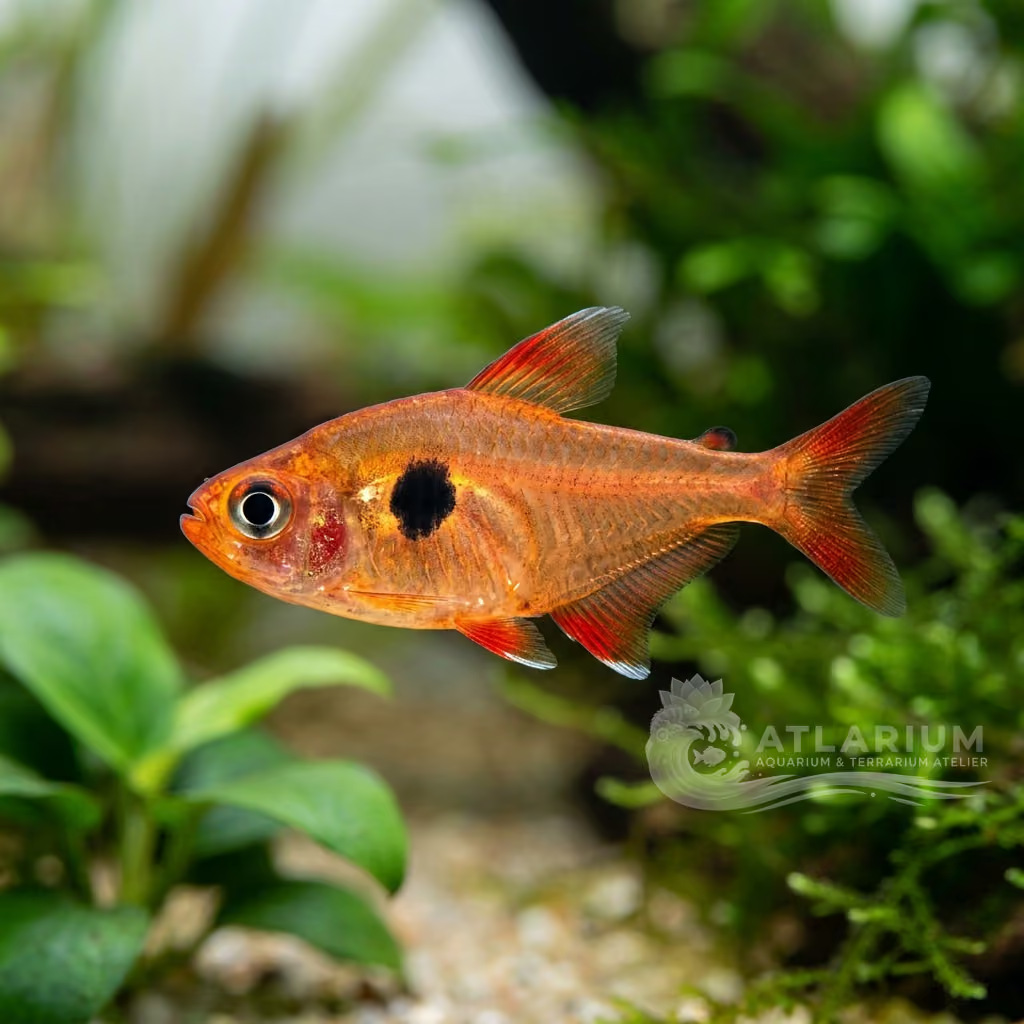
Gold Tetra
Hemigrammus rodwayi
A peaceful, schooling tetra famous for its striking metallic gold sheen, which is actually a reaction to a harmless skin parasite in the wild. Highly adaptable and very hardy.
Wassertemperatur
24 - 28 °C
pH-Wert
6 - 7.5
Wassertyp
Süßwasser
Tankfüllstand
Unten und in der Mitte
Erwachsenengröße
4 cm
Mindesttankvolumen
>= 80 L
Mindestgruppe
>= 8
GH
2 - 12 dGH
KH
1 - 6 dKH
TDS
40 - 240 ppm
Leitfähigkeit
63 - 375 uS/cm

Artbeschreibung
Geographical Origin and Habitat: Distributed throughout northern South America, including the Amazon and Orinoco basins and coastal rivers of the Guianas. Inhabits sluggish forest streams and coastal swamps, often in blackwater.
Taxonomy and Morphology: A member of the Characidae family. Features a typical tetra silhouette, reaching a maximum length of 4.0 cm.
Social Behavior: Highly peaceful and gregarious. It must be kept in a group of 8-10 or more to form a cohesive and beautiful school, which reduces stress.
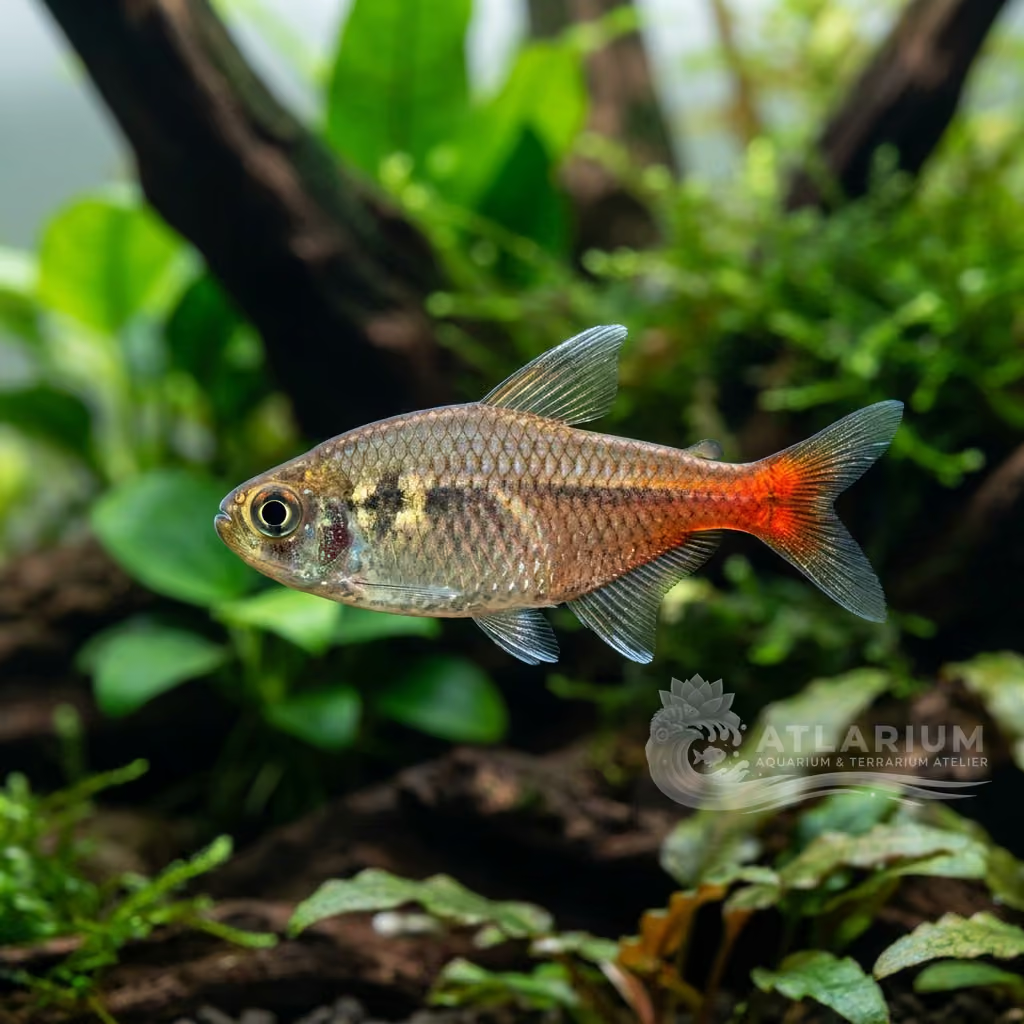
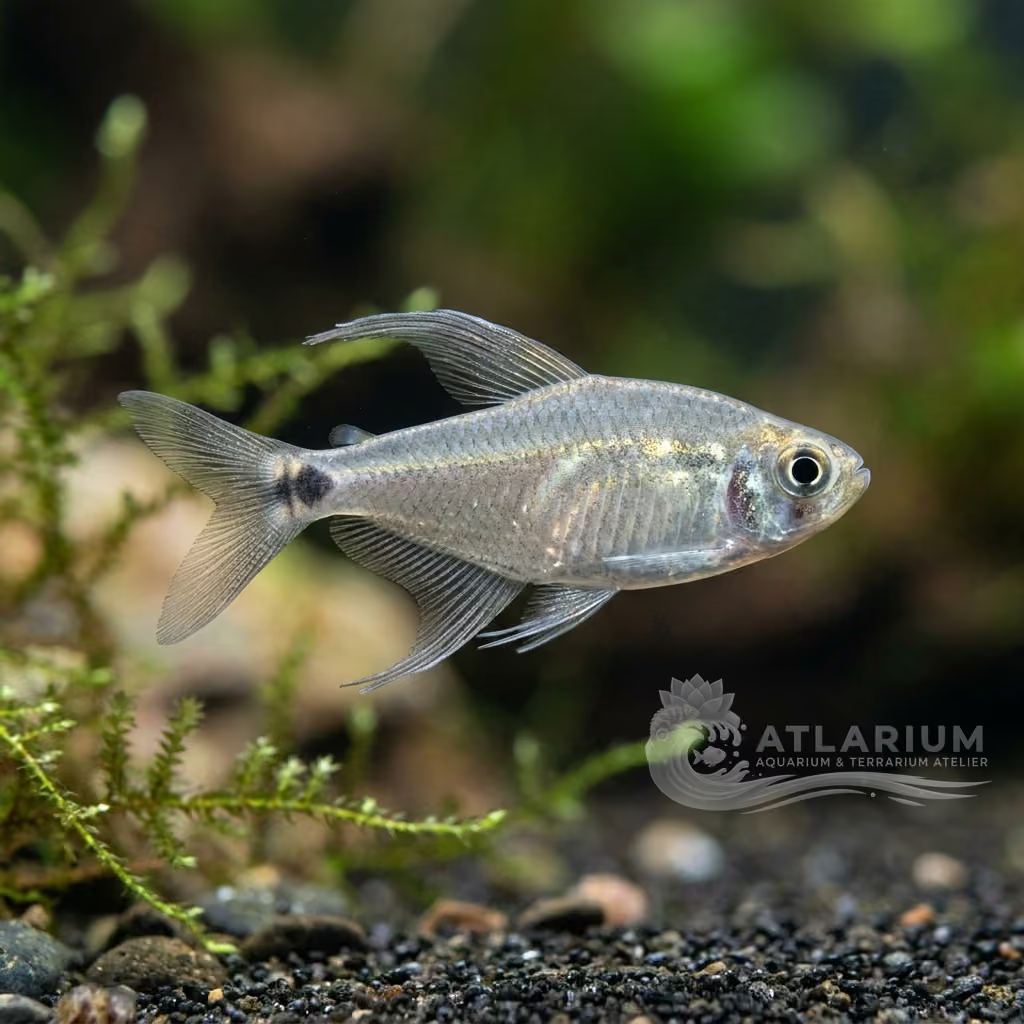
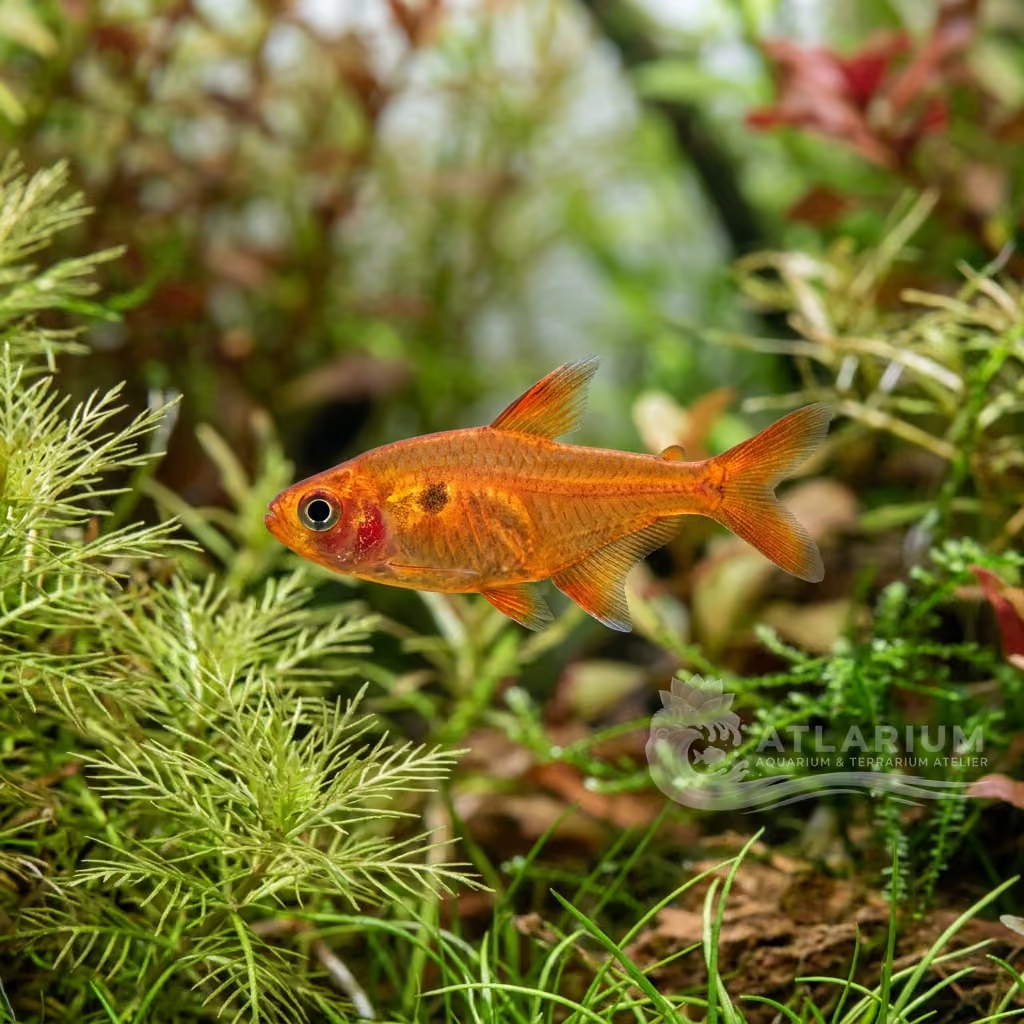
Coloration and Sexual Dimorphism: Famous for its bright metallic gold sheen, which in the wild is a defense mechanism secreting guanine against minor skin parasites. Tank-bred specimens lack this sheen, showing a silvery-grey body with red fin bases. Females are deeper-bodied.

Pflege, Zucht und Mitbewohner
Aquarium Setup: An 80-liter tank with dark substrate, peat filtration, and driftwood roots. Subdued lighting via floating plants is recommended to simulate a forest stream environment.
Diet and Feeding: Omnivorous. Readily accepts flakes, small pellets, and freeze-dried foods. Supplement with live or frozen daphnia, cyclops, and brine shrimp.
Water Quality: Prefers soft, slightly acidic water. Keep temperature at 24-28 °C, pH 6.0-7.5, and hardness at 2-12 dGH.
Compatibility and Cohabitation: Ideal for community aquariums. Excellent companions include other small tetras, pencilfish, corydoras catfish, and peaceful dwarf cichlids.
Aquarium Breeding: Egg scatterer. Requires soft, acidic water and spawning mops or fine plants. Remove the adult pair immediately after egg-laying to prevent predation.
Risks and Diseases: Prone to white spot disease (ich) if subjected to sudden temperature drops or high ammonia/nitrite levels.

Geografische Herkunft und Verbreitung
Distributed throughout northern South America, including the Amazon and Orinoco basins and coastal rivers of the Guianas. Inhabits sluggish forest streams and coastal swamps, often in blackwater.
Ursprung
Amazonas, Orinoco und GuayanaNordamerika

Fischprofil
- Temperament
- Peaceful
- This tetra is peaceful, active, and somewhat timid if not kept in appropriate numbers. They must be maintained in schools of at least six, though larger groups will elicit more natural schooling behaviors. When they feel secure, they are inquisitive and lively additions to the planted aquarium.
- Diät
- Omnivore
- In the wild, they are omnivorous micro-predators that feed on tiny invertebrates and zooplankton. In captivity, they readily accept high-quality crushed flake foods, micro-pellets, and freeze-dried foods. Supplementing their diet with live or frozen daphnia, baby brine shrimp, and bloodworms ensures optimal coloration.
- Lebenserwartung
- 3-5 years
- Erwachsenengröße
- 4 cm
- Geschlechterverhältnis
- School
- A balanced sex ratio or a slight female majority is ideal to prevent excessive male competition. Males frequently display to each other, but this behavior rarely results in any physical injury. Keeping them in a large school naturally diffuses any minor aggression among individuals.
- Fütterungsfrequenz
- Twice daily
- They should be fed small amounts two to three times a day for optimal health. Only offer what they can consume completely within roughly two minutes to prevent water fouling. Consistent feeding of varied foods helps maintain their energetic behavior and bright metallic sheen.
- Bioload
- Low
- This species produces a minimal bioload due to its small size and efficient digestive system. When kept in large schools, their collective waste remains easily manageable for standard aquarium filtration. Regular water changes are still necessary to maintain the pristine water conditions they prefer.
- Fluss
- Moderate
- This species prefers a gentle to moderate water flow that mimics their natural slow-moving river habitats. Strong currents can exhaust these small fish and cause them unnecessary stress over time. Utilizing a sponge filter or baffling the output of a power filter provides an ideal environment.
- Sprungrisiko
- Yes
- Like many small tetras, they present a moderate jump risk, especially when startled by sudden movements or lighting changes. A tight-fitting aquarium lid or cover glass is highly recommended to prevent accidental escapes. Floating plants can also help make them feel more secure and less prone to jumping.
- Reproduktion
- Oviparous
- They are egg-scatterers that exhibit no parental care for their eggs or resulting fry. Breeding requires a separate darkened tank with soft, slightly acidic water and fine-leaved plants or spawning mops. After spawning, the adult fish must be promptly removed to prevent them from eating the eggs.
- Kompatibilität & Tankkameraden
- Peaceful
- They are exceptionally peaceful and make excellent additions to community aquariums with other small, non-aggressive species. Ideal tank mates include other tetras, rasboras, Corydoras catfish, and small loaches. Avoid keeping them with large or aggressive fish that might see them as food.
- Tankfüllstand
- Middle/Bottom
- They are primarily mid-dwelling fish that spend the majority of their time navigating the open water spaces. They appreciate aquariums with plenty of swimming room interspersed with dense areas of vegetation. They occasionally venture to the surface during feeding times to grab floating morsels.

Wissenschaftliche Modelle & Parameter
FishBase
Zugang zu den offiziellen wissenschaftlichen Daten der Art
FishBase v25.04Daten synchronisiert am: 15.06.2026
- Trophäenniveau
- 3,3 ± 0,4 se
- Belastbarkeit
- Mittel (1,4 - 4,4 Jahre)
- Phylogenetische Einzigartigkeit (PD50)
- 0.5
- Bayessche Längen-Gewichts-Beziehung
- a = 0.01259, b = 3.05
- AnfälligkeitGeringe Anfälligkeit (10 / 100)

Verwandte Arten
Empfehlungen gruppiert nach nahen Verwandten, Auswahl von Begleitern und ähnlicher Betreuung.