One-line Tetra
Hemigrammus unilineatus
A hardy and active schooling tetra characterized by a distinct black and white line on its anal fin, very adaptable to different water parameters. Great for beginners.
Wassertemperatur
23 - 28 °C
pH-Wert
5.5 - 7.5
Wassertyp
Süßwasser
Tankfüllstand
Unten und in der Mitte
Erwachsenengröße
5 cm
Mindesttankvolumen
>= 80 L
Mindestgruppe
>= 8
GH
5 - 15 dGH
KH
2 - 8 dKH
TDS
95 - 305 ppm
Leitfähigkeit
148 - 477 uS/cm

Artbeschreibung
Geographical Origin and Habitat: Widely distributed across northern South America, including the river basins of Venezuela, Trinidad and Tobago, Guyana, Suriname, French Guiana, and the Amazon River basin in Brazil. It inhabits slow-flowing streams, drainage ditches, temporary pools, and flooded forest areas.
Taxonomy and Morphology: Belongs to the family Characidae and genus Hemigrammus. Scientifically described by Gill in 1858. It features a laterally compressed, fusiform body typical of small characins, reaching a maximum length of about 4.5 to 5.0 cm. Possesses a small adipose fin.
Social Behavior: An extremely peaceful, active, and schooling fish. It lives in tight groups that constantly swim in the middle layers of the water column. Must be kept in groups of at least six to eight individuals to promote schooling behavior, reduce shyness, and display natural activity.
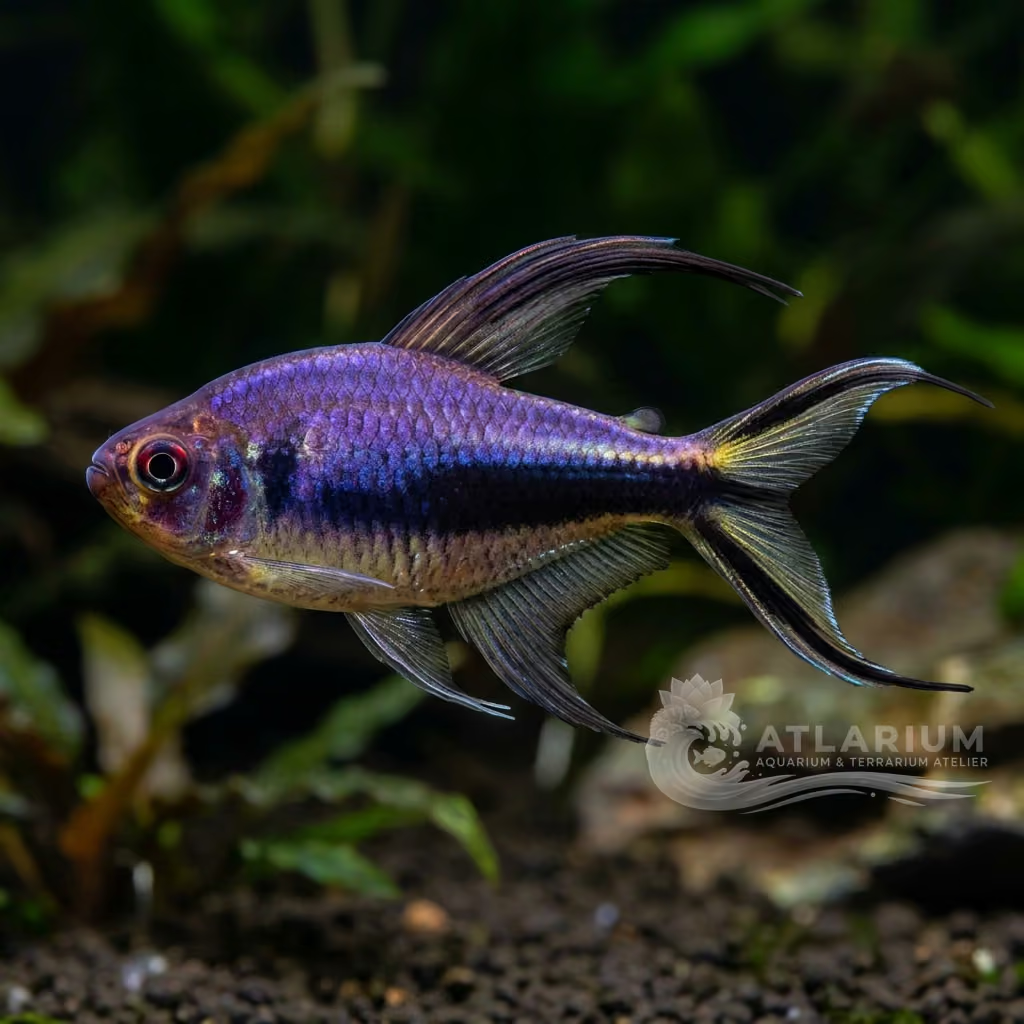
Coloration and Sexual Dimorphism: Body is translucent silvery-grey with golden reflections. It is distinguished by a prominent diagonal black line bordered by white or neon yellow on the anal fin, and a black blotch on the dorsal fin. Males are slimmer and slightly smaller than mature females, which have a rounder abdomen.

Pflege, Zucht und Mitbewohner
Aquarium Setup: Suitable for aquariums of at least 60-80 liters (15-20 gallons) with a minimum length of 60 cm. Provide dense planting along the sides and back (using species like Vallisneria), leaving the central area open for swimming. Add driftwood, roots, and dried leaf litter to mimic natural blackwater.
Diet and Feeding: Omnivorous and easy to feed. Accepts high-quality flakes and micro-pellets. To encourage optimal health and coloration, supplement their diet regularly with live or frozen foods such as daphnia, brine shrimp, and cyclops. Feed once or twice daily.
Water Quality: Very adaptable, but prefers soft, slightly acidic to neutral water. Maintain temperature between 22°C and 28°C (72-82°F), pH 6.0-7.5, and hardness 5-15 dGH. Weekly or bi-weekly water changes of 20% are recommended to keep nitrates low.
Compatibility and Cohabitation: An excellent choice for a peaceful community tank. It can be housed with other small tetras, rasboras, corydoras, peaceful dwarf cichlids (like Apistogramma), and small loricariids. Do not house with large, predatory, or aggressive fish.
Aquarium Breeding: Relatively easy to breed. Egg scatterers that spawn among fine-leafed vegetation (such as Java moss). Spawning requires a separate breeding tank with soft, acidic water, dim lighting, and fine plants. Remove the parents immediately after spawning to protect the eggs.
Risks and Diseases: A hardy species, but vulnerable to ich (white spot disease) if exposed to sudden temperature drops or poor water quality. It responds well to standard commercial anti-parasitic treatments. Ensure proper filtration to avoid organic waste buildup.

Geografische Herkunft und Verbreitung
Widely distributed across northern South America, including the river basins of Venezuela, Trinidad and Tobago, Guyana, Suriname, French Guiana, and the Amazon River basin in Brazil. It inhabits slow-flowing streams, drainage ditches, temporary pools, and flooded forest areas.
Ursprung
Tropische Ozeane und RiffeAmazonas, Orinoco und GuayanaMittelamerika und Karibik

Fischprofil
- Temperament
- Peaceful
- This tetra is peaceful, highly active, and very hardy, making it an excellent beginner fish. They must be kept in groups of at least six, though they display their best behaviors in schools of ten or more. When solitary, they become highly stressed, faded in color, and reclusive.
- Diät
- Omnivore
- Featherfin Tetras are unfussy omnivores that accept almost all standard aquarium foods. A staple diet of high-quality flakes or micro-pellets forms a good nutritional foundation. Providing occasional treats of live or frozen brine shrimp and bloodworms will heavily boost their vitality.
- Lebenserwartung
- 3-5 years
- Erwachsenengröße
- 5 cm
- Geschlechterverhältnis
- School
- There are no strict sex ratio requirements for this peaceful schooling species. Males may exhibit mild territorial displays to establish dominance, but these are harmless. A larger school naturally diffuses any focused aggression and promotes a healthy social dynamic.
- Fütterungsfrequenz
- Twice daily
- They thrive when fed small portions two to three times a day. Only provide an amount they can vigorously consume within a couple of minutes. Ensuring they eat everything prevents substrate fouling and maintains an optimal aquarium environment.
- Bioload
- Low
- The Featherfin Tetra is a robust but small fish that contributes a moderately low bioload to the aquarium. Standard filtration systems paired with a regular water change schedule easily handle a large school. Poor water conditions can dull their colors, making clean water a priority.
- Fluss
- Strong
- Unlike some of its relatives, the Featherfin Tetra is quite adaptable to varying water flows, tolerating moderate currents well. However, they still prefer areas with gentle circulation where they can rest without expending excess energy. Filter outflows should be positioned to allow for calm zones within the tank.
- Sprungrisiko
- Yes
- These fish exhibit a moderate jumping risk when feeling stressed or suddenly startled. An aquarium with a securely fitting lid is necessary to prevent them from leaping out. Adequate hiding spaces and floating plants help alleviate stress and reduce erratic jumping.
- Reproduktion
- Egg scatterer
- Breeding follows the typical egg-scattering behavior seen in most tetras, without any parental protection. To successfully raise fry, a separate bare-bottom tank with spawning mops and dim lighting is required. The adults must be extracted quickly after spawning to protect the eggs from predation.
- Kompatibilität & Tankkameraden
- Peaceful
- They are peaceful, community-friendly fish that do well with a wide variety of similarly sized tank mates. Good choices include other peaceful tetras, smaller barbs, danios, and peaceful dwarf cichlids. Naturally, keeping them with aggressive or large predatory fish is not advised.
- Tankfüllstand
- Middle/Bottom
- They are energetic mid-water swimmers that utilize the open spaces of the aquarium. They can often be seen darting between plants and open water, rarely resting on the bottom. Providing ample horizontal swimming space caters perfectly to their active nature.

Wissenschaftliche Modelle & Parameter
FishBase
Zugang zu den offiziellen wissenschaftlichen Daten der Art
FishBase v25.04Daten synchronisiert am: 15.06.2026
- Trophäenniveau
- 3,4 ± 0,44 se
- Belastbarkeit
- Hoch (weniger als 15 Monate)
- Phylogenetische Einzigartigkeit (PD50)
- 0.5
- Bayessche Längen-Gewichts-Beziehung
- a = 0.01479, b = 2.93
- AnfälligkeitGeringe Anfälligkeit (10 / 100)

Verwandte Arten
Empfehlungen gruppiert nach nahen Verwandten, Auswahl von Begleitern und ähnlicher Betreuung.