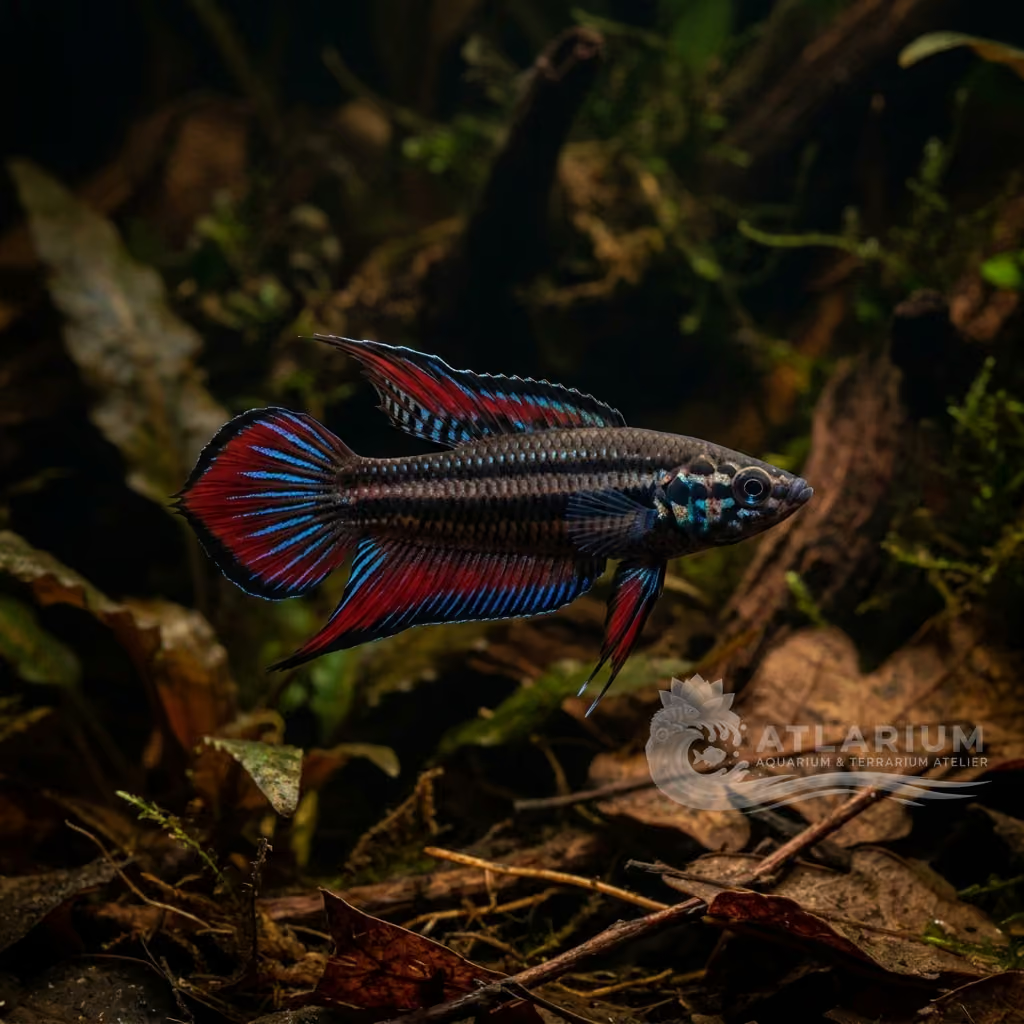
Coral Red Pencilfish
Nannostomus mortenthaleri
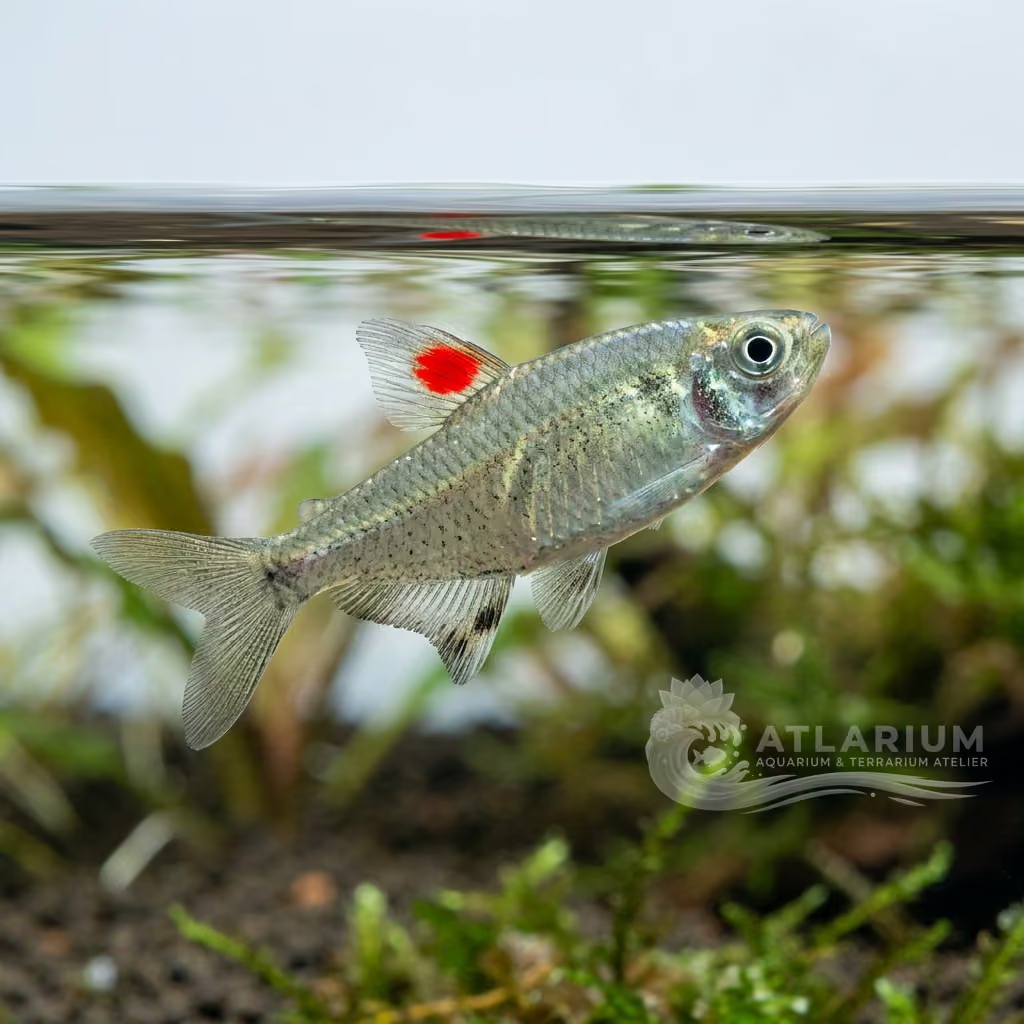
The 'King' of the Pencilfish. Males boast an unbelievably intense, glowing coral-red coloration. However, unlike their peaceful cousins, the males are furiously aggressive toward each other and require massive plant cover to prevent murder.
Wassertemperatur
24 - 28 °C
pH-Wert
6 - 7
Wassertyp
Süßwasser
Tankfüllstand
Oberfläche und Mitte
Erwachsenengröße
3,5 cm
Mindesttankvolumen
>= 30 L
Mindestgruppe
>= 6
GH
1 - 10 dGH
KH
1 - 5 dKH
TDS
25 - 200 ppm
Leitfähigkeit
39 - 313 uS/cm

Artbeschreibung
Geographical Origin and Habitat: Exclusive to the Rio Nanay and Rio Tigre in Peru. Inhabits slow rivers and forest streams rich in decomposed organic matter in dark or amber waters.
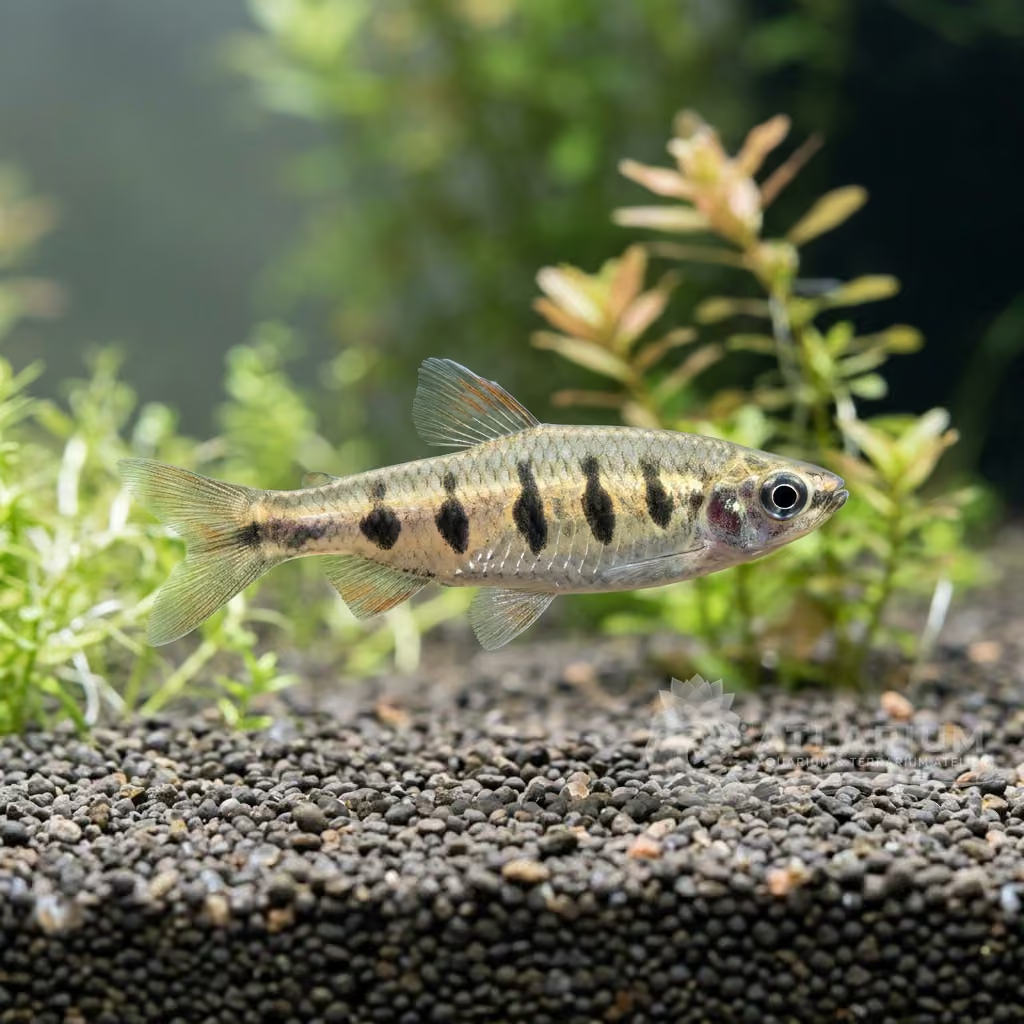
Taxonomy and Morphology: Coral Red Pencilfish (Nannostomus mortenthaleri). Closely related to N. marginatus (of which it was once considered a subspecies), it features a compressed body and short snout.
Social Behavior: Fiercely aggressive towards conspecifics (unlike relatives). Males are incredibly hostile to each other; they duel constantly and injure each other if the tank does not guarantee sufficient escape routes.
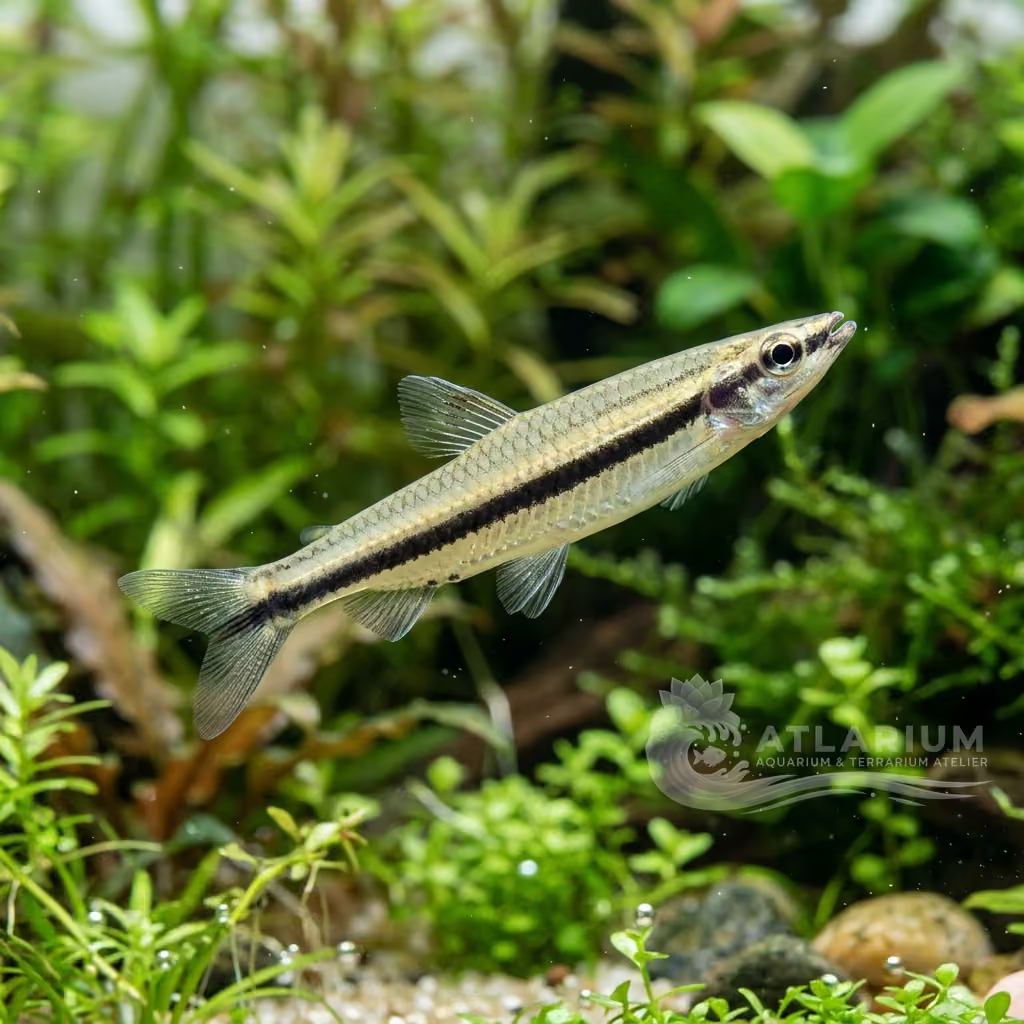
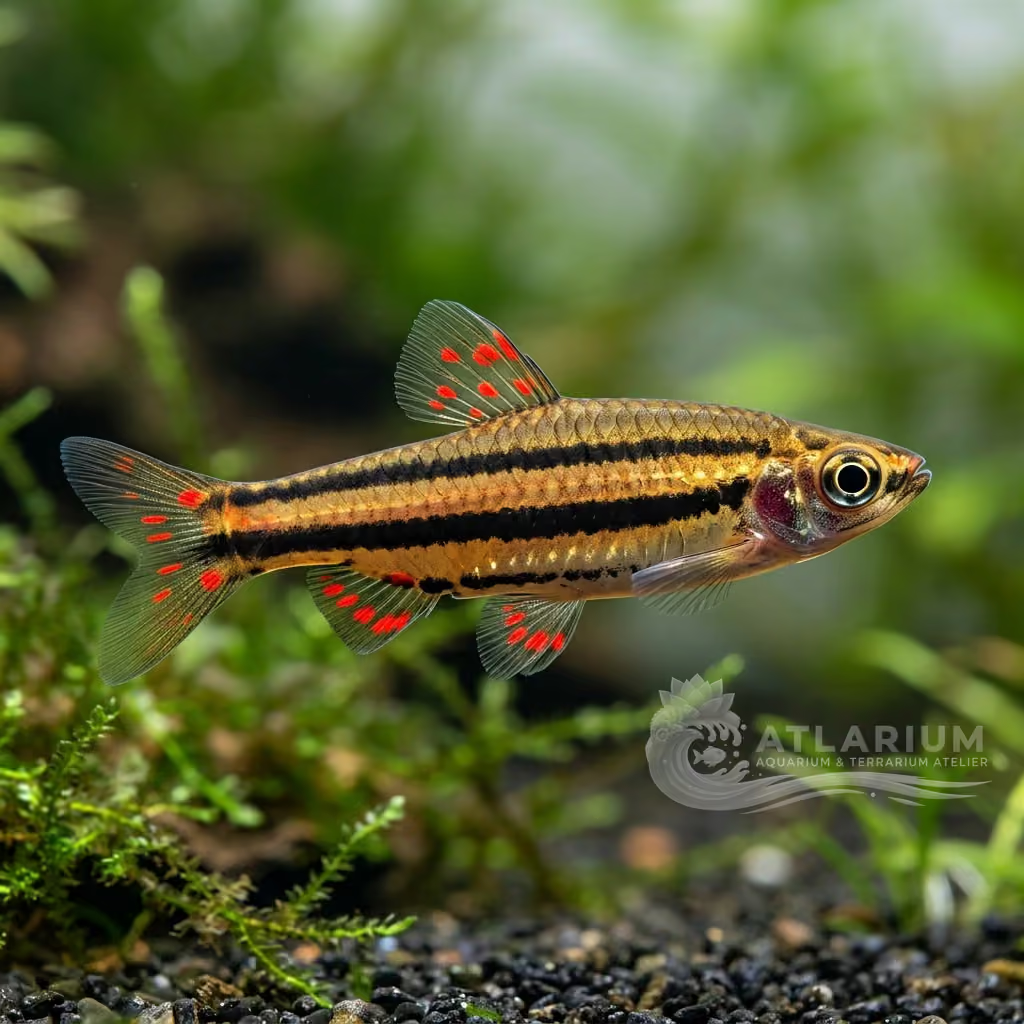
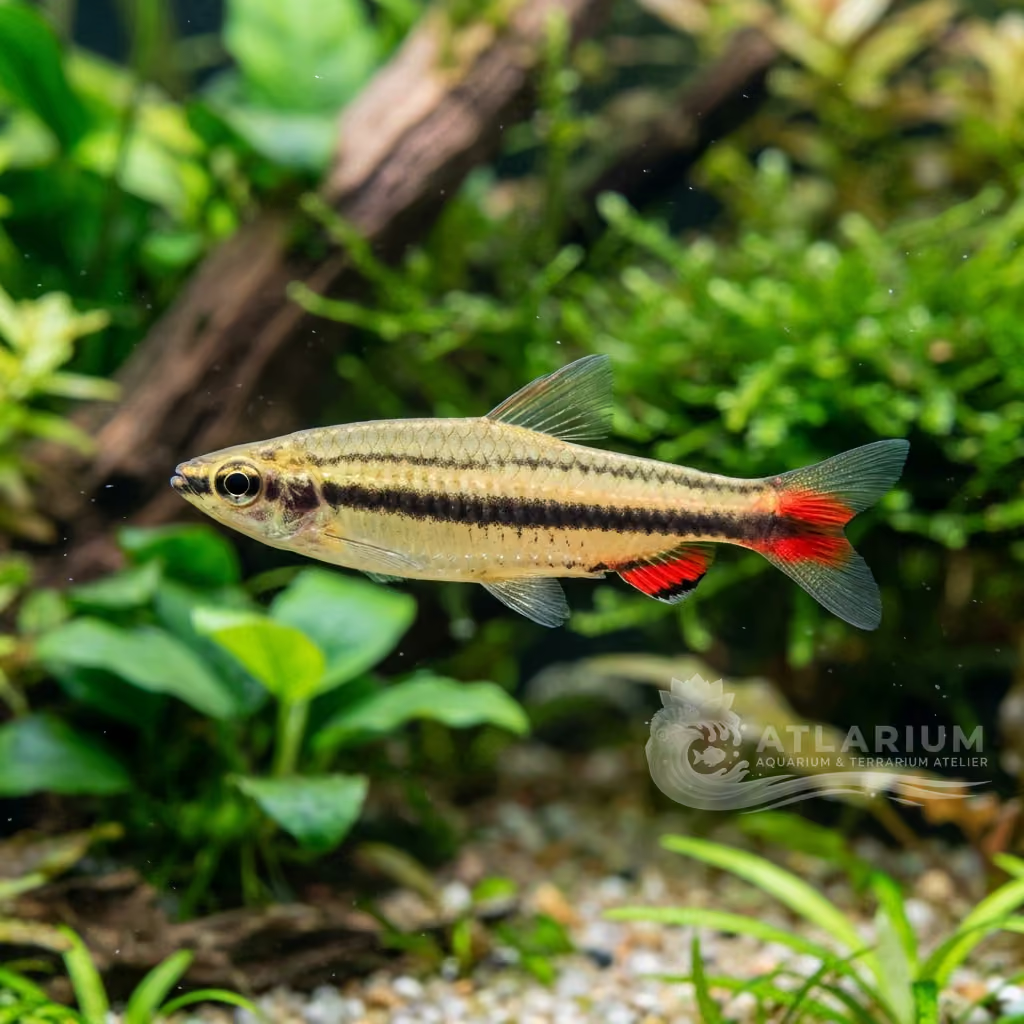
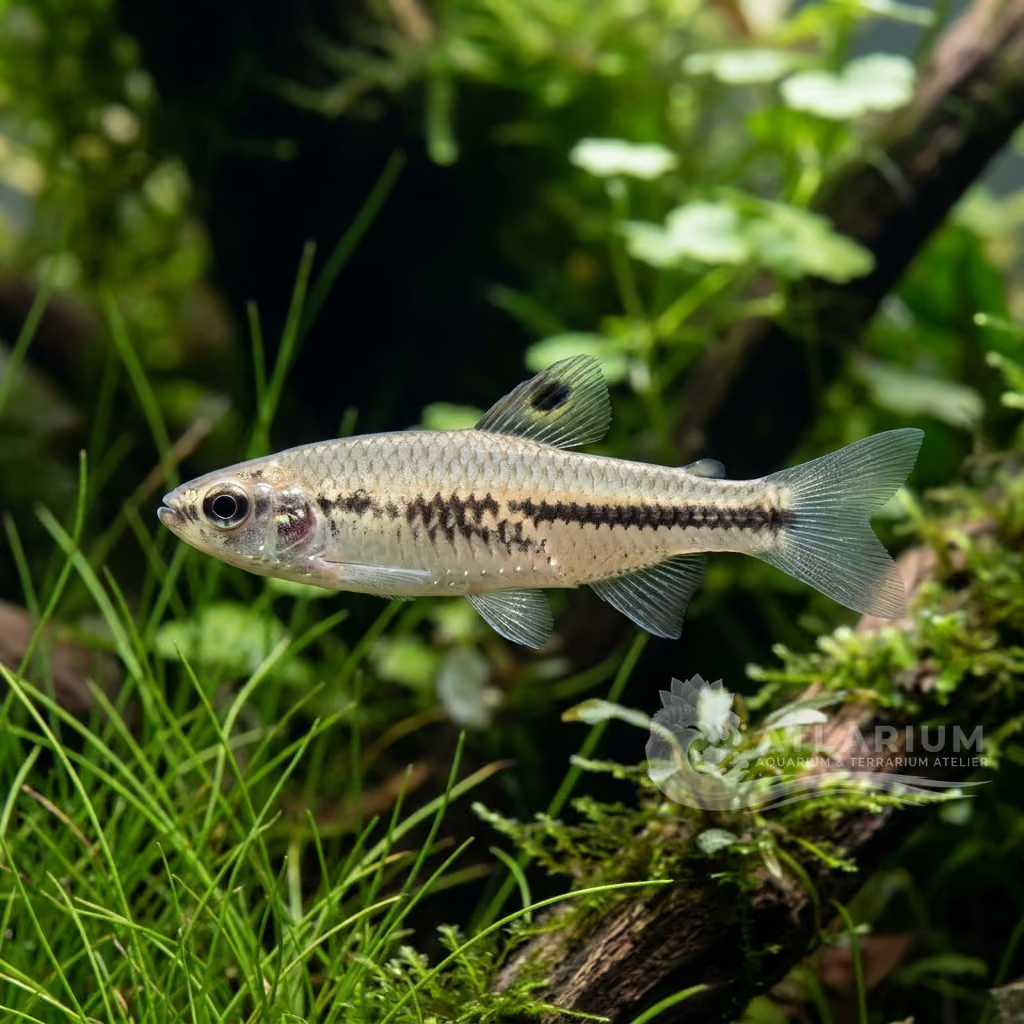
Coloration and Sexual Dimorphism: Among the most spectacular freshwater fish in the world: dominant males light up in a glowing coral red (Red Coral) that covers the entire body between the three black bands. Females remain pale pinkish-yellow with horizontal bands.

Pflege, Zucht und Mitbewohner
Aquarium Setup: Very expensive and territorial species: needs a minimum of 80-100 cm (32-40 inches) to disperse the aggression of the males. Very thick visual barriers (dense forests of stems, branched woods up to the surface) are ABSOLUTELY fundamental.
Diet and Feeding: Micropredator. More ravenous than marginatus. Will avidly devour daphnia, freeze-dried brine shrimp and very high-end protein flakes to enhance the red pigment.
Water Quality: Sensitive and delicate fish: demands immaculate waters (Zero Nitrites/Ammonia) and weak filtration over peat (Ph 6.5) to keep the environment stable and partially calm the males' nerves.
Compatibility and Cohabitation: Excellent with other species, but lethal with its own male kind. Can coexist perfectly with South American Dwarf Cichlids (Apistogramma, Dicrossus), Otocinclus and Corydoras, but NEVER in small tanks with more than one male of its species.
Aquarium Breeding: Difficult, both because of the prohibitive prices of the breeders, and because the males often kill the rebellious females or each other before spawning. The eggs (very small) are released among the foliage.
Risks and Diseases: Intraspecific murder. Buying a school of 5 males for a 60 cm (24 inches) tank (common mistake, being the red ones) will lead to the death of 4 of them in a few days. If you want a school, you need 1 male for every 3 females (expensive, since females are rare and priced high in stores) in tanks of at least 1 meter (40 inches).

Geografische Herkunft und Verbreitung
Exclusive to the Rio Nanay and Rio Tigre in Peru. Inhabits slow rivers and forest streams rich in decomposed organic matter in dark or amber waters.
Ursprung
Extra-Amazonas-Südamerika

Fischprofil
- Temperament
- Semi-aggressive
- Unlike other pencilfish, males exhibit extreme territorial aggression towards one another. They will fight relentlessly in cramped quarters without sufficient visual barriers. Towards other species, however, they remain peaceful and completely harmless.
- Diät
- Omnivore
- They are micro-predators that eagerly accept small, high-quality meaty foods. Frozen bloodworms, daphnia, and high-protein micro-pellets are excellent dietary staples. A varied, rich diet is absolutely essential for maintaining their stunning crimson coloration.
- Lebenserwartung
- 3-5 years
- Erwachsenengröße
- 3.5 cm
- Geschlechterverhältnis
- Specific M:F ratio
- A ratio of one male to three or more females is strongly recommended. Males are highly territorial and will fiercely attack other males without adequate space. In small tanks, keeping only a single male is the safest approach.
- Fütterungsfrequenz
- Twice daily
- Feed them small portions two times a day to maintain their intense energy levels. They are active feeders but their small mouths require appropriately sized foods. Ensure that less aggressive females get their fair share during feeding time.
- Bioload
- Low
- The Coral Red Pencilfish produces a low bioload, similar to other small characins. Despite their vibrant colors, their biological footprint is easily managed by standard filtration. Excellent water quality is, however, required to keep them healthy and colorful.
- Fluss
- Stagnant
- They prefer slow to moderate water movement, avoiding fast, turbulent currents. Gentle flow allows them to hover and establish their territories naturally. Baffled filter returns or sponge filters are ideal for creating a calm environment.
- Sprungrisiko
- Yes
- Like most pencilfish, they are highly prone to jumping, especially when males spar. A tight-fitting lid is absolutely mandatory to prevent these expensive fish from escaping. Thick floating vegetation also provides a comforting barrier at the surface.
- Reproduktion
- Oviparous
- Breeding them is challenging and requires precise soft, acidic water parameters. They are egg scatterers that hide their eggs among dense clumps of moss. Adults are notorious egg eaters and must be removed promptly after spawning.
- Kompatibilität & Tankkameraden
- Peaceful
- While peaceful towards other species, males are incredibly aggressive towards each other. They should be kept in a heavily planted tank if multiple males are present. Good tank mates include peaceful bottom dwellers and small, fast-moving tetras.
- Tankfüllstand
- Top/Middle
- They are highly active in the middle and upper levels of the aquarium. Males will enthusiastically patrol their chosen territories among the plant leaves. They rarely drop to the bottom substrate during their normal daily activities.

Wissenschaftliche Modelle & Parameter
FishBase
Zugang zu den offiziellen wissenschaftlichen Daten der Art
FishBase v25.04Daten synchronisiert am: 15.06.2026
- Trophäenniveau
- 3,2 ± 0,4 se
- Phylogenetische Einzigartigkeit (PD50)
- 0.5
- Bayessche Längen-Gewichts-Beziehung
- a = 0.01023, b = 3.13
- AnfälligkeitGeringe Anfälligkeit (10 / 100)

Verwandte Arten
Empfehlungen gruppiert nach nahen Verwandten, Auswahl von Begleitern und ähnlicher Betreuung.