Kuhli Loach
Pangio kuhlii
Kuhli Loach (Pangio kuhlii) is a freshwater species with an adult-size reference of about 12 cm. It needs at least 80 litres and 6 individuals, with its social and territorial profile taken into account.
Wassertemperatur
24 - 28 °C
pH-Wert
5.5 - 7
Wassertyp
Süßwasser
Tankfüllstand
Unten
Erwachsenengröße
12 cm
Mindesttankvolumen
>= 80 L
Mindestgruppe
>= 6
GH
1 - 10 dGH
KH
1 - 5 dKH
TDS
25 - 200 ppm
Leitfähigkeit
39 - 313 uS/cm

Artbeschreibung
Geographical Origin and Habitat: A freshwater species; the enclosure should provide stability, oxygenation, space and shelter consistent with its behaviour without turning one habitat description into a mandatory recipe.
Taxonomy and Morphology: The accepted scientific name is Pangio kuhlii; the verified classification records genus Pangio, family Cobitidae, order Cypriniformes. Historical names remain searchable as synonyms rather than separate species.
Social Behavior: Kuhli Loach is social and should be kept in a group. The minimum reference is 6 individuals; sex, maturity and available space can require a more conservative composition. Observe access to food, resting behaviour, chasing and use of shelter. Isolation, persistent competition or aggression means the number, composition or environment needs to be corrected.
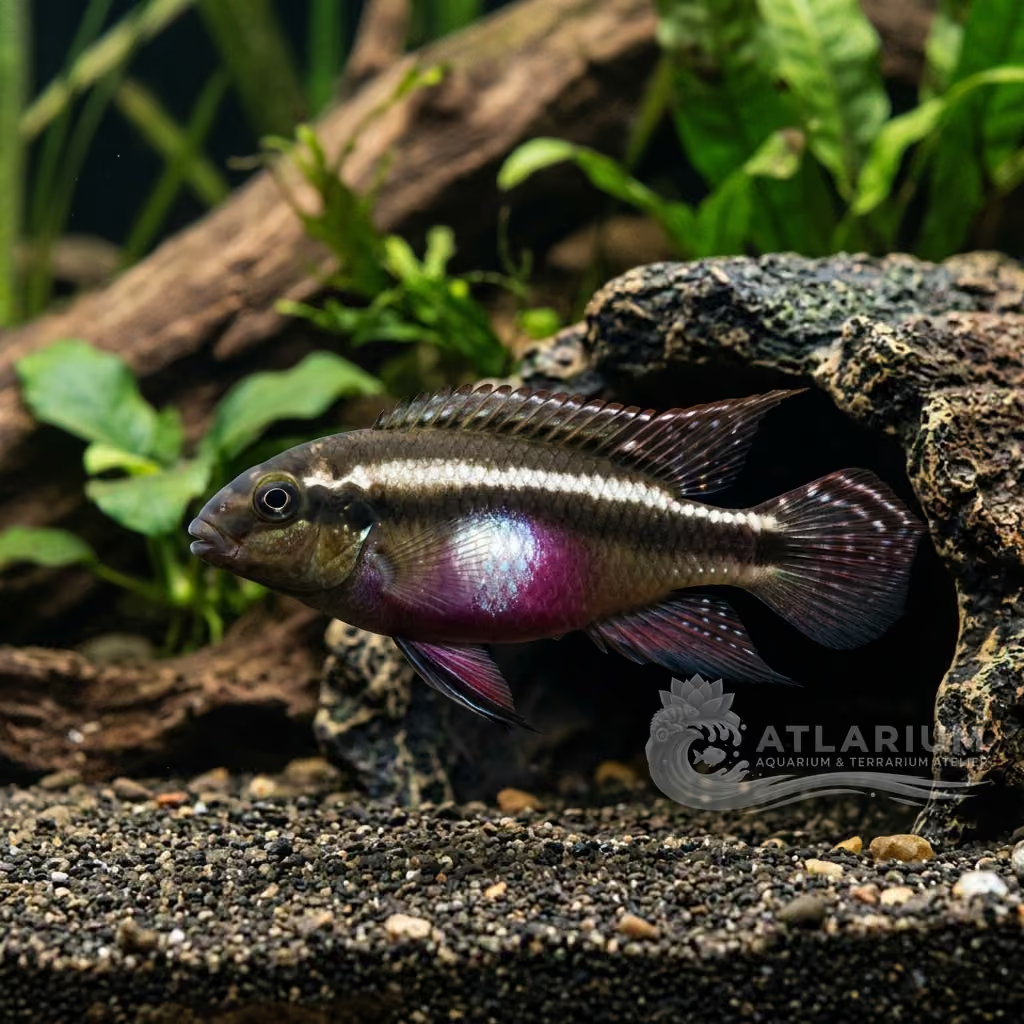
Coloration and Sexual Dimorphism: Colour and shape can vary with age, sex, physiological state and environmental conditions. Identification and sexing require recognized species-level characters; one appearance or photograph is not enough.

Pflege, Zucht und Mitbewohner
Aquarium Setup: Kuhli Loach needs an aquarium of at least 80 litres, sized for adult body size and a minimum group of 6 individuals. Filtration, shelter and swimming room must match the species and the actual number kept. Volume alone does not make an enclosure suitable: tank shape and length, usable area, oxygenation and the ability to separate territories must reflect adult behaviour.
Diet and Feeding: The recorded diet is omnivorous. Offer appropriately sized foods varied within that category, and adjust quantity and frequency from actual intake, body condition and leftovers. One food or a fixed schedule is not suitable for every age and situation.
Water Quality: Maintain stable, well-oxygenated water appropriate to a freshwater species; the card's reference values are 24–28 °C, pH 5.5–7. Verify conditions with reliable tests and size maintenance and filtration to the actual load. Ranges are not automatic thresholds for treatment or rapid chemical correction.
Compatibility and Cohabitation: The cohabitation profile is suitable for a compatible community, with a generally peaceful temperament. Keep at least 6 individuals; tankmates, stocking density and decor must allow escape, rest and feeding without excessive competition. Watch interactions especially during feeding, maturity and breeding. Persistent chasing, injury or exclusion from food requires a change in stocking or layout, or separation of the animals.
Aquarium Breeding: The recorded reproductive profile is “oviparity”. Breeding should be attempted only with healthy adults, separation capacity and a plan for eggs or young. Do not treat unverified triggers, sex ratios or hatch times as universal for this species.
Risks and Diseases: Use a secure cover and close escape gaps. Prevent problems through quarantine of new arrivals, stable water, appropriate feeding and daily observation. Similar signs can have different causes, so check parameters, history and diagnosis before medication. Follow the product label and qualified aquatic-veterinary advice; there is no universal reduced dose for a species or family.

Geografische Herkunft und Verbreitung
A freshwater species; the enclosure should provide stability, oxygenation, space and shelter consistent with its behaviour without turning one habitat description into a mandatory recipe.
Ursprung
Süd- und Südostasien

Fischprofil
- Temperament
- Peaceful
- Kuhli Loach has a generally peaceful temperament. Insufficient space, an unsuitable social ratio or incompatible tankmates can substantially change observed behaviour.
- Diät
- Omnivore
- They are unfussy omnivorous scavengers. They will enthusiastically hunt down sinking pellets, frozen bloodworms, and detritus. Ensure some food actually reaches the bottom for them to find.
- Lebenserwartung
- 5-10 years
- Erwachsenengröße
- 12 cm
- Geschlechterverhältnis
- Group
- Kuhli Loach is social and should be kept in a group. The reference minimum is 6 individuals and must not be read as permission to overcrowd the aquarium.
- Fütterungsfrequenz
- Twice daily
- Feed them once a day, ideally shortly before lights out. They forage continuously throughout the night in the substrate. Small sinking portions ensure they get their share without overfeeding the tank.
- Bioload
- Low to Medium
- They possess a very low bioload suitable for nano tanks. Their thin bodies do not produce significant amounts of biological waste. They actually help keep the tank clean by eating leftover food.
- Fluss
- Stagnant
- They prefer gentle to moderate flow that doesn't disrupt the substrate. A very strong current will make it difficult for them to forage comfortably. Diffused filter outputs work perfectly for their needs.
- Sprungrisiko
- Yes
- They are notorious escape artists that can jump or slither out. They can easily squeeze through the smallest gaps around filter pipes. A tight-fitting lid and sponge pre-filters are completely mandatory.
- Reproduktion
- Oviparous
- Breeding them in captivity is rare but occasionally happens by accident. They scatter bright green eggs among dense vegetation or roots. Specific triggers are poorly understood, but mature heavily planted tanks offer the best chance.
- Kompatibilität & Tankkameraden
- Community
- The cohabitation profile is suitable for a compatible community, with a generally peaceful temperament. Keep at least 6 individuals; tankmates, stocking density and decor must allow escape, rest and feeding without excessive competition. Watch interactions especially during feeding, maturity and breeding. Persistent chasing, injury or exclusion from food requires a change in stocking or layout, or separation of the animals.
- Tankfüllstand
- Bottom
- They strictly inhabit the bottom of the aquarium. They spend their time burrowing into soft sand or hiding under leaf litter. You will almost never see them swimming near the surface.

Wissenschaftliche Modelle & Parameter
FishBase
Zugang zu den offiziellen wissenschaftlichen Daten der Art
FishBase v25.04Daten synchronisiert am: 15.06.2026
- Trophäenniveau
- 3,6 ± 0,4 se
- Belastbarkeit
- Mittel (1,4 - 4,4 Jahre)
- Generierungszeit
- 3 Jahre
- Phylogenetische Einzigartigkeit (PD50)
- 0.5
- Bayessche Längen-Gewichts-Beziehung
- a = 0.00501, b = 3.08
- AnfälligkeitGeringe bis mäßige Anfälligkeit (30 / 100)

Bildergalerie
Lizenzierte Bilder, die mit der Art oder, wenn markiert, mit dem nächstgelegenen repräsentativen Taxon verknüpft sind.

Verwandte Arten
Empfehlungen gruppiert nach nahen Verwandten, Auswahl von Begleitern und ähnlicher Betreuung.