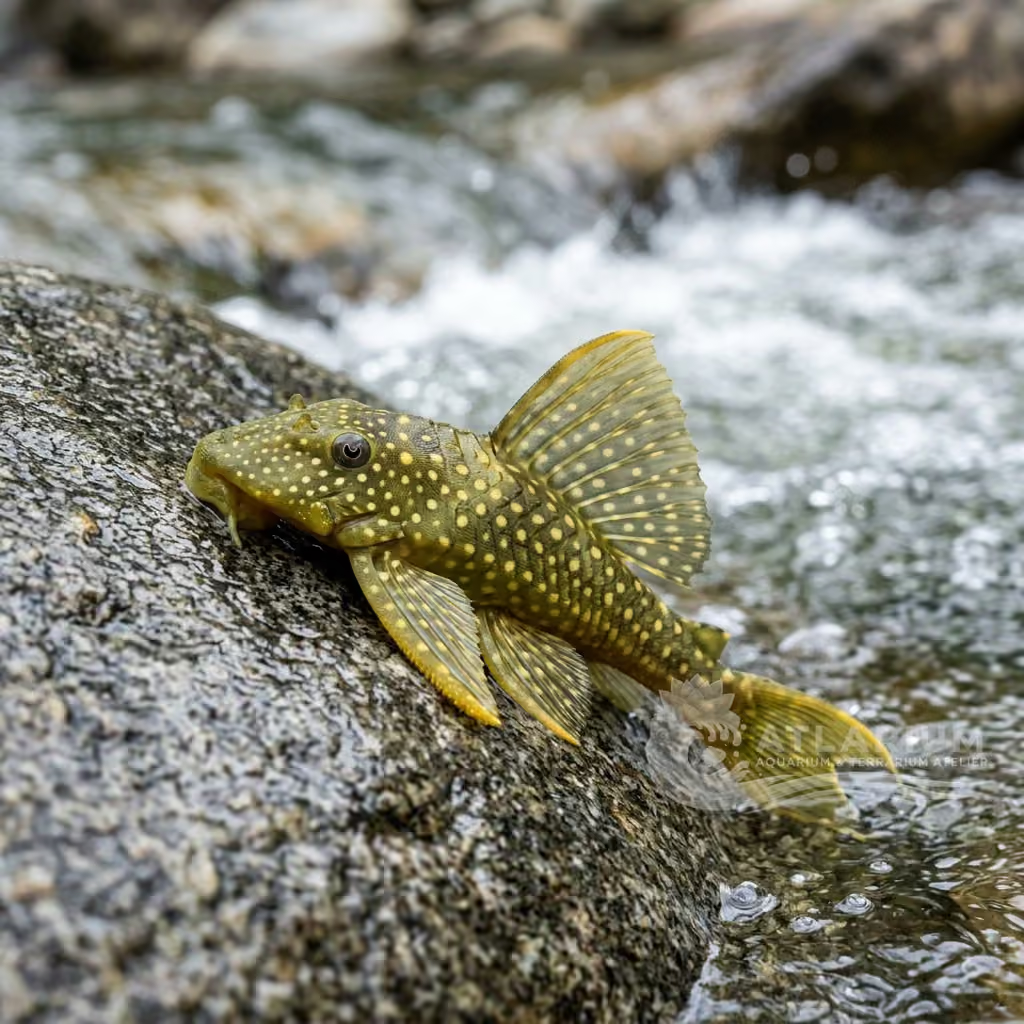
Horseface Loach
Acantopsis dialuzona
The horseface loach is a shy, snake-like freshwater fish from SE Asia. It thrives in fast-flowing streams with fine gravel or sand, using its long snout to burrow and feed.
Wassertemperatur
25 - 28 °C
pH-Wert
6 - 7.5
Wassertyp
Süßwasser
Tankfüllstand
Unten
Erwachsenengröße
20 cm
Mindesttankvolumen
>= 180 L
Mindestgruppe
5
GH
2 - 12 dGH
KH
1 - 6 dKH
TDS
40 - 240 ppm
Leitfähigkeit
63 - 375 uS/cm

Artbeschreibung
Geographical Origin and Habitat: Highly widespread throughout Southeast Asia, from the islands of Sumatra and Java to Borneo, Malaysia and Thailand. Thrives in clear streams and hill rivers characterized by lively currents, where it patrols vast beds of very fine gravel and mud to feed.
Taxonomy and Morphology: Exponent of the Cobitidae family. Known worldwide as the "Horseface Loach". The snake-like and compressed body is dominated by a hyper-elongated and tubular snout, perfect for uprooting and burying itself, making it reach a good 20 cm (8 inches) in length.
Social Behavior: Deeply shy, gregarious and peaceful nature. Spends most of the daylight hours totally buried in the sand, letting only its eyes emerge. In the twilight hours it patrols in schools (at least 5 specimens) the substrate in search of food.
Coloration and Sexual Dimorphism: Camouflage "stealth" livery par excellence: sand-gray, brown or cream background interspersed with a dense disorderly punctuation and broken mimetic lateral bands. Eyes positioned high on the head. Mature females possess a distinctly more spherical and round waistline than slender males.

Pflege, Zucht und Mitbewohner
Aquarium Setup: The use of inert sand fine as sugar is essential; rough gravels will cause immediate and lethal skin mutilations, as the species dives headlong at great speed to bury itself. Provide strong currents with roots, smooth stones and dimmed lights.
Diet and Feeding: Benthic micropredator. The diet must consist of small fast-sinking foods that can be unearthed in the sand: live or frozen tubifex, thawed bloodworms, and protein bottom granules. Will totally ignore floating flakes.
Water Quality: Typically lotic water fish: requires high and constant temperatures (25-28°C / 77-82°F), pH between 6.0 and 7.5 (neutral-acidic) and soft waters. The aquarium must be free of pollutants, ultra-oxygenated and preferably covered, as they tend to jump out of the water if frightened.
Compatibility and Cohabitation: An excellent and invisible guest for quiet Asian biotope communities. Cohabits wonderfully with Rasboras, Danios, peaceful Barbs and Gouramis. Avoid a priori cohabitation with large digging Cichlids or aggressive and biting Loaches (such as B. modesta).
Aquarium Breeding: Event not yet documented and completely absent in the hobbyist aquarist bibliography. In nature, reproduction is dictated by complex migratory flows along the waterways coinciding with the massive monsoon rains.
Risks and Diseases: The biggest threat comes from the wrong substrate, which tears the flesh exposing it to fungal infections. Due to the absence of protective armored scales, it tolerates copper medicines or aggressive Ich treatments very badly.

Geografische Herkunft und Verbreitung
Highly widespread throughout Southeast Asia, from the islands of Sumatra and Java to Borneo, Malaysia and Thailand. Thrives in clear streams and hill rivers characterized by lively currents, where it patrols vast beds of very fine gravel and mud to feed.
Ursprung
Kosmopolitisch oder eingeführtSüd- und SüdostasienOstasien

Fischprofil
- Temperament
- Peaceful
- The horseface loach is a highly peaceful and non-aggressive species, making it an excellent addition to community tanks. They spend much of their time buried or resting quietly on the bottom, avoiding confrontation with other tankmates. While minor, harmless skirmishes may occur between individuals of the same species over temporary territory, physical injuries are extremely rare. They do not pose any threat to small, midwater-dwelling fish.
- Diät
- Omnivore
- In nature, these loaches feed by sifting mouthfuls of sandy substrate through their gills, extracting insect larvae, small crustaceans, and organic matter. In captivity, they are omnivorous and not difficult to feed, but they require foods that sink directly to the bottom. A varied diet of high-quality sinking pellets or wafers, supplemented with live or frozen foods like bloodworms, tubifex, daphnia, and brine shrimp, is ideal. Providing a soft sand substrate is critical to allow their natural sifting feeding behavior.
- Lebenserwartung
- 8-12 years
- Erwachsenengröße
- 20 cm
- Geschlechterverhältnis
- Group
- In their natural habitat, horseface loaches live in loose aggregations rather than strict pairs. When kept in aquariums, it is highly recommended to house them in groups of at least three, but ideally six or more specimens, to reduce stress. A single specimen can be kept alone, but keeping pairs is generally discouraged as occasional minor territorial skirmishes can occur. The exact sex ratio in these groups is not highly critical, as they do not form monogamous pairs.
- Fütterungsfrequenz
- Twice daily
- Horseface loaches should be fed once or twice a day, offering only what they can consume within a few minutes. Since they are primarily nocturnal or crepuscular, it is often beneficial to feed them shortly before or after the aquarium lights are turned off. This ensures they can forage peacefully without having to compete with faster, daytime-active tankmates. Regular feeding schedules help maintain their health and prevent food from decaying in the substrate.
- Bioload
- Medium
- The horseface loach reaches a relatively large size, potentially exceeding 20 cm in length, meaning they have a moderate biological waste contribution in an aquarium. Due to their natural habitat of flowing river systems, they are highly sensitive to the accumulation of organic pollutants like nitrate, nitrite, and ammonia. A powerful filtration system with a flow rate of 4-5 times the tank volume per hour is essential to keep the water pristine. Weekly water changes of 30% to 50% are highly recommended to ensure their health.
- Fluss
- Moderate
- Hailing from flowing river channels and streams, horseface loaches prefer moderate to strong water flow in the aquarium. They require well-oxygenated water with low organic pollution, which is typically facilitated by strong currents. The inclusion of powerheads, additional filter outlets, or airstones is highly beneficial to mimic their natural riverine environment. However, they must also be provided with calm, decorated areas where they can rest without fighting the current constantly.
- Sprungrisiko
- Yes
- Although they are primary bottom-dwellers, horseface loaches represent a significant jump risk in home aquariums. When startled or stressed, they can dart extremely fast and may jump out of the water, escaping through even small gaps in the cover. A tight-fitting lid or glass canopy without any openings is essential to prevent them from leaping out. Covering filter outlets and cable holes with foam or mesh is also highly recommended to ensure their safety.
- Reproduktion
- Oviparous
- There are no documented cases of successful reproduction of the horseface loach in home aquariums. In the wild, they are believed to migrate into temporarily flooded forest areas during the wet season to spawn, a complex process that is difficult to replicate in captivity. Their sexual dimorphism is subtle, with modified pectoral fins in males and mature females growing larger. Spawning triggers in the wild include changes in water level, temperature, and atmospheric pressure.
- Kompatibilität & Tankkameraden
- Peaceful
- The horseface loach is compatible with a wide variety of peaceful community fish, particularly those that inhabit the upper water column. Suitable tankmates include active schooling fish like rasboras, danios, devario, and barilius. Other peaceful sand-dwelling loaches can also be housed with them, provided the tank is large enough to prevent territorial disputes. Large, predatory, or highly aggressive species must be avoided, as these shy loaches can easily become stressed or preyed upon.
- Tankfüllstand
- Bottom
- The horseface loach is a strictly bottom-dwelling species that spends almost all of its time on or beneath the substrate. They possess a specialized behavior of burying themselves in fine sand, leaving only their eyes exposed to watch for predators or prey. They rarely venture into the middle or upper water column except when startled or during feeding. Therefore, the aquarium layout must focus on maximizing the available sand surface area at the bottom.

Verwandte Arten
Empfehlungen gruppiert nach nahen Verwandten, Auswahl von Begleitern und ähnlicher Betreuung.