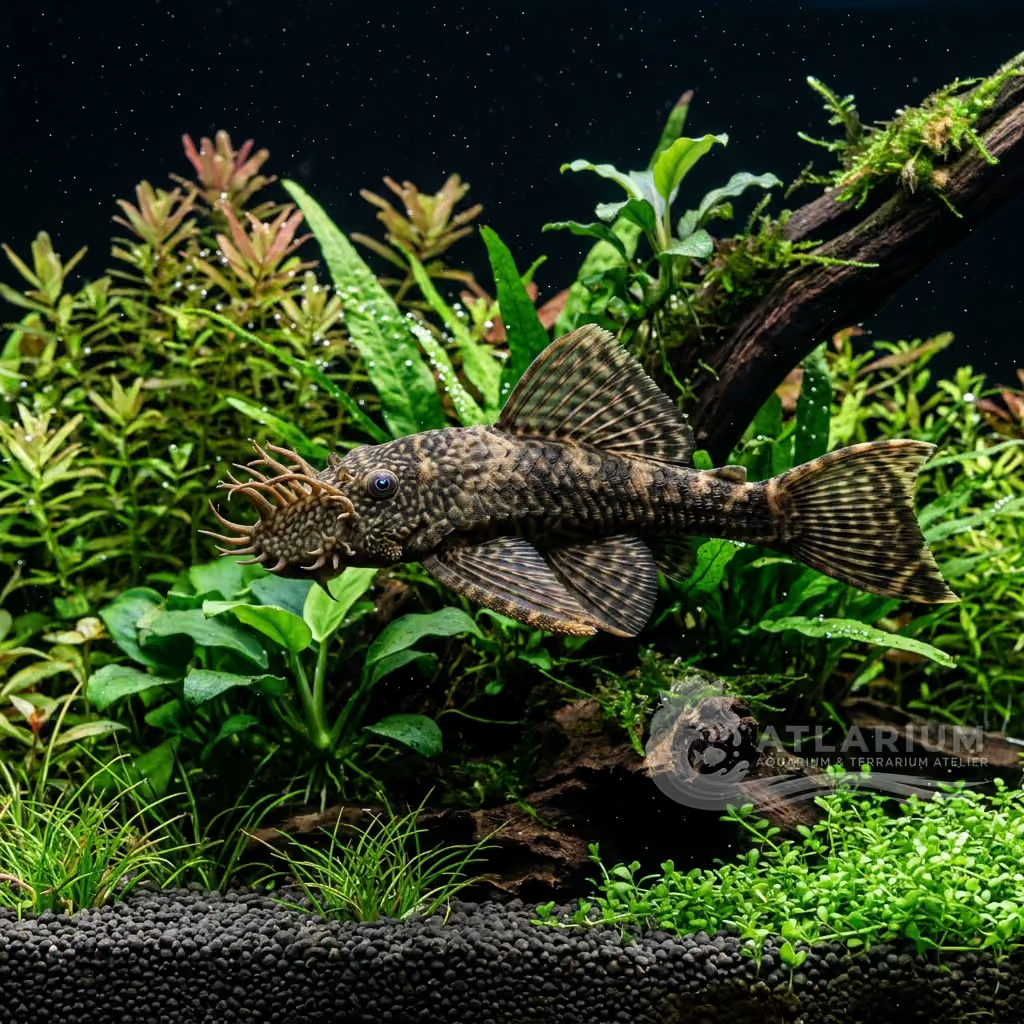
Spotted raphael catfish
Agamyxis pectinifrons
An unmistakable armored catfish: stocky dark body dotted with white spots, with serrated pectoral spines that lock erect as a defense mechanism. Strictly nocturnal, it spends the day motionless in its shelters only to come alive in the dark with surprising liveliness. It produces audible sounds by stridulating its pectoral spines — earning it the nickname "talking catfish." Long-lived, it can exceed 10 years in captivity. Never use nets to catch it: the spines snag dangerously.
22 - 26 °C
6 - 7.5
Süßwasser
Unten
15 cm
>= 150 L
>= 1
4 - 15 dGH
2 - 7 dKH
80 - 295 ppm
125 - 461 uS/cm

Artbeschreibung

Pflege, Zucht und Mitbewohner

Geografische Herkunft und Verbreitung
Ursprung

Fischprofil
- Temperament
- Semi-aggressive
- This catfish is highly peaceful and non-aggressive, making it an excellent addition to many community setups. They are nocturnal and secretive, meaning they will spend the day hidden and only become active after the lights go out. While peaceful towards tankmates of appropriate size, they are opportunistic feeders and might swallow very tiny fry or micro-fish. They do not show territorial aggression towards other bottom-dwellers, provided there are enough hiding spots for everyone.
- Diät
- Omnivore
- Agamyxis pectinifrons is an omnivore with a strong preference for protein-rich foods. In the wild, they consume insects, larvae, and organic detritus from the riverbed. In captivity, they eagerly accept sinking pellets, tablet foods, and frozen options like bloodworms, brine shrimp, and tubifex. It is important to ensure that food actually reaches the bottom of the tank, as faster-swimming surface dwellers may consume everything before the catfish emerge.
- Lebenserwartung
- 10-20 years
- Erwachsenengröße
- 15 cm
- Geschlechterverhältnis
- Group
- There is no strict sex ratio required for Agamyxis pectinifrons as they are not aggressive toward their own kind. They are highly gregarious fish and are much more active and less stressed when kept in groups of five or more specimens. If kept alone, they tend to remain permanently hidden and may fail to thrive. Therefore, stocking them as a social group rather than focusing on male-to-female ratios is the best practice.
- Fütterungsfrequenz
- Once daily
- Since they are nocturnal, it is best to feed these catfish once a day, shortly after the aquarium lights are turned off for the evening. Feeding them during the day is rarely successful, as they will remain hidden and the food may rot or be eaten by others. Offering food at night aligns with their natural foraging behavior and ensures they get adequate nutrition. A consistent daily feeding schedule helps maintain their health and prevents overfeeding.
- Bioload
- Medium
- The Spotted Raphael Catfish has a medium biological footprint due to its size of up to fifteen centimeters and its group-living habits. While they are relatively sedentary, a group of these catfish will produce a notable amount of waste that requires efficient filtration. A canister filter or high-quality power filter combined with weekly water changes is recommended to keep the substrate clean. Proper maintenance of the gravel or sand is crucial, as they spend their time on the bottom where organic debris accumulates.
- Fluss
- Moderate
- This species prefers slow to moderate water flow, reflecting their natural slow-moving river habitats in the Amazon basin. Heavy or turbulent currents should be avoided, as they can cause stress and make it difficult for these heavy-bodied fish to navigate. A gentle current that circulates oxygen and distributes heat throughout the tank is ideal. Hiding places shielded from direct water flow will provide them with comfortable resting areas.
- Sprungrisiko
- No
- Reproduktion
- Oviparous
- Breeding the Spotted Raphael Catfish in a home aquarium is exceptionally difficult and rarely achieved by hobbyists. In nature, they are egg-scatterers that spawn during the rainy season, laying adhesive eggs among dense vegetation or roots. Most specimens available in the trade are either wild-caught or bred commercially using hormone injections. Successfully triggering spawning in captivity without hormones requires precise manipulation of water parameters and environmental cues that are difficult to replicate.
- Kompatibilität & Tankkameraden
- Peaceful
- They are highly compatible with a wide variety of medium to large, peaceful community fish. Ideal tankmates include larger tetras, barbs, cichlids, gouramis, and other peaceful catfish of similar size. Extremely small fish, such as newborn fry or tiny shrimp, should be avoided as they may be eaten during the night. They can also be kept with their own species in groups, which actually encourages more natural and visible behavior.
- Tankfüllstand
- Bottom
- This species is strictly a bottom-dwelling fish that spends almost all daylight hours hiding in caves, PVC pipes, or dense root structures near the substrate. During the night, they may venture slightly into the lower-middle zones of the water column to search for food, especially if driftwood reaches upward. However, their primary swimming and resting activities remain close to the bottom of the aquarium. Providing a soft sandy substrate is essential to protect their sensory barbels while they forage at this level.

Wissenschaftliche Modelle & Parameter
Zugang zu den offiziellen wissenschaftlichen Daten der Art
- Trophäenniveau
- 2,3 ± 0,1 se
- Belastbarkeit
- Hoch (weniger als 15 Monate)
- Phylogenetische Einzigartigkeit (PD50)
- 0.75
- Bayessche Längen-Gewichts-Beziehung
- a = 0.01122, b = 3.04
- AnfälligkeitGeringe Anfälligkeit (10 / 100)

Bildergalerie
Lizenzierte Bilder, die mit der Art oder, wenn markiert, mit dem nächstgelegenen repräsentativen Taxon verknüpft sind.

Verwandte Arten
Empfehlungen gruppiert nach nahen Verwandten, Auswahl von Begleitern und ähnlicher Betreuung.