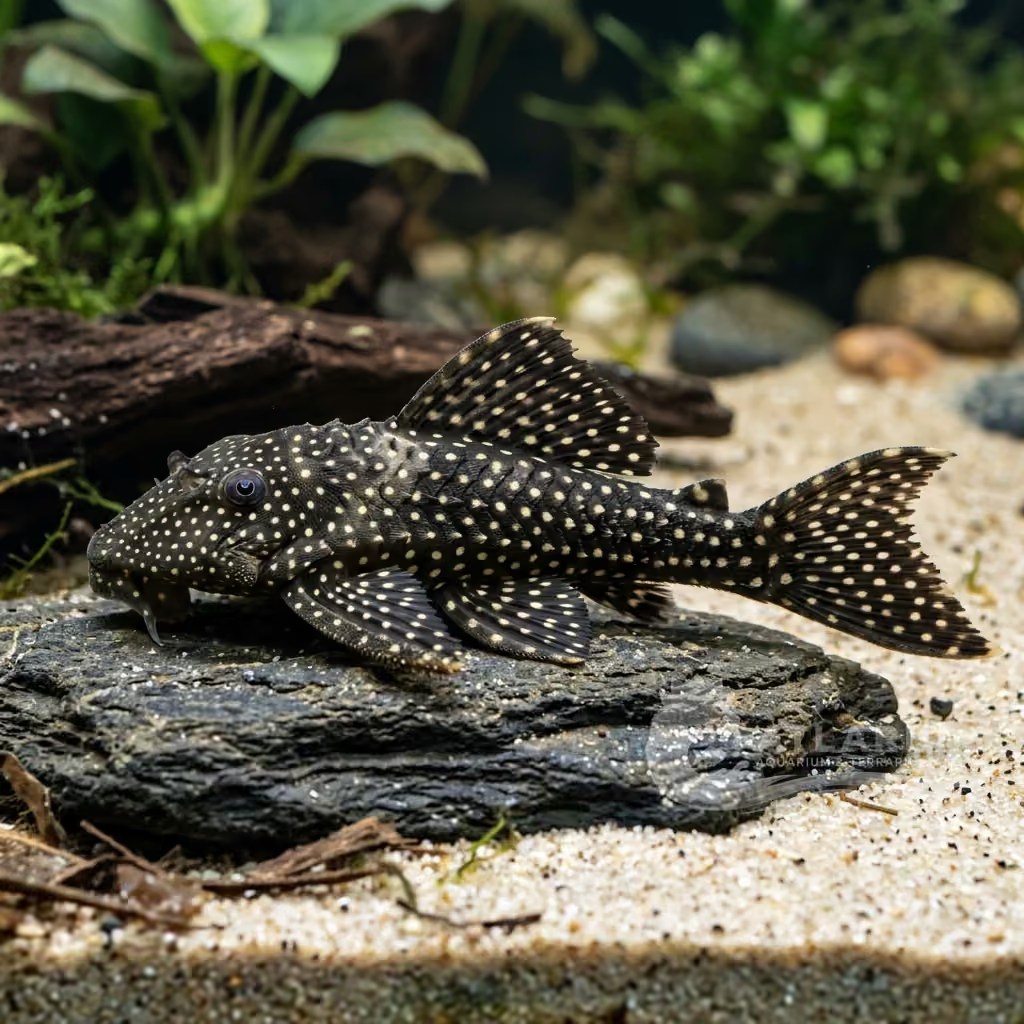
Motoro Stingray
Potamotrygon motoro
A large freshwater stingray from South America. Requires a very spacious aquarium with sandy substrate, excellent filtration, and expert-level care. Venomous tail spine demands extreme caution during maintenance.
Wassertemperatur
24 - 29 °C
pH-Wert
6 - 7
Wassertyp
Süßwasser
Tankfüllstand
Unten
Erwachsenengröße
60 cm
Mindesttankvolumen
>= 500 L
Mindestgruppe
>= 1
GH
1 - 10 dGH
KH
1 - 5 dKH
TDS
25 - 200 ppm
Leitfähigkeit
39 - 313 uS/cm

Artbeschreibung
Geographical Origin and Habitat: Amazon River Basin (Colombia, Peru, Brazil). Inhabits sandy and silty bottoms of large rivers and slow-flowing bays, camouflaging under a light layer of sand.
Taxonomy and Morphology: Motoro Stingray (Potamotrygon motoro). Freshwater stingray. Huge cartilaginous disc, raised periscope eyes and spiracles to breathe when buried. Muscular tail armed with a serrated and venomous stinger.
Social Behavior: Ambush predator and "glider". By day it often rests buried. At night and during meals, it rises like a flying saucer sifting the sand. Uses its mantle fins to trap fish on the bottom.
Coloration and Sexual Dimorphism: Polka dot disc. The body varies from sand beige to dark brown, entirely studded with spectacular ocellar spots (Ocelli: yellow or orange circles bordered in black). Males are distinguished by "claspers" (two tubular reproductive appendages at the base of the tail).

Pflege, Zucht und Mitbewohner
Aquarium Setup: Indoor Pool (Minimum 200 cm / 80 inches long x 100 cm / 40 inches deep). THE BOTTOM SURFACE IS EVERYTHING. Zero decor: only very soft and deep river sand. No sharp rocks or gravel that would scratch their belly leading to death by septicemia.
Diet and Feeding: Extreme high-load carnivore. Eats obscene amounts of meat: tilapia fillets, peeled shrimp, scallops, bloodworms for juveniles. Very fast metabolism: they dirty the water in an unimaginable way.
Water Quality: The ammonia monster. They produce frightening biological loads. They require a monstrous filtration system (Huge sumps, fluidized bed filters) and 50% weekly water changes. Very sensitive to nitrates and common medications (Copper, Malachite Green forbidden).
Compatibility and Cohabitation: Fish-eaters. Any bottom fish (Corydoras, small Plecos) will become a fatal snack (pleco spines kill the ray). Pair only with large cichlids or Arowana fish that stay strictly on the surface.
Aquarium Breeding: Viviparous. Mating is violent: the male repeatedly bites the edges of the female's disc to pin her down (leaving scars). After about 100 days, the mother gives birth to 2-8 mini-rays already perfect, adorable but lethal copies of the adults.
Risks and Diseases: The Venomous Stinger. It is not a pet. The stinger (which is molted periodically falling to the bottom) penetrates human muscles and bones, injecting necrotizing toxins. A clumsy movement during glass cleaning can take you straight to the ER in anaphylactic shock.

Geografische Herkunft und Verbreitung
Amazon River Basin (Colombia, Peru, Brazil). Inhabits sandy and silty bottoms of large rivers and slow-flowing bays, camouflaging under a light layer of sand.
Ursprung
Amazonas, Orinoco und GuayanaNordamerika

Fischprofil
- Temperament
- Semi-aggressive
- The Motoro Stingray is generally peaceful and highly responsive to its caretakers, often learning to accept food directly from tongs. However, its predatory nature makes it highly dangerous to any tank mate small enough to be considered prey. It possesses a venomous tail spine used strictly for defense, requiring extreme caution during tank maintenance.
- Diät
- Omnivore
- Motoro Stingrays are voracious, exclusively carnivorous predators that require a highly diverse and heavily meaty diet. They thrive on fresh or frozen offerings such as earthworms, ghost shrimp, chunks of fish fillet, and completely thawed mussels. Specialized sinking carnivore pellets can be gradually introduced to heavily supplement their intensive nutritional requirements.
- Lebenserwartung
- 10-12 years
- Erwachsenengröße
- 60 cm
- Geschlechterverhältnis
- Solitary
- Sexing is straightforward: males possess visibly distinct claspers located near the base of the pelvic fins, while females do not. They can be successfully kept as single specimens, pairs, or in groups containing one male and multiple females if space permits. Keeping multiple adult males together can lead to severe aggression and mating injuries toward the females.
- Fütterungsfrequenz
- Twice daily
- Juvenile rays have exceptionally fast metabolisms and strongly require feeding two to three times every single day to support rapid growth. Mature adults still demand a substantial intake and should be generously fed once or twice daily. Their high feeding frequency directly contributes to their immense bioload, further necessitating strict water quality management.
- Bioload
- High
- The Motoro Stingray produces an absolutely massive bioload due to its highly carnivorous diet and rapid metabolism. It strictly requires an incredibly powerful, oversized biological and mechanical filtration system, often utilizing massive sump systems. Very frequent, large-volume water changes are absolutely non-negotiable to keep nitrates, ammonia, and nitrites at barely detectable levels.
- Fluss
- Stagnant
- Originating from the expansive Amazon River basin, they generally prefer moderate, wide-sweeping water flow across the substrate. While they tolerate varied flow rates, extremely high, turbulent currents can sometimes cause unnecessary physical stress. Strategic flow should be utilized primarily to push waste toward filtration intakes without creating localized dead zones.
- Sprungrisiko
- Yes
- While not traditional jumpers, large rays can occasionally breach the surface or splash aggressively during intense feeding frenzies or startling events. A heavy, highly secure lid is surprisingly necessary to prevent them from displacing equipment or partially launching themselves out. Their immense strength allows them to easily dislodge unsecured aquarium covers or light fixtures.
- Reproduktion
- Oviparous
- Captive breeding of Motoro Stingrays is well-documented and highly achievable for dedicated, advanced aquarists with massive aquariums. They reproduce via live birth (matrotrophic viviparity), typically producing small litters of fully formed, independent pups after a lengthy gestation. Providing absolutely pristine water quality and a heavily protein-rich diet is critical to supporting the breeding pair.
- Kompatibilität & Tankkameraden
- Peaceful
- This predatory species must only be kept with very large, peaceful mid-to-top dwelling fish such as large characins, robust cichlids, or arowanas. It will actively hunt and consume any fish small enough to be trapped beneath its expansive disk. Aggressive bottom-dwellers, specifically large plecos known to suck on ray slime coats, must be strictly avoided.
- Tankfüllstand
- Bottom
- As obligate benthic dwellers, they spend virtually their entire lives actively cruising along the bottom substrate or burying themselves. The aquarium's footprint (length and width) is vastly more critical than its height, requiring a massive surface area. The substrate must consist of fine, soft sand to prevent severe abrasions to their delicate bellies.

Wissenschaftliche Modelle & Parameter
FishBase
Zugang zu den offiziellen wissenschaftlichen Daten der Art
FishBase v25.04Daten synchronisiert am: 15.06.2026
- Trophäenniveau
- 3,2 ± 0,4 se
- Belastbarkeit
- Niedrig (4,5 - 14 Jahre)
- Generierungszeit
- 6,5 Jahre
- Phylogenetische Einzigartigkeit (PD50)
- 0.5
- Bayessche Längen-Gewichts-Beziehung
- a = 0.01, b = 3.04
- AnfälligkeitMäßige bis hohe Anfälligkeit (54 / 100)

Verwandte Arten
Empfehlungen gruppiert nach nahen Verwandten, Auswahl von Begleitern und ähnlicher Betreuung.