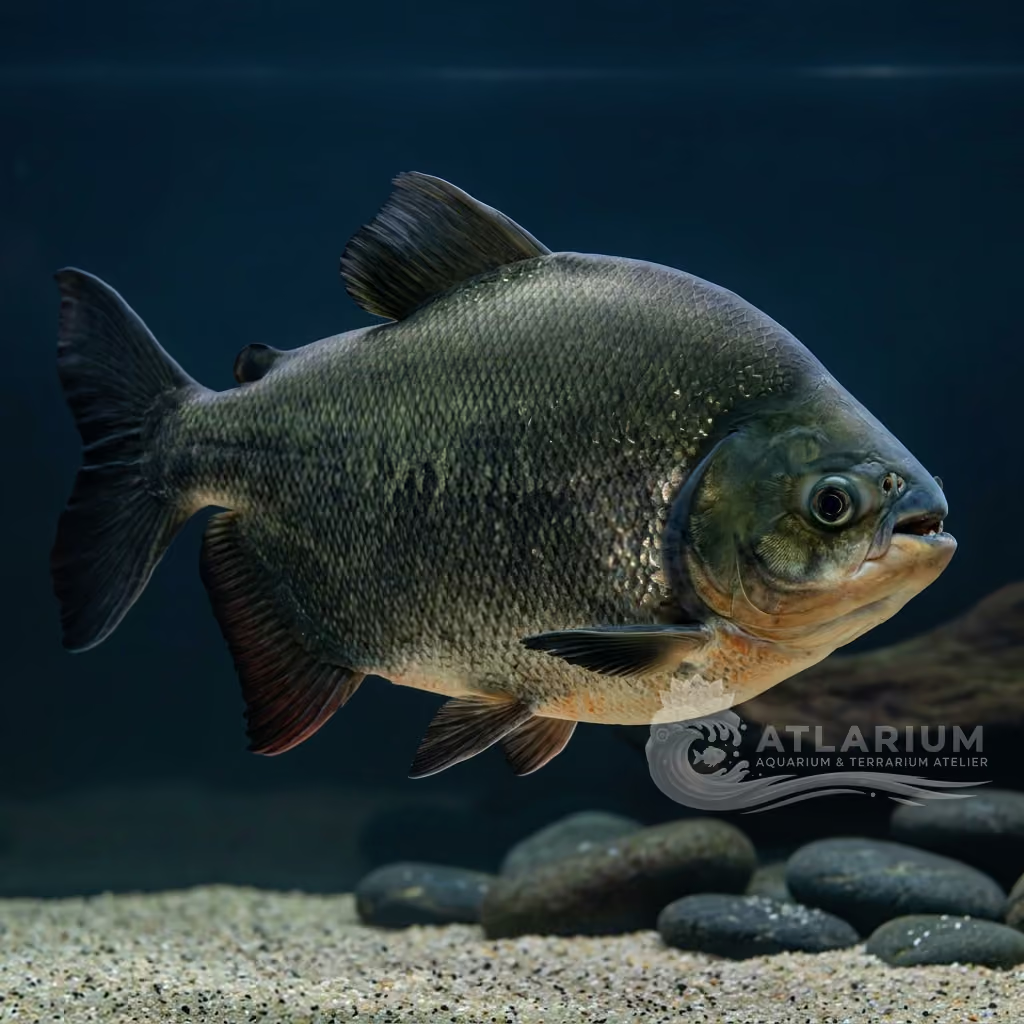
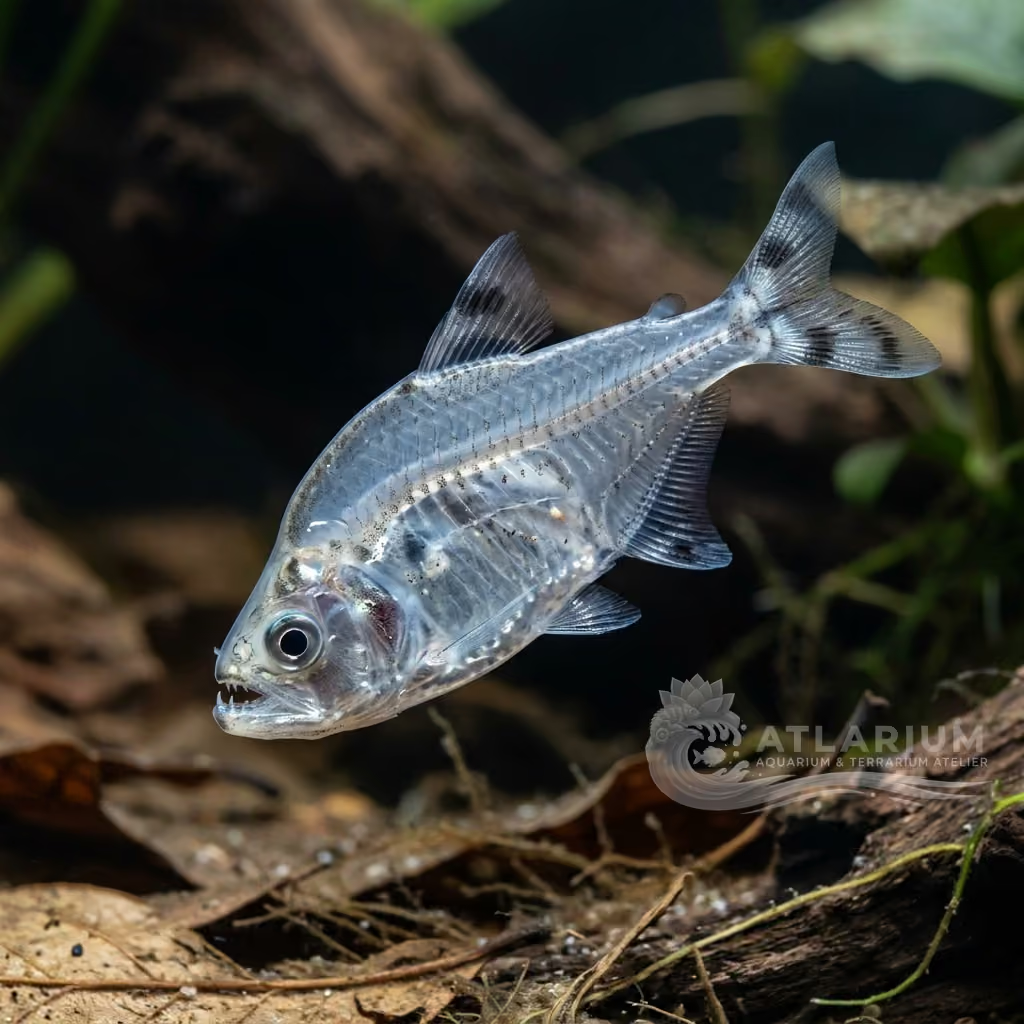
Black Spot Piranha (Orinoco Piranha / Cariba)
Pygocentrus cariba
The black-spot piranha (up to 35 cm). Renowned for its bold temperament and highly active nature, it is distinguished by a clear black humeral spot behind the gills.
Wassertemperatur
24 - 28 °C
pH-Wert
6 - 7.5
Wassertyp
Süßwasser
Tankfüllstand
Mitte
Erwachsenengröße
30 cm
Mindesttankvolumen
500 L
Mindestgruppe
6 - 8
GH
5 - 15 dGH
KH
2 - 7 dKH
TDS
95 - 295 ppm
Leitfähigkeit
148 - 461 uS/cm

Artbeschreibung
Geographical Origin and Habitat: Endemic to the Orinoco River basin in Venezuela and Colombia, inhabiting the vast flooded grasslands of the Llanos. Found in slow-moving rivers, swamps, and lagoons that experience extreme seasonal water level drops.
Taxonomy and Morphology: Black-shoulder Piranha (Pygocentrus cariba). Closely resembles P. nattereri but is distinguished by the dark humeral spot. Possesses incredibly powerful jaw muscles and razor-sharp triangular teeth.
Social Behavior: Highly gregarious pack animal. Exhibits strong territoriality and a strict social hierarchy. Considerably more aggressive than other Pygocentrus species, showing frequent intraspecific skirmishes.
Coloration and Sexual Dimorphism: Silvery-gray body with golden flecks, bright red to orange throat and belly, and a prominent black spot behind the gill cover. No reliable external sexual dimorphism exists.

Pflege, Zucht und Mitbewohner
Aquarium Setup: Requires a very large aquarium (minimum 500 liters / 130 gallons for a small group) with extensive open swimming space and heavy driftwood structures. Dim lighting and floating plants are highly recommended to prevent skittishness.
Diet and Feeding: Carnivore. Feed a varied diet of fresh or frozen seafood, such as fish fillets, shrimp, mussels, and earthworms. Can be trained on high-quality sinking carnivore pellets. Do not feed warm-blooded meats or unquarantined live feeder fish.
Water Quality: High-volume biological filtration is mandatory to handle the massive bioload. Perform 30-50% weekly water changes. Keep temperature at 24-28°C, pH at 6.0-7.5, and GH between 5 and 15.
Compatibility and Cohabitation: Keep strictly in a species-only setup. Tankmates, even large robust species, will eventually be attacked or consumed. Keep in groups of 6 or more to distribute aggression.
Aquarium Breeding: Seldom achieved in home aquaria. A bonded pair will clear a depression in the substrate to lay adhesive eggs, which the male guards aggressively.
Risks and Diseases: Intraspecific biting can cause serious wounds, fin damage, and eye injuries. Extremely prone to panic; sudden movements or bright lights can cause them to crash into the glass, causing mouth damage.

Geografische Herkunft und Verbreitung
Endemic to the Orinoco River basin in Venezuela and Colombia, inhabiting the vast flooded grasslands of the Llanos. Found in slow-moving rivers, swamps, and lagoons that experience extreme seasonal water level drops.
Ursprung
Amazonas, Orinoco und GuayanaEuropa, Mittelmeerraum und Westasien

Fischprofil
- Temperament
- Semi-aggressive
- Despite their fierce reputation, they are surprisingly skittish in captivity. They require dim lighting and secure hiding spots to feel confident. During feeding, they exhibit explosive, highly aggressive pack-hunting behaviors.
- Diät
- Omnivore
- They are strict carnivores demanding high-protein, meaty foods. Thawed white fish, shrimp, and specialized carnivore pellets are ideal. Never feed them mammalian meat, which severely damages their liver.
- Lebenserwartung
- 10-15 years
- Erwachsenengröße
- 30 cm
- Geschlechterverhältnis
- Solitary
- They must be kept in a sizable shoal of six or more. Single specimens become extremely timid, stressed, and sickly. Large groups establish a strict and sometimes brutal pecking order.
- Fütterungsfrequenz
- Twice daily
- Adults should be fed one large meal every other day. They are messy eaters that leave significant debris behind. Remove any uneaten flesh immediately to prevent deadly ammonia spikes.
- Bioload
- High
- This heavy-bodied Piranha produces a massive, highly polluting bioload. Frequent, large-scale water changes are strictly required for survival. Oversized canister filters are mandatory to handle their messy eating habits.
- Fluss
- Stagnant
- They prefer moderate water flow to mimic Amazonian rivers. Powerheads provide exercise and help sweep detritus into the filters. High oxygenation is crucial for their active, predatory metabolism.
- Sprungrisiko
- Yes
- They are a significant jump risk when spooked or hunting. A heavy, securely locked lid is absolutely essential for safety. Sudden turning on of lights can cause them to panic and jump.
- Reproduktion
- Oviparous
- Breeding them in captivity is incredibly rare and very difficult. They require massive pools and precise seasonal water level simulations. The parents fiercely guard the nest and are highly dangerous.
- Kompatibilität & Tankkameraden
- Species only
- They are notoriously aggressive and highly predatory by nature. They must only be kept in a strict species-only aquarium setup. Any other fish species will be systematically hunted and consumed.
- Tankfüllstand
- Middle
- They primarily patrol the mid-water column of the aquarium. They actively cruise back and forth looking for potential prey. They utilize large driftwood pieces as territories and ambush points.

Wissenschaftliche Modelle & Parameter
FishBase
Zugang zu den offiziellen wissenschaftlichen Daten der Art
FishBase v25.04Daten synchronisiert am: 15.06.2026
- Trophäenniveau
- 3,6 ± 0,76 se
- Belastbarkeit
- Hoch (weniger als 15 Monate)
- Phylogenetische Einzigartigkeit (PD50)
- 0.5625
- Bayessche Längen-Gewichts-Beziehung
- a = 0.0182, b = 3.12
- AnfälligkeitGeringe Anfälligkeit (18 / 100)

Verwandte Arten
Empfehlungen gruppiert nach nahen Verwandten, Auswahl von Begleitern und ähnlicher Betreuung.