Giant Hatchetfish
Thoracocharax securis
The 'Leviathan' of the hatchetfish family. An enormous, heavily armored silver top-dweller reaching 9 cm. Magnificent in massive schools alongside big South American cichlids, but fragile and notoriously difficult to acclimate from the wild.
Wassertemperatur
24 - 28 °C
pH-Wert
6 - 7.5
Wassertyp
Süßwasser
Tankfüllstand
Oberfläche
Erwachsenengröße
7 cm
Mindesttankvolumen
>= 60 L
Mindestgruppe
>= 1
GH
2 - 15 dGH
KH
1 - 7 dKH
TDS
40 - 295 ppm
Leitfähigkeit
63 - 461 uS/cm

Artbeschreibung
Geographical Origin and Habitat: Vast distribution across the main Amazon River system in Brazil and Peru. Prefers expansive, quiet lagoons, flooded oxbows, and slow rivers, schooling under the thick canopy of coastal trees and fallen wood.
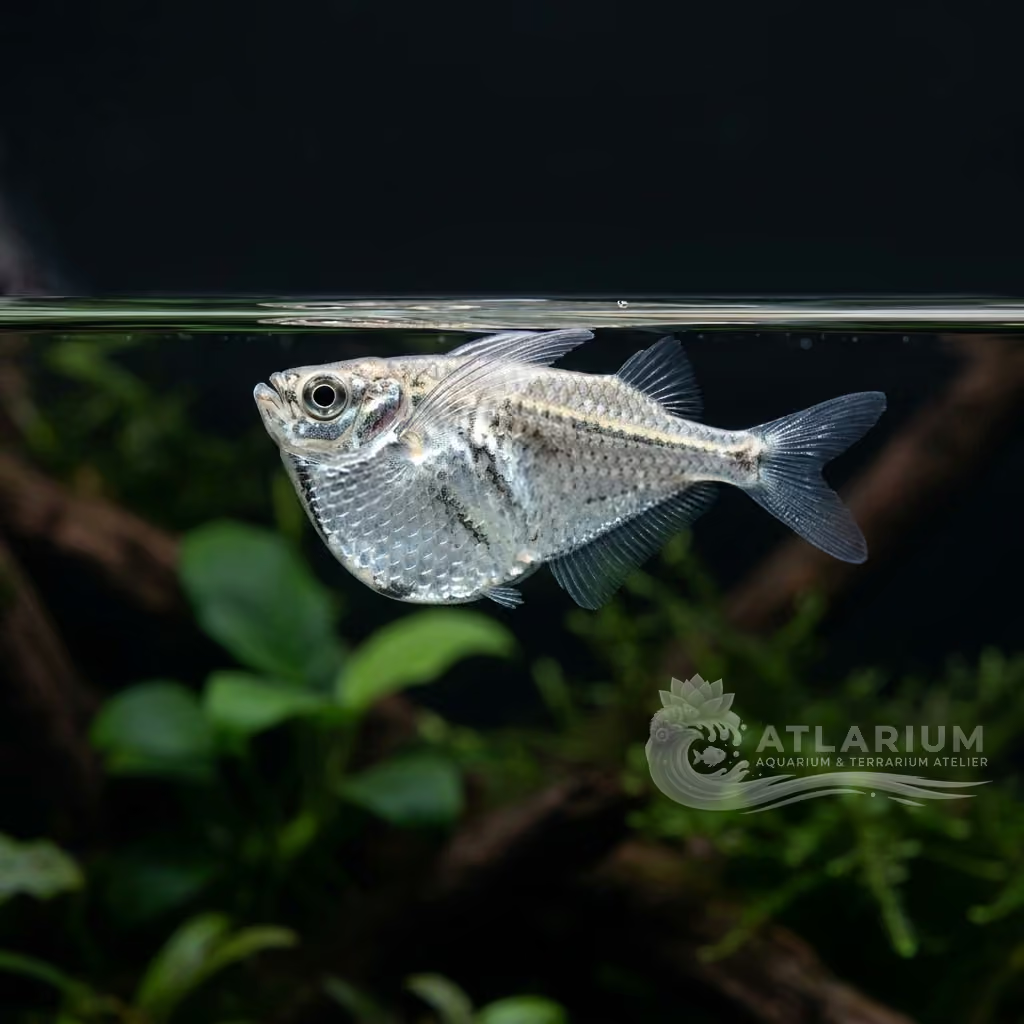
Taxonomy and Morphology: The absolute giant of the Gasteropelecidae family. Thoracocharax (meaning 'armored characin') easily reaches 8-9 cm (3.5 inches). The abdominal keel is so deep and massive it almost looks unnatural, comprising the vast majority of the fish's profile. Exceptionally long pectoral 'wings'.
Social Behavior: Highly gregarious, schooling placidly right at the surface. Less prone to panic than dwarf species, but when they do jump, their massive flight muscles produce explosive, loud ballistic jumps that carry them meters away in the wild. Becomes deeply depressed and if kept in small numbers.
Coloration and Sexual Dimorphism: Brilliant, mirror-like platinum/silver base. The scales are large and heavily outlined, granting an 'armored' appearance. Subtle yellow tinges on the flat back and at the base of the massive pectoral fins. No clear sexual dimorphism besides gravid females being slightly rounder.

Pflege, Zucht und Mitbewohner
Aquarium Setup: Demands MASSIVE volumes. A proper school requires a minimum 150 cm (5 feet) long tank. A HEAVY, COMPLETELY SEALED LID IS NON-NEGOTIABLE. Additionally, you MUST leave a 4-6 inch (10-15 cm) air gap between the water and the lid/lights; otherwise, these giants will launch into the glass at high speed, snapping their spines instantly. Copious broad-leaf floating plants are required.
Diet and Feeding: Extreme macro-insectivore. Has a massive appetite. Feed large freeze-dried insects (crickets, mealworms), jumbo floating pellets, and copious amounts of floating frozen bloodworms and krill chunks. Will starve if forced to dive for food; ignores sinking items completely.
Water Quality: THE PRIMARY CHALLENGE. Almost exclusively wild-caught, suffering heavy losses during shipping. Requires pristine, highly oxygenated water with minimal surface chop. pH 6.0-7.0, soft to medium GH. Temp 24-28°C (75-82°F). Zero tolerance for ammonia, which causes rapid fin corrosion on their 'wings'.
Compatibility and Cohabitation: Their sheer size allows them to be the perfect top-dweller for tanks housing jumbo South American peaceful cichlids: adult Discus, Geophagus, Uaru, Severums, and giant Plecos. Do NOT house with aggressive, toothy cichlids (Oscars, Jaguars) or Arowanas that will shred or eat them. Absolute minimum school of 6, ideally 10+.
Aquarium Breeding: Essentially unknown in the home aquarium; breeds during massive natural flood cycles.
Risks and Diseases: 1. LETHAL ACCLIMATION. Over 50% often die from Ich, internal parasites, and shipping stress in the first month unless strictly quarantined. 2. Ballistic suicide against the tank lid. 3. Starvation if water flow pulls food below the surface too quickly.

Geografische Herkunft und Verbreitung
Vast distribution across the main Amazon River system in Brazil and Peru. Prefers expansive, quiet lagoons, flooded oxbows, and slow rivers, schooling under the thick canopy of coastal trees and fallen wood.
Ursprung
Amazonas, Orinoco und Guayana

Fischprofil
- Temperament
- Semi-aggressive
- They are peaceful, skittish, and highly specialized fish that require a calm environment. They are easily frightened by sudden movements, loud noises, or aggressive tank mates. Despite their delicate nature, a large school of Giant hatchetfish is a stunning display.
- Diät
- Omnivore
- They are strict surface-feeding insectivores whose natural diet consists almost entirely of insects. In captivity, they require floating foods, as they will completely ignore anything that sinks. High-quality floating flakes and live fruit flies provide an excellent and natural food source.
- Lebenserwartung
- 3-5 years
- Erwachsenengröße
- 7 cm
- Geschlechterverhältnis
- School
- Distinguishing between the sexes is very difficult, though females may appear slightly wider when full of eggs. They are obligate schooling fish and must be kept in groups of at least six, preferably ten or more. Keeping them in small numbers will result in severe stress.
- Fütterungsfrequenz
- Twice daily
- They should be fed small amounts two to three times daily. Because they only eat from the surface, it is crucial to monitor feedings to ensure the food does not sink and go to waste. Care must be taken to ensure bottom-dwelling fish do not steal their food.
- Bioload
- Low to Medium
- The Giant hatchetfish produces a low to moderate bioload, suitable for well-maintained community aquariums. Because they require pristine water conditions, excellent filtration and regular water changes are mandatory. A mature, stable aquarium environment is necessary before introducing these delicate fish.
- Fluss
- Stagnant
- They prefer gentle to moderate water flow, mimicking the calm streams of South America. Strong surface agitation or heavy currents will stress them and make it difficult for them to feed naturally. The use of a spray bar can help distribute the filter return evenly.
- Sprungrisiko
- Yes
- They are arguably the most notorious jumpers in the freshwater aquarium hobby. Their deep, muscular bodies are specifically evolved to launch themselves out of the water to catch flying insects. An absolutely flawless, tight-fitting lid is strictly mandatory to keep them safe.
- Reproduktion
- Oviparous
- Breeding the Giant hatchetfish in captivity is considered extremely difficult and rarely achieved. They are egg scatterers that deposit their eggs among floating plant roots in very soft, acidic water. Triggering the spawn often requires simulating the rainy season with large water changes.
- Kompatibilität & Tankkameraden
- Semi-aggressive
- They are incredibly peaceful and make wonderful additions to calm community aquariums. They should be housed with other peaceful, slow-moving fish such as small tetras and bottom-dwelling catfish. They must never be kept with aggressive, boisterous, or fin-nipping species that will cause stress.
- Tankfüllstand
- Top
- They are obligate surface dwellers that spend their entire lives within the top few inches of the water column. Their upturned mouths and flat dorsal profiles are perfectly adapted for skimming the surface. Floating plants are highly appreciated, providing them with cover.

Wissenschaftliche Modelle & Parameter
FishBase
Zugang zu den offiziellen wissenschaftlichen Daten der Art
FishBase v25.04Daten synchronisiert am: 15.06.2026
- Trophäenniveau
- 3,5 ± 0,4 se
- Phylogenetische Einzigartigkeit (PD50)
- 0.752
- Bayessche Längen-Gewichts-Beziehung
- a = 0.01698, b = 3.09
- AnfälligkeitGeringe Anfälligkeit (10 / 100)

Verwandte Arten
Empfehlungen gruppiert nach nahen Verwandten, Auswahl von Begleitern und ähnlicher Betreuung.