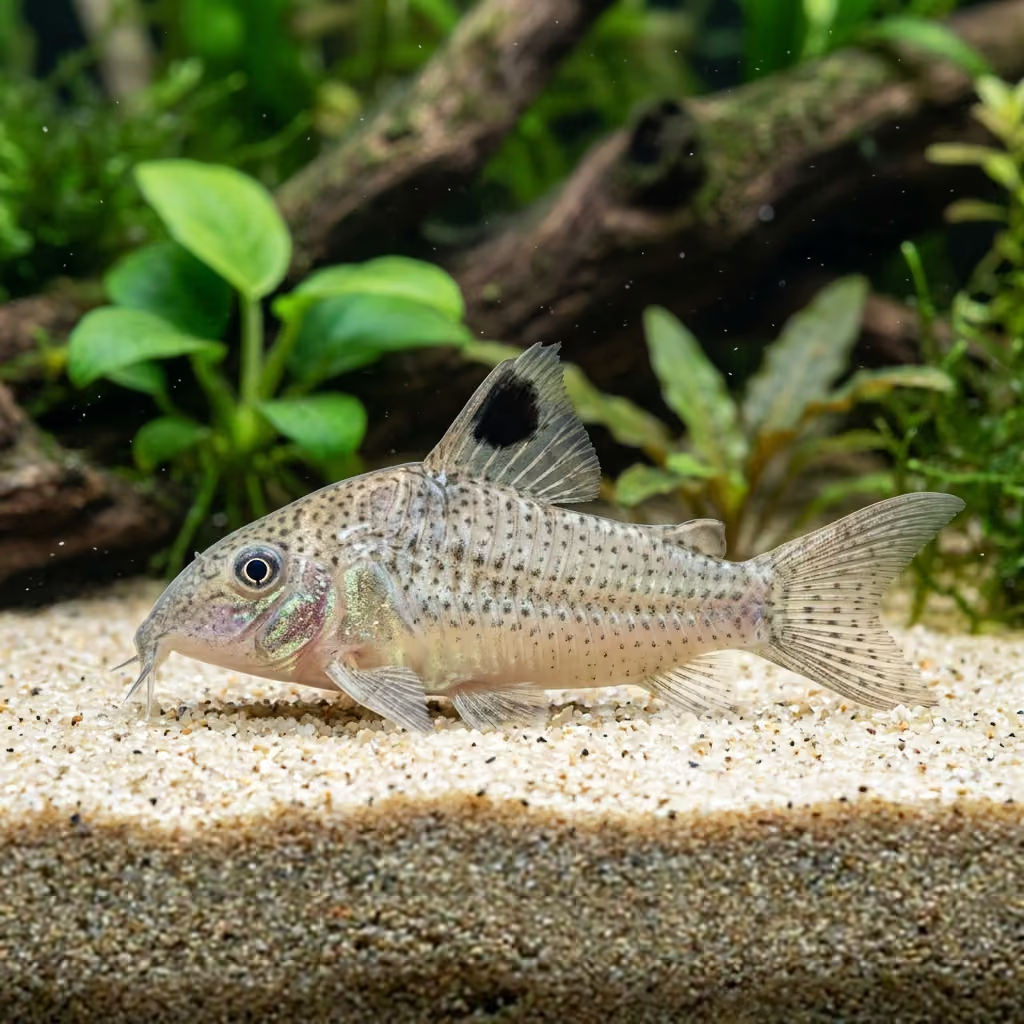
Marbled Hatchetfish
Carnegiella strigata
The 'flying' fish of the Amazon. Radically modified with a deep, axe-shaped chest and wing-like pectoral fins. Highly prone to jumping and gliding out of the water when startled. A completely sealed lid is mandatory.
Wassertemperatur
24 - 28 °C
pH-Wert
5.5 - 7
Wassertyp
Süßwasser
Tankfüllstand
Oberfläche
Erwachsenengröße
4 cm
Mindesttankvolumen
>= 30 L
Mindestgruppe
>= 1
GH
1 - 12 dGH
KH
1 - 6 dKH
TDS
25 - 240 ppm
Leitfähigkeit
39 - 375 uS/cm

Artbeschreibung
Geographical Origin and Habitat: Amazon and Orinoco Basin (Peru, Colombia, Brazil, Guyana). Inhabits forest streams, flooded areas (igapó) covered by thick floating foliage and the calm banks of major rivers.
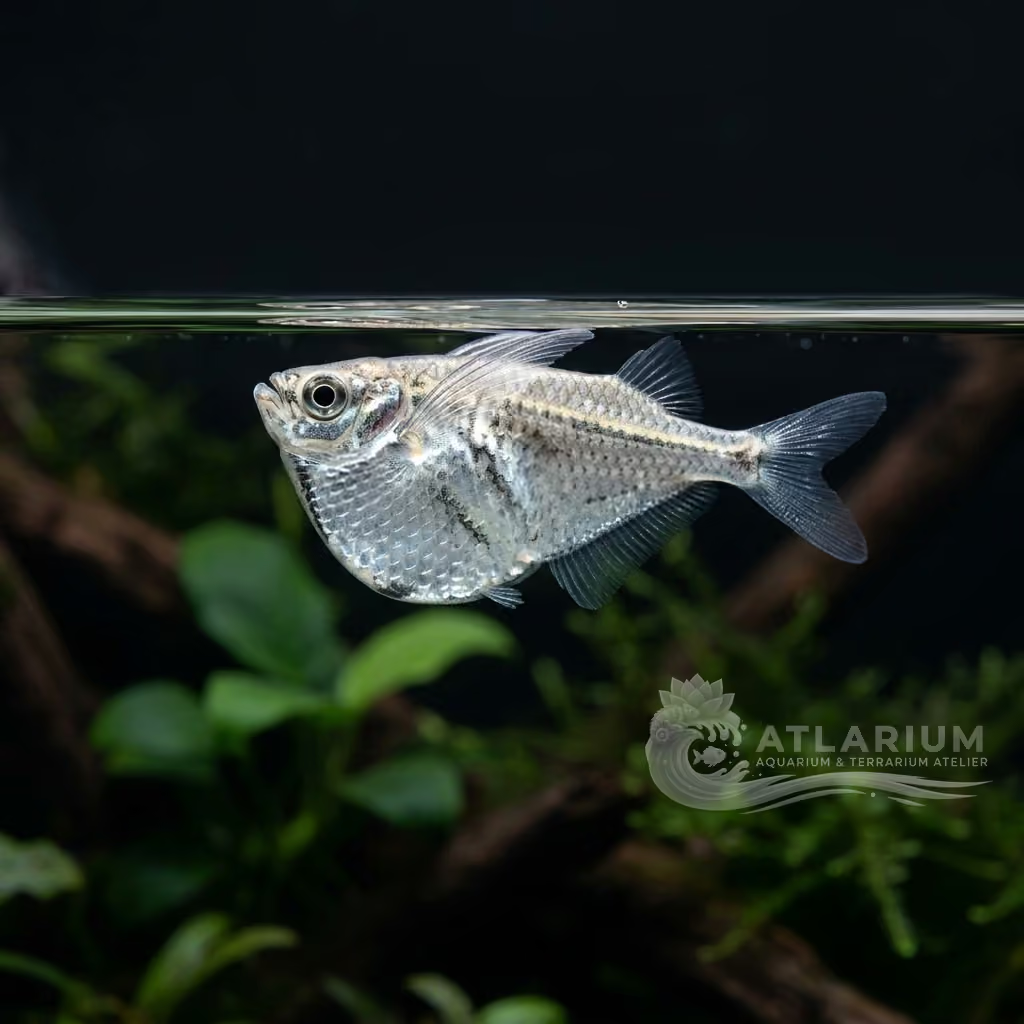
Taxonomy and Morphology: Marbled Hatchetfish (Carnegiella strigata). Characin with a very particular "hatchet" shape, with a deeply keeled belly and an almost flat back. Reaches 4 cm (1.5 inches). Hypertrophic pectoral fins pointing upwards.
Social Behavior: Extremely gregarious and strictly confined to the top inches of surface water. Hovers against the current waiting for insects. Lives constantly in terror of underwater predators, requiring schools of at least 8-10 individuals to feel secure.
Coloration and Sexual Dimorphism: Silvery or pale golden background crossed by a spectacular network of dark marbled stripes (strigata = striped) on the belly. Mature females have a slightly more convex dorsal profile due to eggs.

Pflege, Zucht und Mitbewohner
Aquarium Setup: Minimum 80 cm (32 inches) in length. A LID IS A VITAL REQUIREMENT: they are designed to fly for meters out of the water. Insert abundant floating vegetation (Limnobium, Pistia) and create a moderate but constant surface flow.
Diet and Feeding: Exclusive surface micro-insectivore. Categorically refuses any food that sinks. Feed fruit flies (Drosophila), floating freeze-dried bloodworms and very small flakes placed on the water's surface.
Water Quality: Pure Amazonian fish: demands warm (24-28°C / 75-82°F), moderately acidic to neutral (pH 5.5-7.0) waters of low or moderate hardness. Very sensitive to spikes in nitrogenous compounds.
Compatibility and Cohabitation: Completely inoffensive and vulnerable. Ideal companion for peaceful Tetras, Corydoras, Otocinclus and Loricariids. Avoid overly lively surface species (e.g. Giant Hatchetfish or large Danios) or medium-large cichlids.
Aquarium Breeding: Rare. Requires very soft (osmosis) and acidic water, with a rich live diet. They scatter tiny, non-adhesive eggs among the roots of floating plants. No parental care.
Risks and Diseases: In addition to the fatal risk of jumping, they suffer from thinning due to food competition if they fail to grab the floating fragments before they sink. Frequent carriers of Ich post-importation.

Geografische Herkunft und Verbreitung
Amazon and Orinoco Basin (Peru, Colombia, Brazil, Guyana). Inhabits forest streams, flooded areas (igapó) covered by thick floating foliage and the calm banks of major rivers.
Ursprung
Amazonas, Orinoco und Guayana

Fischprofil
- Temperament
- Semi-aggressive
- The marbled hatchetfish is an exceptionally peaceful, timid, and non-aggressive species that poses no threat to any tank mates. They are schooling fish by nature, and when kept in insufficient numbers, they can become extremely shy, stressed, and prone to diseases. They spend their day hovering quietly near the surface, showing interest primarily in food that floats on the water. Because of their delicate and gentle nature, they should never be housed with aggressive, territorial, or highly active fish that could intimidate them.
- Diät
- Omnivore
- In the wild, the marbled hatchetfish is a specialized insectivore that feeds on terrestrial insects falling onto the water's surface, as well as small aquatic invertebrates. In captivity, they must be offered foods that remain floating, as they will rarely descend to eat food that has sunk to the bottom. A diet consisting of high-quality floating flakes, micro-pellets, and freeze-dried or live foods such as fruit flies of the genus Drosophila, mosquito larvae, and daphnia is highly recommended. Variety is key to maintaining their vibrant marbled coloration and robust immune system.
- Lebenserwartung
- 3-5 years
- Erwachsenengröße
- 4 cm
- Geschlechterverhältnis
- Group
- There are no distinct external physical differences between male and female marbled hatchetfishes, though females may appear slightly rounder when viewed from above when they are carrying eggs. For stocking, they should not be kept in single pairs or harems, but rather in a group of at least six to eight individuals, with ten or more being ideal to help them feel secure. In a larger school, their natural schooling behavior is enhanced, which significantly reduces stress and promotes healthier interactions. Because they are shoaling fish, a specific male-to-female sex ratio is not critical for their general care or community display.
- Fütterungsfrequenz
- Twice daily
- Marbled hatchetfishes should be fed small portions two to three times a day, ensuring they can consume all the food within a few minutes. Because they feed strictly at the surface, it is important to provide only what they can consume quickly before the food sinks out of their reach. Any food that sinks to the bottom will be ignored by them and will degrade the water quality if not cleaned by bottom-dwellers. Feeding them in small, controlled amounts helps maintain pristine water conditions while keeping their energy levels stable.
- Bioload
- Low
- The marbled hatchetfish is a small species with a very low individual bioload, meaning it produces minimal waste. However, since it is a schooling species that must be kept in groups of at least six to ten individuals, the cumulative bioload can be moderate. They are highly sensitive to organic pollutants, ammonia, nitrite, and nitrate levels, requiring a clean and well-maintained aquarium environment. Effective but gentle filtration is crucial, ensuring that the water quality remains pristine without generating excessive currents that can stress the fish.
- Fluss
- Stagnant
- In their natural blackwater streams and flooded forest habitats, marbled hatchetfishes live in very calm, slow-moving waters. Consequently, they have a strong preference for weak to gentle water flow in the aquarium and will struggle in tanks with high surface turbulence. Strong currents can exhaust these delicate fish, preventing them from hovering naturally at the surface and interfering with their feeding. Utilizing spray bars, flow deflectors, or dense floating plants can help diffuse filter outputs, creating the calm surface zones they require.
- Sprungrisiko
- Yes
- This species is a legendary jumper in the aquarium hobby, capable of leaping significant distances out of the water to escape predators or catch insects in the wild. Consequently, a tightly fitting aquarium cover or lid with absolutely no gaps is mandatory when keeping marbled hatchetfishes. Even minor openings for cables or filter pipes should be sealed, as they can easily find their way through small spaces. Additionally, introducing floating plants can help reduce their jumping instinct by providing a physical barrier and a sense of security at the surface.
- Reproduktion
- Oviparous
- Breeding the marbled hatchetfish in captivity is considered highly challenging and is rarely achieved by casual aquarists. They are egg scatterers that require extremely soft, acidic water (pH around 5.5 to 6.0) and very dim lighting to trigger spawning behavior. The parents do not care for their offspring and will readily consume their own eggs and fry, necessitating their immediate removal after spawning. The resulting fry are exceptionally small and require microscopic live foods, such as infusoria, before transitioning to newly hatched brine shrimp.
- Kompatibilität & Tankkameraden
- Peaceful
- Marbled hatchetfishes are excellent community fish, provided they are housed with small, peaceful, and non-threatening tank mates. Ideal companions include peaceful bottom-dwellers like Corydoras, small tetras, rasboras, dwarf cichlids, and peaceful loricariids that occupy different levels of the aquarium. They should never be kept with large, aggressive, or boisterous species, nor with fish that are known fin-nippers. Ensuring the aquarium is spacious and has plenty of hiding places will further support a peaceful community dynamic.
- Tankfüllstand
- Top
- The marbled hatchetfish is a highly specialized surface-dwelling species that spends almost all of its time in the top layer of the water column. Their anatomical adaptations, including an upturned mouth and a deep, keel-like chest, are perfectly designed for feeding and swimming just beneath the water's surface. They rarely descend to the middle or bottom zones of the tank unless they are severely frightened or seeking cover. To mimic their natural environment, providing floating vegetation like Amazon frogbit or salvinia is highly recommended to give them cover and shelter at the surface.

Wissenschaftliche Modelle & Parameter
FishBase
Zugang zu den offiziellen wissenschaftlichen Daten der Art
FishBase v25.04Daten synchronisiert am: 15.06.2026
- Trophäenniveau
- 3,3 ± 0,43 se
- Phylogenetische Einzigartigkeit (PD50)
- 0.5645
- Bayessche Längen-Gewichts-Beziehung
- a = 0.0166, b = 3.13
- AnfälligkeitGeringe Anfälligkeit (10 / 100)

Bildergalerie
Lizenzierte Bilder, die mit der Art oder, wenn markiert, mit dem nächstgelegenen repräsentativen Taxon verknüpft sind.

Verwandte Arten
Empfehlungen gruppiert nach nahen Verwandten, Auswahl von Begleitern und ähnlicher Betreuung.