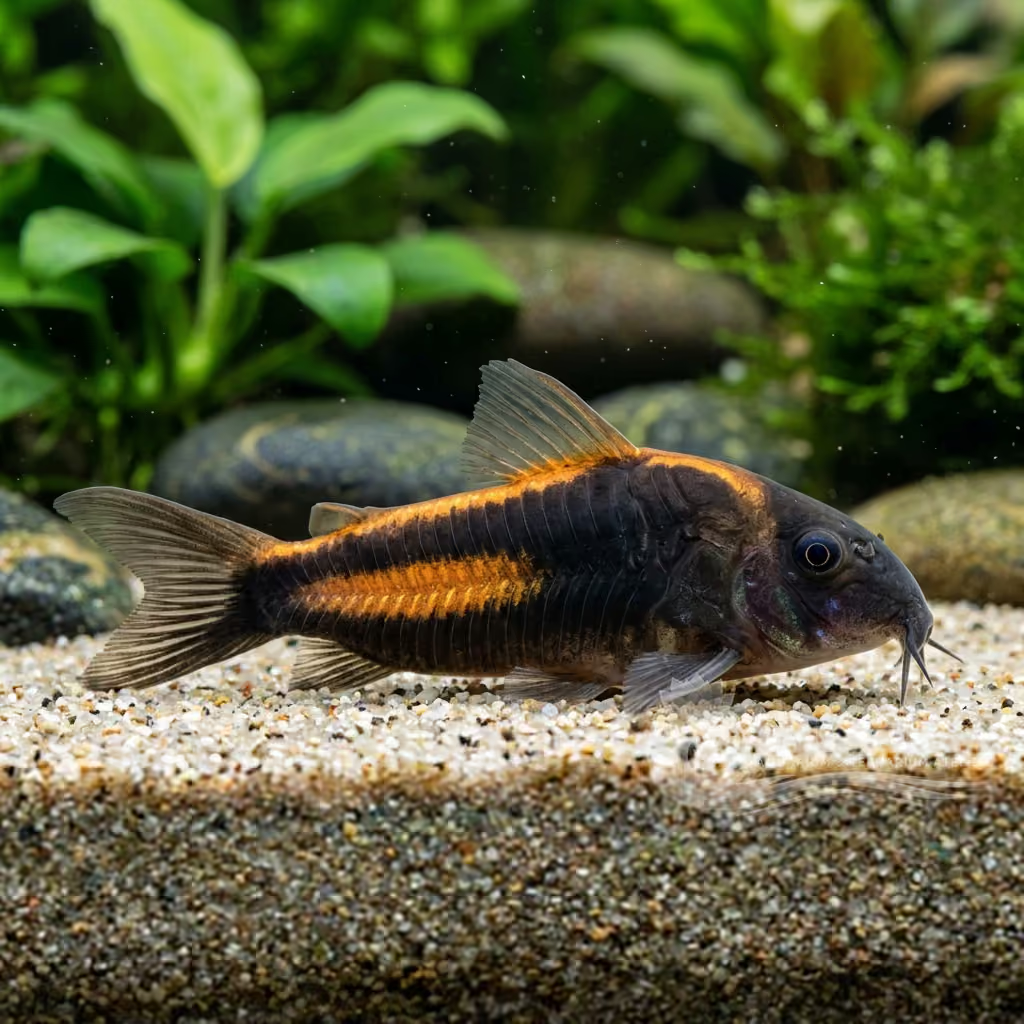
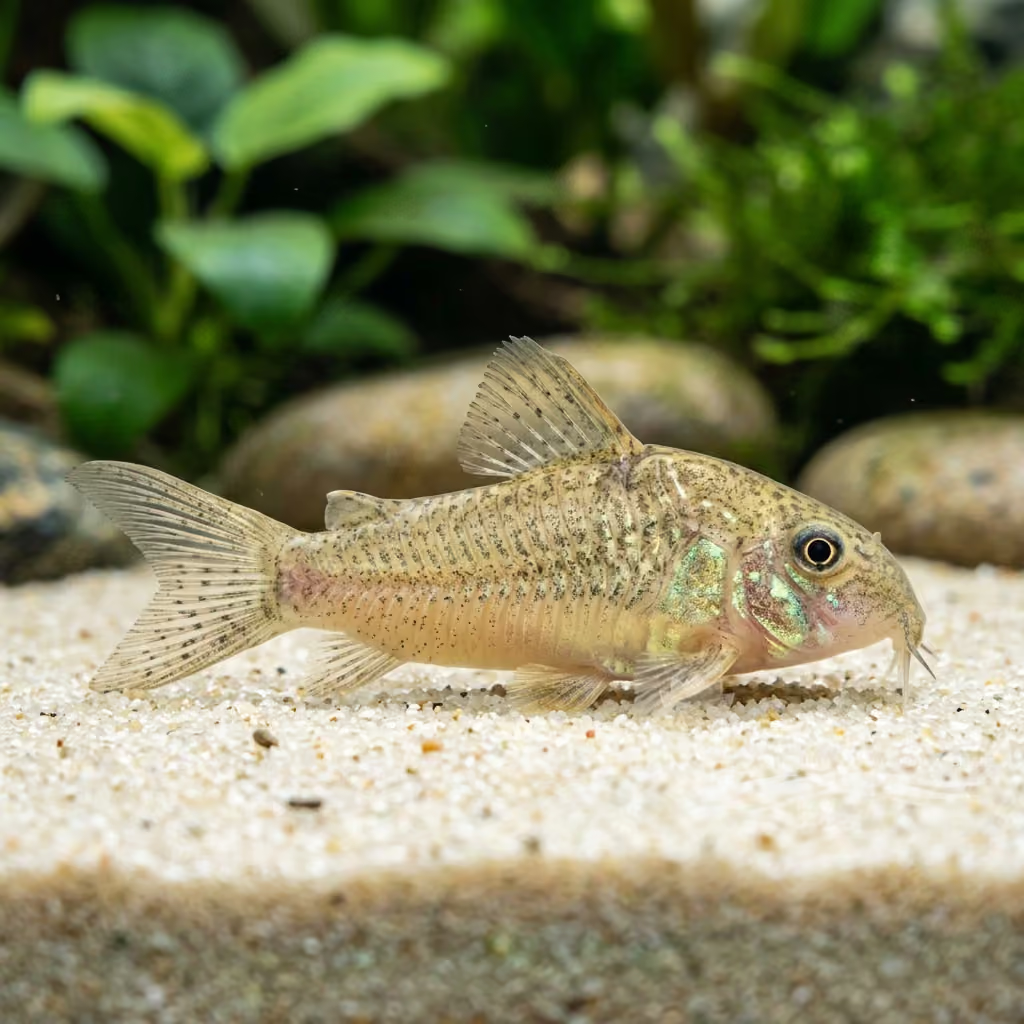
Burgess's Corydoras
Hoplisoma burgessi
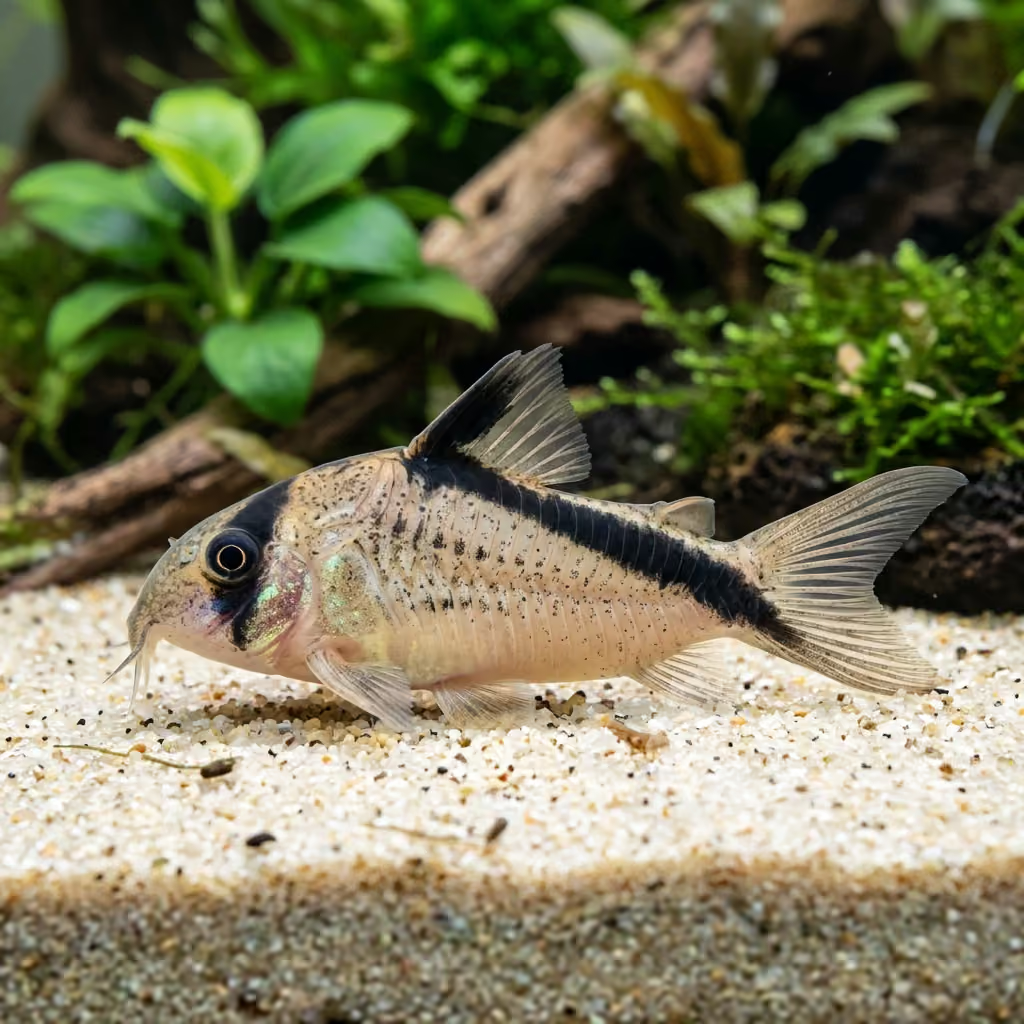
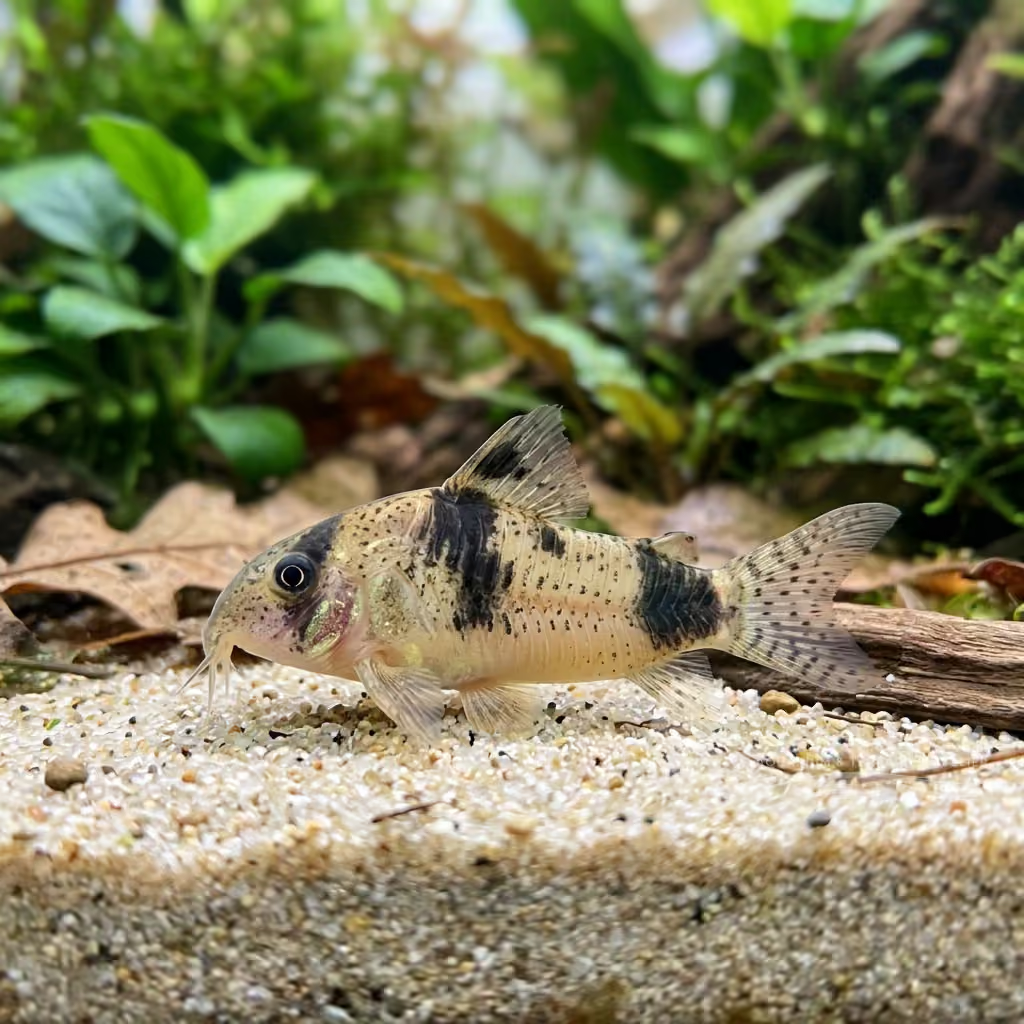
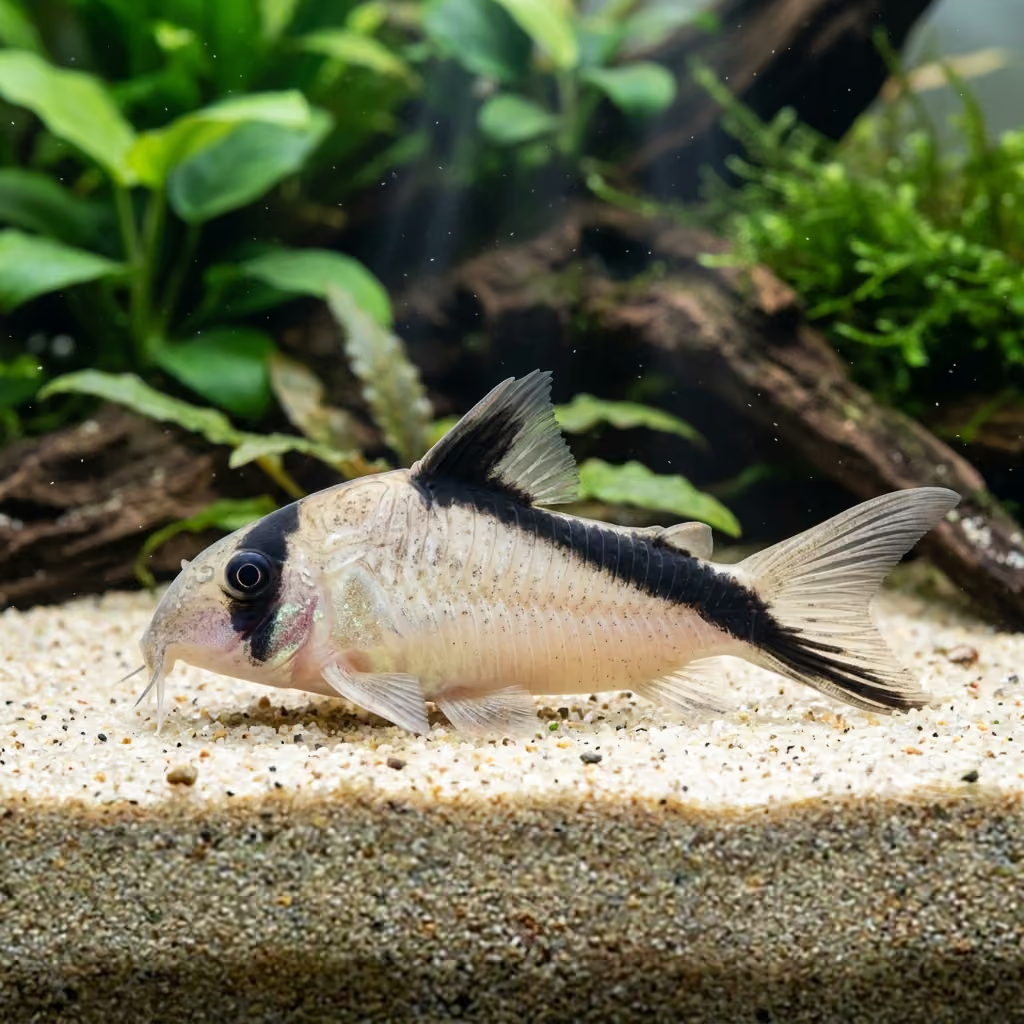
A striking Rio Unini jewel featuring a black eye mask, dorsal band, and a bright orange patch on its nape. It is peaceful, highly social, and prefers soft, sandy substrates.
Wassertemperatur
22 - 26 °C
pH-Wert
6 - 7.2
Wassertyp
Süßwasser
Tankfüllstand
Unten
Erwachsenengröße
5,5 cm
Mindesttankvolumen
>= 80 L
Mindestgruppe
>= 6
GH
2 - 12 dGH
KH
1 - 8 dKH
TDS
40 - 260 ppm
Leitfähigkeit
63 - 406 uS/cm

Artbeschreibung
Geographical Origin and Habitat: Endemic to the northern Rio Negro basin in Brazil, specifically near the Uaupés River. Frequents classic igapó environments (flooded forests) and small slow-moving tributaries, with tannin-infused blackwater, sandy bottom, and leaf litter.
Taxonomy and Morphology: Species discovered relatively recently (1987) by Dr. Warren Burgess. Has the short, blunt snout typical of many species in the genus. The body is robust and moderately compressed laterally, with a standard adult length of about 5 - 5.5 cm (2-2.2 inches). Well-evident bony plates.
Social Behavior: Of an exceptionally peaceful and sociable nature, it must categorically be kept in groups of at least 6-8 individuals. If kept in small numbers, it becomes stressed, and prone to diseases. Spends most of its time patrolling the substrate.
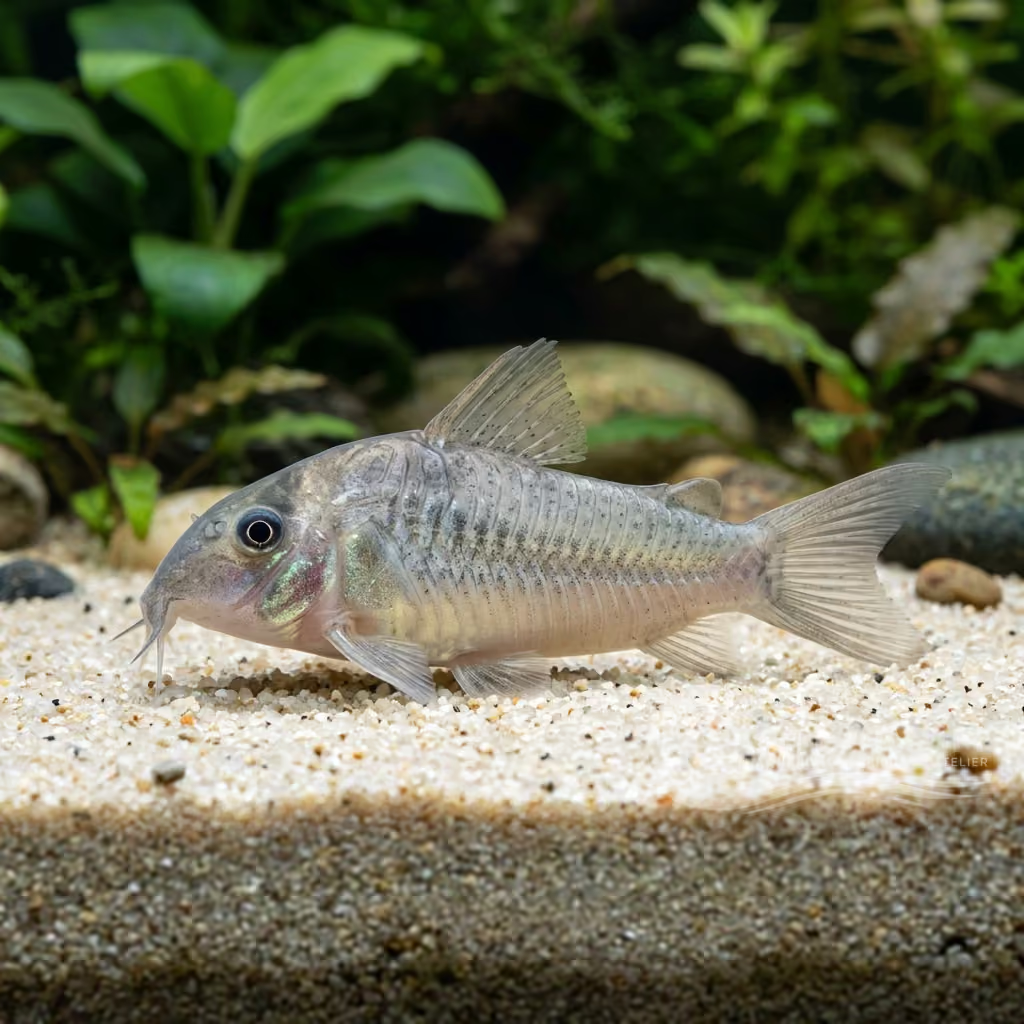
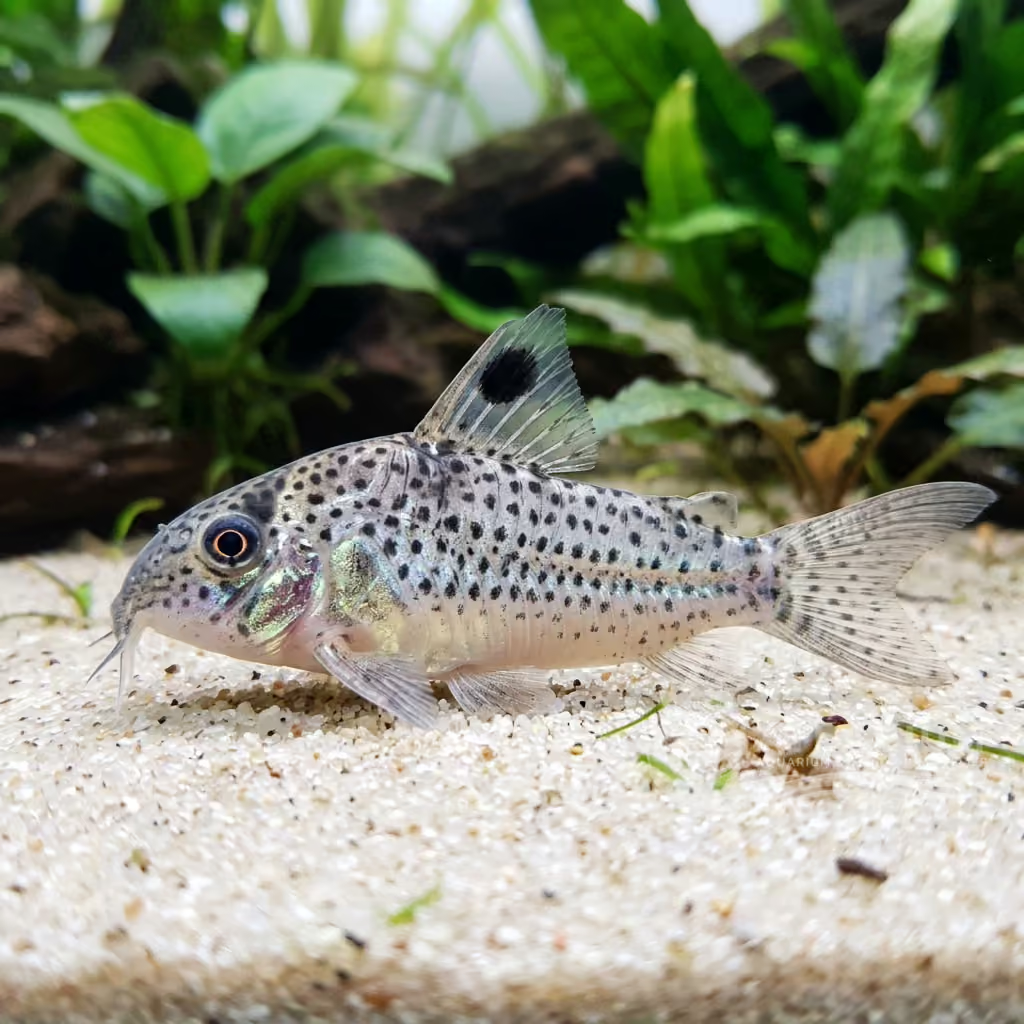
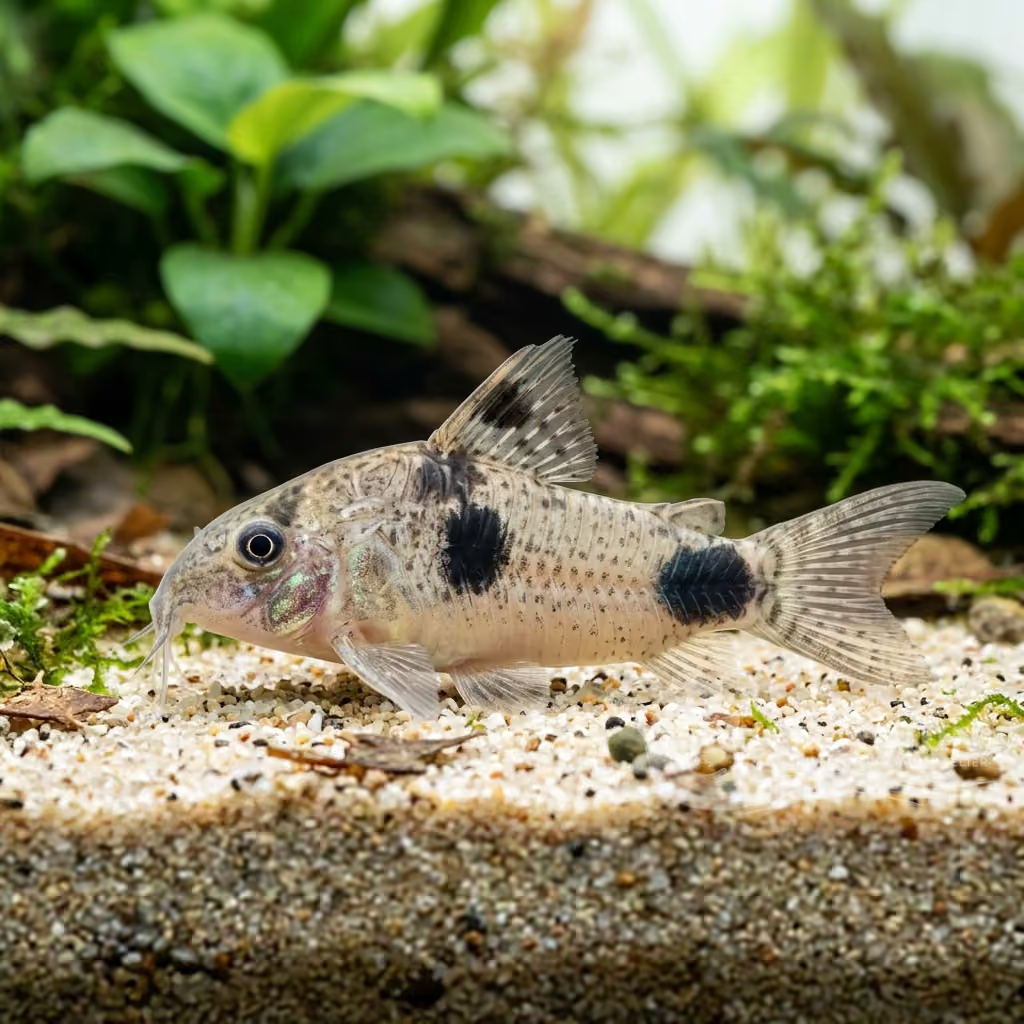
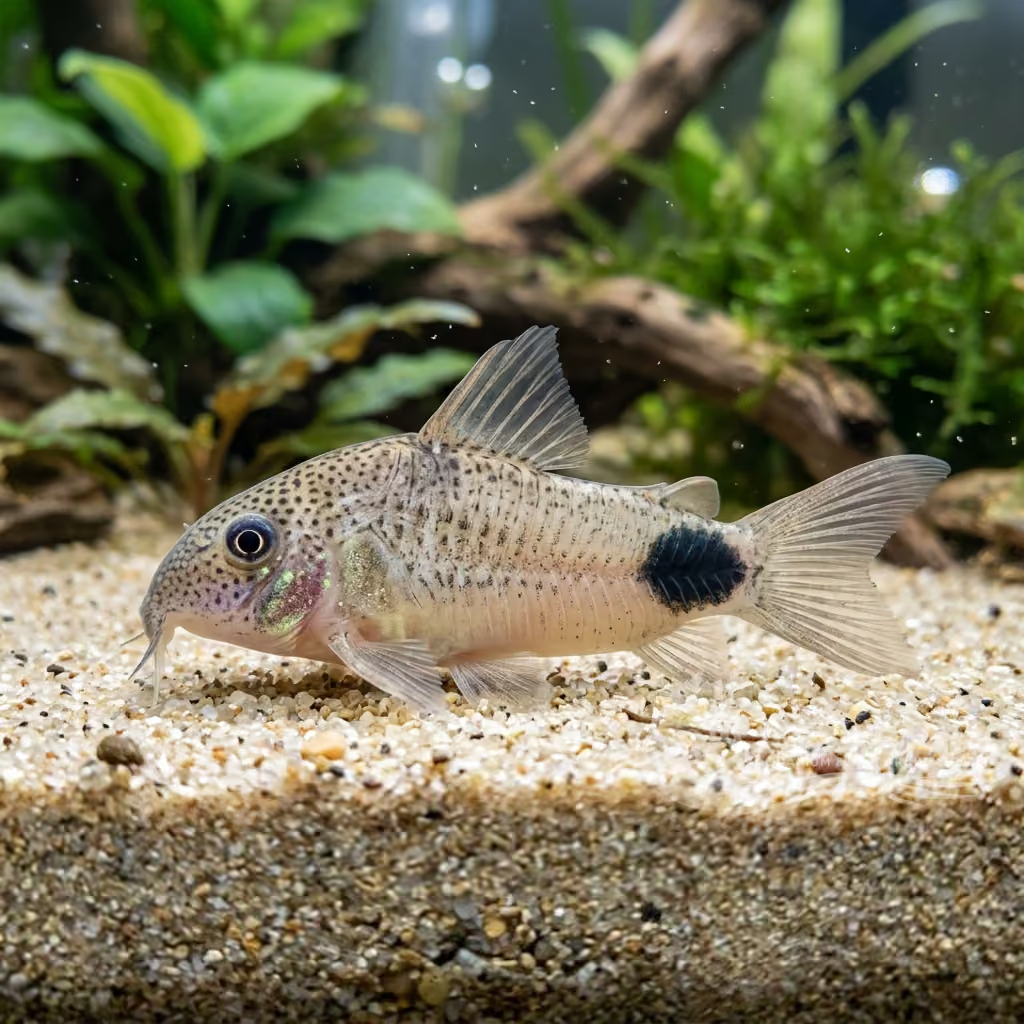
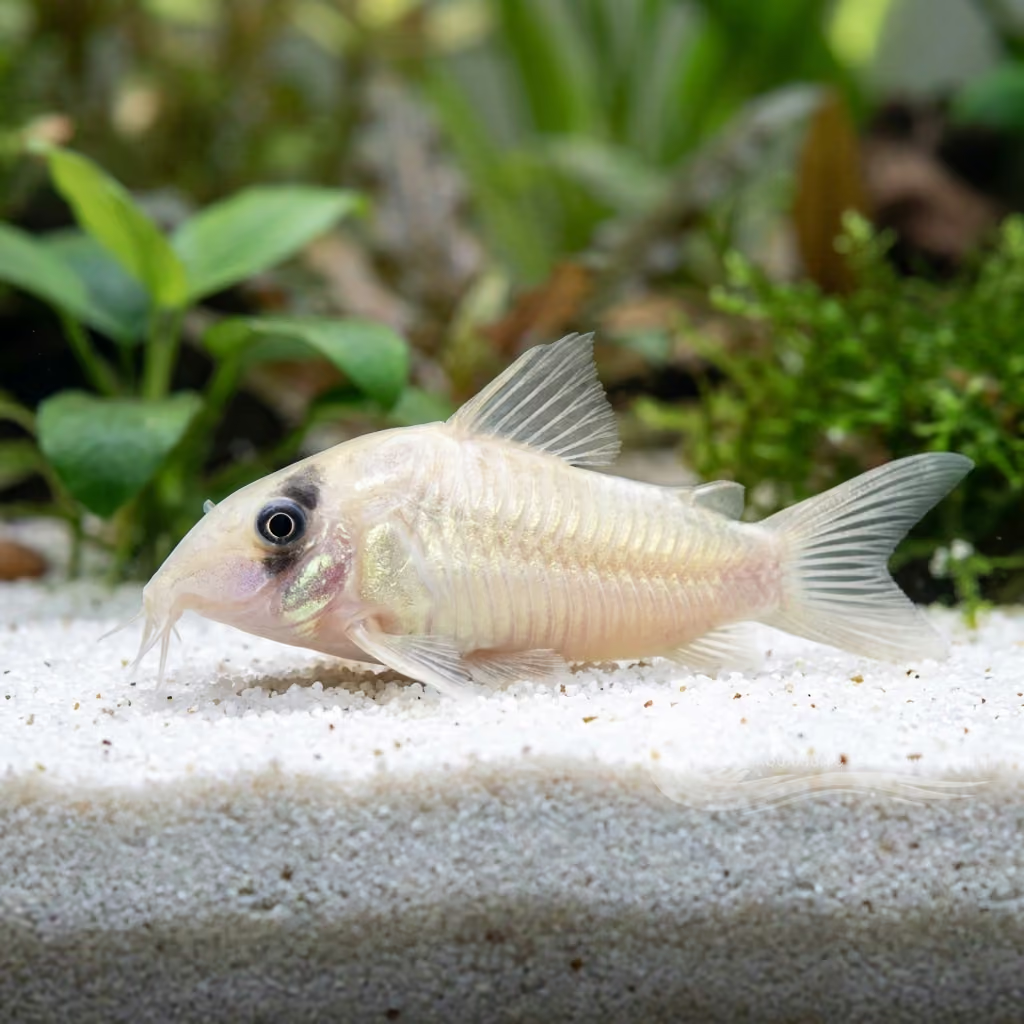
Coloration and Sexual Dimorphism: Silvery-white or pale cream base coloration, embellished by an obvious vertical black mask covering the eye. Unlike C. adolfoi (with which it is often confused), it has a black spot on the dorsal fin that fades towards the back, and a very bright orange-gold patch on the nape. Females are noticeably more swollen and wider.

Pflege, Zucht und Mitbewohner
Aquarium Setup: A bottom of very fine and smooth river sand (absolutely not sharp) is mandatory. Create semi-shaded areas using intricate trunks, branches (driftwood), and plants like Echinodorus. Add dry leaves (Catappa or Oak) to release tannins and simulate the original blackwaters.
Diet and Feeding: Benthic carnivore / omnivore. Feeding solely on leftovers is lethal. Provide a balanced diet based on protein sinking wafers, supplemented 2-3 times a week by small live or frozen food (Tubifex, Bloodworms, Brine shrimp, Daphnia).
Water Quality: Sensitive to nitrogenous compounds, requires very clean water. Ideal temperature between 22 and 26°C (72-79°F). Very soft to soft hardness (GH 2-12). The pH should be slightly acidic or neutral (6.0 - 7.2), although wild specimens require pH close to 5.0.
Compatibility and Cohabitation: Perfect coexistence in peaceful South American biotope community tanks. Excellent with small Tetras (Neons, Cardinals), peaceful Loricariids, Apistogramma, and Dicrossus. Under no circumstances should it be paired with large territorial Cichlids or aggressive earth-eaters (giant Geophagus).
Aquarium Breeding: Typical Corydoras reproductive model: stimulated by drastic cold water changes (mimicking the rainy season). The eggs are attached to the glass or broad leaves. Fecundity rate is relatively low compared to more common species like aeneus.
Risks and Diseases: If housed on rough gravel, the barbels wear out quickly exposing it to lethal bacterial infections and preventing it from feeding. Extreme sensitivity to salt (sodium chloride) and copper- or malachite green-based medications.

Geografische Herkunft und Verbreitung
Endemic to the northern Rio Negro basin in Brazil, specifically near the Uaupés River. Frequents classic igapó environments (flooded forests) and small slow-moving tributaries, with tannin-infused blackwater, sandy bottom, and leaf litter.
Ursprung
Amazonas, Orinoco und Guayana

Fischprofil
- Temperament
- Semi-aggressive
- Hoplisoma burgessi are peaceful, social schooling fish that thrive when kept in groups. Keeping them in numbers of at least six individuals greatly reduces their stress and promotes natural behaviors. They are completely harmless to plants and other tank inhabitants.
- Diät
- Omnivore
- These are omnivorous bottom feeders that require a varied diet to thrive. Their meals should include high-quality sinking pellets, wafers, and live or frozen foods like bloodworms. A balanced diet ensures proper growth and vibrant coloration for Hoplisoma burgessi.
- Lebenserwartung
- 5-8 years
- Erwachsenengröße
- 5.5 cm
- Geschlechterverhältnis
- Specific M:F ratio
- Maintaining a ratio of two or three males for every female is ideal for breeding purposes. This ratio encourages natural spawning behaviors and increases the chances of successful fertilization. In non-breeding community tanks, the exact ratio for Hoplisoma burgessi is less critical.
- Fütterungsfrequenz
- Twice daily
- They should be fed small amounts once or twice a day. It is important to provide only what Hoplisoma burgessi can consume within a few minutes to prevent water fouling. Occasional fasting days can also be beneficial for their digestive health.
- Bioload
- Low
- The Hoplisoma burgessi has a relatively low bioload compared to many other species of similar size. They are efficient scavengers that help keep the substrate clean, which slightly offsets their waste production. However, adequate biological and mechanical filtration is still necessary to maintain optimal water quality in the aquarium.
- Fluss
- Stagnant
- They prefer moderate water movement that simulates their natural riverine habitats. A gentle current provides necessary oxygenation without exhausting the fish. Avoid overly strong flow that could sweep Hoplisoma burgessi away or cause stress.
- Sprungrisiko
- No
- Reproduktion
- Oviparous
- Breeding Hoplisoma burgessi in captivity is possible but requires specific water conditions and conditioning. They are egg layers that typically deposit their adhesive eggs on broad leaves or the aquarium glass. Parents may eat the eggs, so it is often best to raise the fry in a separate tank.
- Kompatibilität & Tankkameraden
- Peaceful
- They are incredibly peaceful and make excellent additions to community aquariums. Hoplisoma burgessi gets along well with most other peaceful, similarly sized fish. Aggressive or large tank mates should be avoided as they may intimidate or harm them.
- Tankfüllstand
- Bottom
- They are obligate bottom dwellers that spend the majority of their time on the substrate. Hoplisoma burgessi constantly rummage through sand or smooth gravel in search of food. Very rarely will they be seen swimming in the middle or upper levels of the water column.

Wissenschaftliche Modelle & Parameter
FishBase
Zugang zu den offiziellen wissenschaftlichen Daten der Art
FishBase v25.04Daten synchronisiert am: 15.06.2026
- Trophäenniveau
- 3 ± 0,4 se
- Belastbarkeit
- Hoch (weniger als 15 Monate)
- Phylogenetische Einzigartigkeit (PD50)
- 0.5
- Bayessche Längen-Gewichts-Beziehung
- a = 0.00741, b = 3.14
- AnfälligkeitGeringe Anfälligkeit (10 / 100)

Verwandte Arten
Empfehlungen gruppiert nach nahen Verwandten, Auswahl von Begleitern und ähnlicher Betreuung.