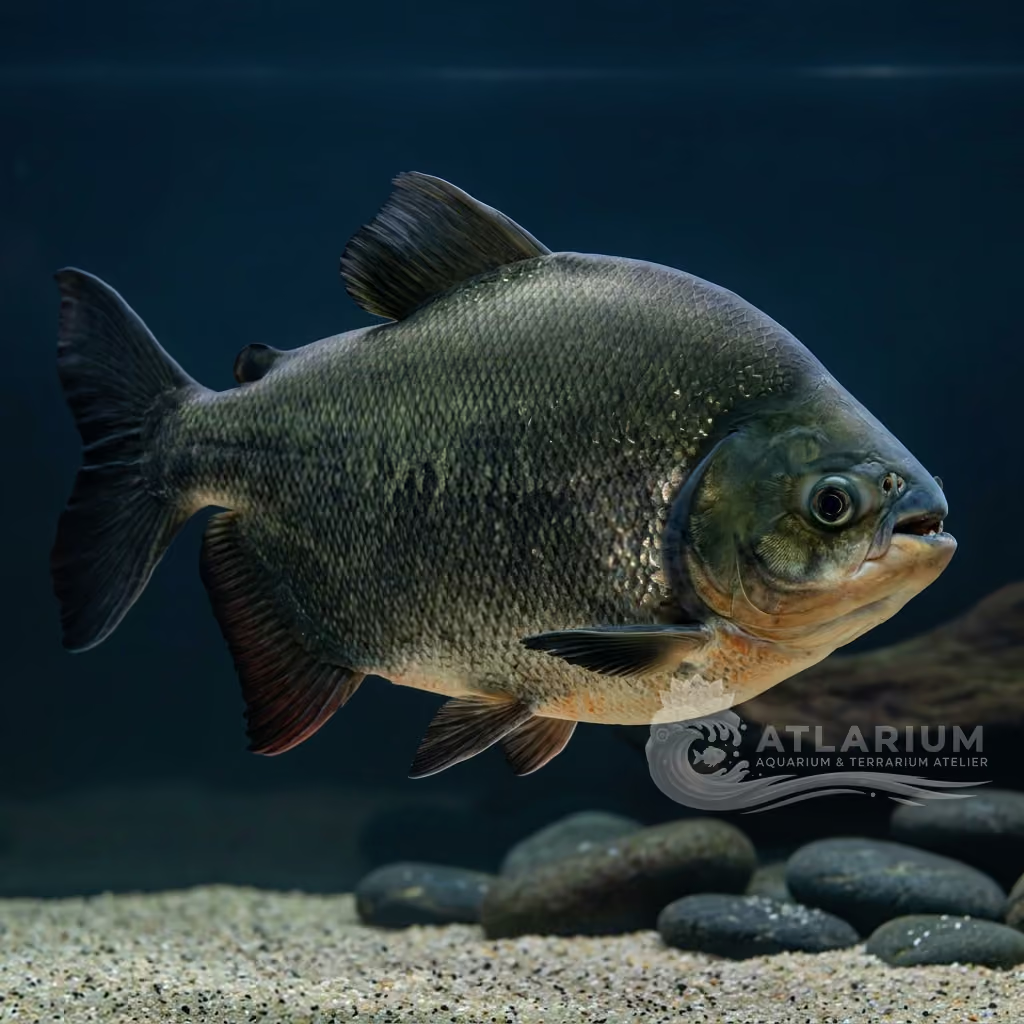
Red-Bellied Piranha
Pygocentrus nattereri
The social and nervous predator of the Amazon (up to 35 cm). Despite its fearsome reputation, it is a shy, schooling species that requires large groups (10+) and heavily shaded tanks to thrive. A strict species-only setup is mandatory due to potential aggression and cannibalism.
Wassertemperatur
24 - 28 °C
pH-Wert
5.5 - 7.5
Wassertyp
Süßwasser
Tankfüllstand
Mitte
Erwachsenengröße
30 cm
Mindesttankvolumen
>= 300 L
Mindestgruppe
>= 1
GH
2 - 15 dGH
KH
1 - 7 dKH
TDS
40 - 295 ppm
Leitfähigkeit
63 - 461 uS/cm

Artbeschreibung
Geographical Origin and Habitat: Widely distributed in the Amazon, Orinoco, Paraná, and Paraguay river basins. It inhabits slow-moving or stagnant waters, including flooded forests and blackwater creeks, utilizing dense root networks and floating vegetation for cover.
Taxonomy and Morphology: Family Serrasalmidae. Characterized by a deep, laterally compressed body with a saw-toothed belly keel. Features a powerful, undershot lower jaw armed with a single row of interlocking, razor-sharp triangular teeth adapted for shearing flesh.
Social Behavior: Shoaling species that relies on the group structure to feel secure; isolated individuals become highly stressed and inactive. In a group, they establish a social hierarchy.
Coloration and Sexual Dimorphism: Shimmering metallic silver-grey body covered in gold flecks. The throat, chest, belly, and anal fin are bright scarlet red or orange. Females are typically broader than males when viewed from above.

Pflege, Zucht und Mitbewohner
Aquarium Setup: Requires a very large aquarium, at least 180-200 cm in length (800-1000 liters) for a school of 6-8 adults. Needs dim lighting, blackwater conditions, floating plants, and substantial driftwood to provide adequate hiding places.
Diet and Feeding: Carnivorous scavenger. Do not feed live feeder fish, as this introduces pathogens and causes nutritional deficiencies. Feed raw white fish fillets, shrimp, squid, and high-quality sinking carnivore pellets.
Water Quality: Requires heavy filtration (such as a sump system) to handle the significant organic waste from feeding. Maintain temperatures between 24-28°C and a stable pH between 6.0-7.5.
Compatibility and Cohabitation: Must be kept in a strict species-only tank. Keeping them with other species, regardless of size, will inevitably result in the other fish being killed and consumed.
Aquarium Breeding: Spawns in large tanks. The pair digs a nesting pit in the substrate. The male aggressively guards the eggs and fry. Fry are highly cannibalistic.
Risks and Diseases: Intraspecific aggression and cannibalism can occur if they are underfed or kept in cramped tanks. Easily panicked by sudden movements or bright lights, which can cause them to crash into the glass, causing mouth injuries.

Geografische Herkunft und Verbreitung
Widely distributed in the Amazon, Orinoco, Paraná, and Paraguay river basins. It inhabits slow-moving or stagnant waters, including flooded forests and blackwater creeks, utilizing dense root networks and floating vegetation for cover.
Ursprung
Amazonas, Orinoco und GuayanaNordamerikaEuropa, Mittelmeerraum und Westasien

Fischprofil
- Temperament
- Semi-aggressive
- They are surprisingly nervous and skittish despite their legendary teeth. Sudden movements outside the tank will send them into a panic. They only display their fearless, aggressive nature when food is introduced.
- Diät
- Omnivore
- They require a heavily carnivorous diet of whole fish and crustaceans. White bait fish, shrimp, and high-quality pellets are highly recommended. Live feeder fish carry diseases and should be strictly avoided.
- Lebenserwartung
- 10-15 years
- Erwachsenengröße
- 30 cm
- Geschlechterverhältnis
- School
- They must be housed in a group of at least six. Smaller groups lead to severe bullying and eventual fatalities. A large shoal promotes natural behaviors and diffuses internal aggression.
- Fütterungsfrequenz
- Twice daily
- Feed them one appropriately sized meal every one to two days. Gorging leads to lethargy and massive waste spikes in the water. Clean up any leftover scraps immediately to maintain water purity.
- Bioload
- Extreme
- The Red Belly Piranha creates an extremely heavy bioload. Massive filtration systems and giant water volumes are strictly mandatory. Their messy meat-eating habits quickly foul smaller aquarium setups.
- Fluss
- Stagnant
- They enjoy moderate water flow that provides excellent oxygenation. Powerheads help mimic the flow of their native South American rivers. Proper flow also keeps their waste suspended for the filters.
- Sprungrisiko
- Yes
- They are incredibly powerful fish and pose a high jump risk. Heavy glass or wooden canopies must be used to secure them. They often thrash at the surface during aggressive feeding frenzies.
- Reproduktion
- Oviparous
- Breeding is possible but requires a massive, dedicated setup. They form pairs and lay eggs in a substrate pit. The male becomes lethally aggressive while guarding the nest.
- Kompatibilität & Tankkameraden
- Semi-aggressive
- They are highly predatory and completely unsafe for community aquariums. Keep them only with their own kind in a large shoal. They will occasionally cannibalize weaker or injured members of their group.
- Tankfüllstand
- Middle
- They spend their time hovering in the mid-water regions. They appreciate dim lighting and the cover of overhanging branches. They actively school together when traversing the open water spaces.

Wissenschaftliche Modelle & Parameter
FishBase
Zugang zu den offiziellen wissenschaftlichen Daten der Art
FishBase v25.04Daten synchronisiert am: 15.06.2026
- Trophäenniveau
- 3,7 ± 0,61 se
- Belastbarkeit
- Mittel (1,4 - 4,4 Jahre)
- Generierungszeit
- 1,7 Jahre
- Phylogenetische Einzigartigkeit (PD50)
- 0.5625
- Bayessche Längen-Gewichts-Beziehung
- a = 0.02089, b = 3.16
- AnfälligkeitMäßige Anfälligkeit (44 / 100)

Verwandte Arten
Empfehlungen gruppiert nach nahen Verwandten, Auswahl von Begleitern und ähnlicher Betreuung.