Shining Pencilfish
Nannostomus nitidus
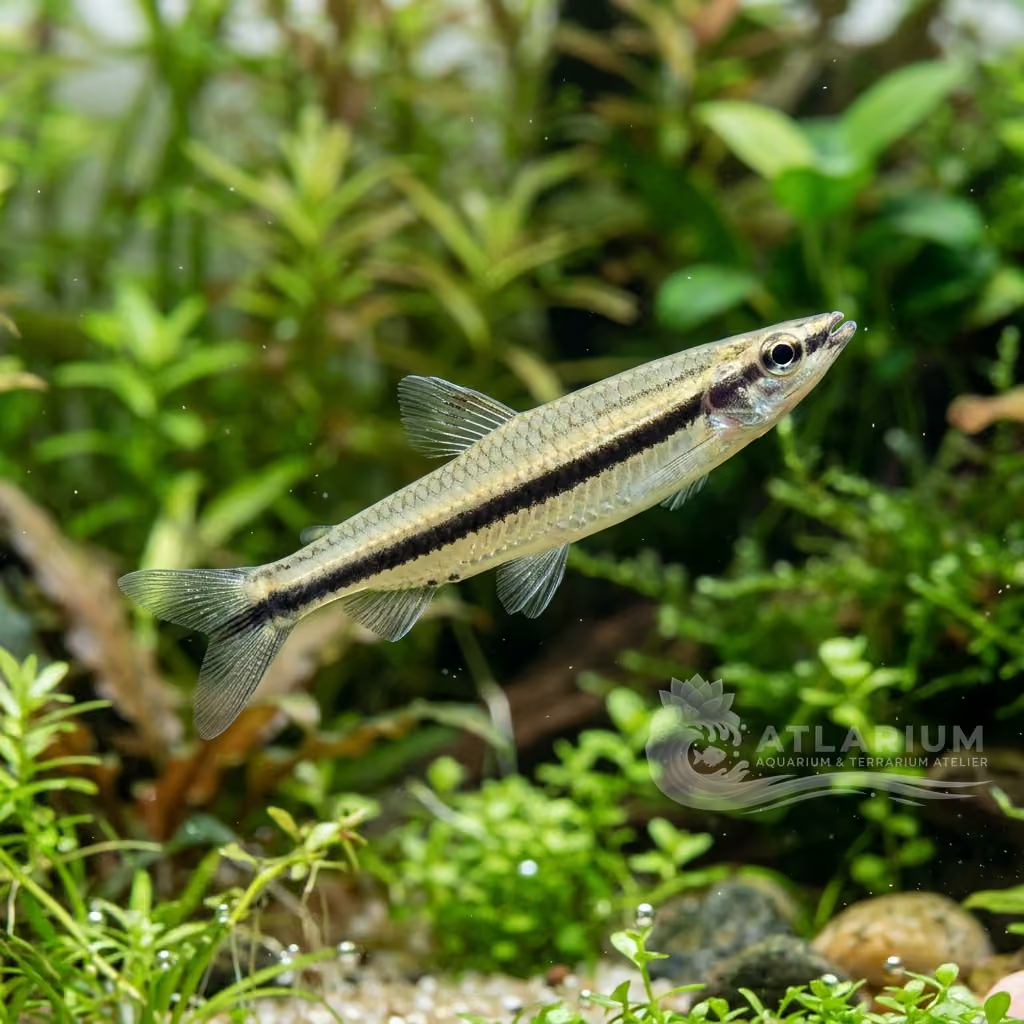
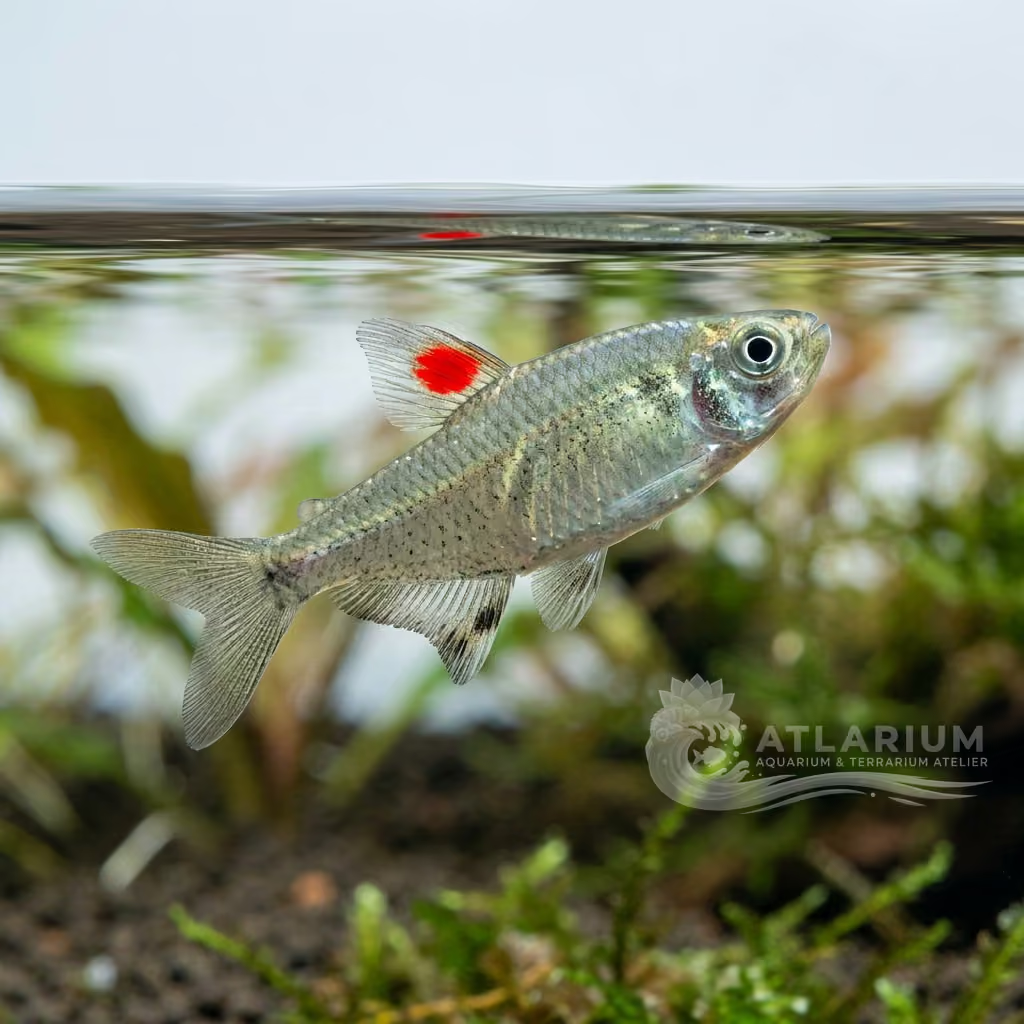
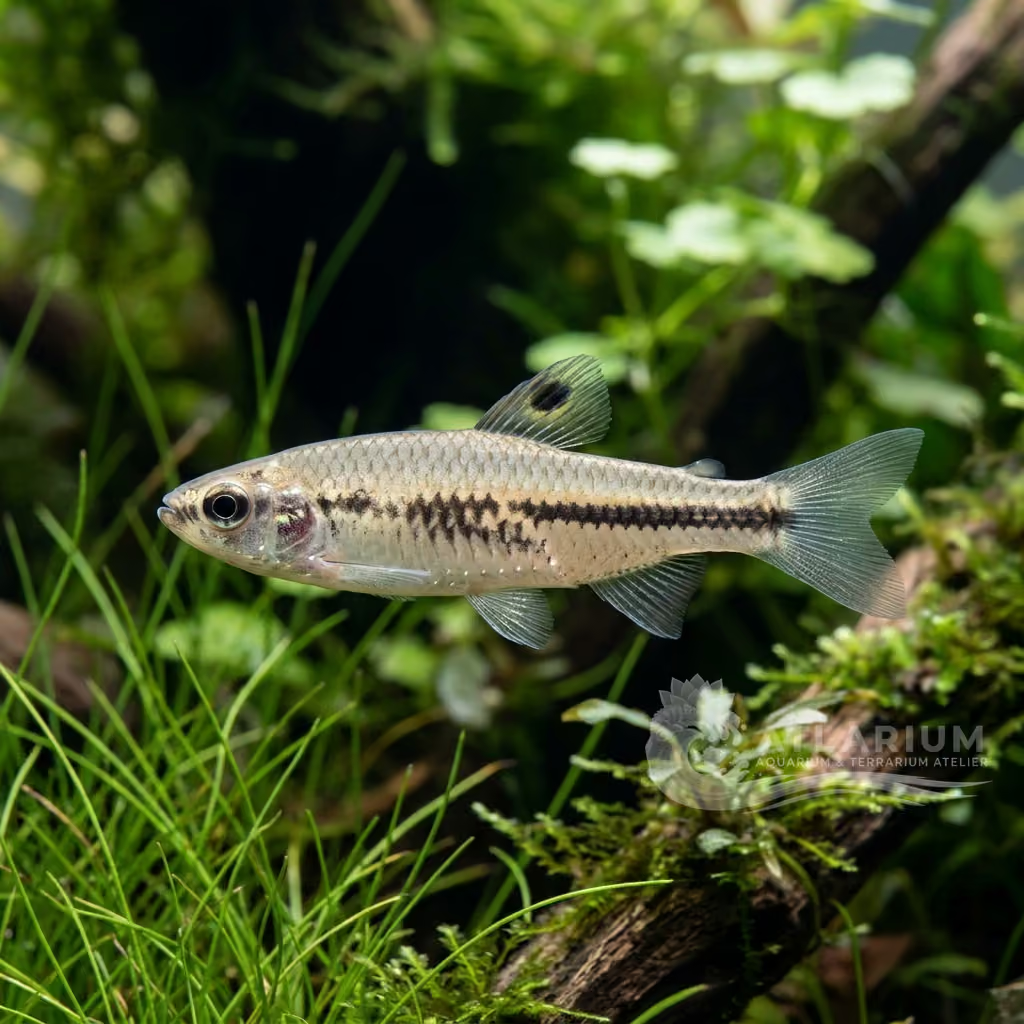
The name 'nitidus' literally means luminous or shiny; boasts a golden upper coat that wonderfully reflects light and the canonical longitudinal black bands.
Wassertemperatur
24 - 28 °C
pH-Wert
5.5 - 7
Wassertyp
Süßwasser
Tankfüllstand
Oberfläche und Mitte
Erwachsenengröße
3,5 cm
Mindesttankvolumen
>= 60 L
Mindestgruppe
>= 6
GH
1 - 10 dGH
KH
1 - 6 dKH
TDS
25 - 210 ppm
Leitfähigkeit
39 - 328 uS/cm

Artbeschreibung
Geographical Origin and Habitat: Rio Guamá basin and Capim river (State of Pará, Brazil). Species associated with slow forest environments, "Igarapés", rich in plant sediments, clear but strongly tannic water.
Taxonomy and Morphology: Shining Pencilfish (Nannostomus nitidus). Tiny silvery and slender pencilfish. Profile similar to beckfordi but does not exceed 3.5 cm (1.4 inches) as an adult. Upper jaw slightly more prominent.
Social Behavior: Mild and stationary. Gathers in dense groups in mid-water (Shoaling) near plant barriers, darting away in unison if threatened.
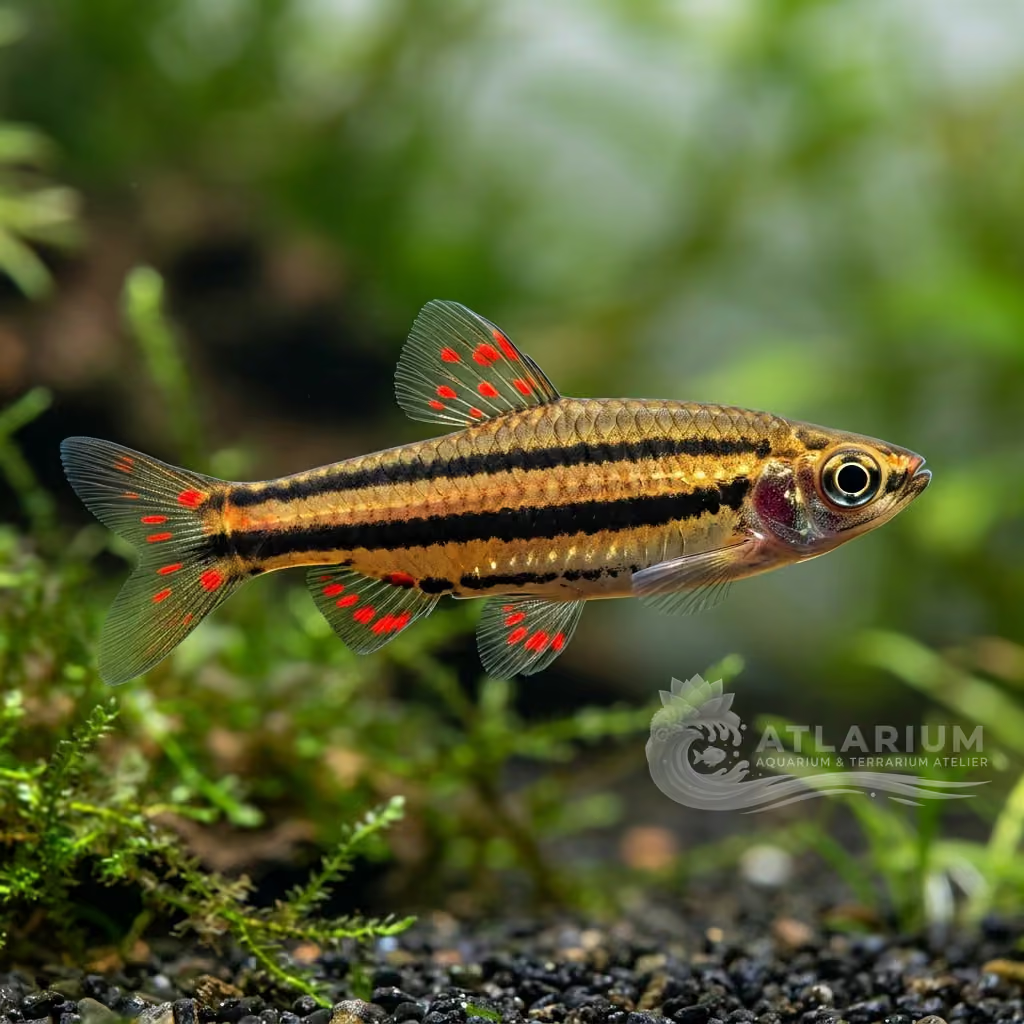
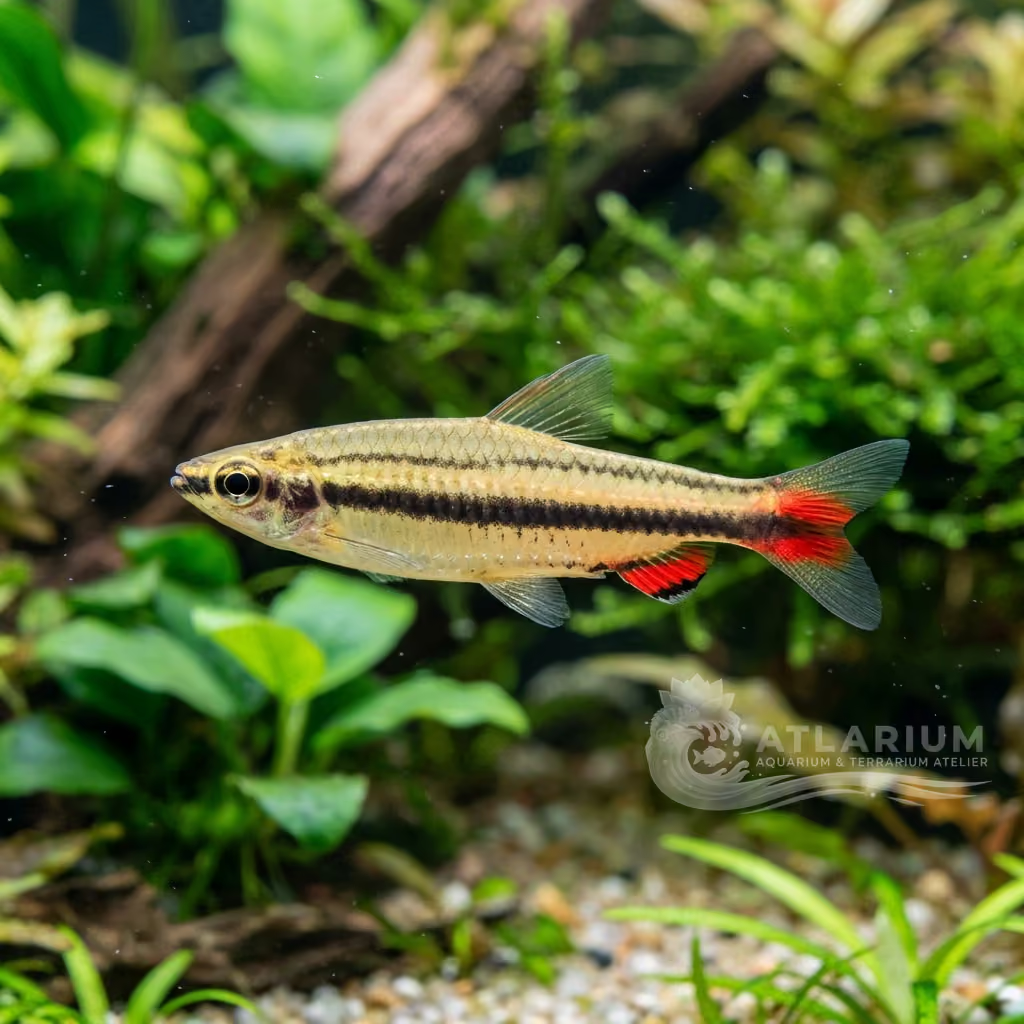
Coloration and Sexual Dimorphism: Elegant but inconspicuous (not "red" or "blue"). Possesses a strong central black stripe, but is topped by a line of a dazzling reflective gold-green (Shining). Males have a red spot strictly confined within the black stripe on the caudal peduncle.

Pflege, Zucht und Mitbewohner
Aquarium Setup: Nano-biotope tank (60 cm / 24 inches). Dark bottoms, light dimmed by floaters and peaty water are essential. Without a darkened tank, their gold-green reflections will be completely lost.
Diet and Feeding: Micro hunter. Needs microscopic slow-sinking foods (micro-pellets for rasboras) or live prey: infusoria and newly hatched nauplii.
Water Quality: Extremely tied to acidic water. If pH rises above 7, they will inevitably fade and stop feeding, falling victim to bacteriosis.
Compatibility and Cohabitation: Only ultra-peaceful fish (Boraras, Corydoras hastatus). Their slender build and shyness preclude their breeding in community tanks, especially with dwarf cichlids that would steal the food.
Aquarium Breeding: Extremely elusive, similar to the other small species of the genus. Scatters tiny eggs in Java moss, but the larvae are too fine to eat nauplii for the first ten days.
Risks and Diseases: Avitaminosis and Fading. They are fed in stores with dry food that is too large for them to swallow. They often arrive at the aquarist's home with a sunken belly and irretrievably debilitated.

Geografische Herkunft und Verbreitung
Rio Guamá basin and Capim river (State of Pará, Brazil). Species associated with slow forest environments, "Igarapés", rich in plant sediments, clear but strongly tannic water.
Ursprung
Amazonas, Orinoco und Guayana

Fischprofil
- Temperament
- Semi-aggressive
- The Shining pencilfish is generally timid and easily frightened. They are a schooling species that feels most secure in groups of six or more. When kept in sufficient numbers, they exhibit fascinating social behaviors and more vibrant coloration.
- Diät
- Carnivore
- It is a micro-predator that naturally feeds on tiny invertebrates and zooplankton. In the aquarium, it readily accepts crushed high-quality flakes and micropellets. Live or frozen foods like Daphnia and baby brine shrimp are highly recommended for optimal health.
- Lebenserwartung
- 3-5 years
- Erwachsenengröße
- 3.5 cm
- Geschlechterverhältnis
- School
- Males frequently display brighter colors and have a slimmer profile than females. Keeping a ratio of two or three females per male helps disperse mild male-to-male aggression. In larger schools, a balanced mix of sexes generally works well without intense conflict.
- Fütterungsfrequenz
- Twice daily
- Due to their small digestive tracts, they should be fed small amounts multiple times a day. Offering food two to three times daily mimics their natural grazing behavior. Care must be taken not to overfeed, ensuring all food is consumed within minutes.
- Bioload
- Low
- The Shining pencilfish has a very low bioload impact on the aquarium. Its tiny size and modest appetite mean it produces minimal waste. This makes it an excellent candidate for heavily planted setups or smaller nano aquariums.
- Fluss
- Stagnant
- Nannostomus nitidus prefers gentle to moderate water flow. High-velocity currents can easily exhaust these small fish and cause chronic stress. Utilizing sponge filters or baffling the outflow of power filters is often beneficial.
- Sprungrisiko
- Yes
- Like many pencilfish, they have a notable tendency to jump when startled. A tight-fitting aquarium lid or fine mesh screen is absolutely necessary. Ensuring stable water parameters and hiding spots reduces their startle response and jumping risk.
- Reproduktion
- Oviparous
- Breeding this species is challenging and requires soft, acidic water conditions. They are egg scatterers that provide zero parental care after spawning. To save the fry, eggs must be moved to a separate rearing tank away from hungry adults.
- Kompatibilität & Tankkameraden
- Semi-aggressive
- This species is extremely peaceful and works perfectly in community setups. It should only be housed with similarly sized, non-aggressive tankmates. Aggressive or large fish will easily intimidate or consume this delicate pencilfish.
- Tankfüllstand
- Top/Middle
- They spend the majority of their time navigating the upper and middle levels of the water column. They love to hover among floating plants or tall stem plants. This top-dwelling behavior makes them a great contrast to bottom-dwelling species.

Wissenschaftliche Modelle & Parameter
FishBase
Zugang zu den offiziellen wissenschaftlichen Daten der Art
FishBase v25.04Daten synchronisiert am: 15.06.2026
- Trophäenniveau
- 3,2 ± 0,4 se
- Phylogenetische Einzigartigkeit (PD50)
- 0.5
- Bayessche Längen-Gewichts-Beziehung
- a = 0.00646, b = 3.13
- AnfälligkeitGeringe Anfälligkeit (10 / 100)

Verwandte Arten
Empfehlungen gruppiert nach nahen Verwandten, Auswahl von Begleitern und ähnlicher Betreuung.