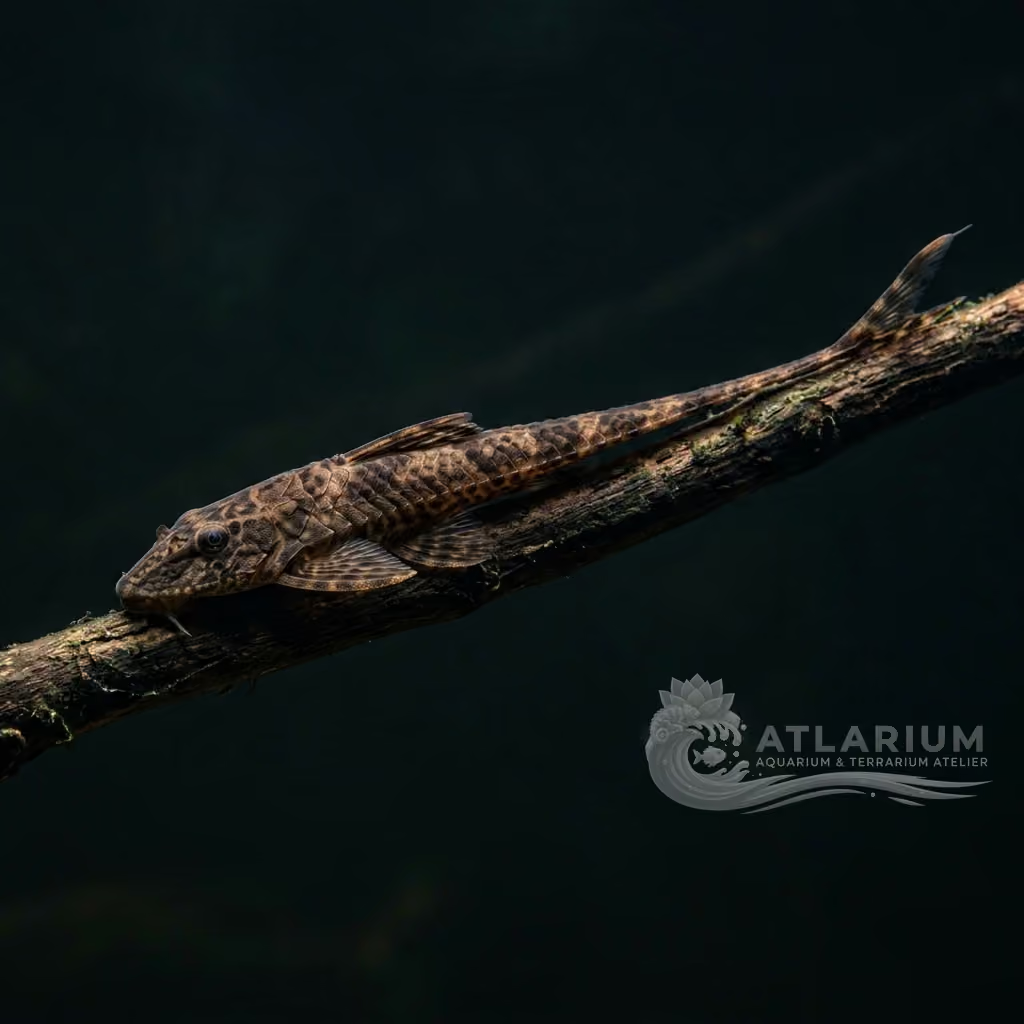
Otocinclus (Oto Vittatus)
Otocinclus vittatus
Otocinclus (Oto Vittatus) (Otocinclus vittatus) is a freshwater species with an adult-size reference of about 4 cm. It needs at least 60 litres and 6 individuals, with its social and territorial profile taken into account.
Wassertemperatur
21 - 26 °C
pH-Wert
5.5 - 7.5
Wassertyp
Süßwasser
Tankfüllstand
Unten und in der Mitte
Erwachsenengröße
4 cm
Mindesttankvolumen
>= 60 L
Mindestgruppe
>= 6
GH
1 - 12 dGH
KH
1 - 6 dKH
TDS
25 - 240 ppm
Leitfähigkeit
39 - 375 uS/cm

Artbeschreibung
Geographical Origin and Habitat: A freshwater species; the enclosure should provide stability, oxygenation, space and shelter consistent with its behaviour without turning one habitat description into a mandatory recipe.
Taxonomy and Morphology: The accepted scientific name is Otocinclus vittatus; the verified classification records genus Otocinclus, family Loricariidae, subfamily Hypoptopomatinae, order Siluriformes. Historical names remain searchable as synonyms rather than separate species.
Social Behavior: Otocinclus (Oto Vittatus) is social and should be kept in a group. The minimum reference is 6 individuals; sex, maturity and available space can require a more conservative composition. Observe access to food, resting behaviour, chasing and use of shelter. Isolation, persistent competition or aggression means the number, composition or environment needs to be corrected.
Coloration and Sexual Dimorphism: Colour and shape can vary with age, sex, physiological state and environmental conditions. Identification and sexing require recognized species-level characters; one appearance or photograph is not enough.

Pflege, Zucht und Mitbewohner
Aquarium Setup: Otocinclus (Oto Vittatus) needs an aquarium of at least 60 litres, sized for adult body size and a minimum group of 6 individuals. Filtration, shelter and swimming room must match the species and the actual number kept. Volume alone does not make an enclosure suitable: tank shape and length, usable area, oxygenation and the ability to separate territories must reflect adult behaviour.
Diet and Feeding: The recorded diet is omnivorous. Offer appropriately sized foods varied within that category, and adjust quantity and frequency from actual intake, body condition and leftovers. One food or a fixed schedule is not suitable for every age and situation.
Water Quality: Maintain stable, well-oxygenated water appropriate to a freshwater species; the card's reference values are 21–26 °C, pH 5.5–7.5. Verify conditions with reliable tests and size maintenance and filtration to the actual load. Ranges are not automatic thresholds for treatment or rapid chemical correction.
Compatibility and Cohabitation: The cohabitation profile is suitable for a compatible community, with a generally peaceful temperament. Keep at least 6 individuals; tankmates, stocking density and decor must allow escape, rest and feeding without excessive competition. Watch interactions especially during feeding, maturity and breeding. Persistent chasing, injury or exclusion from food requires a change in stocking or layout, or separation of the animals.
Aquarium Breeding: The recorded reproductive profile is “oviparity”. Breeding should be attempted only with healthy adults, separation capacity and a plan for eggs or young. Do not treat unverified triggers, sex ratios or hatch times as universal for this species.
Risks and Diseases: Prevent problems through quarantine of new arrivals, stable water, appropriate feeding and daily observation. Similar signs can have different causes, so check parameters, history and diagnosis before medication. Follow the product label and qualified aquatic-veterinary advice; there is no universal reduced dose for a species or family.

Geografische Herkunft und Verbreitung
A freshwater species; the enclosure should provide stability, oxygenation, space and shelter consistent with its behaviour without turning one habitat description into a mandatory recipe.
Ursprung
Amazonas, Orinoco und Guayana

Fischprofil
- Temperament
- Peaceful
- Otocinclus (Oto Vittatus) has a generally peaceful temperament. Insufficient space, an unsuitable social ratio or incompatible tankmates can substantially change observed behaviour.
- Diät
- Omnivore
- They are dedicated algae eaters that need mature setups. Diatoms, soft green algae, and biofilm are their primary foods. Sinking vegetable wafers and blanched zucchini should be offered regularly.
- Lebenserwartung
- 3-5 years
- Erwachsenengröße
- 4 cm
- Geschlechterverhältnis
- Group
- Otocinclus (Oto Vittatus) is social and should be kept in a group. The reference minimum is 6 individuals and must not be read as permission to overcrowd the aquarium.
- Fütterungsfrequenz
- Twice daily
- They continuously forage and scrape surfaces day and night. They require an uninterrupted supply of algae to thrive. Supplement their diet two to three times weekly with vegetables.
- Bioload
- Low
- This tiny species adds almost nothing to the tank's bioload. Their physical waste is minute and easily processed. They are excellent additions to nano aquariums and aquascapes.
- Fluss
- Stagnant
- They appreciate moderate flow and highly oxygenated water. A small circulation pump will help mimic their natural habitat. Good surface agitation is necessary for their respiration.
- Sprungrisiko
- No
- Reproduktion
- Oviparous
- Captive breeding is uncommon but possible in densely planted tanks. Females scatter adhesive eggs on flat surfaces like plant leaves. The fry are extremely tiny and require microscopic infusoria.
- Kompatibilität & Tankkameraden
- Community
- The cohabitation profile is suitable for a compatible community, with a generally peaceful temperament. Keep at least 6 individuals; tankmates, stocking density and decor must allow escape, rest and feeding without excessive competition. Watch interactions especially during feeding, maturity and breeding. Persistent chasing, injury or exclusion from food requires a change in stocking or layout, or separation of the animals.
- Tankfüllstand
- Middle/Bottom
- They are typically found in the bottom and middle levels. They love to rest on large plant leaves and driftwood. You will frequently see them cleaning the aquarium glass.

Wissenschaftliche Modelle & Parameter
FishBase
Zugang zu den offiziellen wissenschaftlichen Daten der Art
FishBase v25.04Daten synchronisiert am: 15.06.2026
- Phylogenetische Einzigartigkeit (PD50)
- 0.5
- Bayessche Längen-Gewichts-Beziehung
- a = 0.01122, b = 3.11
- AnfälligkeitGeringe Anfälligkeit (10 / 100)

Verwandte Arten
Empfehlungen gruppiert nach nahen Verwandten, Auswahl von Begleitern und ähnlicher Betreuung.