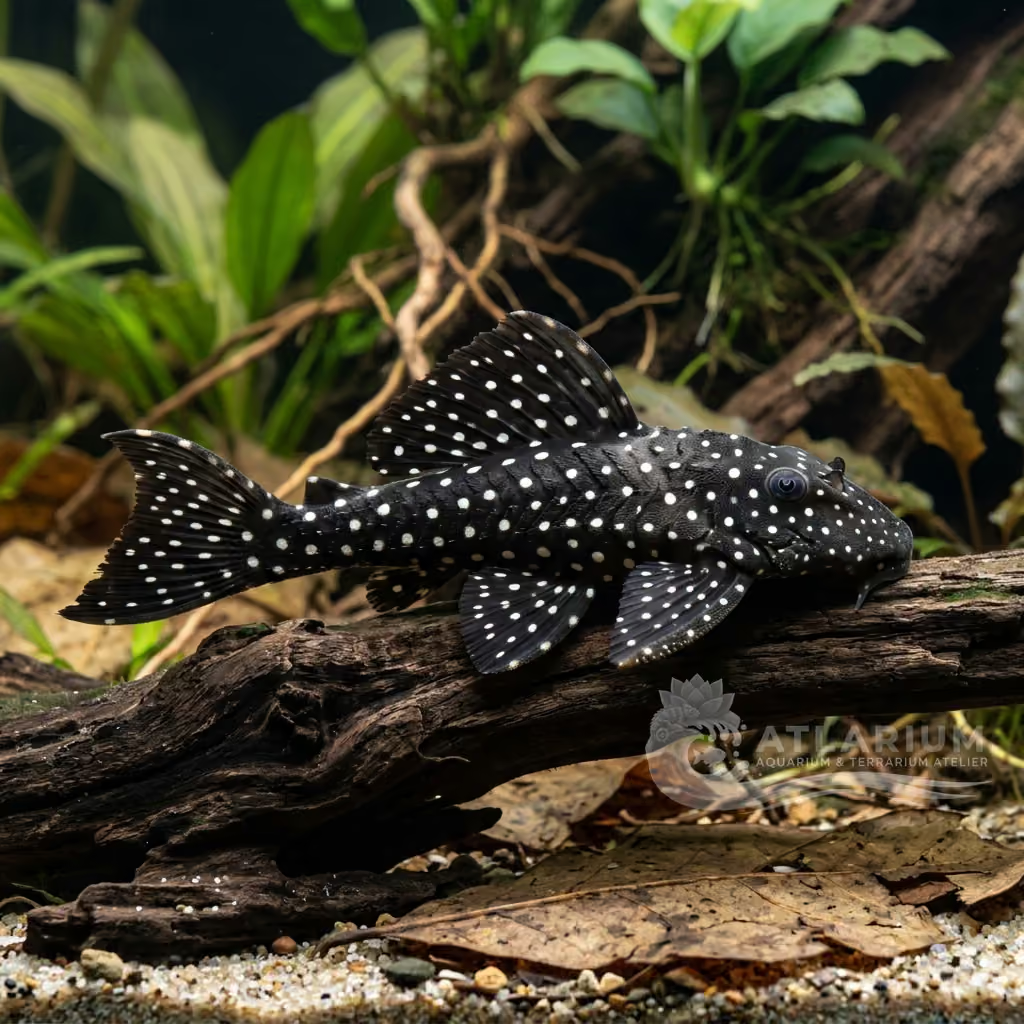
Twig Catfish (Farlowella)
Farlowella acus
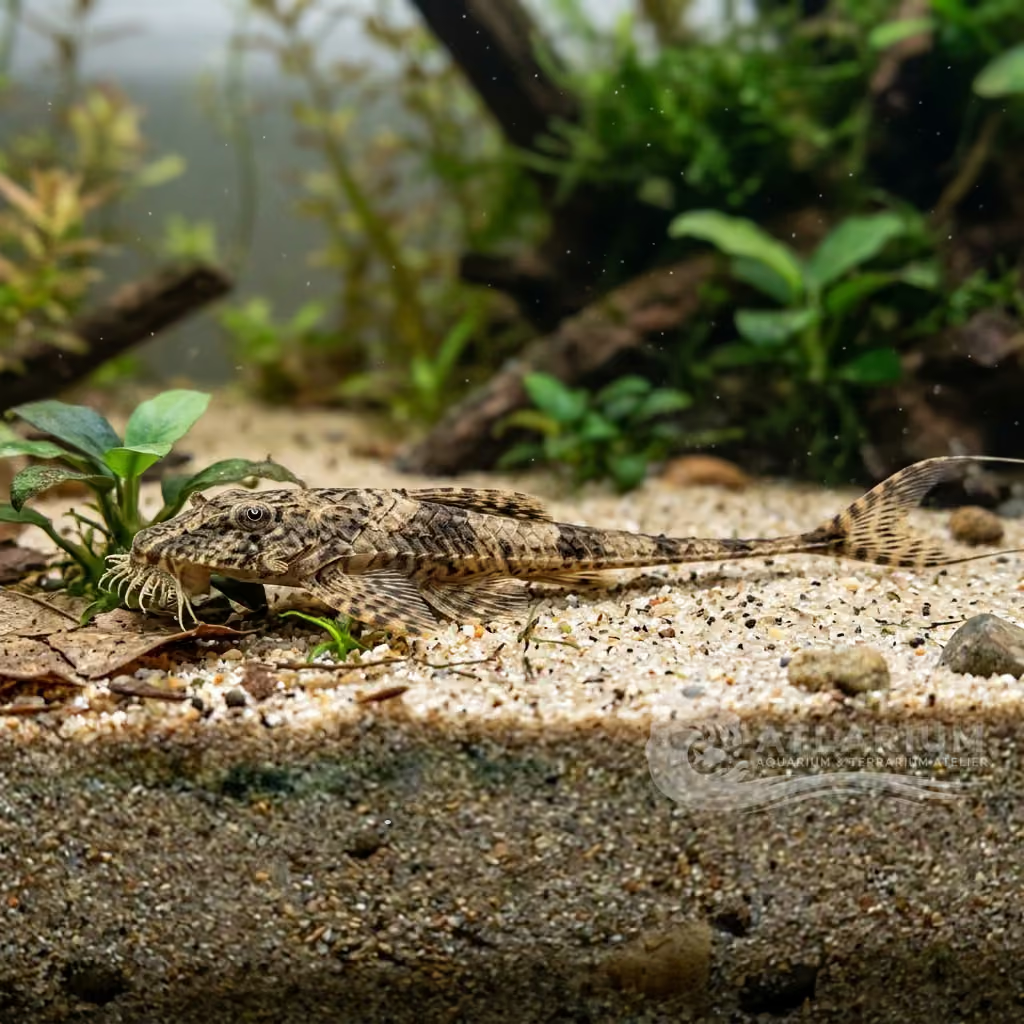
The Twig Catfish (Farlowella acus) is a living masterpiece of evolutionary mimicry. Belonging to the loricariid family (the 'sucker' fish), it has an exaggeratedly thin, thread-like and rigid body, extended by a very long rostrum on the snout, which makes it look exactly like a twig or a small wooden stick dropped in the water. This very particular species (which reaches 15-20 cm / 6-8 inches) spends its entire existence motionless clinging vertically or diagonally to submerged wood or the stems of tall marsh plants, blending perfectly with the environment. In addition to its bizarre appearance, it is a fish of extreme and notorious fragility in captivity, destined solely for dedicated fishkeepers and specialized tanks.
24 - 26 °C
6 - 7
Süßwasser
Unten und in der Mitte
20 cm
>= 120 L
>= 2
2 - 10 dGH
1 - 5 dKH
40 - 200 ppm
63 - 313 uS/cm

Artbeschreibung

Pflege, Zucht und Mitbewohner

Geografische Herkunft und Verbreitung
Ursprung

Fischprofil
- Temperament
- Peaceful
- They are exceedingly peaceful, shy, and highly cryptic fish that rely completely on their camouflage. They are easily stressed by boisterous tank mates and will simply refuse to eat if intimidated. A quiet, heavily planted aquarium allows their fascinating natural behaviors to shine.
- Diät
- Herbivore
- They are specialized herbivores that constantly graze on soft green algae and biofilm on surfaces. Their diet must be heavily supplemented with high-quality sinking algae wafers and fresh blanched vegetables like zucchini. They do not do well on high-protein, meaty diets which can cause digestive issues.
- Lebenserwartung
- 5-15 years
- Erwachsenengröße
- 20 cm
- Geschlechterverhältnis
- Group
- They are entirely peaceful with conspecifics and can be kept singly or in small groups without issue. In a group, a ratio of one male to two females is ideal if breeding is desired. Multiple males will rarely fight, but a larger tank is required to provide enough grazing territory.
- Fütterungsfrequenz
- Continuous
- Since they are slow, methodical grazers, food should be available to them continuously. Offer fresh vegetables or sinking wafers right before lights out to ensure they get enough to eat. Removing uneaten vegetables the next day is necessary to maintain water quality.
- Bioload
- Low
- The Twig catfish produces a relatively low bioload compared to other similarly sized plecos. However, they are highly sensitive to poor water quality and nitrate buildup. Excellent biological filtration and strict, regular water changes are absolutely crucial for their long-term survival.
- Fluss
- Strong
- They originate from slow to moderately flowing rivers in South America with high oxygen levels. They deeply appreciate a gentle but steady current across the bottom of the tank. Highly oxygenated water is vital, so the use of an air stone or gentle powerhead is recommended.
- Sprungrisiko
- No
- Reproduktion
- Egg scatterer
- Captive breeding is possible and often occurs naturally in well-maintained, peaceful setups. The male will meticulously clean a flat surface, often the aquarium glass, where the female deposits eggs. The male then valiantly guards and fans the eggs until they hatch several days later.
- Kompatibilität & Tankkameraden
- Verify
- They are incredibly peaceful, delicate, and easily outcompeted for food by faster bottom-dwellers. They must be housed with exceptionally peaceful, small nano-fish like ember tetras or dwarf corydoras. Never keep them with aggressive cichlids, large loaches, or any fin-nipping species.
- Tankfüllstand
- Middle/Bottom
- They are strictly bottom and lower-middle dwellers, spending their time mimicking sticks on driftwood or plant stems. You will rarely see them swimming in the open water column unless deeply startled. Providing abundant vertical driftwood and large-leaved plants is essential for their comfort.

Wissenschaftliche Modelle & Parameter
Zugang zu den offiziellen wissenschaftlichen Daten der Art
- Trophäenniveau
- 2,5 ± 0,2 se
- Belastbarkeit
- Niedrig (4,5 - 14 Jahre)
- Phylogenetische Einzigartigkeit (PD50)
- 0.5
- Bayessche Längen-Gewichts-Beziehung
- a = 0.00398, b = 3.11
- AnfälligkeitGeringe Anfälligkeit (10 / 100)

Bildergalerie
Lizenzierte Bilder, die mit der Art oder, wenn markiert, mit dem nächstgelegenen repräsentativen Taxon verknüpft sind.

Verwandte Arten
Empfehlungen gruppiert nach nahen Verwandten, Auswahl von Begleitern und ähnlicher Betreuung.