Spotted Blue-eye
Pseudomugil gertrudae
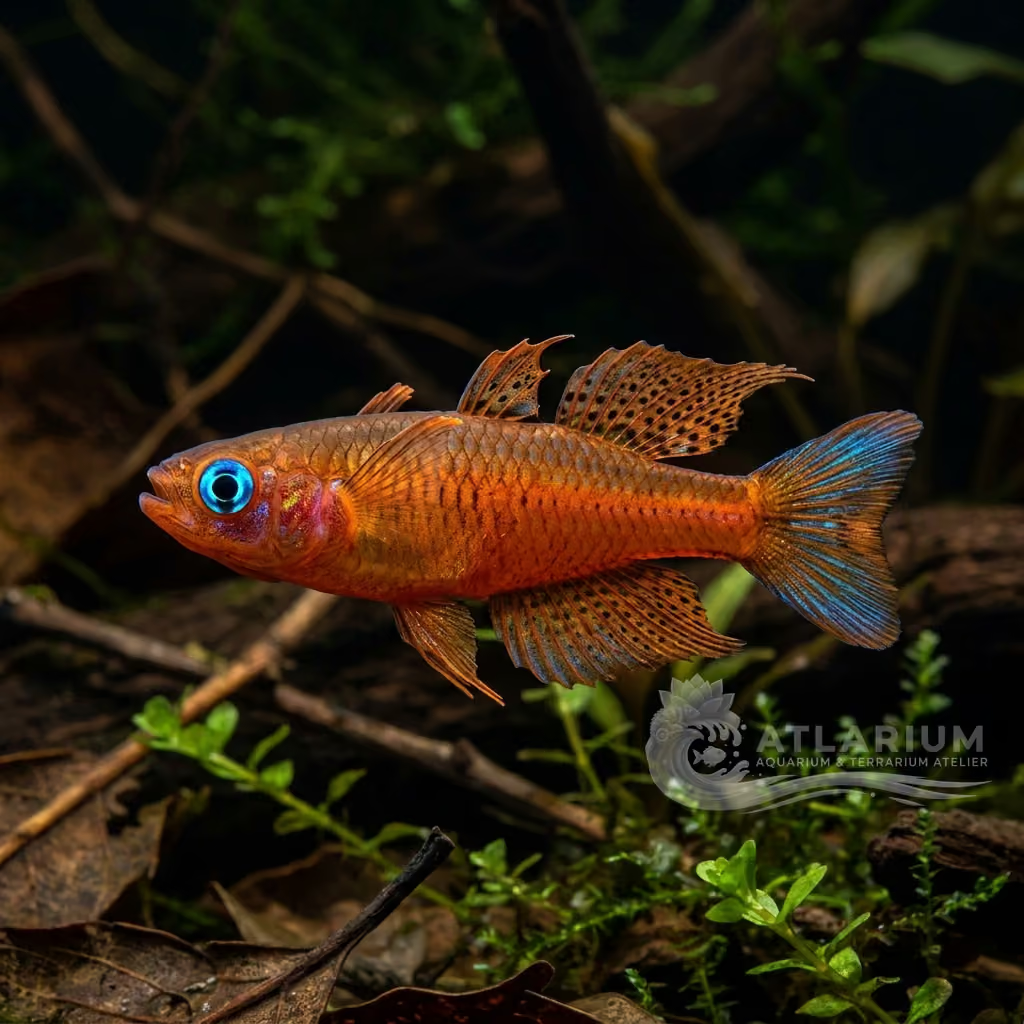
A charming freshwater rainbowfish native to Australia and New Guinea, celebrated for the males' elaborate spotted fins and bright blue eyes.
Wassertemperatur
22 - 28 °C
pH-Wert
6 - 7.5
Wassertyp
Süßwasser
Tankfüllstand
Oberfläche und Mitte
Erwachsenengröße
4 cm
Mindesttankvolumen
>= 30 L
Mindestgruppe
10
GH
5 - 12 dGH
KH
2 - 6 dKH
TDS
95 - 240 ppm
Leitfähigkeit
148 - 375 uS/cm

Artbeschreibung
Geographical Origin and Habitat: Pseudomugil gertrudae, commonly known as the spotted blue-eye, is native to the northern regions of Australia and southern parts of New Guinea. It inhabits shallow, calm freshwater bodies, such as swamps, billabongs, slow-flowing forest streams, and floodplains rich in submerged vegetation, floating plants, and decaying leaf litter.
Taxonomy and Morphology: It belongs to the family Pseudomugilidae. It is a small fish, reaching a maximum length of about 3 to 4 centimeters in adulthood. The body is partially translucent and elongated. Adult males develop exceptionally large, sail-like dorsal, anal, and pectoral fins decorated with distinct dark spots and brightly colored margins.
Social Behavior: It is a peaceful, schooling species that must be kept in groups of at least 10 or more individuals. This grouping not only reduces stress but also encourages males to engage in continuous and stunning courtship displays, raising and flaring their fins to establish dominance and attract females for spawning.
Coloration and Sexual Dimorphism: The coloration is magnificent: the body ranges from pale yellow to semitranslucent gold, covered with a dark scale outline that forms a checkered pattern. The males' fins are adorned with round black spots and white or yellow highlights. The eyes are a luminous, bright blue. Females have short fins and much duller coloration.

Pflege, Zucht und Mitbewohner
Aquarium Setup: Requires an aquarium of at least 50-60 liters for a school. The setup must include dense aquatic vegetation with plants like java moss, water ferns, and floating plants to diffuse the light. A dark substrate and natural driftwood create a comfortable environment that stimulates the fish's natural behaviors.
Diet and Feeding: Omnivorous diet. Because they have very small, upturned mouths, they require food of appropriate size. In the aquarium, feed small live or frozen foods such as baby brine shrimp, copepods, daphnia, microworms, and high-quality powdered or micro-pellet foods, administered in small daily portions.
Water Quality: Water parameters must be kept stable: optimal temperature between 21°C and 28°C, pH between 6.0 and 7.5, and soft to moderate water hardness (GH 5-15). It prefers gentle water filtration, as it does not like strong currents that can exhaust it during daily swimming. Regular small water changes are essential.
Compatibility and Cohabitation: It is an ideal fish for species-only setups or community aquariums with small, peaceful tankmates like freshwater shrimp (Neocaridina spp.), micro rasboras, pencilfish, pygmy corydoras, and other blue-eyes. Avoid larger or aggressive fish that could easily injure this delicate species or view it as prey.
Aquarium Breeding: Breeding in the aquarium is relatively easy and occurs daily under optimal conditions. They deposit a few adhesive eggs daily among mosses or spawning mops. The parents do not care for the eggs and may eat them; it is recommended to move the spawning mops to a separate hatching container for successful rearing.
Risks and Diseases: The primary risks include high sensitivity to sudden changes in water parameters and temperature, which can lead to osmotic shock and bacterial infections. Due to their relatively short lifespan (often under two years in captivity), it is important to purchase young specimens and maintain excellent tank hygiene.

Geografische Herkunft und Verbreitung
Pseudomugil gertrudae, commonly known as the spotted blue-eye, is native to the northern regions of Australia and southern parts of New Guinea. It inhabits shallow, calm freshwater bodies, such as swamps, billabongs, slow-flowing forest streams, and floodplains rich in submerged vegetation, floating plants, and decaying leaf litter.
Ursprung
Afrika und MadagaskarAustralien, Neuguinea und Ozeanien

Fischprofil
- Temperament
- Semi-aggressive
- They are active, peaceful, and entirely non-aggressive. Males display stunning mock battles that never result in injury. They are an enchanting addition to any peaceful planted setup.
- Diät
- Omnivore
- They are micro-predators that feed on tiny insects and zooplankton. Provide crushed high-quality flakes, daphnia, and newly hatched brine shrimp. Live foods are particularly beneficial for bringing out breeding colors.
- Lebenserwartung
- 2-3 years
- Erwachsenengröße
- 4 cm
- Geschlechterverhältnis
- Harem
- A ratio of one male to multiple females is highly recommended. Males exhibit spectacular fin displays to attract females. Having more females reduces constant harassment from eager males.
- Fütterungsfrequenz
- Twice daily
- Feed them very small amounts two to three times daily. Their tiny stomachs require frequent, small meals. Overfeeding with large pieces of food should be avoided entirely.
- Bioload
- Low
- Spotted Blue-eyes have a minimal bioload due to their tiny size. They are excellent candidates for small nano tanks. Pristine water conditions are essential for their health.
- Fluss
- Stagnant
- They prefer sluggish to gentle water flow. Their natural habitats include swamps and heavily vegetated slow-moving creeks. Strong filtration currents will quickly exhaust these delicate fish.
- Sprungrisiko
- Yes
- They have a moderate risk of jumping out of open aquariums. A tight lid or a thick layer of floating vegetation is highly recommended. Jumping usually occurs if they are frightened.
- Reproduktion
- Oviparous
- They spawn continuously in favorable conditions, laying a few eggs daily. Fine-leaved plants like Java moss are perfect egg depositories. Fry are extremely small and need green water or infusoria.
- Kompatibilität & Tankkameraden
- Peaceful
- They are incredibly peaceful and timid. They should only be kept with other diminutive, docile species or peaceful dwarf shrimp. Larger, boisterous fish will easily outcompete and stress them.
- Tankfüllstand
- Top/Middle
- They are most active in the middle and upper levels of the aquarium. They love to dart in and out of dense plant thickets. Open swimming areas at the top are appreciated.

Wissenschaftliche Modelle & Parameter
FishBase
Zugang zu den offiziellen wissenschaftlichen Daten der Art
FishBase v25.04Daten synchronisiert am: 15.06.2026
- Trophäenniveau
- 3,3 ± 0,4 se
- Phylogenetische Einzigartigkeit (PD50)
- 0.5
- Bayessche Längen-Gewichts-Beziehung
- a = 0.01122, b = 3.04
- AnfälligkeitGeringe Anfälligkeit (10 / 100)

Bildergalerie
Lizenzierte Bilder, die mit der Art oder, wenn markiert, mit dem nächstgelegenen repräsentativen Taxon verknüpft sind.

Verwandte Arten
Empfehlungen gruppiert nach nahen Verwandten, Auswahl von Begleitern und ähnlicher Betreuung.