Highfin Barb
Oreichthys crenuchoides
An exquisitely peaceful Indian micro-barb. Males exhibit a disproportionately large dorsal fin, resembling a black and yellow sail, which they hoist during spectacular displays.
Wassertemperatur
22 - 27 °C
pH-Wert
6 - 7.5
Wassertyp
Süßwasser
Tankfüllstand
Unten und in der Mitte
Erwachsenengröße
4,5 cm
Mindesttankvolumen
>= 60 L
Mindestgruppe
>= 1
GH
2 - 12 dGH
KH
1 - 6 dKH
TDS
40 - 240 ppm
Leitfähigkeit
63 - 375 uS/cm

Artbeschreibung
Geographical Origin and Habitat: Endemic to the Brahmaputra River basin and the Jorai river in Bengal (India). Inhabits very turbid, slow-moving or near-stagnant waters, with bottoms densely covered in silt, plant detritus, dead leaves, and submerged branches. Prefers dim lighting.
Taxonomy and Morphology: Cyprinidae (Barbinae subfamily). Crenuchoides literally translates to 'similar to Crenuchus', referencing the large dorsal fin resembling the South American tetra Crenuchus spilurus. The body is compact, deep, with an almost 'humpbacked' profile, reaching just 4 cm (1.5 inches).
Social Behavior: Exceptionally peaceful and shy. It is a gregarious species that MUST live in large groups (8+ specimens). Unlike fast barbs, it swims almost lethargically and stationarily near the bottom. Males spend the day slowly facing off, raising and lowering their majestic dorsal fins like fans.
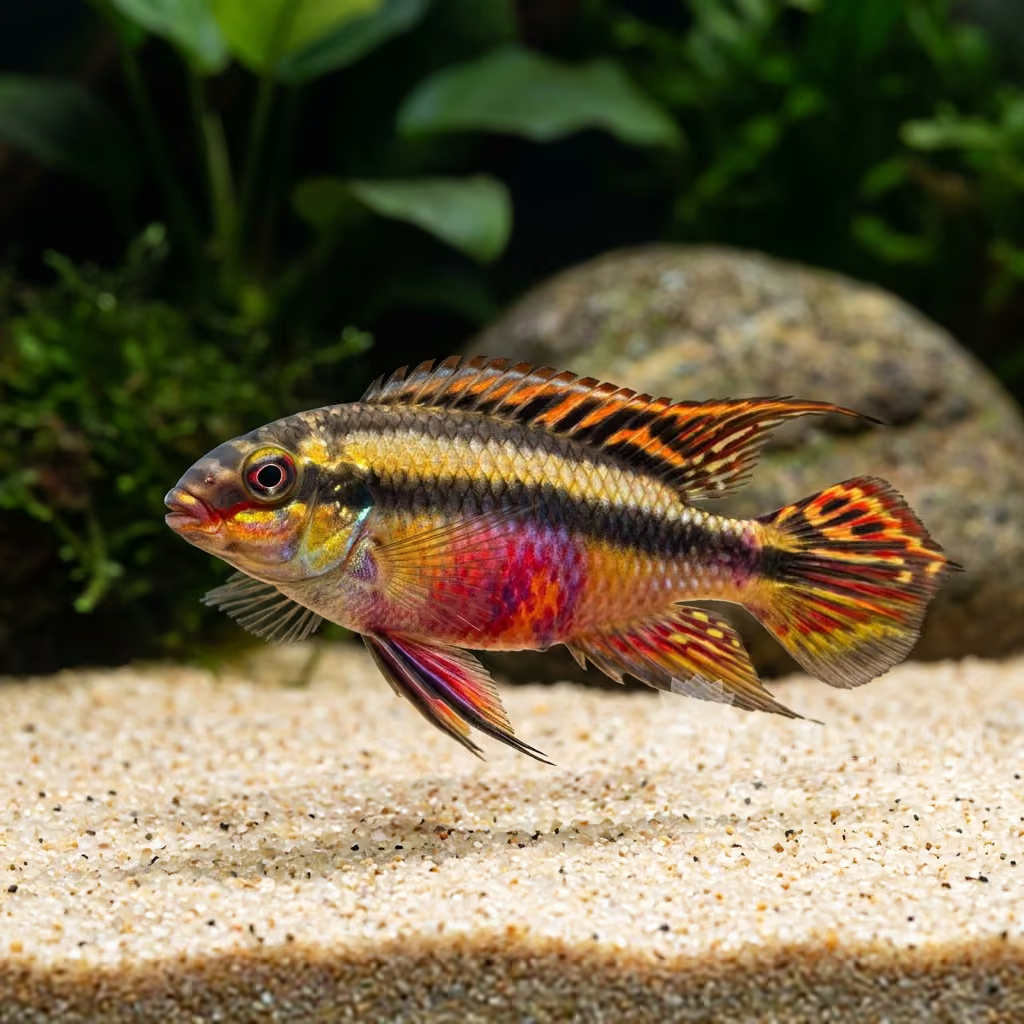
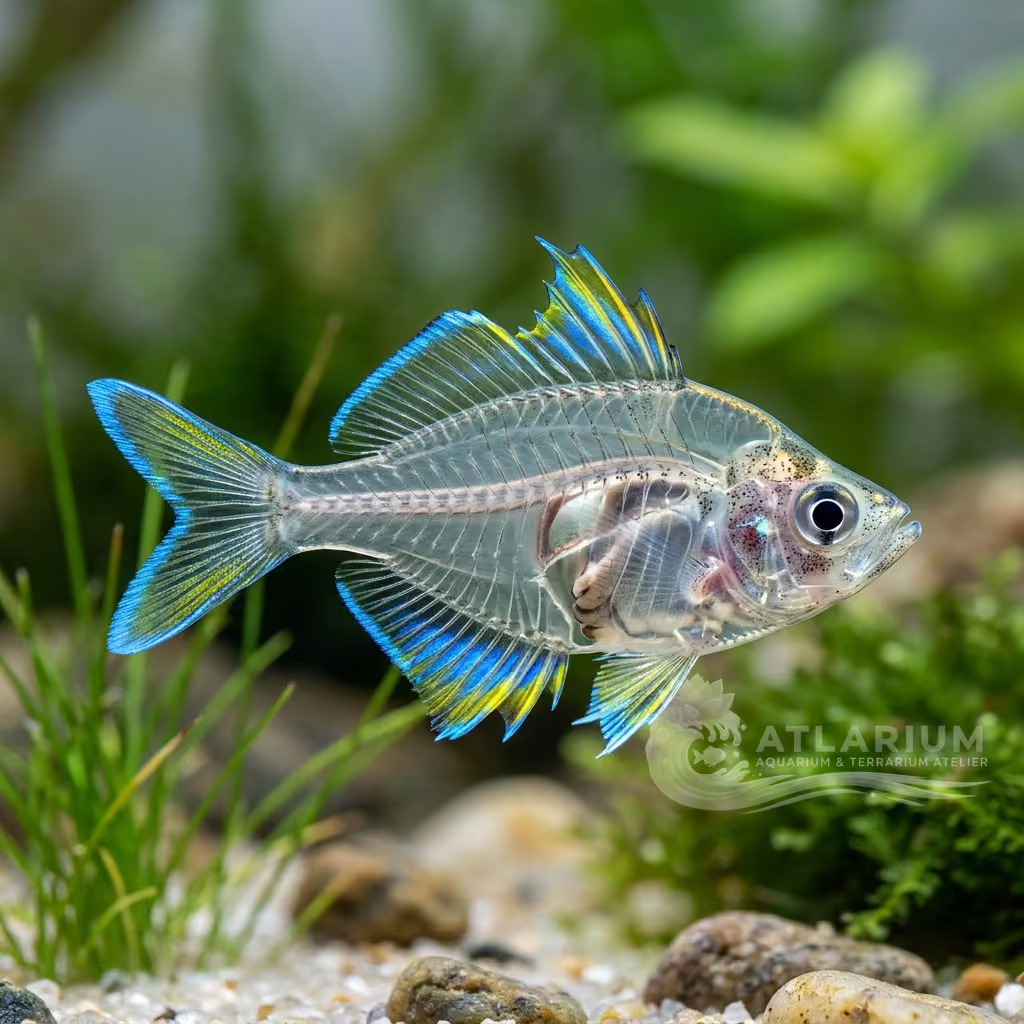
Coloration and Sexual Dimorphism: The body is silvery/gray with bronze reflections and a black spot at the base of the tail. Dimorphism is drastic: the male has a huge, angular dorsal fin, painted intense ink-black, with the upper edges splashed with mustard yellow or washed-out red. The female has short, colorless fins and is noticeably plumper in the belly.

Pflege, Zucht und Mitbewohner
Aquarium Setup: Demands a very mature aquarium, at least 60-80 cm (24-32 inches) long. The ideal layout is dimly lit, with a sandy or soft silt bottom, lots of tangled driftwood, and Catappa leaves to release protective tannins. Filtration must be gentle, as they hate fighting violent currents.
Diet and Feeding: Bottom-foraging micro-predators/omnivores. They slowly pick food off the substrate. It is vital to provide them with sinking live or frozen food (daphnia, brine shrimp, micro-bloodworms). They will almost never eat food floating on the surface. They have tiny mouths relative to their body size.
Water Quality: Relatively hardy if the tank is biologically stable. pH between 6.0 and 7.5, soft to medium water (GH 2-12). Optimal temperature 22-27°C (72-81°F). Highly sensitive to osmotic shock: requires small but frequent water changes with properly conditioned water.
Compatibility and Cohabitation: This is the critical point. They are slow, shy, and easily outcompeted. Do not pair with fast Barbs or Danios, which would eat all the food before it hits the bottom. Perfect with small Corydoras, Kuhli Loaches, Dwarf Rasboras (Boraras, Trigonostigma), and peaceful Gouramis.
Aquarium Breeding: Egg-scatterer among leaf litter. The male chooses a territory (often a root or dead leaf) and weakly defends it, inviting the female to spawn. Parents do not care for the eggs and might eat them. Often, in tanks rich in microfauna, a few fry spontaneously survive by hiding in moss.
Risks and Diseases: 1. Fatal starvation if housed with fast-eating fish. 2. Lethal stress wasting caused by excessive lighting or lack of secure hiding spots.

Geografische Herkunft und Verbreitung
Endemic to the Brahmaputra River basin and the Jorai river in Bengal (India). Inhabits very turbid, slow-moving or near-stagnant waters, with bottoms densely covered in silt, plant detritus, dead leaves, and submerged branches. Prefers dim lighting.
Ursprung
Tropische Ozeane und RiffeSüd- und Südostasien

Fischprofil
- Temperament
- Semi-aggressive
- They are extremely timid and delicate barbs. Keeping them in a group of six or more is crucial for them to feel secure. They will spend much of their time gently exploring the substrate and plant life.
- Diät
- Omnivore
- They are micropredators that feed on tiny crustaceans and worms in the wild. Offer them crushed, high-quality flakes alongside micro-pellets. Live or frozen foods like daphnia, cyclops, and baby brine shrimp are essential for conditioning.
- Lebenserwartung
- 5-6 years
- Erwachsenengröße
- 4.5 cm
- Geschlechterverhältnis
- Group
- Males are distinctly more colorful and possess an enlarged, striking dorsal fin. Females are slightly plumper and have less prominent fins. Keeping a group with a mix of sexes allows males to display their best colors while sparring harmlessly.
- Fütterungsfrequenz
- Twice daily
- Feed them small amounts one to two times daily. Ensure the food particles are small enough for their tiny mouths to handle. Because they are shy, monitor feedings to ensure they are getting their share.
- Bioload
- Low
- The Highfin Barb produces a very small bioload. A standard, well-maintained sponge or hang-on-back filter is entirely adequate. They appreciate clean water, so regular weekly water changes are recommended.
- Fluss
- Stagnant
- They prefer slow-moving or nearly stagnant water. Harsh currents will stress them out and force them into hiding. A sponge filter provides the perfect combination of gentle flow and biological filtration.
- Sprungrisiko
- Yes
- They are not known to be prominent jumpers, but startled fish can always make a leap. A standard aquarium lid or cover glass will prevent any accidental escapes. Floating plants can also make them feel secure and deter jumping.
- Reproduktion
- Oviparous
- They are egg scatterers that spawn among fine-leaved plants like Java moss. Conditioning the parents with live foods and providing soft, slightly acidic water triggers breeding. The parents should be removed post-spawning to save the eggs from being eaten.
- Kompatibilität & Tankkameraden
- Peaceful
- They are incredibly peaceful and shy, making them ideal for nano community tanks. They should only be kept with other very small, non-aggressive species like rasboras or dwarf corydoras. Fast or boisterous fish will easily outcompete them for food.
- Tankfüllstand
- Middle/Bottom
- They generally occupy the bottom and middle zones of the aquarium. They feel most secure in heavily planted tanks with plenty of shaded areas. You will often see them hovering motionlessly among the leaves.

Wissenschaftliche Modelle & Parameter
FishBase
Zugang zu den offiziellen wissenschaftlichen Daten der Art
FishBase v25.04Daten synchronisiert am: 15.06.2026
- Trophäenniveau
- 3 ± 0,3 se
- Belastbarkeit
- Hoch (weniger als 15 Monate)
- Phylogenetische Einzigartigkeit (PD50)
- 0.5039
- Bayessche Längen-Gewichts-Beziehung
- a = 0.01622, b = 2.94
- AnfälligkeitGeringe Anfälligkeit (10 / 100)

Verwandte Arten
Empfehlungen gruppiert nach nahen Verwandten, Auswahl von Begleitern und ähnlicher Betreuung.