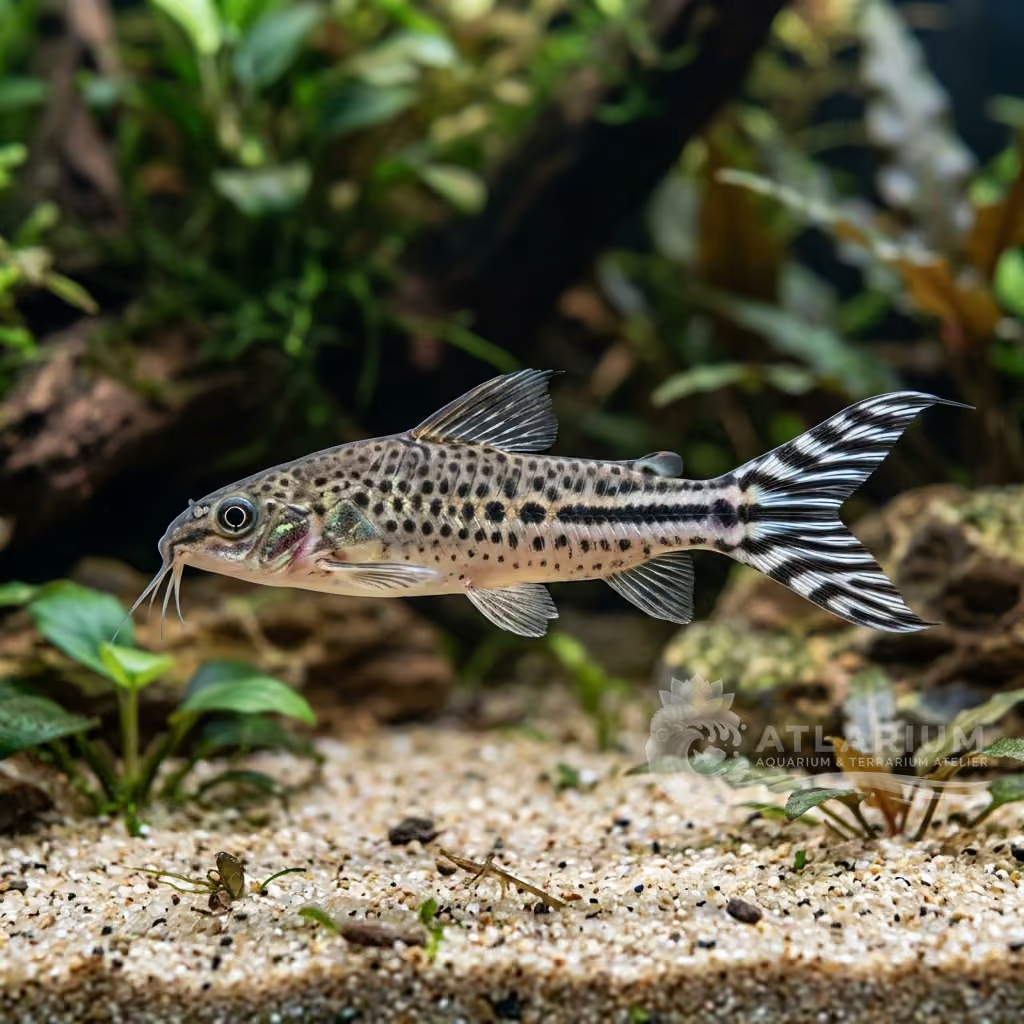
Reticulated Flying Fox
Crossocheilus reticulatus
Often purchased as a utilitarian scavenger against Black Beard Algae (BBA), this bottom-dwelling cyprinid proves to be a tireless colossus. It grows huge (16 cm / 6.5 inches) and demands extremely long tanks with river-like currents.
Wassertemperatur
22 - 26 °C
pH-Wert
6 - 7.5
Wassertyp
Süßwasser
Tankfüllstand
Unten und in der Mitte
Erwachsenengröße
16 cm
Mindesttankvolumen
>= 180 L
Mindestgruppe
>= 1
GH
2 - 15 dGH
KH
1 - 7 dKH
TDS
40 - 295 ppm
Leitfähigkeit
63 - 461 uS/cm

Artbeschreibung
Geographical Origin and Habitat: Mekong River basin (Thailand, Laos, Cambodia). Inhabits fast-flowing clear rivers, with bottoms of smooth rocks, coarse gravel and boulders covered with biofilm.
Taxonomy and Morphology: Silver Flying Fox / Reticulated Algae Eater (Crossocheilus reticulatus). Robust Asian cyprinid, has a ventral sucker mouth specifically adapted for scraping surfaces.
Social Behavior: Very gregarious, especially when young (minimum 4-5 individuals). As they grow, adults may show slight territorial skirmishes, chasing each other without injury to define hierarchies. Continuously in motion.
Coloration and Sexual Dimorphism: Silvery gray body with a conspicuous "reticulated" pattern (dark edges of the scales). The distinguishing feature from the Siamese Algae Eater is an obvious massive black oval spot placed before the tail. Females are more swollen.

Pflege, Zucht und Mitbewohner
Aquarium Setup: Grows quickly and swims vigorously: minimum 120 cm (48 inches) aquarium. Prefers smooth wood and round stones for algal grazing. Strictly closed tank, excellent jumpers.
Diet and Feeding: Specialized herbivore/algivore. The only reliable devourer of the infamous black beard algae (BBA). Requires spirulina wafers, blanched vegetables (zucchini) and must not be over-fed with protein foods, otherwise obesity and stopping scraping algae will result.
Water Quality: Prefers well-moved, very clean and highly oxygenated water. Intolerant to ammonia and nighttime oxygen drops.
Compatibility and Cohabitation: Completely peaceful towards other species. Cohabits with Rasboras, Barbs, Asian Botias. Can be stressful (due to hyperkinetic swimming) for very slow or shy fish (e.g. Gouramis or demanding Cichlids).
Aquarium Breeding: Undocumented in home aquariums (in nature it makes reproductive migrations triggered by climate changes). Commercial fish are almost all induced with hormones.
Risks and Diseases: Fatal obesity if kept in tanks with many predatory fish that are fed with abundant meat mush. Propensity to jump from the lid if frightened.

Geografische Herkunft und Verbreitung
Mekong River basin (Thailand, Laos, Cambodia). Inhabits fast-flowing clear rivers, with bottoms of smooth rocks, coarse gravel and boulders covered with biofilm.
Ursprung
Süd- und Südostasien

Fischprofil
- Temperament
- Semi-aggressive
- They are generally active, peaceful, and excellent additions to a cleanup crew. They are constantly on the move, exploring the tank and grazing on surfaces. Some individuals may become slightly grumpy and territorial with age, chasing away other bottom dwellers from their favorite resting spots. For the most part, their aggression is mild and rarely results in injury.
- Diät
- Omnivore
- They are fantastic algae eaters and are known to consume a wide variety of nuisance algae, including brush and thread algae. Besides algae, they are omnivorous and must be fed a varied diet of sinking algae wafers, spirulina pellets, and vegetable matter like cucumber or spinach. They also relish meaty foods such as bloodworms and daphnia. A diverse diet ensures they remain healthy and do not resort to eating soft-leaved aquarium plants.
- Lebenserwartung
- 5-10 years
- Erwachsenengröße
- 16 cm
- Geschlechterverhältnis
- Solitary
- They are not fussy about sex ratios and can be kept individually, in pairs, or in groups. A group of 4 or 5 is often recommended to disperse any minor territorial aggression that might develop as they grow. When kept in groups, they will establish a loose pecking order but generally coexist peacefully. Keeping a single specimen is perfectly fine if the tank is too small for a group.
- Fütterungsfrequenz
- Twice daily
- They are constant grazers and should have access to algae or vegetables throughout the day. Supplemental feeding with wafers or pellets can be done once daily, preferably towards the evening. If the tank is free of algae, they will require more frequent, small meals to maintain their energy levels. Be careful not to overfeed meaty foods, as it can deter them from their algae-eating duties.
- Bioload
- Medium to High
- The Reticulated Flying Fox produces a moderate bioload that is easily managed in a standard, well-filtered aquarium. Their constant foraging keeps them active, leading to a steady metabolism and waste output. Regular water changes and routine substrate vacuuming are adequate to maintain good water quality. Like all algae eaters, their bioload increases relative to the amount of supplemental food provided.
- Fluss
- Stagnant
- They prefer moderate to strong water flow, mimicking the flowing streams and rivers of their native Southeast Asian habitats. Good circulation and high oxygenation are crucial for their long-term health. The addition of a circulation pump or a strong filter outflow will provide the required current. They are often found resting on objects directly in the path of the flow.
- Sprungrisiko
- Yes
- There is a significant jump risk with this species, particularly when they are startled or during lights-out. A tight and secure lid is mandatory for any aquarium housing them. They are surprisingly powerful swimmers and can propel themselves through very small gaps. Ensuring stable water parameters also minimizes their desire to flee the tank.
- Reproduktion
- Oviparous
- Captive breeding of Crossocheilus reticulatus is practically unheard of in the home aquarium. Commercially available specimens are usually wild-caught or bred in large outdoor ponds using hormonal stimulation. There are no reliable methods or documented accounts of inducing spawning naturally in a closed system. Determining the sex of these fish is also highly problematic until they are fully mature.
- Kompatibilität & Tankkameraden
- Peaceful
- They are generally peaceful and suitable for community tanks with a variety of fish. They do well with tetras, danios, peaceful barbs, and various loaches. However, as they age, they may become slightly territorial towards other algae-eating species or similarly shaped bottom-dwellers. They should not be kept with slow-moving, laterally compressed fish like angelfish or discus, as they might try to graze on them.
- Tankfüllstand
- Middle/Bottom
- They are predominantly bottom and middle-dwelling fish. They spend their time actively moving over the substrate, rocks, and plant leaves in search of food. They are excellent at cleaning broad plant leaves without damaging them. They rarely visit the very top of the water column unless food is floating there.

Wissenschaftliche Modelle & Parameter
FishBase
Zugang zu den offiziellen wissenschaftlichen Daten der Art
FishBase v25.04Daten synchronisiert am: 15.06.2026
- Trophäenniveau
- 2,3 ± 0,17 se
- Belastbarkeit
- Hoch (weniger als 15 Monate)
- Phylogenetische Einzigartigkeit (PD50)
- 0.5
- Bayessche Längen-Gewichts-Beziehung
- a = 0.00813, b = 3.05
- AnfälligkeitGeringe Anfälligkeit (11 / 100)

Verwandte Arten
Empfehlungen gruppiert nach nahen Verwandten, Auswahl von Begleitern und ähnlicher Betreuung.