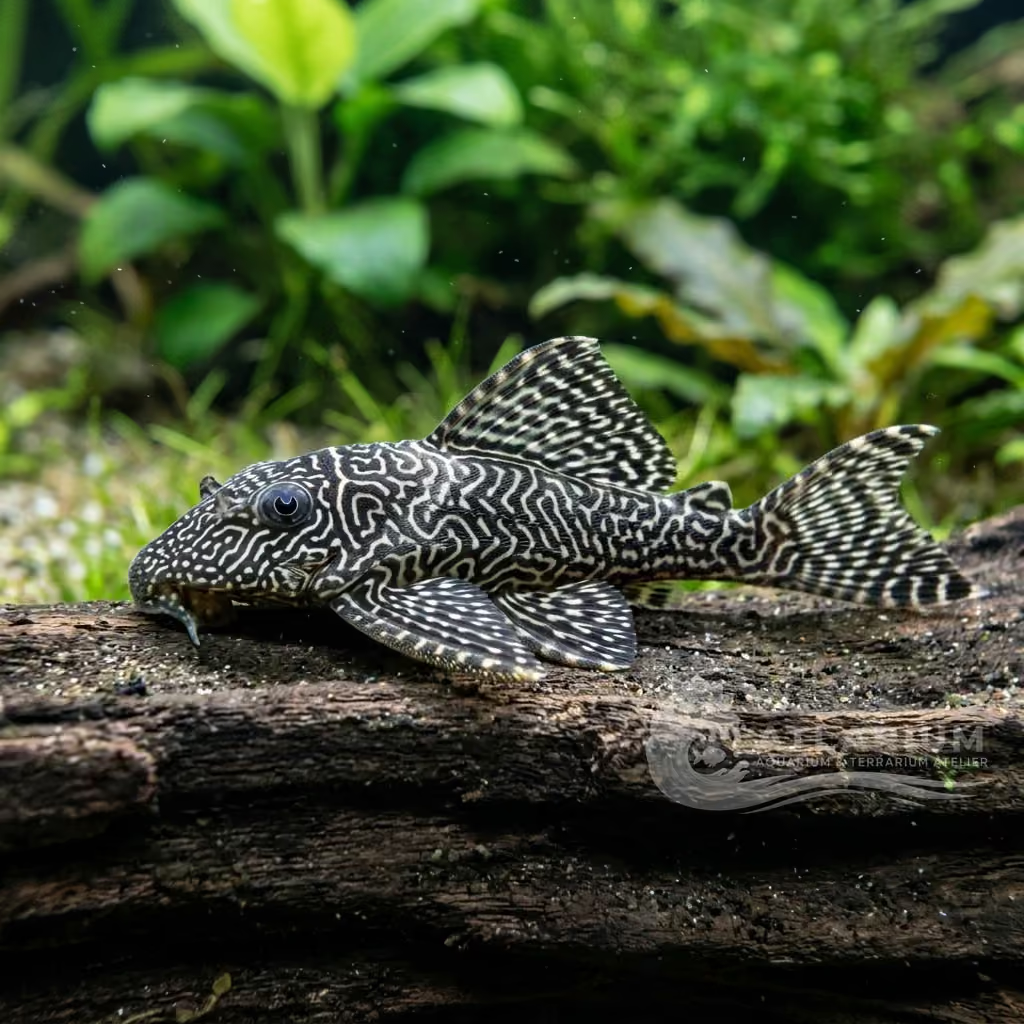
Red Wolf Fish
Erythrinus erythrinus
The colorful, dwarf cousin of the giant Wolf Fish. Maxing out at 20-25 cm, it packs all the prehistoric brutality and nasty teeth of the giant into a manageable, bright red-and-violet package. An incredibly vicious ambush predator.
Wassertemperatur
22 - 26 °C
pH-Wert
5.5 - 7.5
Wassertyp
Süßwasser
Tankfüllstand
Unten und in der Mitte
Erwachsenengröße
20 cm
Mindesttankvolumen
>= 180 L
Mindestgruppe
>= 1
GH
2 - 15 dGH
KH
1 - 7 dKH
TDS
40 - 295 ppm
Leitfähigkeit
63 - 461 uS/cm

Artbeschreibung
Geographical Origin and Habitat: Widely distributed in South America (Amazon River, Orinoco). Prefers stagnant canals, asphyxial pools, agricultural ditches and swamps saturated with intricate roots in the absence or total lack of oxygen.
Taxonomy and Morphology: Red Wolf Fish (Erythrinus erythrinus). "Monumental" predatory characin for micro-aquariums. Formidable cylindrical body, abnormal mouth equipped with large canine-like teeth. The swim bladder acts as a supplementary respiratory organ.
Social Behavior: Nocturnal ambush predator severely territorial and aggressive towards its own kind (red wolves fight fiercely). Sedentary animal, never swims empty. Waits for hours camouflaged among the woods before grasping.
Coloration and Sexual Dimorphism: Perfect camouflage: broken dark gray-green tones, which in adulthood (or in perfect conditions) lead to bright fire red bellies and purplish/iridescent opercula. Males have much more extensive red coloration and a pointed dorsal fin.

Pflege, Zucht und Mitbewohner
Aquarium Setup: Strangely requires little space for its size (100 cm / 40 inches tank), due to its inactive lifestyle. Set up in swamp style: fine bottom, branches and trunks to create "tubes" and solid wood caves.
Diet and Feeding: Terminal carnivore (Piscivore / Insectivore). Wean him with thawed fish (smelt, silversides), large earthworms, prawns. As juveniles they accept insects (crickets). Tends to extreme obesity if overfed; a large meal every 3-4 days for adults is sufficient.
Water Quality: Among the most resistant fish on the globe to pollution and anoxia. Can literally jump between muddy pools to find better water. However, old water depresses it, while water changes make it hyper-vigilant and reactive.
Compatibility and Cohabitation: Ideally to be kept SOLITARY as a "pet fish". Can cohabit with large Central/South American Cichlids or large Loricariidae in HUGE tanks (150+ cm / 60+ inches). Will attack any fish under 15 cm (6 inches), and will devastate quieter fish tearing off shreds of meat.
Aquarium Breeding: Extremely rare. The male digs a nest in the sand in safety and obsessively protects the thousands of laid eggs in Cichlid style.
Risks and Diseases: Very high risk of ESCAPE. A Red Wolf can jump up to bang its head on the glass lid and shatter it. Mouth wounds "Banging" easily infect the teeth.

Geografische Herkunft und Verbreitung
Widely distributed in South America (Amazon River, Orinoco). Prefers stagnant canals, asphyxial pools, agricultural ditches and swamps saturated with intricate roots in the absence or total lack of oxygen.
Ursprung
Kosmopolitisch oder eingeführtAmazonas, Orinoco und Guayana

Fischprofil
- Temperament
- Semi-aggressive
- They are highly aggressive, solitary ambush predators with a notably nasty disposition. They are highly intolerant of any tank mates and will vigorously defend their space. Caution is advised during tank maintenance, as they have sharp teeth and may bite hands.
- Diät
- Omnivore
- They are strictly carnivorous predators that require a hearty, protein-rich diet to flourish. Offer them substantial portions of frozen whole fish, large earthworms, prawns, and mussels. Feeder fish can be offered occasionally but carry a high risk of introducing devastating diseases.
- Lebenserwartung
- 8-12 years
- Erwachsenengröße
- 20 cm
- Geschlechterverhältnis
- Specific M:F ratio
- Because they are overwhelmingly aggressive towards their own kind, maintaining a sex ratio is impossible in home aquaria. They must be kept strictly alone to prevent fatal encounters. Only massive public aquariums can even attempt to house multiple individuals together.
- Fütterungsfrequenz
- Twice daily
- Juveniles should be fed once a day to support their rapid growth rate. Adult specimens only require feeding two to three times a week with appropriately sized meals. Care must be taken not to overfeed, as they will gorge themselves until they regurgitate.
- Bioload
- Medium
- The Red wolf fish produces a significant bioload due to its highly carnivorous, messy diet. Heavy-duty filtration systems are absolutely essential to handle the rapid accumulation of organic waste. Frequent and large water changes are required to keep nitrate levels within an acceptable range.
- Fluss
- Stagnant
- They naturally inhabit stagnant swamps, ditches, and sluggish river margins in South America. They deeply prefer a low-flow environment with minimal water turbulence. Strong currents will only stress them and should be completely avoided in their setup.
- Sprungrisiko
- Yes
- They are powerful, explosive jumpers capable of shattering glass lids if sufficiently startled. A very heavy, reinforced, and locked canopy is completely mandatory to prevent catastrophic escapes. Their powerful muscles allow them to launch themselves significant distances out of the water.
- Reproduktion
- Oviparous
- Captive breeding is exceptionally rare due to their extreme intraspecific aggression. Attempting to pair them often results in the immediate death of the smaller or weaker fish. In the wild, males are known to construct nests and fiercely guard the eggs and fry.
- Kompatibilität & Tankkameraden
- Solitary
- They are extraordinarily aggressive, highly predatory, and relentlessly territorial. They are best kept completely solitary as a single specimen in a dedicated species setup. They will inevitably attack, kill, or consume almost any fish sharing their environment.
- Tankfüllstand
- Middle/Bottom
- They are primarily bottom and mid-level dwellers that prefer lurking motionless in the shadows. They favor environments with dense vegetation, sunken driftwood, and large pipes where they can ambush prey. They rarely swim openly unless actively hunting or anticipating food.

Wissenschaftliche Modelle & Parameter
FishBase
Zugang zu den offiziellen wissenschaftlichen Daten der Art
FishBase v25.04Daten synchronisiert am: 15.06.2026
- Trophäenniveau
- 3,7 ± 0,58 se
- Belastbarkeit
- Hoch (weniger als 15 Monate)
- Phylogenetische Einzigartigkeit (PD50)
- 0.75
- Bayessche Längen-Gewichts-Beziehung
- a = 0.00933, b = 3.16
- AnfälligkeitGeringe Anfälligkeit (14 / 100)

Verwandte Arten
Empfehlungen gruppiert nach nahen Verwandten, Auswahl von Begleitern und ähnlicher Betreuung.