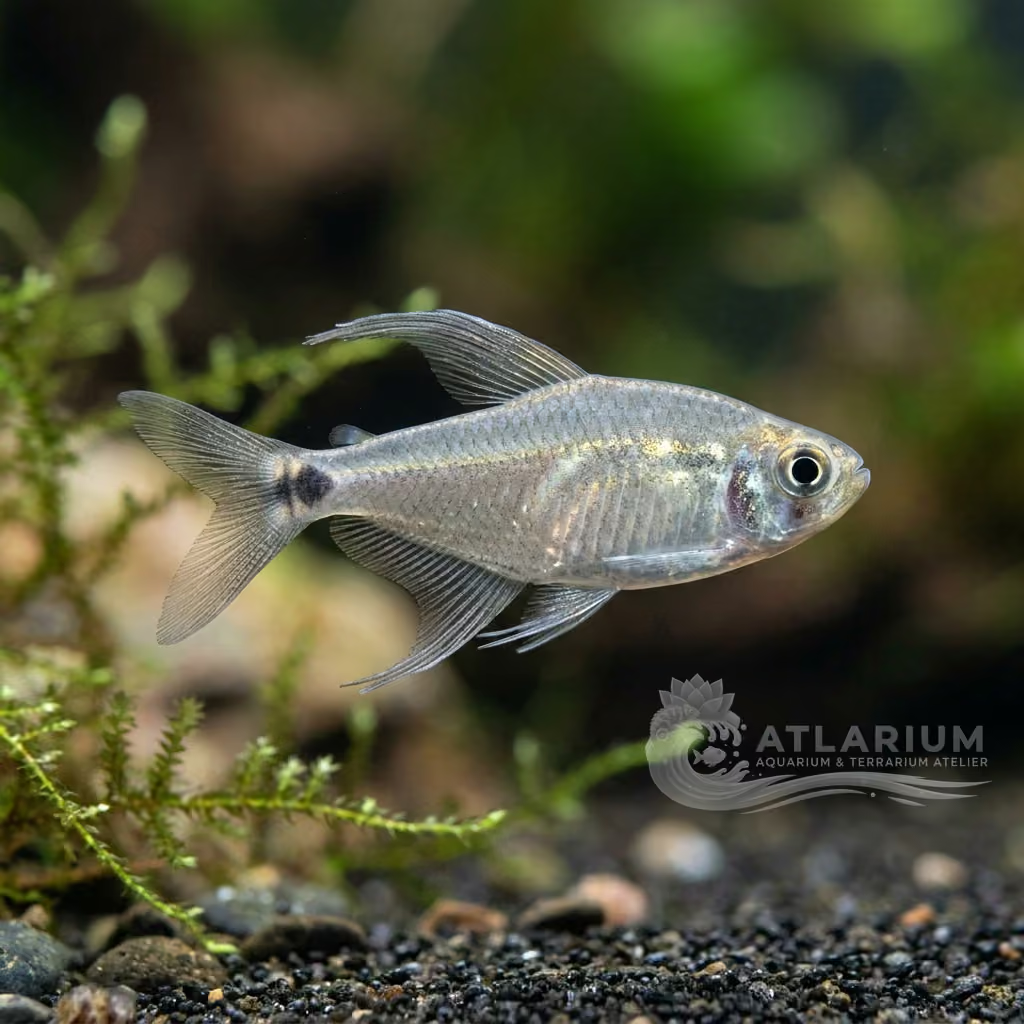
Panda Garra
Garra flavatra
The Panda Garra (Garra flavatra) is undoubtedly one of the most fascinating, hardworking and charismatic algae-eaters in the fishkeeping world. Very different from the classic grey and hidden Plecostomus, this small bottom fish (7-9 cm / 3.5 inches) sports an amazing color contrast: thick alternating bands of deep gold and dark brown/black, with fins tinted a bright coral red. It is not only a useful fish, but a true aquarium star, constantly in sight and endowed with a comical and extroverted personality. However, to thrive long-term, it requires the rigorous simulation of its inhospitable native habitat: strong-current mountain streams.
22 - 27 °C
6.5 - 7.5
Süßwasser
Unten
9 cm
>= 80 L
>= 4
2 - 12 dGH
1 - 6 dKH
40 - 240 ppm
63 - 375 uS/cm

Artbeschreibung

Pflege, Zucht und Mitbewohner

Geografische Herkunft und Verbreitung
Ursprung

Fischprofil
- Temperament
- Active
- They are very active, comical, and overwhelmingly peaceful community fish. They establish a loose hierarchy within their group, often engaging in playful chasing without causing harm. Their continuous grazing and quirky resting positions make them highly entertaining to observe.
- Diät
- Omnivore
- They are omnivorous grazers that naturally feed on biofilm, algae, and small benthic organisms. In the aquarium, they enthusiastically accept sinking algae wafers, vegetable matter, and high-quality pellets. Supplementing their diet with occasional frozen bloodworms or daphnia keeps them exceptionally healthy.
- Lebenserwartung
- 4-6 years
- Erwachsenengröße
- 9 cm
- Geschlechterverhältnis
- Group
- Sexing them is difficult, but mature females often appear noticeably plumper when gravid. Males may develop tiny breeding tubercles on their snouts when ready to spawn. They are best kept in a small group of at least four to six individuals to encourage natural social behaviors.
- Fütterungsfrequenz
- Twice daily
- They should be offered food once or twice daily, specifically utilizing sinking foods that reach the bottom. Providing smooth rocks for natural algae grazing allows them to forage constantly between scheduled meals. Ensure that food reaches them before faster mid-water swimming fish consume it entirely.
- Bioload
- Medium
- The Panda Garra produces a moderate bioload for a fish of its relatively small size. Strong mechanical and biological filtration is necessary to keep their water exceptionally clean. They are sensitive to organic waste buildup, making weekly water changes absolutely essential.
- Fluss
- Strong
- Originating from fast-flowing, oxygen-rich hillstreams, they thrive in aquariums with high water movement. Employing powerheads or strong canister filters to simulate a river environment is highly recommended. High levels of dissolved oxygen are crucial for their long-term health and vitality.
- Sprungrisiko
- Yes
- These active fish are skilled climbers and jumpers, especially when first introduced to a new aquarium. A tight-fitting lid is strictly required to prevent them from scaling the glass and escaping. Ensure there are no small gaps around equipment cables or filter pipes.
- Reproduktion
- Oviparous
- Breeding the Panda Garra in captivity is challenging but occasionally achieved by dedicated hobbyists. It usually requires specialized river-manifold setups that simulate highly oxygenated seasonal floods. A diet rich in live foods is necessary to condition the females for spawning.
- Kompatibilität & Tankkameraden
- Community
- They are incredibly peaceful and make excellent additions to community aquariums with similarly peaceful tank mates. They pair perfectly with rasboras, small tetras, and calm bottom-dwellers like Corydoras. However, they should not be kept with aggressive cichlids or fish capable of swallowing them.
- Tankfüllstand
- Bottom
- They are primarily bottom-dwellers that spend their time resting on or grazing across the substrate. They love to attach themselves to smooth river stones and the aquarium glass using their specialized mouths. Providing a variety of broad-leaved plants and smooth cobbles creates an ideal environment.

Wissenschaftliche Modelle & Parameter
Zugang zu den offiziellen wissenschaftlichen Daten der Art
- Belastbarkeit
- Hoch (weniger als 15 Monate)
- Phylogenetische Einzigartigkeit (PD50)
- 0.5
- Bayessche Längen-Gewichts-Beziehung
- a = 0.00794, b = 3.04
- AnfälligkeitGeringe Anfälligkeit (10 / 100)

Verwandte Arten
Empfehlungen gruppiert nach nahen Verwandten, Auswahl von Begleitern und ähnlicher Betreuung.