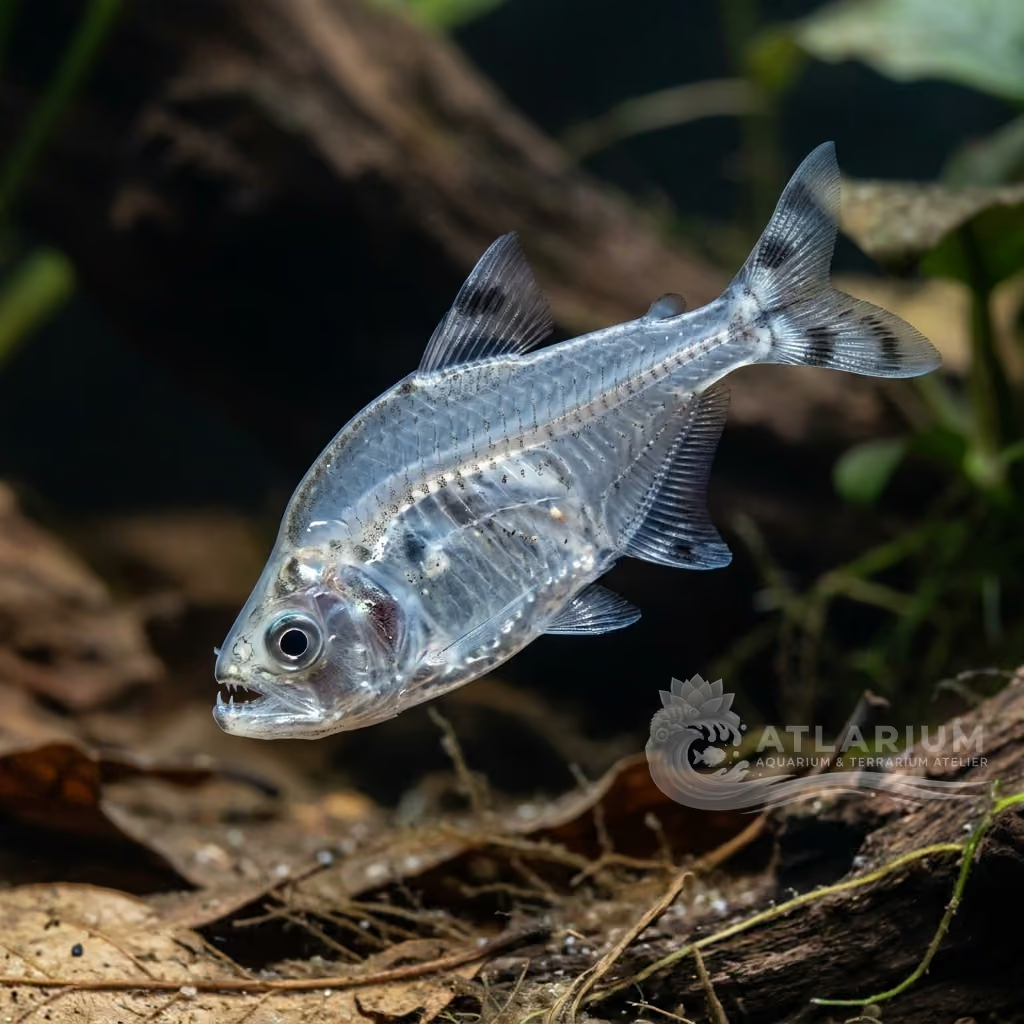
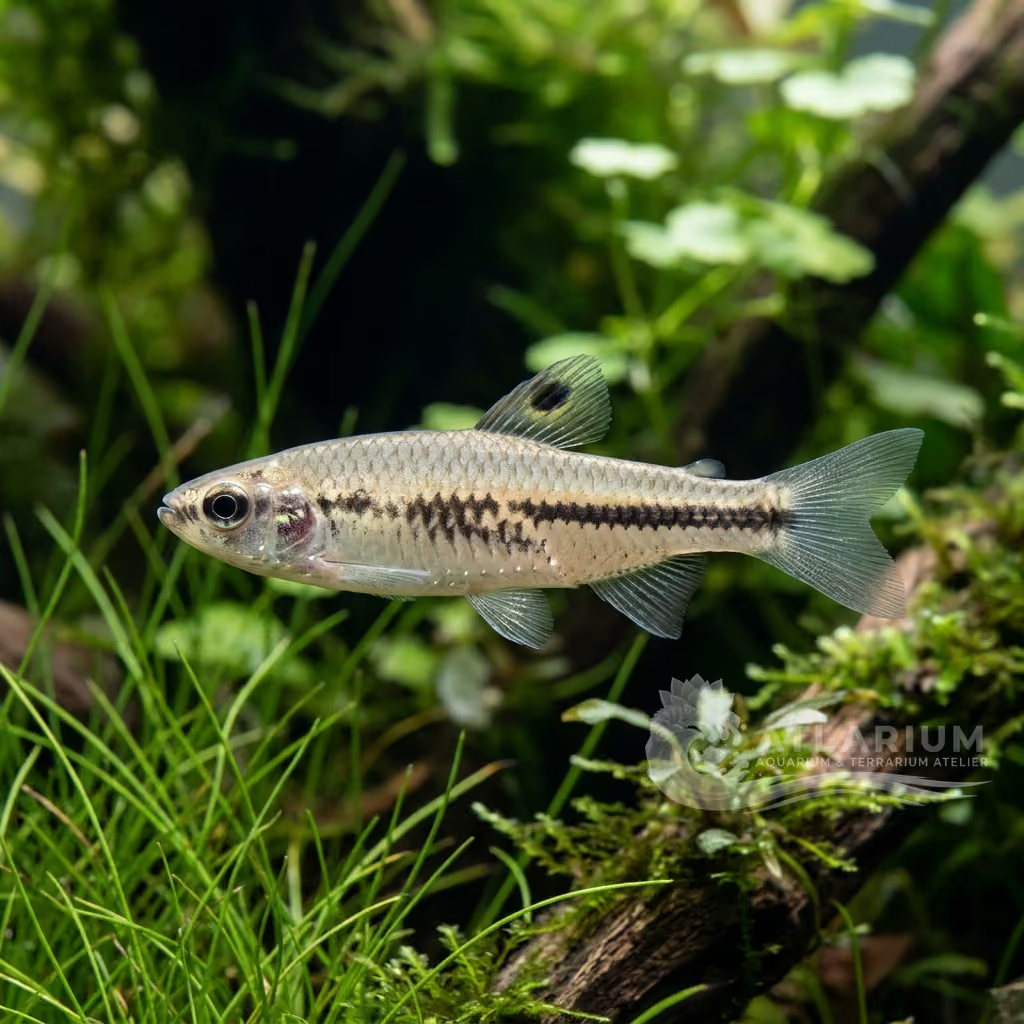
Borneo Tiger Barb
Puntigrus anchisporus
The doppelgänger of the common Tiger Barb. At first glance identical to Puntigrus tetrazona, but native to Borneo, it possesses strictly red pelvic fins and differs microscopically by having a complete lateral line.
Wassertemperatur
20 - 26 °C
pH-Wert
5 - 7
Wassertyp
Süßwasser
Tankfüllstand
Mitte
Erwachsenengröße
6 cm
Mindesttankvolumen
>= 60 L
Mindestgruppe
>= 1
GH
1 - 10 dGH
KH
1 - 5 dKH
TDS
25 - 200 ppm
Leitfähigkeit
39 - 313 uS/cm

Artbeschreibung
Geographical Origin and Habitat: Endemic to the Kapuas and Mahakam rivers in central and western Borneo (Kalimantan, Indonesia). Inhabits very slow forest streams or swamp pools, usually with dark, tannin-loaded water (blackwater) and very low pH caused by decaying vegetation.
Taxonomy and Morphology: Cyprinidae (genus Puntigrus). Confused for decades with P. tetrazona (Sumatra). Key differences: anchisporus has a 'complete' lateral line (sensory pores reach the tail; in tetrazona they stop halfway), always has 14 scales around the caudal peduncle, and its pelvic fins are ALWAYS intensely red (in tetrazona they are often black or hyaline). Reaches 6 cm (2.4 inches).
Social Behavior: Extremely dynamic and hierarchical. Like all 'Tiger Barbs', it is a notorious fin-nipper. However, this bad reputation is the fault of aquarists: if kept in large schools of 12-15 specimens, the Tiger Barb will focus its frantic aggression internally to establish pecking orders, completely ignoring other species.
Coloration and Sexual Dimorphism: Pale gold/peach base crossed by four massive, sharp vertical black bands. All fins feature deeply saturated fire-red borders or hues, much brighter than their Sumatran cousins. Breeding males have bright red snouts, are slimmer, and show higher contrast. Females are deeper-bodied with pronounced silvery bellies.

Pflege, Zucht und Mitbewohner
Aquarium Setup: Demands tanks of at least 80 cm (32 inches) in length. Being native to Borneo, it appreciates layouts rich in submerged roots (Manila or Mopani) and Catappa leaves to tint the water amber. Lighting should not be blinding. The aquarium must have a large central swimming space for their frantic sprints.
Diet and Feeding: Insatiable micro-predators. They will voraciously eat before anyone else. They eat anything: bottom pellets, flakes, brine shrimp, and bloodworms. Without live food, they tend to damage soft plants, so supplement with spirulina flakes.
Water Quality: Compared to the bulletproof tetrazona, anchisporus prefers decidedly softer (GH 1-10) and more acidic waters (pH 5.0 - 7.0). The ideal temperature is between 20 and 26°C (68-79°F). It is less tolerant of urban pollutants.
Compatibility and Cohabitation: GOLDEN RULE: No slow-moving fish with long fins (Absolutely NEVER with Betta splendens, Gouramis, Angelfish, Discus, or Guppies). They would be shredded and killed by stress. Should be paired exclusively with robust, fast, short-finned fish: Clown Loaches, Danios, Giant Rasboras, or large Plecos.
Aquarium Breeding: Highly prolific egg-scatterer. They scatter eggs in the morning among thick bushes of fine-leaved plants (like Java Moss). If an egg-saver grid is not placed on the bottom, the eggs will be devoured by the parents in seconds.
Risks and Diseases: They stress out and succumb to external parasites (Ich) if confined in small schools (under 6 individuals), while also turning into terrorists toward other species.

Geografische Herkunft und Verbreitung
Endemic to the Kapuas and Mahakam rivers in central and western Borneo (Kalimantan, Indonesia). Inhabits very slow forest streams or swamp pools, usually with dark, tannin-loaded water (blackwater) and very low pH caused by decaying vegetation.
Ursprung
NordamerikaSüd- und Südostasien

Fischprofil
- Temperament
- Semi-aggressive
- They possess a bold, boisterous, and highly energetic temperament. Their constant, rapid movement adds massive activity to the tank. They are fearless and investigate new additions immediately.
- Diät
- Omnivore
- They are eager omnivores that readily accept anything offered. High-quality micro-pellets provide an excellent nutritional base. Occasional live daphnia triggers their natural hunting instincts.
- Lebenserwartung
- 5-7 years
- Erwachsenengröße
- 6 cm
- Geschlechterverhältnis
- School
- They must be kept in mixed shoals of at least eight. A large group establishes an internal hierarchical pecking order. This heavily diffuses their aggression amongst themselves.
- Fütterungsfrequenz
- Twice daily
- Feeding them twice daily supports their extremely active metabolism. They eat voraciously and rapidly deplete offered food. Fasting them occasionally helps clear their digestive tracts.
- Bioload
- Low to Medium
- This schooling barb produces a relatively moderate bioload. They demand clean, well-oxygenated water to truly thrive. Standard weekly maintenance routines keep them perfectly healthy.
- Fluss
- Stagnant
- They enjoy moderate to brisk water flow significantly. Filter outputs replicating moving streams encourage natural schooling. Highly stagnant water leads to lethargy and poor health.
- Sprungrisiko
- Yes
- They are a moderate jump risk when startled quickly. A tightly fitting canopy is always a wise precaution. Surface agitation can sometimes disguise external startling movements.
- Reproduktion
- Oviparous
- Breeding is easy but requires a dedicated spawning setup. They scatter eggs blindly and provide zero parental care. Parents must be removed immediately to prevent egg cannibalism.
- Kompatibilität & Tankkameraden
- Semi-aggressive
- They exhibit highly notorious fin-nipping, semi-aggressive behaviors. Never house them with slow-moving or long-finned species. Keep them in large schools to minimize outward aggression.
- Tankfüllstand
- Middle
- They are hyperactive swimmers occupying the mid-water column constantly. They rarely rest and patrol the open spaces incessantly. Dense planting on the edges provides necessary shelter.

Wissenschaftliche Modelle & Parameter
FishBase
Zugang zu den offiziellen wissenschaftlichen Daten der Art
FishBase v25.04Daten synchronisiert am: 15.06.2026
- Trophäenniveau
- 2,9 ± 0,3 se
- Belastbarkeit
- Hoch (weniger als 15 Monate)
- Phylogenetische Einzigartigkeit (PD50)
- 0.5312
- Bayessche Längen-Gewichts-Beziehung
- a = 0.01072, b = 3.02
- AnfälligkeitGeringe Anfälligkeit (10 / 100)

Verwandte Arten
Empfehlungen gruppiert nach nahen Verwandten, Auswahl von Begleitern und ähnlicher Betreuung.