Half-banded Pyrrhulina
Pyrrhulina laeta
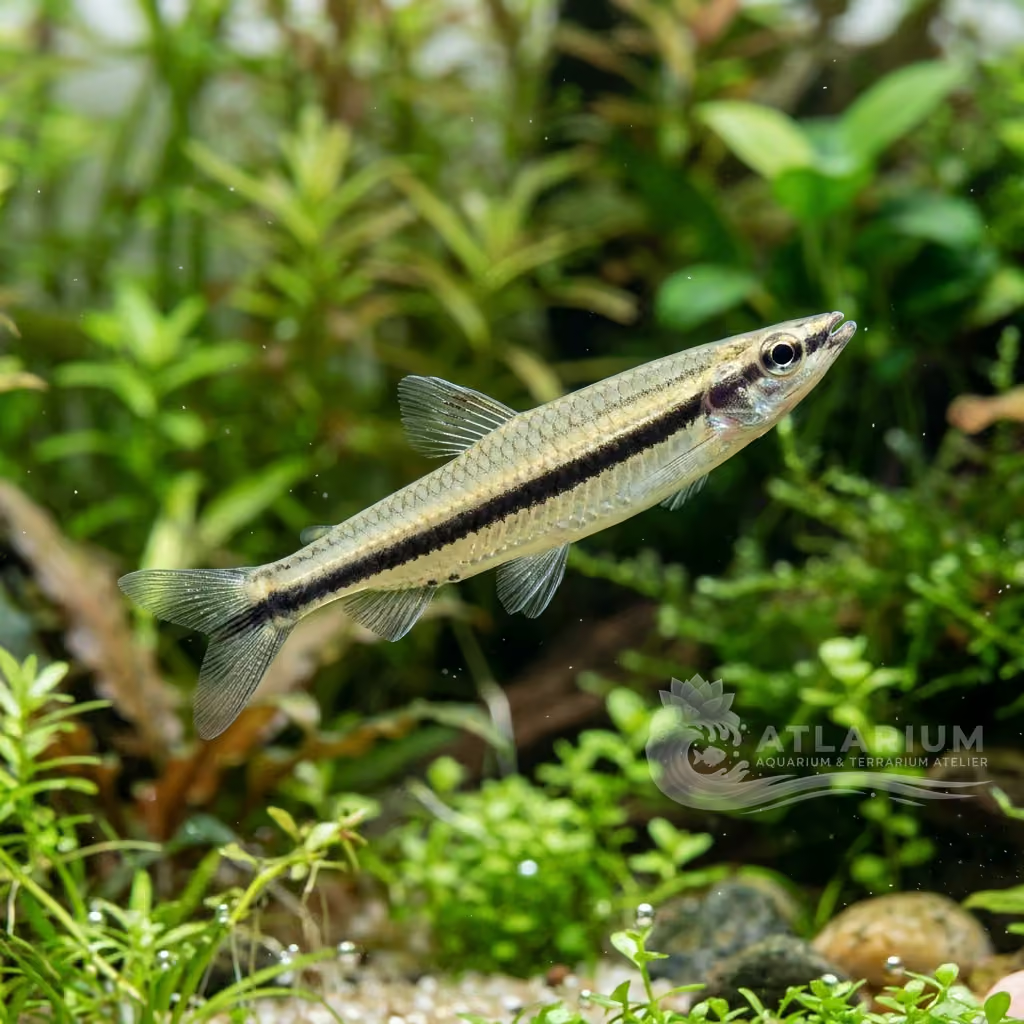
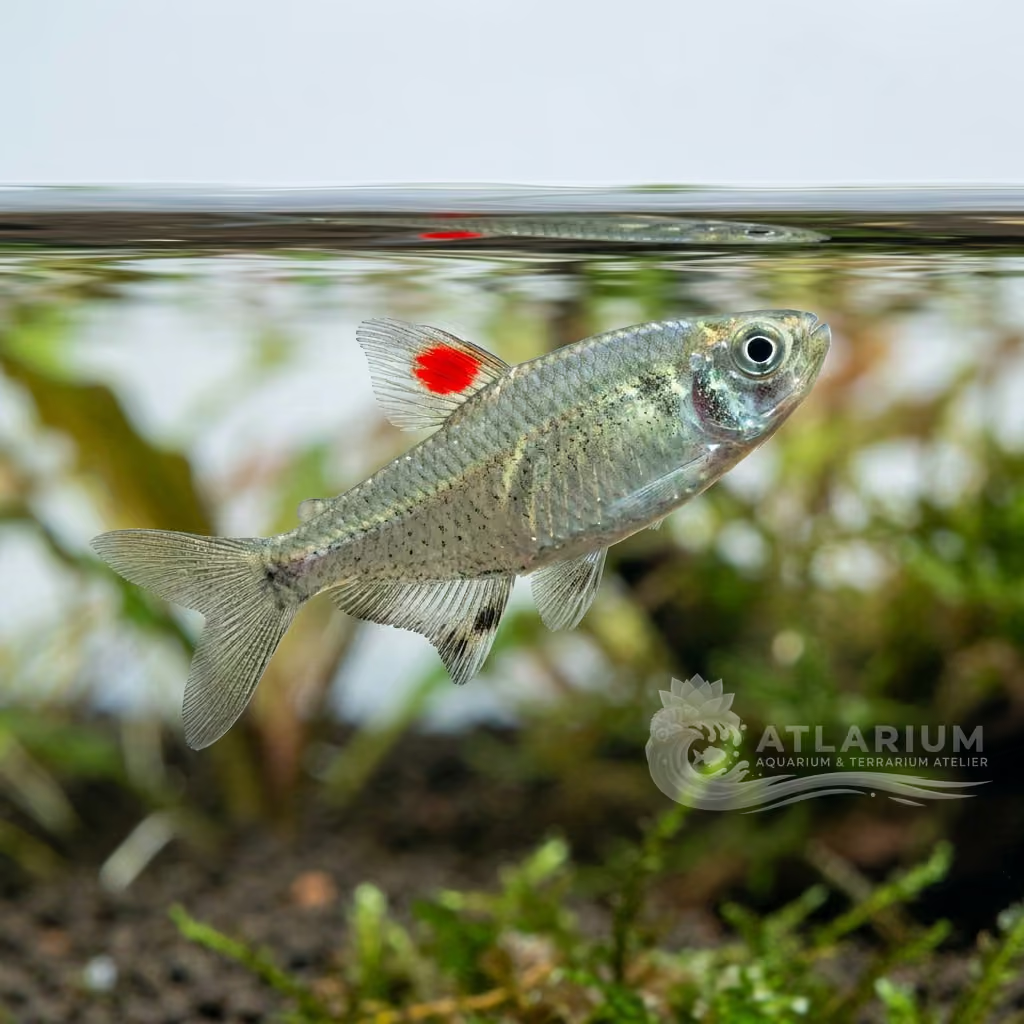
It has a robust cylindrical body, olive back, pinkish shades on the flanks and a sharp black zig-zag 'half-band' very marked on the flank (often confused with P. vittata).
Wassertemperatur
24 - 28 °C
pH-Wert
5.5 - 7.2
Wassertyp
Süßwasser
Tankfüllstand
Oberfläche
Erwachsenengröße
7 cm
Mindesttankvolumen
>= 80 L
Mindestgruppe
6
GH
1 - 10 dGH
KH
2 - 10 dKH
TDS
35 - 250 ppm
Leitfähigkeit
55 - 391 uS/cm

Artbeschreibung
Geographical Origin and Habitat: Widely distributed in the middle Amazon River basin in Brazil. Populates slow environments: igarapés (jungle streams), marginal forest lakes saturated with plant debris, often sheltered by the dense arboreal layer.
Taxonomy and Morphology: Half-banded Pyrrhulina (Pyrrhulina laeta). The Latin term "laeta" means lively/cheerful. Shares the tapered shape of the Lebiasinidae family. Absence of adipose fin, upward-oriented mouth suitable for snatching prey on the surface.
Social Behavior: Peaceful towards other species, but pronounced territoriality among males competing for positions under the leaves. Recommended to keep small groups (at least 6 fish) with a preponderance of females.
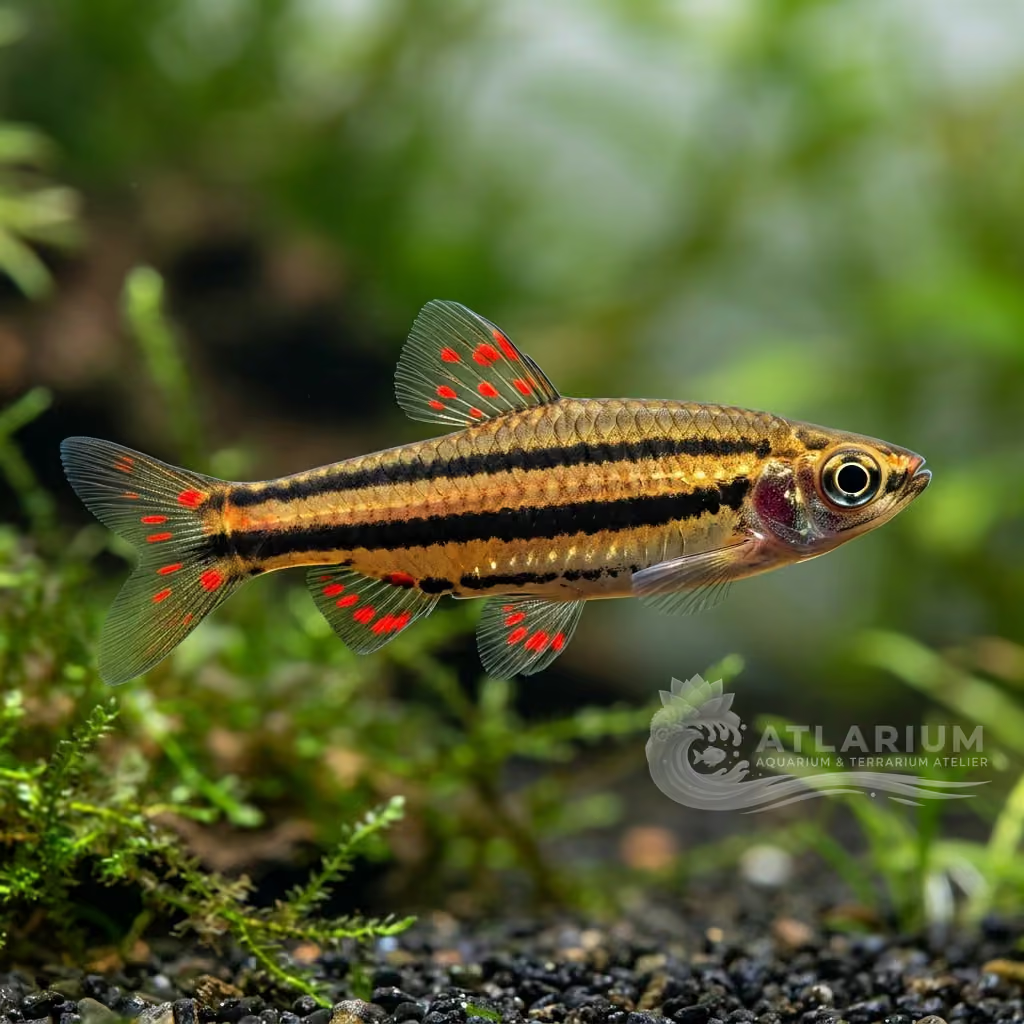
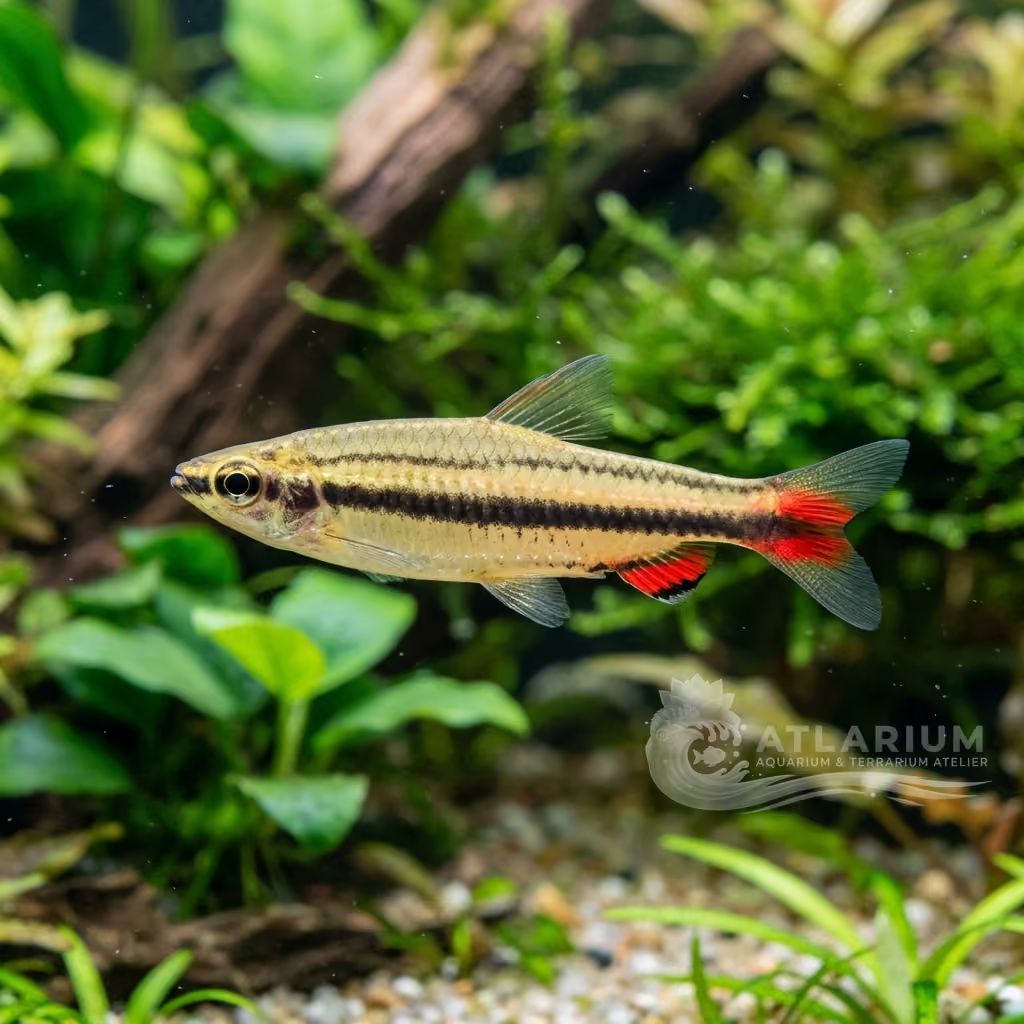
Coloration and Sexual Dimorphism: Delicate but splendid coloration: iridescent light brown body crossed by a solid black lateral stripe ("Half-banded"). Males exhibit enormous unpaired fins with a bright orange-red border and yellow nuances on the apex.

Pflege, Zucht und Mitbewohner
Aquarium Setup: The aquarium, minimum 80 cm (32 inches), must emulate a calm forest stream. The water must be tinted with dark tannins. Vital surface cover: use water lilies (Nymphaea) or large sword plants (Echinodorus) whose leaves float.
Diet and Feeding: Visual micro-predator hunter. Totally snubs food that sinks to the bottom. Feeding consists of providing on the water surface brine shrimp, drosophila, freeze-dried mosquitoes (bloodworms) and micro-flakes.
Water Quality: Loves well-stabilized, very soft, acidic water (pH around 6.0) filtered with granular peat. The current must be imperceptible so that the males do not have to strain themselves too much when displaying under the surface.
Compatibility and Cohabitation: Stunning in combination with peaceful benthic species, such as small Loricariids and Corydoras, and docile Apistogramma or Dicrossus. To be avoided are competitive surface fish (like aggressive Hatchetfish or large Danios).
Aquarium Breeding: A miracle of dedication: the female lays 100 to 200 eggs on a large submerged leaf chosen and cleaned beforehand by the male. He chases everyone away and fans oxygen on the eggs for the 48h needed for hatching.
Risks and Diseases: Uncovered tank equals lethal jump. Fearful species that fades quickly in bright and sterile setups, refusing to eat to the point of starvation or falling ill with Ichthyophthirius.

Geografische Herkunft und Verbreitung
Widely distributed in the middle Amazon River basin in Brazil. Populates slow environments: igarapés (jungle streams), marginal forest lakes saturated with plant debris, often sheltered by the dense arboreal layer.
Ursprung
Amazonas, Orinoco und Guayana

Fischprofil
- Temperament
- Semi-aggressive
- Their temperament is peaceful, making them ideal community residents. They might initially hide when introduced to a new tank. Eventually, they display a curious and lively disposition.
- Diät
- Carnivore
- They naturally consume small invertebrates and zooplankton from the water surface. High-quality dry foods are eagerly accepted in the home aquarium. Offering bloodworms or daphnia occasionally ensures balanced nutrition and health.
- Lebenserwartung
- 3-4 years
- Erwachsenengröße
- 7 cm
- Geschlechterverhältnis
- Harem
- A harem setup of one male per multiple females is advised. This arrangement minimizes stress and territorial disputes among males. Dense planting provides necessary refuge for the females.
- Fütterungsfrequenz
- Twice daily
- It is recommended to offer them food twice a day. Provide only what they can consume in under three minutes. Overfeeding should be avoided to maintain pristine water conditions.
- Bioload
- Low to Medium
- Pyrrhulina laeta generates a very small bioload due to its modest size. Aquarium water quality remains stable easily with regular partial water changes. A standard hang-on-back or sponge filter is perfectly adequate for their waste.
- Fluss
- Stagnant
- Gentle water movement replicates their native slow-moving streams. High flow rates can cause them undue stress and fatigue. Utilizing spray bars can effectively distribute the return flow.
- Sprungrisiko
- Yes
- They possess a strong instinct to jump out of the water. Keeping the tank securely covered at all times is mandatory. Adding a layer of floating plants deters jumping behavior.
- Reproduktion
- Oviparous
- Spawning occurs when females deposit eggs on broad plant leaves. Males take on the responsibility of guarding the eggs fiercely. Hatching occurs within a few days under optimal warm conditions.
- Kompatibilität & Tankkameraden
- Community
- This species is highly compatible with other peaceful nano fish. Corydoras and small rasboras are excellent choices for tank mates. Fin-nippers and large cichlids should be strictly avoided.
- Tankfüllstand
- Top
- They are classic top-to-middle water column dwellers. They spend most of their time patrolling just beneath the surface. Sinking foods are often ignored unless they are very hungry.

Wissenschaftliche Modelle & Parameter
FishBase
Zugang zu den offiziellen wissenschaftlichen Daten der Art
FishBase v25.04Daten synchronisiert am: 15.06.2026
- Trophäenniveau
- 3,3 ± 0,4 se
- Phylogenetische Einzigartigkeit (PD50)
- 0.5
- Bayessche Längen-Gewichts-Beziehung
- a = 0.00646, b = 3.13
- AnfälligkeitGeringe Anfälligkeit (10 / 100)

Verwandte Arten
Empfehlungen gruppiert nach nahen Verwandten, Auswahl von Begleitern und ähnlicher Betreuung.