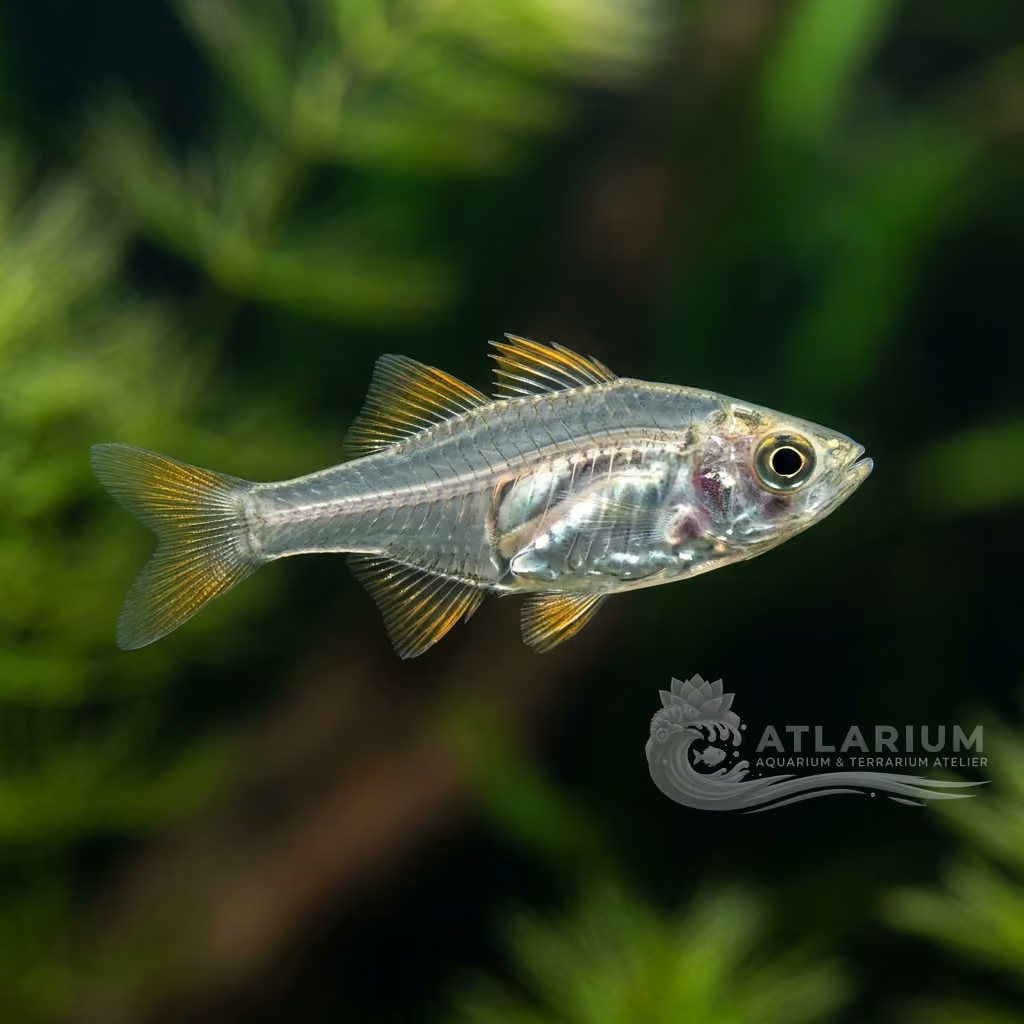
Indian glassfish
Pseudambassis lala
A completely transparent fish: through the glassy body you can see the skeleton, internal organs and swim bladder — a living anatomy lesson effect. Native to India and Southeast Asia. Small (2.5–3 cm) and gregarious, must be kept in groups of 6–8+. Strictly freshwater (the brackish water myth is false). Micropredator: almost always refuses dry food — live or frozen food diet mandatory. WARNING: never buy artificially 'colored' specimens — the dyeing is a painful and lethal practice.
21 - 30 °C
6 - 8
Süßwasser / Brackwasser
Mitte
4 cm
>= 40 L
>= 6
0 - 14 dGH
0 - 7 dKH
0 - 280 ppm
0 - 438 uS/cm

Artbeschreibung

Pflege, Zucht und Mitbewohner

Geografische Herkunft und Verbreitung
Ursprung

Fischprofil
- Temperament
- Peaceful
- They are generally timid, peaceful, and somewhat sensitive fish. They thrive when kept in groups of their own kind. If kept solitary, they will hide constantly and easily succumb to stress.
- Diät
- Carnivore
- They are naturally micropredators feeding on small insects and crustaceans. They prefer live or frozen foods like bloodworms and daphnia. With patience, they can typically be trained to accept high-quality flakes.
- Lebenserwartung
- 2-3 years
- Erwachsenengröße
- 4 cm
- Geschlechterverhältnis
- School
- They are schooling fish and the exact sex ratio is relatively unimportant. Keeping a mixed group of at least six provides the best social structure. Males may occasionally display without causing harm.
- Fütterungsfrequenz
- Twice daily
- They should be offered small meals once or twice a day. Ensure that boisterous tank mates do not outcompete them. Monitoring their feeding is essential to make sure they get enough nutrition.
- Bioload
- Low
- They have a relatively moderate bioload but require very clean water. Effective biological filtration is necessary to keep nitrate levels low. Regular water changes are critical to maintain their delicate immune systems.
- Fluss
- Strong
- They prefer moderate water flow that mimics their natural riverine habitats. A gentle current from a canister filter provides an oxygenated environment. Make sure there are calm resting spots among plants.
- Sprungrisiko
- No
- Reproduktion
- Oviparous
- Breeding in captivity is quite rare and moderately difficult. They are egg scatterers that lay eggs among fine-leaved aquatic plants. Parents exhibit no care and will eat the eggs if not removed.
- Kompatibilität & Tankkameraden
- Peaceful
- These are peaceful schooling fish that do well in community aquariums. They can be safely kept with peaceful loaches and small rasboras. Avoid keeping them with aggressive or fin-nipping species.
- Tankfüllstand
- Middle
- They predominantly occupy the middle and lower-middle levels of the water column. They enjoy hovering together in loosely organized schools. Dense planted areas give them a sense of security.

Wissenschaftliche Modelle & Parameter
Zugang zu den offiziellen wissenschaftlichen Daten der Art
- Trophäenniveau
- 3,2 ± 0,4 se
- Belastbarkeit
- Hoch (weniger als 15 Monate)
- Phylogenetische Einzigartigkeit (PD50)
- 0.5
- Bayessche Längen-Gewichts-Beziehung
- a = 0.01259, b = 2.95
- AnfälligkeitGeringe Anfälligkeit (10 / 100)

Bildergalerie
Lizenzierte Bilder, die mit der Art oder, wenn markiert, mit dem nächstgelegenen repräsentativen Taxon verknüpft sind.

Verwandte Arten
Empfehlungen gruppiert nach nahen Verwandten, Auswahl von Begleitern und ähnlicher Betreuung.