SüßwasserMittel
©AI Generated·Proprietary
Chanda pulcinella — Humphead glassfish

Humphead glassfish

Chanda pulcinella

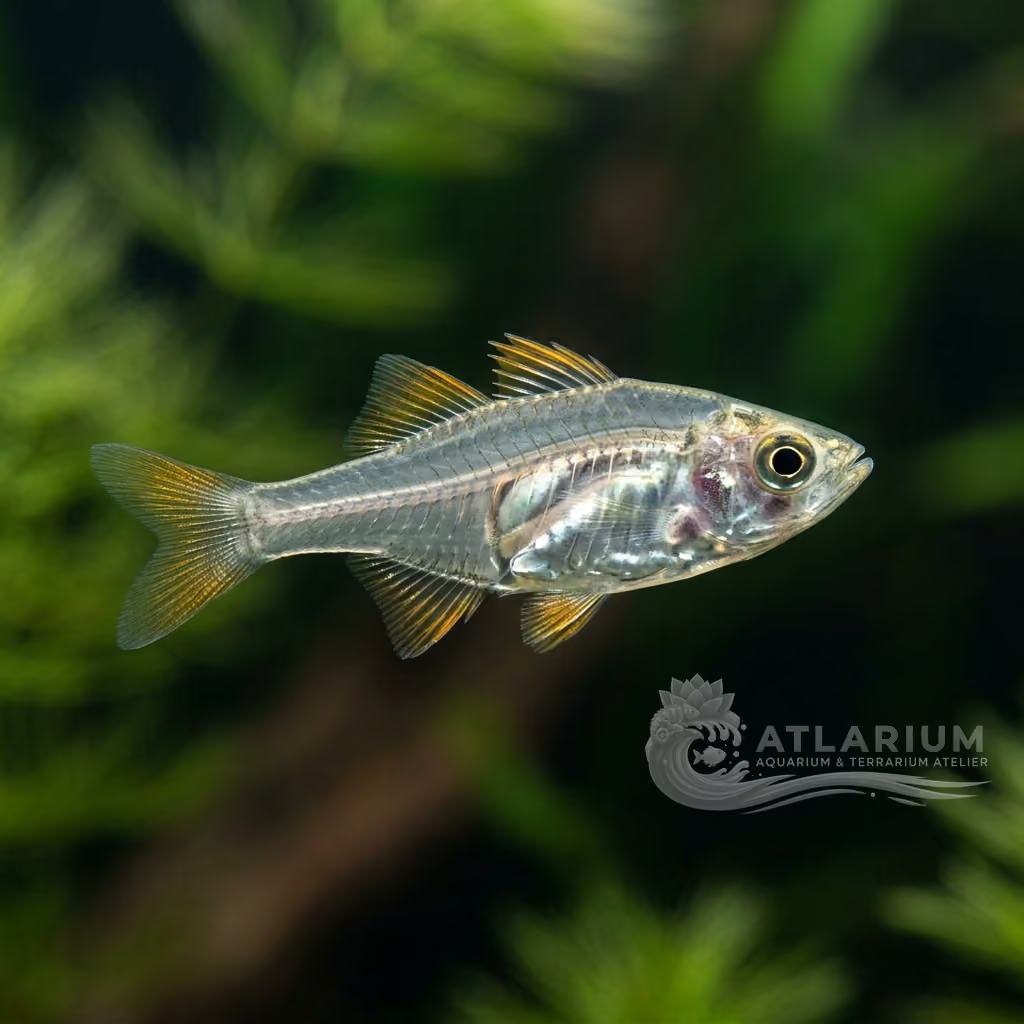
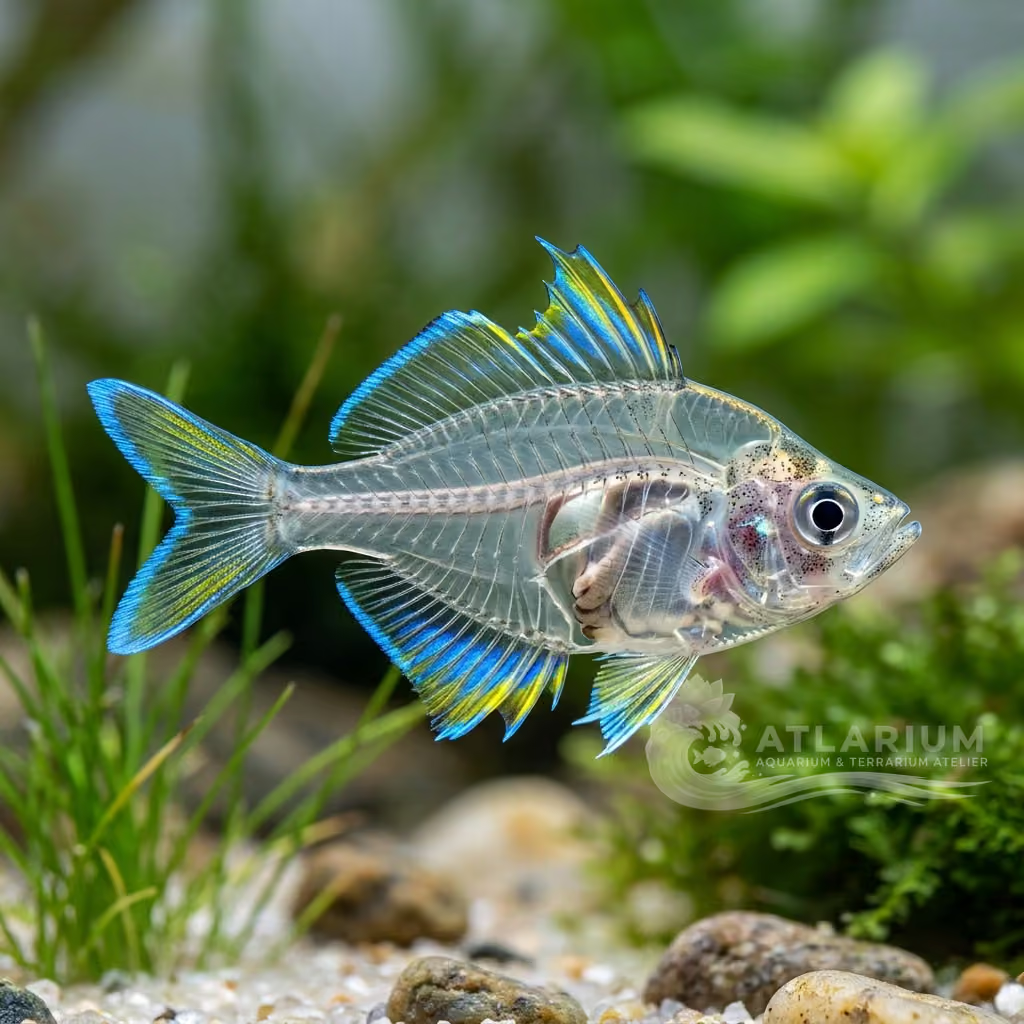
A glassfish with a prominent bony cranial hump that makes it immediately recognizable — the 'Pulcinella' of aquarium fish. Native to the fast-flowing, oxygenated streams of Myanmar (Ataran and Salween basins). Requires strong current and highly oxygenated water — one of the few aquarium fish that needs high filter turnover (~8x volume/hour). Gregarious: schools of 6–10+. Carnivorous predator preferring live or frozen food. Males develop the larger cranial hump. Breeding rare in captivity.

Wassertemperatur

0 - 27 °C

pH-Wert

6.5 - 7.5

Wassertyp

Süßwasser

Tankfüllstand

Mitte

Erwachsenengröße

8 cm

Mindesttankvolumen

>= 80 L

Mindestgruppe

>= 6

GH

0 - 27 dGH

KH

1 - 13 dKH

TDS

10 - 535 ppm

Leitfähigkeit

16 - 836 uS/cm

Artbeschreibung

Geographical Origin and Habitat: Endemic exclusively to the pristine, highly oxygenated, fast-flowing, and immensely powerful upper reaches of the Salween River basin (often near cascading rapids and deep gorges) spanning the rugged, mountainous borders of Myanmar and western Thailand. Parambassis pulcinella (universally known as the Humphead Glassfish) natively colonizes the deep, turbulent channels and rocky pools of these massive highland rivers. These specific micro-habitats are characterized by crystal-clear water, smooth, water-worn boulders, absolutely zero aquatic vegetation, and intense, relentless water currents.
Taxonomy and Morphology: Scientifically classified within the Ambassidae family (the Asiatic Glassfishes), it is an astonishingly unique, biologically bizarre, and evolutionary fascinating large glassfish. Morphologically, fully mature adults reach roughly 8.0 to 10.0 centimeters (3.1-3.9 inches) in length. It possesses a deeply robust, heavily compressed, and towering body profile. Its absolute defining, unbelievable anatomical feature is a massive, fleshy, completely transparent, and deeply dramatic humped crest (nuchal hump) extending violently upward from the top of its head, giving it a completely prehistoric, somewhat comical appearance.
Social Behavior: They are highly active, robust, and absolutely obligate shoaling predators. Despite their bizarre appearance, they are immensely athletic and designed to fight powerful river currents. They strictly MUST be kept in a sizable group (absolute minimum 6, but 8-10+ is required to disperse hierarchical aggression). In the aquarium, they are deeply hyper-active, spending their entire day frantically swimming against powerhead currents in the middle and upper levels. Dominant males will fiercely (but harmlessly) spar, relentlessly chasing subordinates to establish dominance within the school.
Coloration and Sexual Dimorphism: Sexual dimorphism is subtle but discernible; mature males generally develop a slightly larger, more pronounced cranial hump and exhibit slightly bolder fin coloration, while females are somewhat plumper in the abdomen. The coloration of the Humphead Glassfish is subtle yet deeply striking: their entire body is largely transparent, allowing visibility of their internal organs and massive skeletal structure. However, their fins and massive head hump are heavily flushed with stunning, iridescent metallic gold, silvery-white, and faint, glowing neon-blue reflections under intense lighting.

Pflege, Zucht und Mitbewohner

Aquarium Setup: The aquarium architecture MUST flawlessly replicate a turbulent, deeply oxygenated, rocky Asian river rapid. An absolute minimum 200-liter (55-gallon) tank (at least 120 cm / 4 feet long) is strictly required to accommodate their adult size and relentless swimming speed. The absolute most critical requirement is overwhelming, massive water flow and extreme oxygenation. The tank MUST be equipped with powerful powerheads or specialized river-manifold systems. The decor should consist exclusively of massive, smooth river boulders and large, heavy driftwood. Aquatic plants are completely unnecessary and will be destroyed by the current.
Diet and Feeding: They are highly specialized, intensely voracious predators (carnivores) that hunt in the strong currents. They possess massive mouths and an insatiable appetite. In the aquarium, they will aggressively accept high-quality, large sinking carnivore pellets. However, to maintain optimal health and replicate their natural diet, you MUST provide heavy, daily offerings of meaty foods: massive amounts of frozen bloodworms, Mysis shrimp, chopped earthworms, and live ghost shrimp or feeder insects. They are voracious eaters and will aggressively outcompete timid fish for food.
Water Quality: Originating from pristine, roaring highland rivers, they strictly demand highly stable, immaculate, intensely oxygenated, and moderately hard water. They thrive in slightly cooler tropical temperatures (23-27°C / 73-80°F). Crucially, they require moderately hard to hard water (GH 8-15) and a neutral to slightly alkaline pH (7.0 - 7.8). They possess absolute zero tolerance for dissolved organic waste, Ammonia, or Nitrites; rigorous, massive weekly water changes are absolutely mandatory. The water flow MUST be roaring and turbulent; stagnant water will cause immediate physiological collapse and death.
Compatibility and Cohabitation: Compatibility requires expert planning due to their large mouths, frantic swimming behavior, and strict requirement for roaring water currents. They are the perfect centerpiece schooling fish for a dedicated, high-flow Asian hillstream biotope. Excellent companions include large, robust, fast-swimming Barbs (like Denison Barbs or Tinfoil Barbs), robust Botia loaches, and large, fast-flowing Catfish. They MUST NEVER be housed with tiny micro-fish (which they will instantly swallow whole), nor with slow-moving, long-finned fish (like Angelfish or Bettas) that will be violently thrown around by the currents.
Aquarium Breeding: Breeding is exceptionally rare, intensely difficult, and virtually undocumented in the home aquarium, largely due to the massive water volume and extreme flow required to trigger spawning. In the wild, they are believed to be open-water egg-scatterers, shedding massive amounts of eggs directly into the roaring rapids during the monsoon season, providing zero parental care. Replicating the sudden temperature drops, massive water influx, and raging currents of the monsoon season in a massive, dedicated river-tank setup is the only theoretical way to trigger breeding.
Risks and Diseases: The absolute greatest physical risk is severe stress, physiological collapse, and rapid death caused by keeping them in stagnant, poorly oxygenated water; massive, turbulent water flow from powerheads is strictly, unconditionally mandatory for their survival. The second major risk is lethal starvation to smaller tankmates; they are aggressive, voracious eaters with massive mouths and will swallow any fish small enough to fit. Finally, they are highly susceptible to sudden jumps in Ammonia; rigorous water quality maintenance is required.

Geografische Herkunft und Verbreitung

Endemic exclusively to the pristine, highly oxygenated, fast-flowing, and immensely powerful upper reaches of the Salween River basin (often near cascading rapids and deep gorges) spanning the rugged, mountainous borders of Myanmar and western Thailand. Parambassis pulcinella (universally known as the Humphead Glassfish) natively colonizes the deep, turbulent channels and rocky pools of these massive highland rivers. These specific micro-habitats are characterized by crystal-clear water, smooth, water-worn boulders, absolutely zero aquatic vegetation, and intense, relentless water currents.

Ursprung

Süd- und SüdostasienOstasien

Fischprofil

Temperament
Territorial
They are generally timid, peaceful, and somewhat sensitive fish. They thrive when kept in groups of their own kind. If kept solitary, they will hide constantly and easily succumb to stress.
Diät
Carnivore
They are naturally micropredators feeding on small insects and crustaceans. They prefer live or frozen foods like bloodworms and daphnia. With patience, they can typically be trained to accept high-quality flakes.
Lebenserwartung
5-8 years
Erwachsenengröße
8 cm
Geschlechterverhältnis
School
They are schooling fish and the exact sex ratio is relatively unimportant. Keeping a mixed group of at least six provides the best social structure. Males may occasionally display without causing harm.
Fütterungsfrequenz
Twice daily
They should be offered small meals once or twice a day. Ensure that boisterous tank mates do not outcompete them. Monitoring their feeding is essential to make sure they get enough nutrition.
Bioload
Medium
They have a relatively moderate bioload but require very clean water. Effective biological filtration is necessary to keep nitrate levels low. Regular water changes are critical to maintain their delicate immune systems.
Fluss
Strong
They prefer moderate water flow that mimics their natural riverine habitats. A gentle current from a canister filter provides an oxygenated environment. Make sure there are calm resting spots among plants.
Sprungrisiko
No
Reproduktion
Rare / not documented
Breeding in captivity is quite rare and moderately difficult. They are egg scatterers that lay eggs among fine-leaved aquatic plants. Parents exhibit no care and will eat the eggs if not removed.
Kompatibilität & Tankkameraden
Community
These are peaceful schooling fish that do well in community aquariums. They can be safely kept with peaceful loaches and small rasboras. Avoid keeping them with aggressive or fin-nipping species.
Tankfüllstand
Middle
They predominantly occupy the middle and lower-middle levels of the water column. They enjoy hovering together in loosely organized schools. Dense planted areas give them a sense of security.

Wissenschaftliche Modelle & Parameter

FishBase

Zugang zu den offiziellen wissenschaftlichen Daten der Art

FishBase v25.04Daten synchronisiert am: 15.06.2026
Trophäenniveau
3,5 ± 0,4 se
Belastbarkeit
Hoch (weniger als 15 Monate)
Phylogenetische Einzigartigkeit (PD50)
0.5
Bayessche Längen-Gewichts-Beziehung
a = 0.01349, b = 2.98
AnfälligkeitGeringe Anfälligkeit (10 / 100)