Baldellia ranunculoides
Baldellia ranunculoides
An elegant aquatic plant of the Alismataceae family, native to European shorelines. Requires medium to high lighting for healthy submerged growth.
Wassertemperatur
10 - 22 °C
pH-Wert
6 - 7.5
Wassertyp
Süßwasser
Licht
Hoch
CO2
Mittel
Erwartete Höhe
20 cm
Erwartete Breite
15 cm
GH
4 - 20 dGH
KH
2 - 21 dKH

Artbeschreibung
Geographical Origin and Habitat: Baldellia ranunculoides is an extremely specialized, delicate marginal aquatic plant endemic to the cold-water bogs, coastal marshes, and heavily calcified alkaline fens of Western Europe and the Mediterranean basin. It is a highly sensitive amphibious plant that thrives in shallow, seasonal standing water that frequently freezes during the winter. In the wild, it grows primarily as an emergent bog plant, plunging its roots into dense, heavy mud while sending delicate, grass-like leaves and highly distinctive, beautiful pale purple flowers up into the cold, open air.
Taxonomy & Genetics: Belonging to the Alismataceae family, Baldellia ranunculoides is a remarkably unique and genetically isolated species. It is a close genetic cousin to the popular Echinodorus (Amazon Swords) of South America, though it occupies a completely different, freezing-cold environmental niche. True Baldellia ranunculoides is exceptionally rare in the commercial aquarium trade, highly sought after by extreme botanical collectors and European biotope purists who specialize in unheated, cold-water aquariums.
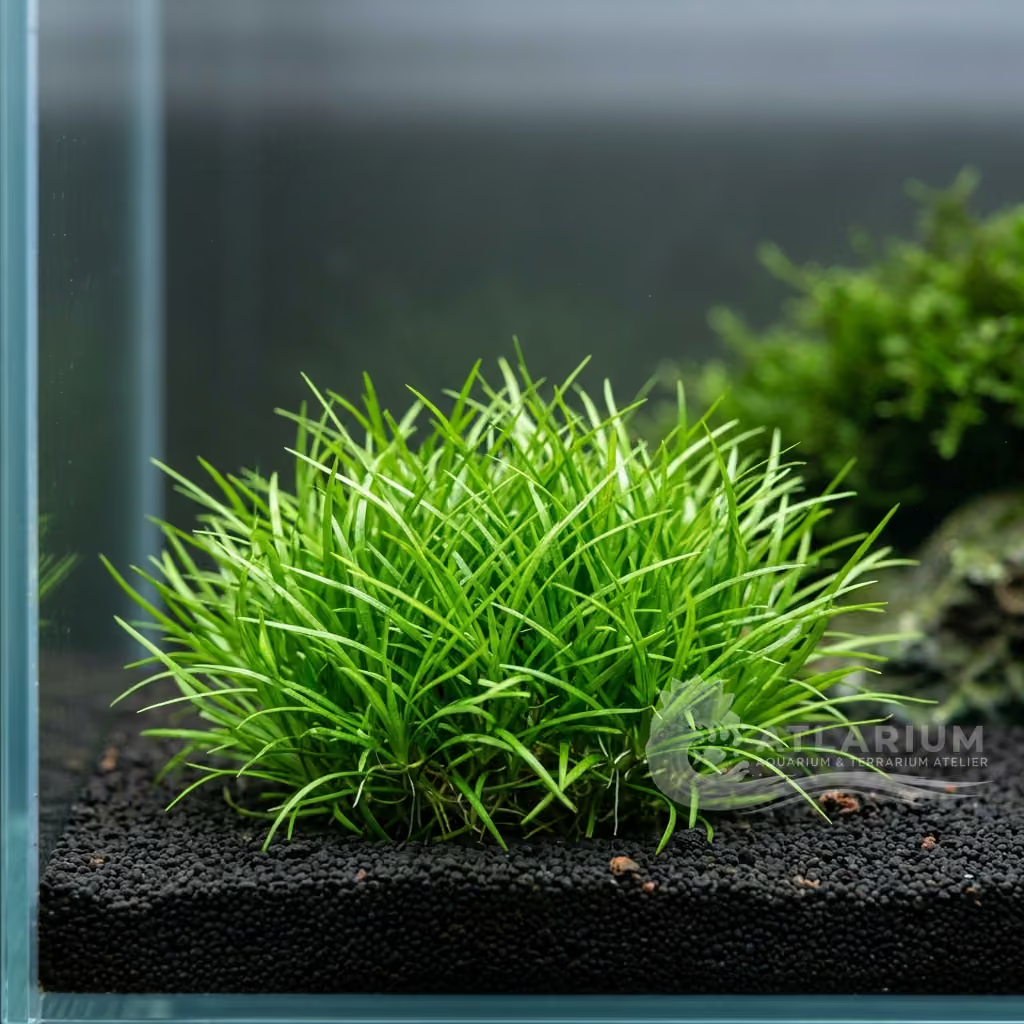
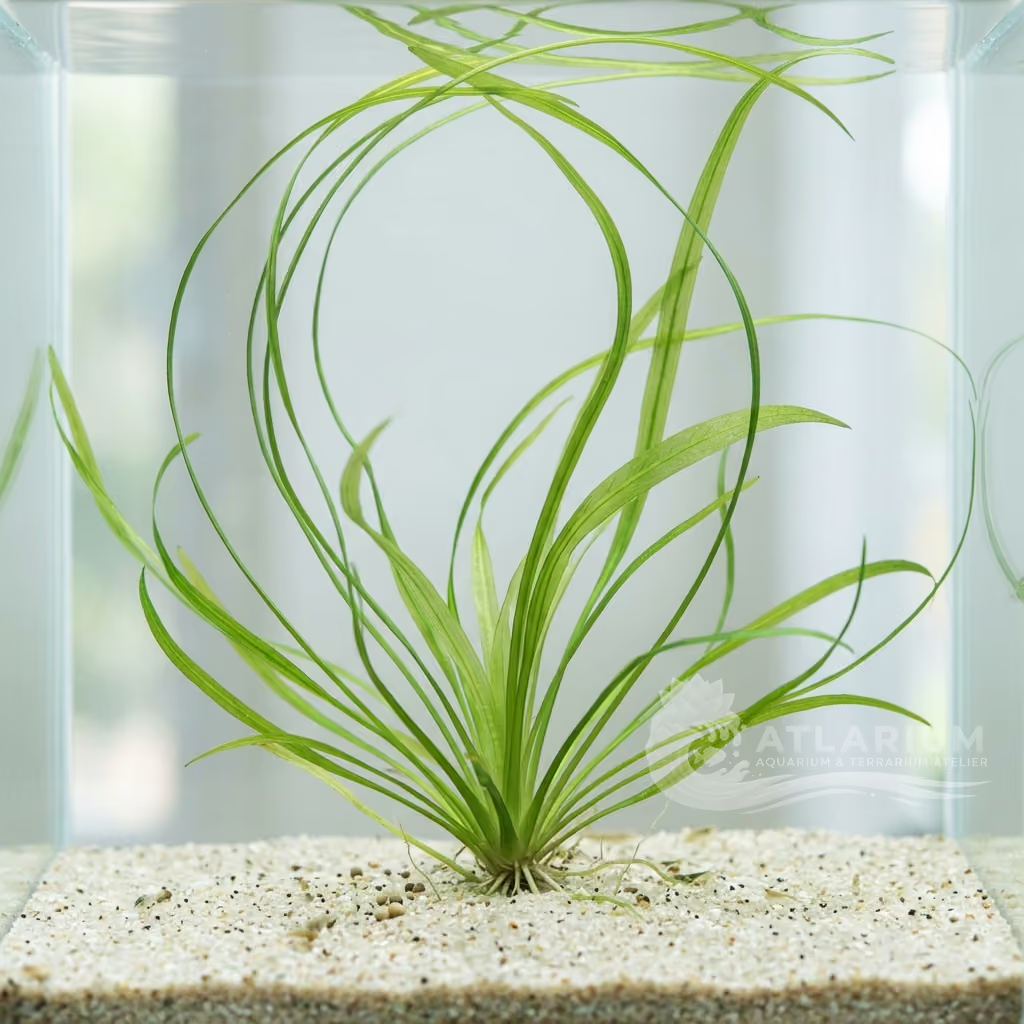
Physical Structure: The structural architecture of this plant is exceptionally fragile and delicate. It lacks the massive, creeping rhizome of an Anubias or the thick stems of a Bacopa. Instead, it grows as a very tight, central basal rosette. From the tiny central crown, it shoots out a multitude of incredibly thin, needle-like or narrow lanceolate leaves that grow strictly upright. When fully submerged, the plant resembles a highly delicate, sprawling tuft of underwater grass, reaching 10-20 cm (4-8 inches) in height.
Color & Texture: The deeply grass-like, needle-thin leaves are colored a very bright, glowing, highly translucent light-green. The texture is notoriously fragile; the leaves are paper-thin, incredibly delicate, and will easily snap or tear if handled roughly. The true spectacle of this plant occurs when it breaks the water surface: it will eagerly produce a tall, highly visible flower stalk bearing tiny, incredibly beautiful, three-petaled flowers colored a striking, delicate pale purple or bright pinkish-white.

Pflege, Zucht und Mitbewohner
Lighting & CO2: It is an extreme high-energy, demanding plant that absolutely requires intense, high-par LED lighting to survive completely submerged. If the lighting is weak, the delicate rosette will rapidly melt and disintegrate into the water column. While it can technically survive without CO2 in shallow, open-air bogs, if you attempt to grow it fully submerged in an aquarium, pressurized CO2 injection is absolutely mandatory to prevent the delicate, needle-like leaves from exhausting their energy reserves and rotting away.
Nutrition & Substrate: This delicate jewel is an aggressive, obligate root feeder. The tiny basal rosette MUST be planted deep into an incredibly rich, nutrient-dense substrate. A premium, heavily fertilized aquasoil is strictly non-negotiable. If planted in sterile, inert sand or plain gravel, the plant will instantly starve, turn yellow, and dissolve into mush. The water column must also be kept exceptionally clean, as any nutrient deficiencies will immediately cause the fragile grass-like leaves to become transparent and melt.
Water Chemistry: This is where Baldellia ranunculoides becomes exceptionally difficult. It is strictly a COLD-WATER plant. It demands water temperatures between 10°C and 20°C (50-68°F). If placed in a standard tropical aquarium heated to 26°C (78°F), the plant will literally boil, violently melt, and die within 48 hours. Furthermore, unlike most aquarium plants that prefer soft, acidic water, this European bog plant strongly prefers heavily calcified, alkaline, hard water with a high pH (7.0 - 8.5).
Space Management & Placement: Due to its delicate, grass-like appearance and modest height (10-20 cm), it must be utilized exclusively as a foreground or front-midground accent plant. It should be planted as a solitary, striking tuft in the open aquasoil, entirely free from the shade of taller plants. It is exceptionally beautiful when used in specialized, unheated European biotope tanks or shallow, open-top paludariums where it is allowed to break the surface and display its stunning purple flowers.
Pruning: Pruning is a highly surgical, delicate process. Use long, fine-tipped spring scissors to surgically reach into the dense basal rosette and snip off any outer leaves that are yellowing, melting, or covered in algae. Never pull or rip a leaf off, as the entire fragile crown will uproot from the substrate. To propagate, look for tiny adventitious runners shooting off from the main rosette; once the baby plant develops tiny roots, snip the runner and replant the clone.
Risks & Diseases: This plant is notoriously difficult and highly prone to "Melting." If the water temperature rises above 22°C, if CO2 drops, or if it is shaded by a larger plant, the entire rosette will instantly turn transparent and disintegrate into slimy mush. Furthermore, because its leaves are incredibly thin and delicate, it is highly susceptible to being completely smothered by Black Beard Algae (BBA) or being aggressively uprooted and eaten by bottom-dwelling fish like Corydoras or Plecos.

Geografische Herkunft und Verbreitung
Baldellia ranunculoides is an extremely specialized, delicate marginal aquatic plant endemic to the cold-water bogs, coastal marshes, and heavily calcified alkaline fens of Western Europe and the Mediterranean basin. It is a highly sensitive amphibious plant that thrives in shallow, seasonal standing water that frequently freezes during the winter. In the wild, it grows primarily as an emergent bog plant, plunging its roots into dense, heavy mud while sending delicate, grass-like leaves and highly distinctive, beautiful pale purple flowers up into the cold, open air.
Ursprung
Europa, Mittelmeerraum und Westasien

Pflanzenprofil
- Platzierung
- Vordergrund
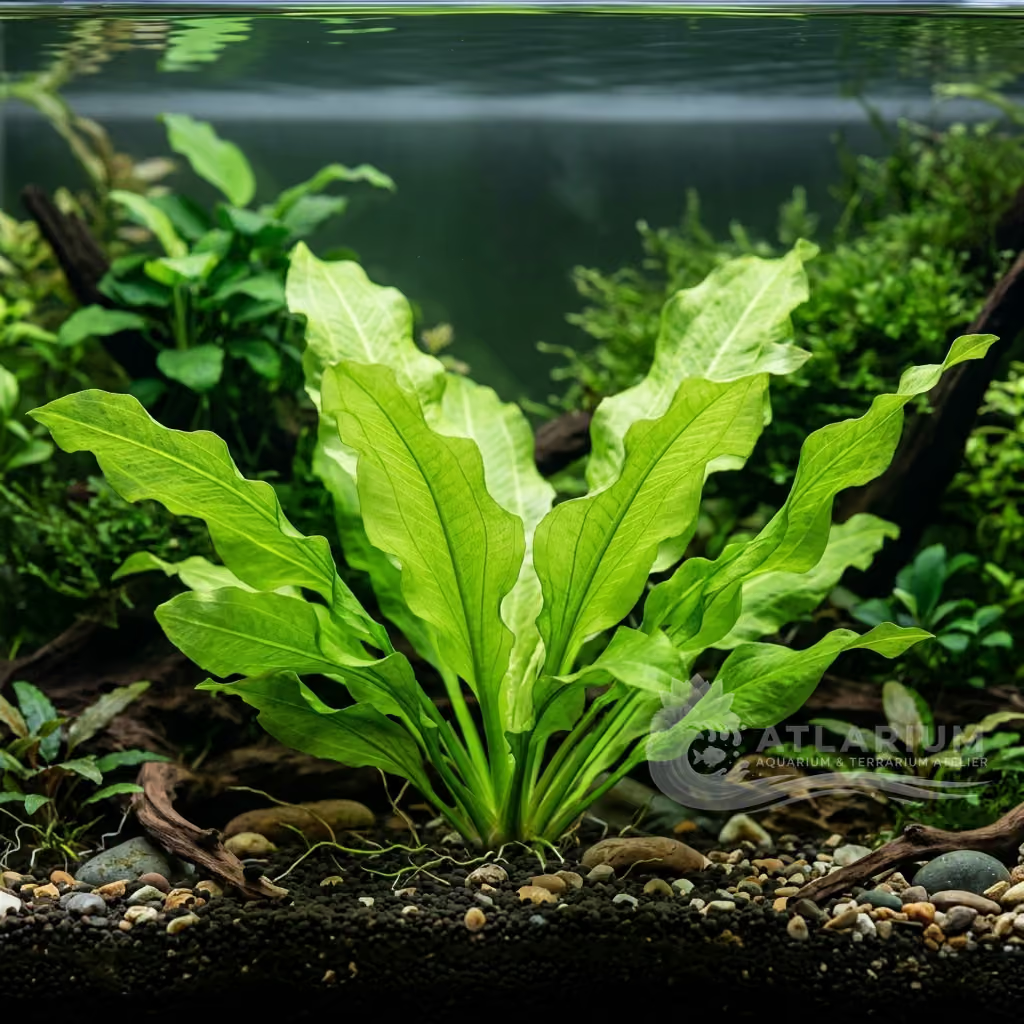
- This plant is best suited for the midground or foreground of larger aquariums. It forms rosette-like clusters that create soft, grassy accents among stones or driftwood. In shallow tanks, it may grow emergent and produce delicate flowers.
- Botanische Form
- Rosette
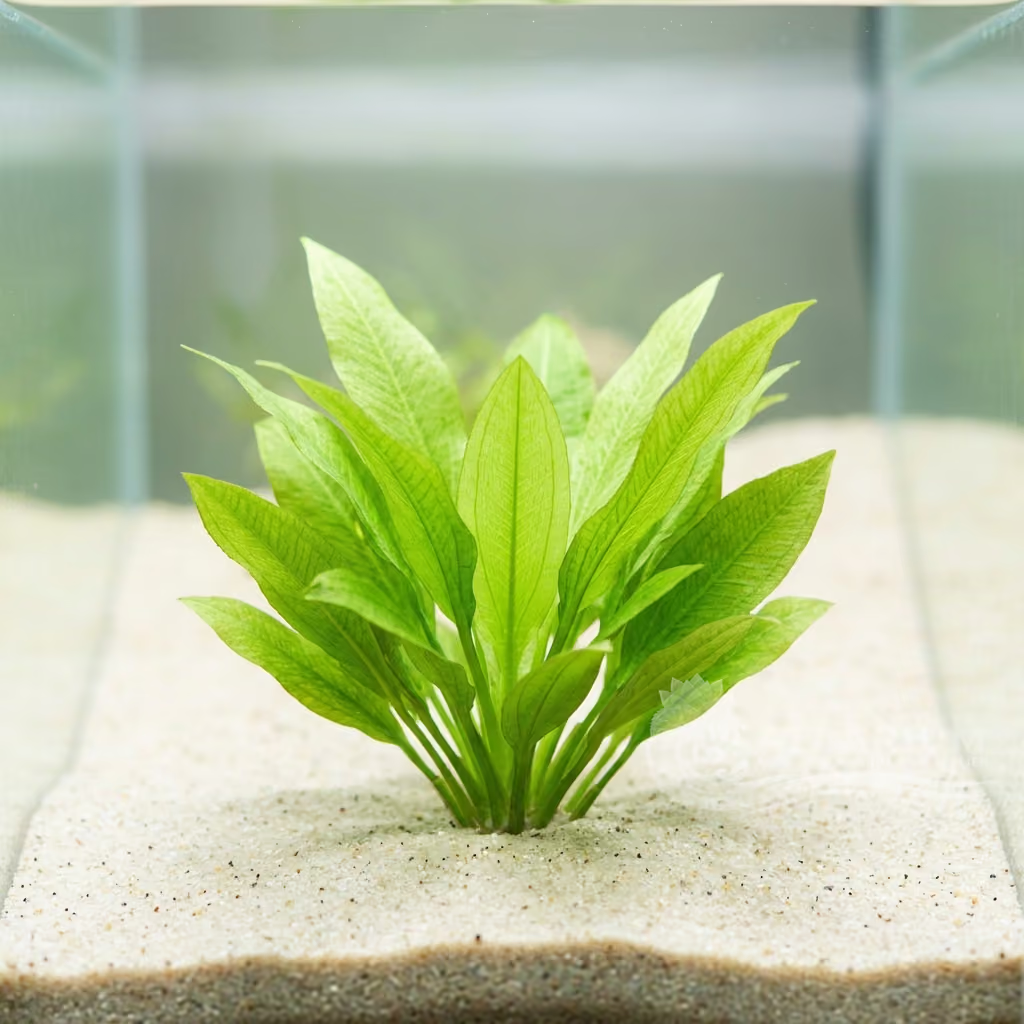
- It forms a rosette of narrow, lanceolate leaves that can vary in length depending on light intensity. The foliage is typically light to medium green. Under specific conditions, it can develop a creeping stem or runners.
- Wachstum
- Mittel
- Its growth rate is generally moderate, but it can accelerate under intense lighting and CO2 injection. As it establishes its root system, it will begin to produce runners. Growth is slower and more compact in lower-light setups.
- Substrat
- Hoch
- Baldellia ranunculoides is a marsh plant that demands a deep, highly nutritious substrate to establish its strong, web-like root structure. A thick layer of aqua soil or nutrient-enriched clay is strictly required, as the plant relies heavily on root-based nutrient uptake rather than extracting from the water column. Providing a deep, organically rich bed will reward the aquarist with strong stalks and persistent, vigorous growth.
- Säulendüngung
- Erforderlich
- While it relies heavily on root feeding, liquid fertilizers help maintain overall health. A comprehensive fertilizer containing trace elements is beneficial. Balanced water column nutrients ensure the leaves remain vibrant.
- Wurzeldüngung
- Erforderlich
- A nutrient-rich substrate or the regular addition of root tabs is highly recommended. It draws a significant portion of its required nutrients through its root system. A fertile base will greatly enhance its vitality.
- Trimmen
- Gelegentlich
- Maintenance involves removing older, yellowing, or damaged leaves from the outer edge. If it spreads via runners, these can be snipped to control its spread. Avoid cutting the crown of the plant.
- Ausbreitung
- Samen, Ausläufer, Teilung
- Propagation naturally occurs through the production of runners or division of the main rosette. New plantlets will develop on the runners and can be separated. It can also be propagated by seeds if grown emergent.
- Empfindlichkeit
- HIGH
- It is relatively hardy but prefers cooler to moderate water temperatures. It requires good light penetration; otherwise, its leaves may elongate unnaturally. It may take some time to acclimate to new water parameters.
- Layoutrolle
- Vordergrund, accent
- It is an excellent choice for creating grassy, natural-looking tufts in the midground. Its delicate appearance softens the hard lines of rocks and wood. It contrasts nicely with broader-leafed plants.

Bildergalerie
Lizenzierte Bilder, die mit der Art oder, wenn markiert, mit dem nächstgelegenen repräsentativen Taxon verknüpft sind.

Verwandte Arten
Empfehlungen gruppiert nach nahen Verwandten, Auswahl von Begleitern und ähnlicher Betreuung.