Dussumier's glass perchlet
Ambassis dussumieri
The Malabar Glassfish is a peaceful, schooling species admired for its completely transparent body. It prefers a spacious, planted brackish water aquarium and requires tiny live or frozen foods.
Wassertemperatur
22 - 28 °C
pH-Wert
7.5 - 8.5
Wassertyp
Brackwasser / Meerwasser
Tankfüllstand
Mitte
Erwachsenengröße
10 cm
Mindesttankvolumen
>= 120 L
Mindestgruppe
>= 6

Artbeschreibung
Geographical Origin and Habitat: Ambassis dussumieri is native to the warm coastal waters of the Indo-West Pacific, ranging from East Africa to the Philippines and northern Australia. It primarily inhabits estuaries, mangrove swamps, coastal rivers, and shallow marine waters, showing high tolerance for salinity changes.
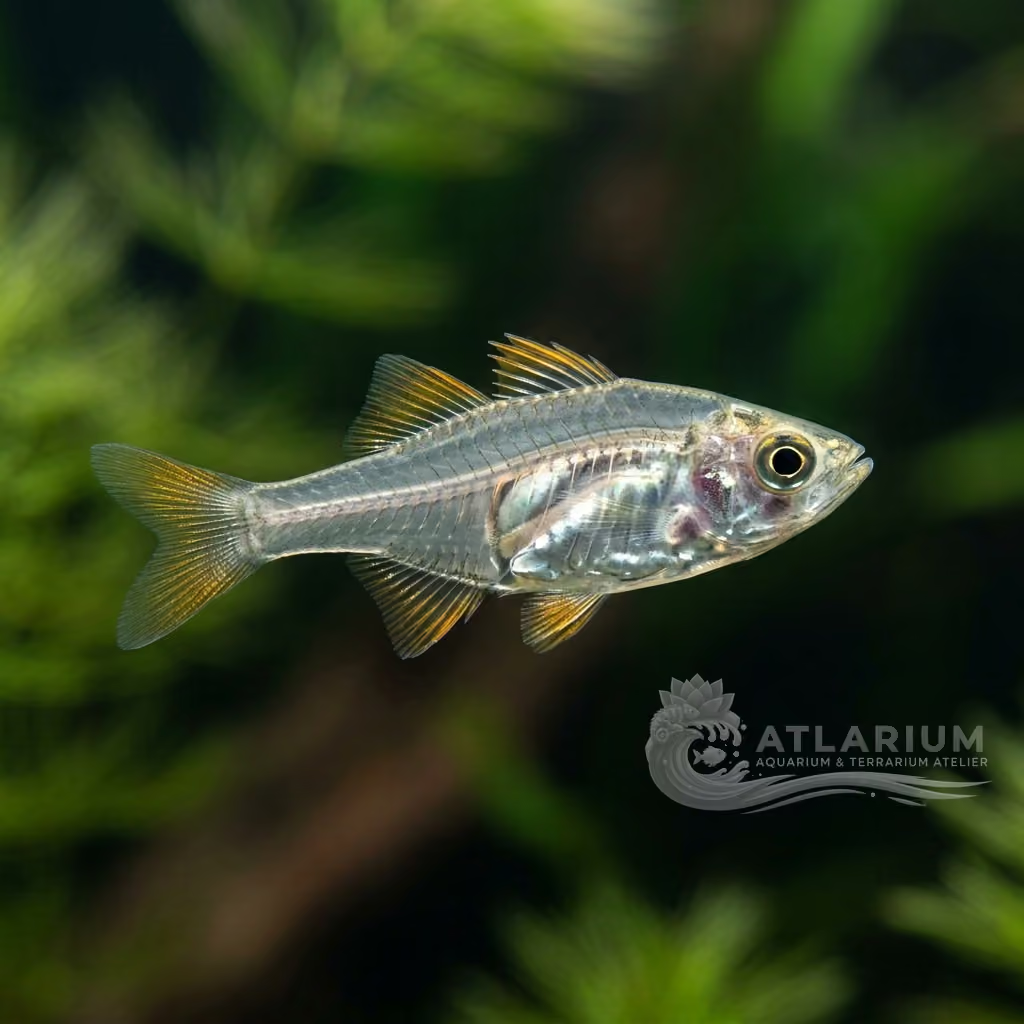
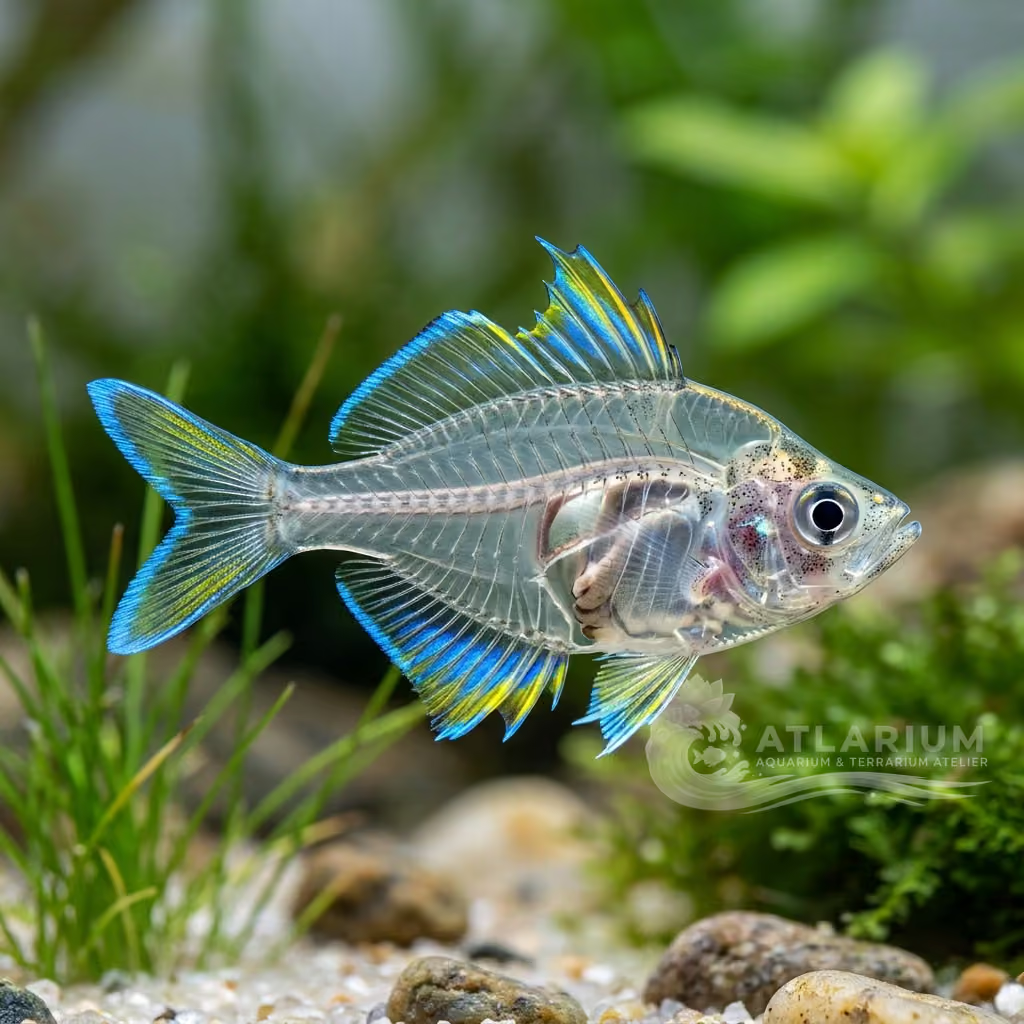
Taxonomy and Morphology: It belongs to the family Ambassidae. Features a short, deep, and highly compressed body that is almost entirely transparent, revealing the spine and silvery internal organs. Adults reach a maximum length of about 7.5-10 cm.
Social Behavior: A peaceful, shy, and strictly schooling fish. It must be kept in groups of at least 6-8 specimens to encourage natural activity and prevent stress. They prefer to swim together in the mid-water and upper levels of the tank.
Coloration and Sexual Dimorphism: The body is mostly glass-like or transparent with a prominent silvery longitudinal lateral band and subtle gold or green reflections. Mature males may display slightly more defined yellow or bluish margins on their dorsal and anal fins during spawning.

Pflege, Zucht und Mitbewohner
Aquarium Setup: Needs a tank of at least 100-120 liters with efficient filtration but moderate water flow. Provide densely planted zones (using salt-tolerant plants if kept in brackish water) along with large open areas to allow the school to swim freely.
Diet and Feeding: A carnivorous micro-predator. Prefers live or frozen foods of appropriate size, such as brine shrimp, daphnia, copepods, and bloodworms. It may accept high-quality dry flakes or micro-pellets only after a period of acclimation.
Water Quality: Although it can tolerate hard freshwater, it thrives best in brackish water conditions (salinity 1.002-1.008). Water pH should be maintained between 7.5 and 8.2, hardness medium-high (dGH 12-25), and temperature between 22°C and 28°C.
Compatibility and Cohabitation: Excellent tankmates include peaceful brackish water species of similar size, such as small gobies, other glassfish, or mollies. Avoid keeping them with large, aggressive, or fast-moving predators that could prey on or intimidate them.
Aquarium Breeding: Breeding is difficult and requires a dedicated spawning tank with warm, slightly soft brackish water. Spawning occurs among fine-leaved plants where adhesive eggs are scattered. Parents must be removed immediately to prevent egg predation.
Risks and Diseases: Susceptible to common diseases like ich and Oodinium if stressed by rapid changes in temperature or salinity. Due to their transparent body, internal parasites or physical distress can be noticed early. Maintaining clean water is key.

Geografische Herkunft und Verbreitung
Ambassis dussumieri is native to the warm coastal waters of the Indo-West Pacific, ranging from East Africa to the Philippines and northern Australia. It primarily inhabits estuaries, mangrove swamps, coastal rivers, and shallow marine waters, showing high tolerance for salinity changes.
Ursprung
Tropische Ozeane und RiffeNordamerikaAfrika und MadagaskarSüd- und SüdostasienOstasienAustralien, Neuguinea und Ozeanien

Fischprofil
- Temperament
- Territorial
- This species is remarkably peaceful, active, and harmless to other fish. They are very nervous when kept in inadequate numbers, often hiding and losing their translucent coloration. In a proper school, they confidently swim in the open, displaying their fascinating transparent bodies.
- Diät
- Omnivore
- Ambassis dussumieri is a micro-predator that feeds primarily on small aquatic insects and zooplankton in the wild. In the aquarium, they will accept high-quality crushed flakes but prefer live or frozen foods. Regular offerings of daphnia, brine shrimp, and bloodworms are necessary to maintain their health and coloration.
- Lebenserwartung
- 3-5 years
- Erwachsenengröße
- 10 cm
- Geschlechterverhältnis
- School
- Females are generally deeper-bodied, especially when gravid, while males often possess a more pronounced yellow hue on their fins. They must be maintained in a group of at least six individuals to feel secure. A proper school structure prevents stress and promotes natural social behaviors.
- Fütterungsfrequenz
- Twice daily
- They should be fed small portions one to two times daily to ensure they receive adequate nutrition. Feeding them small amounts prevents uneaten food from decomposing and affecting water parameters. Ensuring the food pieces are small enough for their tiny mouths is crucial.
- Bioload
- Medium
- The Malabar glassfish produces a moderate bioload that is easily managed in a well-established aquarium. Because they are schooling fish, the cumulative waste of the group must be considered. Consistent biological filtration and routine water changes are sufficient to maintain good water quality.
- Fluss
- Moderate
- They appreciate a moderate water flow that provides good oxygenation without causing them to struggle while swimming. In their natural estuarine habitats, they experience tidal movements, so some current is beneficial. A strategically placed sponge filter or a gently baffled power filter works well.
- Sprungrisiko
- No
- Reproduktion
- Oviparous
- Breeding the Malabar glassfish in captivity is challenging but possible in a dedicated setup with slightly brackish water. They are egg-scatterers that lay their eggs among fine-leaved plants like Java moss. The parents must be removed promptly after spawning to prevent them from predating on the eggs.
- Kompatibilität & Tankkameraden
- Community
- They are peaceful and somewhat timid fish that should be kept in a community tank with similarly sized, peaceful species. Suitable companions include small gobies, peaceful livebearers, and smaller rainbowfish. Large or aggressive fish will easily intimidate them and should be avoided.
- Tankfüllstand
- Middle
- They spend the majority of their time navigating the middle and upper levels of the water column. They prefer tanks with open swimming areas in the center, flanked by dense vegetation around the perimeter. They will often hover in the gentle current facing the water flow.

Wissenschaftliche Modelle & Parameter
FishBase
Zugang zu den offiziellen wissenschaftlichen Daten der Art
FishBase v25.04Daten synchronisiert am: 15.06.2026
- Trophäenniveau
- 3,4 ± 0,4 se
- Belastbarkeit
- Hoch (weniger als 15 Monate)
- Phylogenetische Einzigartigkeit (PD50)
- 0.5
- Bayessche Längen-Gewichts-Beziehung
- a = 0.01202, b = 3.02
- AnfälligkeitGeringe Anfälligkeit (10 / 100)

Verwandte Arten
Empfehlungen gruppiert nach nahen Verwandten, Auswahl von Begleitern und ähnlicher Betreuung.