Red grape algae
Botryocladia botryoides
Commonly known as Red Grape algae, this beautiful marine macroalgae features fluid red bladders, excelling in natural nutrient management systems.
Wassertemperatur
24 - 28 °C
pH-Wert
8.1 - 8.4
Wassertyp
Meerwasser
Licht
Mittel
CO2
Niedrig
Erwartete Höhe
10 cm
Erwartete Breite
15 cm
GH
4 - 20 dGH
KH
2 - 15 dKH

Artbeschreibung
Geographical Origin and Habitat: Botryocladia uvaria, widely celebrated in the hobby as "Red Grape Algae," is a marine species that resides primarily in the Mediterranean Sea, but extends its range to the European and North African Atlantic coasts. Its natural environment is confined to the coralligenous zone or sciaphilous (shade-loving) habitats. You will never find it under the beating sun of the surface, but rather at the entrance of dark caves, on steep vertical drop-offs, or at considerable depths (10-40 meters) where algal competition is scarce.
Taxonomy & Genetics: It is a red alga (Rhodophyte) of the order Rhodymeniales, family Rhodymeniaceae. It is often morphologically confused with the green *Caulerpa racemosa*, but they have no degree of kinship, nor do they share the aggressive coenocytic reproductive traits. Botryocladia is a complex multicellular organism that uses red and blue pigments to perform photosynthesis at very low light wavelengths.
Physical Structure: Its morphology justifies its common name: it features a rigid, filiform thallus, almost like a dark twig (the primary axis), from which numerous spherical, ovoid, or teardrop-shaped outgrowths swollen with liquid (vesicles) emerge. The entire plant looks like a tiny, perfect bunch of purple grapes or a cluster of small, shiny balloons branching off the live rock to which it adheres via a small holdfast disc.
Color & Texture: The chromatic impact is superb: the spherical vesicles range from vivid magenta red to deep wine red, glowing under actinic lighting. Their surface is taut, glossy, and translucent. Conversely, the supporting axis (the "branch") is hard, opaque, and dark brown or blackish. Unlike *Valonia* (the pest green bubble algae), the vesicles of *Botryocladia* do not release uncontrollable swarms of spores if they burst.

Pflege, Zucht und Mitbewohner
Lighting & CO2: Here lies its greatest limitation in the aquarium: it is a photophobic alga. Strong light (PAR > 100) will burn it within a few days, causing it to fade to a sad rust or white color before disintegrating. It must be placed exclusively in the shadow of rocky overhangs, under the branches of large hard corals, or in a refugium with extremely dim, soft lighting. It does not require CO2.
Nutrition & Substrate: It does not use rhizoids to draw from the bottom; all organic nourishment (phosphates and nitrates) is absorbed from the water through the membrane of the vesicles. To grow lush and maintain the turgor of its red balloons, it requires a modest amount of dissolved nutrients and regular supplementation of iron and iodine in the marine system.
Water Chemistry: Because it often comes from deep or temperate zones, it prefers water slightly cooler than the typical tropical reef aquarium, although it adapts without too many problems to temperatures of 24-25°C. A prolonged increase above 27°C will induce rapid deterioration. Salinity, pH, and dKH remain the reef classics.
Space Management & Placement: Its non-invasive nature and slow growth make it a "precious gem" for aquascaping the main display, provided its low-light requirements are respected. Attach it to the base of the rockwork, where the light from the fixture struggles to reach, using cyanoacrylate gel glue on the base of the dark branch. It adds a unique contrast of textures and colors next to spongy corals.
Pruning: Growth is so restrained that it rarely requires pruning to export mass. If the clusters spread too much, simply use coral shears to cleanly cut the central axis between the vesicles. The detached fragments can be glued elsewhere. Never crush the vesicles to prune: the lost sap severely weakens the parent branch.
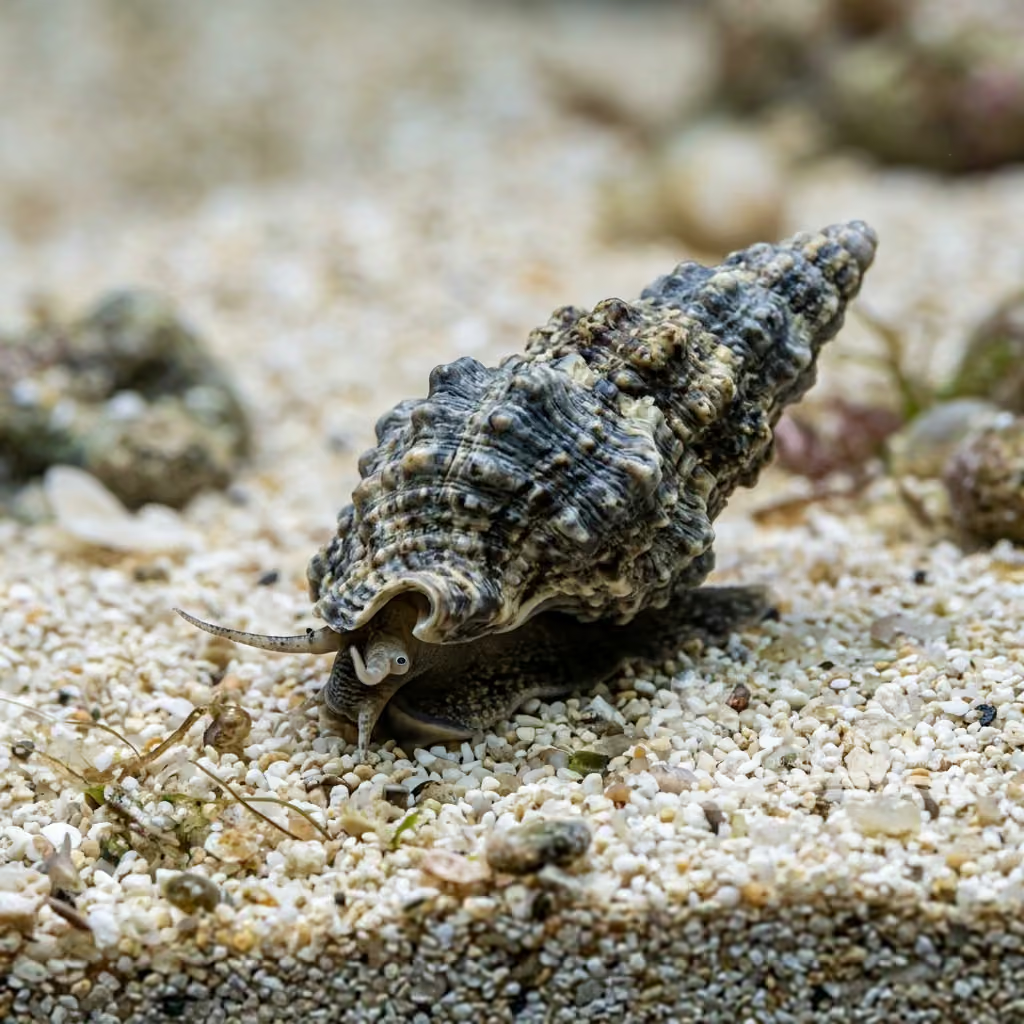
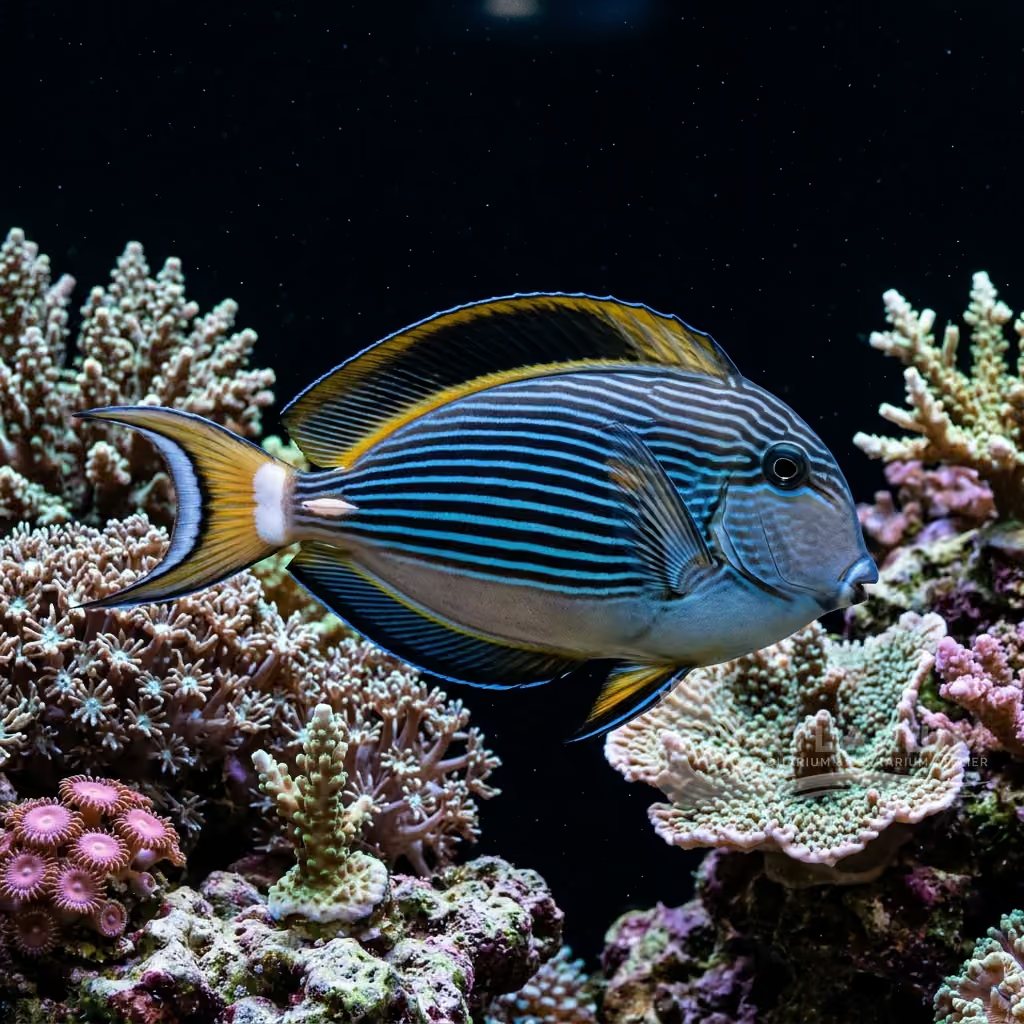
Risks & Diseases: It is extremely appetizing. It is the caviar of herbivorous fish: if placed in an aquarium with Tangs or Dwarf Angelfish (Centropyge), its clusters will be popped and devoured in a flash. Even some species of sea urchins or turbo snails can raze it to the ground. The only other serious risk is the accumulation of cyanobacteria on its vesicles if water flow in the shaded areas is non-existent.

Geografische Herkunft und Verbreitung
Botryocladia uvaria, widely celebrated in the hobby as "Red Grape Algae," is a marine species that resides primarily in the Mediterranean Sea, but extends its range to the European and North African Atlantic coasts. Its natural environment is confined to the coralligenous zone or sciaphilous (shade-loving) habitats. You will never find it under the beating sun of the surface, but rather at the entrance of dark caves, on steep vertical drop-offs, or at considerable depths (10-40 meters) where algal competition is scarce.
Ursprung
Europa, Mittelmeerraum und Westasien

Pflanzenprofil
- Platzierung
- Mittelgrund
- It should be firmly attached to live rock or rubble in a marine or reef aquarium. It prefers moderate to low flow areas where its delicate, grape-like vesicles will not be easily torn away. Moderate lighting brings out its best color; intense lighting may cause it to bleach or turn pale.
- Botanische Form
- Aufsitzerpflanze
- Commonly known as 'Red Grape Algae', it features thin, branching red stems adorned with round, bubble-like vesicles that resemble miniature clusters of red grapes. The distinct bubble structures are actually fluid-filled sacs that provide buoyancy. It has an incredibly unique and attractive ornamental appearance.
- Wachstum
- Mittel
- Its growth rate is moderate once successfully acclimated to the tank's conditions. It grows by extending its main branches and continuously producing clusters of red, fluid-filled bladders. If nutrient levels drop too low or lighting is too intense, its growth will slow down significantly.
- Substrat
- Niedrig
- As a marine macroalgae, Botryocladia uvaria (Red Grape Algae) does not have true roots and therefore does not require a deep sand bed or soil substrate. Instead, it utilizes specialized holdfast structures to anchor itself onto live rock, coral rubble, or coarse aragonite substrates in the reef aquarium. Nutrient absorption occurs entirely through its bladder-like vesicles and thallus directly from the saltwater column.
- Säulendüngung
- Keine
- It relies entirely on the dissolved compounds present in the saltwater column. Routine partial water changes are usually sufficient to replenish essential trace elements. In nutrient-poor reef systems, careful dosing of iron, iodine, and general macroalgae supplements may be necessary.
- Wurzeldüngung
- Keine
- Macroalgae do not possess true roots; instead, they have holdfasts used strictly for anchoring to hard surfaces. Therefore, substrate fertilization is completely inapplicable. The holdfast must be allowed to attach securely to a piece of rock without being buried in sand.
- Trimmen
- Gelegentlich
- Pruning is straightforward and involves carefully cutting away excess branches with sharp scissors. Never pull or tear the algae, as this can severely damage the holdfast or crush the delicate vesicles. Regular trimming helps prevent it from overshadowing adjacent corals and encourages bushier growth.
- Ausbreitung
- Teilung
- Propagation is very easily achieved through simple fragmentation. Cut a healthy branch containing several vesicles and attach it to a new piece of live rock using a specialized reef-safe gel or gentle rubber banding. The fragment will soon develop a new holdfast and continue growing.
- Empfindlichkeit
- HIGH
- It is highly sensitive to being consumed by herbivorous fish, such as tangs and rabbitfish, as well as large turbo snails. It is also susceptible to bleaching if exposed to suddenly intense lighting or unstable salinity and temperature. Care must be taken during acclimation to prevent cellular rupture.
- Layoutrolle
- accent, Aufsitzerpflanze
- It serves as a brilliant splash of deep red in the marine aquascape, providing an excellent visual contrast against green macroalgae and colorful corals. It creates a natural, reef-like environment that offers shelter for copepods and small invertebrates. Often used in refugiums or as an ornamental display in the main tank.

Bildergalerie
Lizenzierte Bilder, die mit der Art oder, wenn markiert, mit dem nächstgelegenen repräsentativen Taxon verknüpft sind.

Verwandte Arten
Empfehlungen gruppiert nach nahen Verwandten, Auswahl von Begleitern und ähnlicher Betreuung.