Mexican turbo snail
Turbo fluctuosus
Mexican turbo snail: marine lumaca marina in the family Turbinidae, included for reef role, behavior, or aquarium utility. Geographical Origin and Habitat: The Mexican Turbo Snail (*Turbo...
Wassertemperatur
24 - 28 °C
pH-Wert
8.1 - 8.4
Wassertyp
Meerwasser
Wirbelloser Typ
Marine snail
Erwachsenengröße
6 cm
Mindestgruppe
>= 1
Ökologische Rolle
Scavenger
Kupferempfindlichkeit
High

Artbeschreibung
Geographical Origin and Habitat: The Mexican Turbo Snail (*Turbo fluctuosa*) is a heavy, highly efficient marine gastropod natively endemic to the warm, algae-rich coastal waters, rocky intertidal zones, and shallow coral reefs of the Gulf of California (Sea of Cortez) and the Pacific coast of Mexico. Their natural biotope is defined by turbulent, highly oxygenated rocky shorelines explicitly dominated by massive growths of tough macroalgae, turf algae, and thick diatom films.
Taxonomy: Scientifically classified within the Turbinidae (Turban Snails) family, they are a massive and heavily armored mollusk. Fully mature adults reach an impressive shell diameter of 5.0 to 7.5 centimeters (2.0-3.0 inches). They possess a thick, heavily calcified, spiral shell that resembles a turban or top.
Defining Feature: They possess a thick, calcareous operculum (a hard trapdoor) that securely seals the shell opening to prevent desiccation during low tide and protect against predators.
Social Behavior: They are slow-moving, intensely determined, and strictly herbivorous benthic grazers. They spend 24 hours a day bulldozing across the live rock, glass, and sand, relentlessly scraping algae using a highly specialized, rasping tongue called a radula. They are entirely solitary and ignore all other invertebrates. Due to their massive size and gripping strength, they possess incredible torque and are notorious for accidentally knocking over poorly secured coral fragments.
Coloration and Sexual Dimorphism: Sexual dimorphism is visually non-existent without dissection. Their coloration is highly variable and primarily functional, designed to blend in with rocky, algae-covered substrates. The heavy, spiraled shell is typically a mottled mix of dull grayish-brown, dark olive green, and off-white. In mature reef aquariums, the shell frequently becomes heavily encrusted with beautiful purple or pink Coralline algae, providing natural camouflage. The fleshy foot is a pale, mottled gray.

Pflege, Zucht und Mitbewohner
Tank Setup: The aquarium architecture MUST accommodate their massive size and extreme appetite for algae. A minimum 110-liter (30-gallon) marine aquarium is required.
CRITICAL REQUIREMENT: The tank MUST feature vast amounts of highly porous live rock.
CORAL WARNING: Because of their sheer mass and clumsy, bulldozing nature, all coral frags MUST be securely glued or epoxied to the rockwork; a large Turbo Snail will effortlessly push unsecured frags off ledges.
Diet and Feeding: They are absolute powerhouse, obligate herbivores and the supreme champions of consuming heavy hair algae (*Derbesia*). They will consume massive quantities of film algae, cyanobacteria, and thick turf algae.
CRITICAL WARNING: Their massive appetite is their greatest vulnerability. A single Turbo Snail can strip a 30-gallon tank of algae in weeks. If the tank is clean, they WILL slowly starve to death. They MUST be heavily supplemented with dried Nori seaweed rubber-banded to a rock.
Water Quality: As heavily calcified marine mollusks, they are devastatingly sensitive to water chemistry and temperature fluctuations. While originating from Mexico, they demand stable tropical/subtropical heat (23-26°C / 73-79°F). Specific gravity (salinity) MUST be maintained precisely between 1.023 and 1.025. They require hard, highly alkaline water (pH 8.1 - 8.4) with flawless Calcium (400-450 ppm) and Magnesium levels to continually grow and repair their massive, thick calcareous shells.
Compatibility and Tankmates: Compatibility is absolute regarding peaceful reef inhabitants. They are 100% reef-safe, completely ignoring all corals and fish. However, they are highly vulnerable to predators.
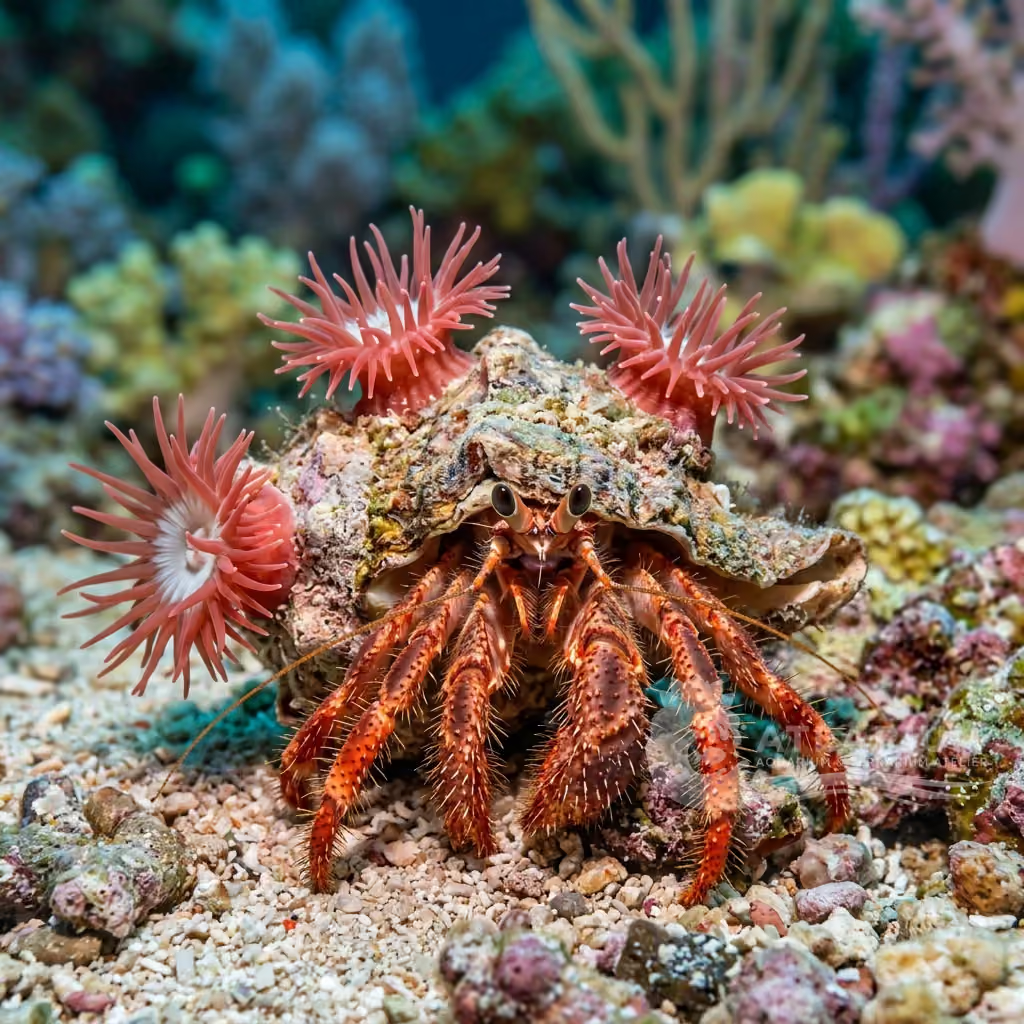
CRITICAL WARNING: They MUST NEVER be housed with Pufferfish, Triggerfish, large Hawkfish, or aggressive Hermit Crabs. Large Hermit Crabs (like the Electric Blue or Hairy Hermit) will relentlessly harass, kill, and eat a Turbo Snail purely to steal its massive, highly desirable shell.
Aquarium Breeding: Breeding the Mexican Turbo Snail in a home aquarium occasionally happens through broadcast spawning. If kept in a group, males and females will simultaneously release clouds of sperm and eggs into the water column, turning the tank water completely cloudy. However, the resulting microscopic, pelagic trochophore larvae rarely survive the filtration systems and protein skimmers of a modern reef tank, making successful rearing practically non-existent for hobbyists.
Risks and Diseases:
CRITICAL TOXICITY WARNING: Like all marine snails, they are immediately and fatally hypersensitive to COPPER (Cu) and heavy metals. They will die rapidly in tanks treated with copper. The second major risk is lethal starvation; they are frequently purchased to clean a tank, and then ignored once the algae is gone, resulting in slow death. The third risk is death by being flipped; if they fall upside-down on soft sand, they often cannot right themselves and will be eaten by crabs.

Geografische Herkunft und Verbreitung
The Mexican Turbo Snail (*Turbo fluctuosa*) is a heavy, highly efficient marine gastropod natively endemic to the warm, algae-rich coastal waters, rocky intertidal zones, and shallow coral reefs of the Gulf of California (Sea of Cortez) and the Pacific coast of Mexico. Their natural biotope is defined by turbulent, highly oxygenated rocky shorelines explicitly dominated by massive growths of tough macroalgae, turf algae, and thick diatom films.
Ursprung
Tropische Ozeane und RiffeExtra-Amazonas-SüdamerikaMittelamerika und KaribikNordamerika

Wirbelloses Profil
- Diät
- Carnivore
- The primary diet of Turbo fluctuosus consists of various types of algae, biofilm, and decaying plant matter found on aquarium surfaces. It is an excellent clean-up crew member but may require supplemental feeding. Sinking algae wafers and blanched vegetables should be provided if natural food sources are depleted.
- Ökologische Rolle
- Scavenger
- In its natural habitat, Turbo fluctuosus plays a crucial role as a detritivore and primary consumer, helping to process organic waste. By constantly grazing on algae and detritus, it prevents excessive nutrient buildup and keeps surfaces clean. This ecological function translates perfectly into the closed ecosystem of a home aquarium.
- Erwachsenengröße
- 6 cm
- Sprungrisiko
- Yes
- While Turbo fluctuosus lacks the ability to physically jump, it is known to occasionally climb above the water line or out of the tank entirely. This wandering behavior can sometimes lead to fatal desiccation if they fall onto the floor. A tightly fitted lid or a wide rim is highly recommended to keep them safely enclosed.
- Stoßempfindlichkeit
- High
- Turbo fluctuosus is remarkably sensitive to sudden fluctuations in water parameters, particularly temperature, pH, and hardness. Rapid changes can induce osmotic shock, leading to lethargy, shell damage, or death. A slow drip acclimation process over several hours is highly recommended when introducing it to a new tank.
- Kalzium und Mineralien
- Medium
- Adequate calcium levels are absolutely critical for Turbo fluctuosus to develop and maintain a strong, healthy shell. Soft, acidic water will gradually erode the shell, exposing the snail to infection and premature death. Hobbyists should supplement the water column or diet with cuttlebone, coral skeleton, or specialized mineral blocks.
- Häutung
- No
- Unlike crustaceans, Turbo fluctuosus is a gastropod and does not undergo a molting process to grow. Instead, it continuously adds new calcified layers to the aperture of its existing shell as it matures. Therefore, observing continuous, healthy shell growth lines without pitting or cracks is the best indicator of its well-being.
- Reproduktion
- Oviparous
- The reproductive strategy of Turbo fluctuosus varies, but many require specific conditions such as brackish water to successfully yield viable offspring. While they may lay eggs frequently in a freshwater aquarium, the larvae often fail to develop without the proper salinity. This trait makes them ideal for aquarists who wish to avoid overpopulation issues.
- Kompatibilität & Tankkameraden
- Verify
- Turbo fluctuosus is entirely peaceful and possesses no means to harm other tank inhabitants, making it perfect for community setups. It should not, however, be kept with aggressive loaches, pufferfish, or large crayfish that will prey on it. Ideal tank mates include small tetras, rasboras, and dwarf shrimp.

Bildergalerie
Lizenzierte Bilder, die mit der Art oder, wenn markiert, mit dem nächstgelegenen repräsentativen Taxon verknüpft sind.

Verwandte Arten
Empfehlungen gruppiert nach nahen Verwandten, Auswahl von Begleitern und ähnlicher Betreuung.