Red Ridged Clinging Crab
Mithraculus forceps
The Red Ridged Clinging Crab is a superb herbivorous cleaner. Hiding in crevices during the day, it emerges at night to devour bubble algae and detritus without harming corals in reef tanks.
Wassertemperatur
22 - 28 °C
pH-Wert
8.1 - 8.4
Wassertyp
Meerwasser
Wirbelloser Typ
Marine crab
Erwachsenengröße
4 cm
Mindestgruppe
>= 1
KH
8 - 12 dKH
Ökologische Rolle
Scavenger
Kupferempfindlichkeit
High

Artbeschreibung
Geographical Origin and Habitat: Mithraculus forceps, commonly known as the Red Ridged Clinging Crab or Red Mithrax Crab, is native to the tropical and subtropical waters of the western Atlantic Ocean. Its extensive geographical range extends from the coasts of North Carolina through Florida, the Gulf of Mexico, and the entire Caribbean Sea (including the Lesser and Greater Antilles, and the Bahamas) down to southern Brazil. It inhabits shallow coral reefs, seagrass beds dominated by Thalassia (turtle grass), and rocky coastal environments, at depths ranging from 1 to approximately 90 meters, finding shelter under rocks and inside sponges.
Taxonomy: This species belongs to the infraorder Brachyura, family Mithracidae, and genus Mithraculus. It is closely related to the well-known green emerald crab (Mithraculus sculptus), sharing many of its physical and behavioral characteristics. The taxonomy of this family is characterized by spider crabs and reef-dwelling crabs that use robust, flattened claws to scrape algae and organic matter from calcareous substrates.
Social Behavior: It leads a primarily nocturnal and very secretive lifestyle. During the day, it remains tightly wedged inside narrow crevices within live rock, becoming active only at dusk to roam the tank in search of food. While generally peaceful toward fish and corals, it can exhibit territorial behavior toward other crabs of the same or closely related species if space is limited.
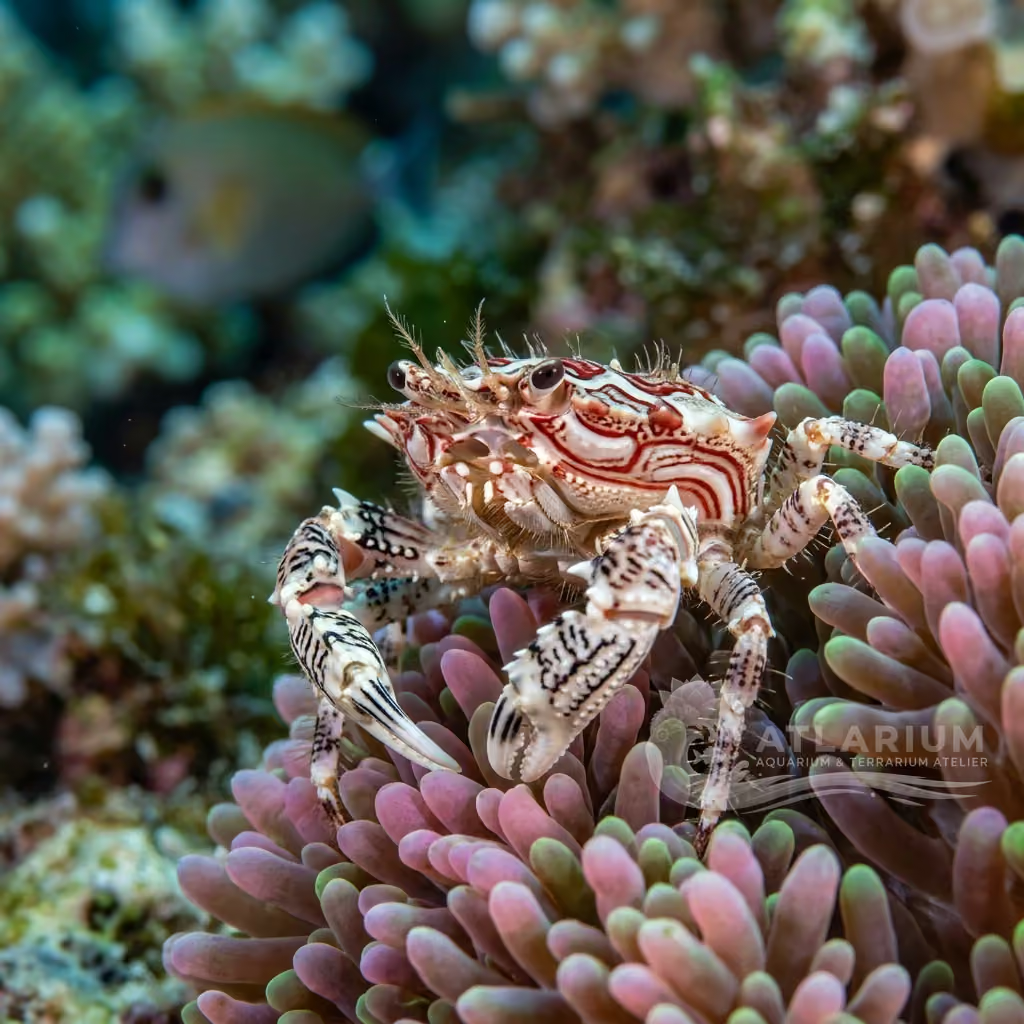
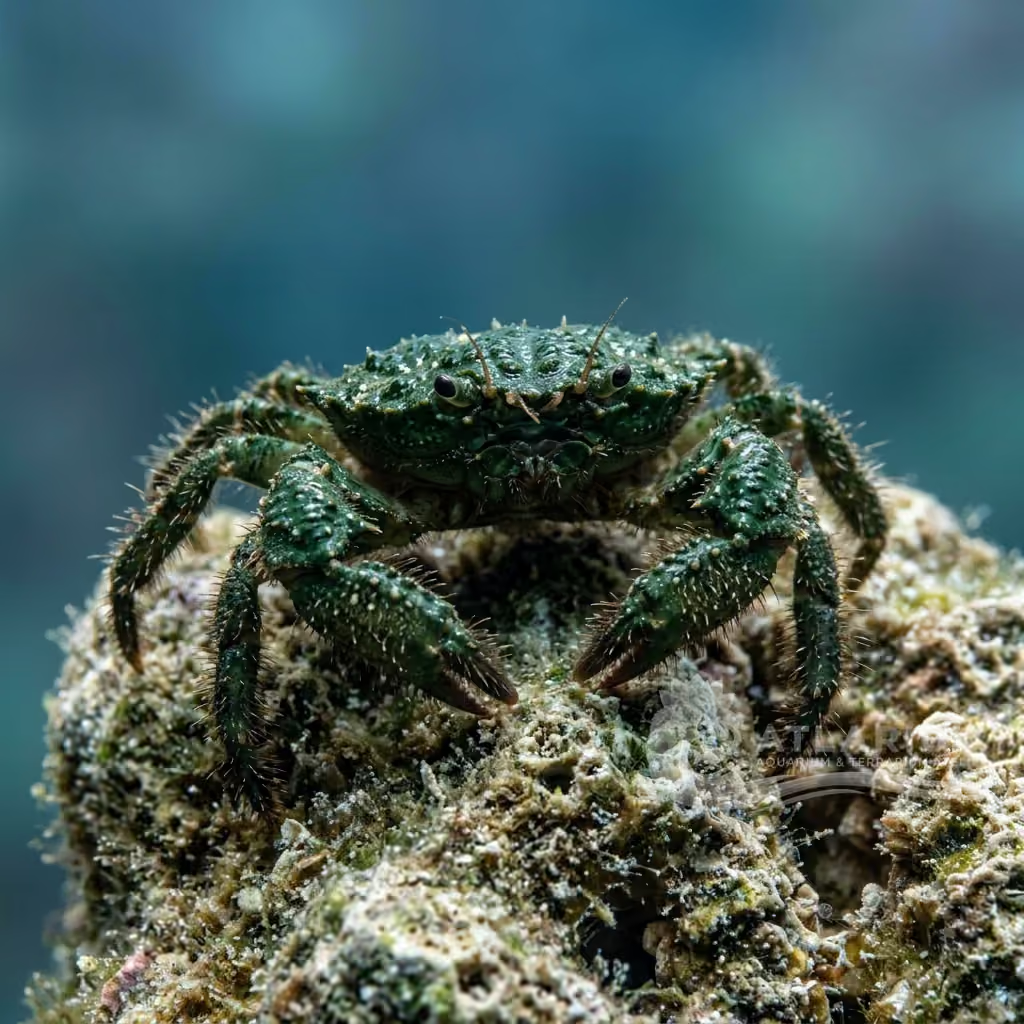
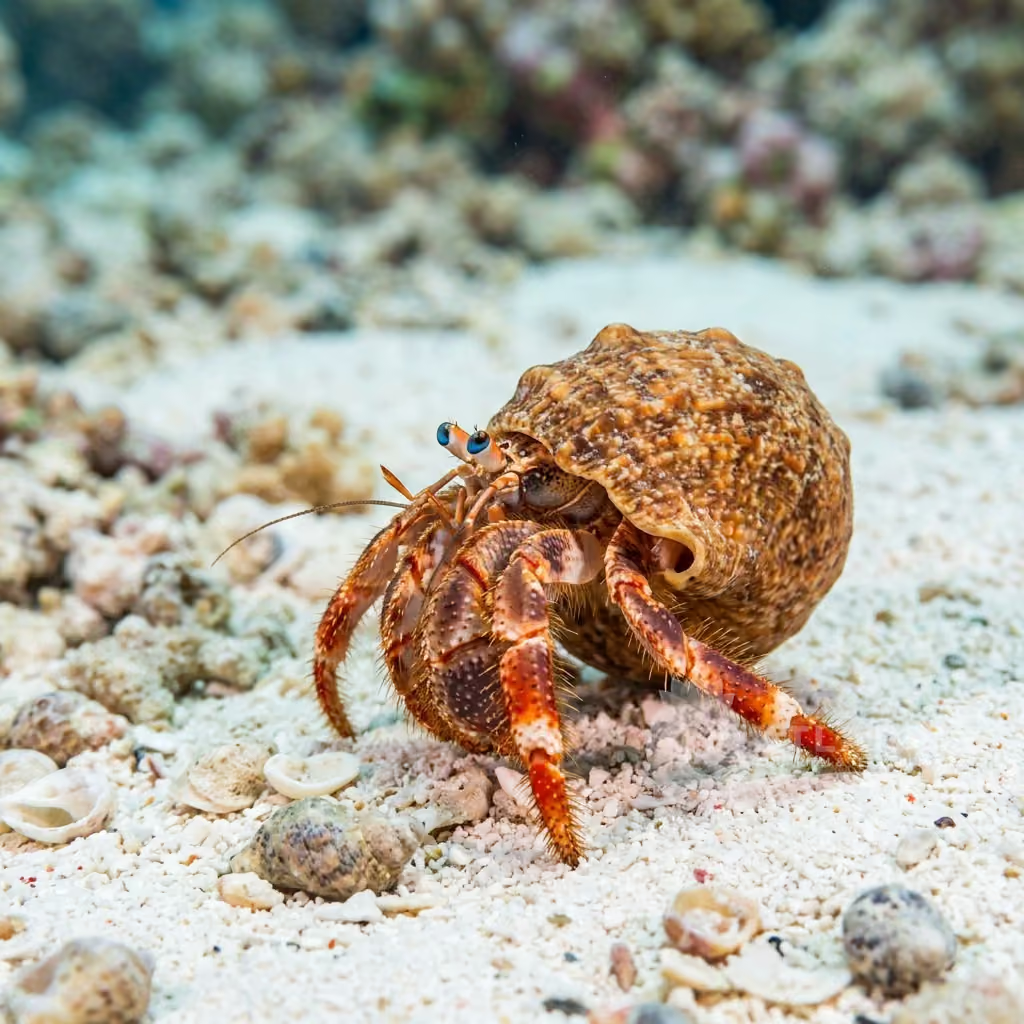
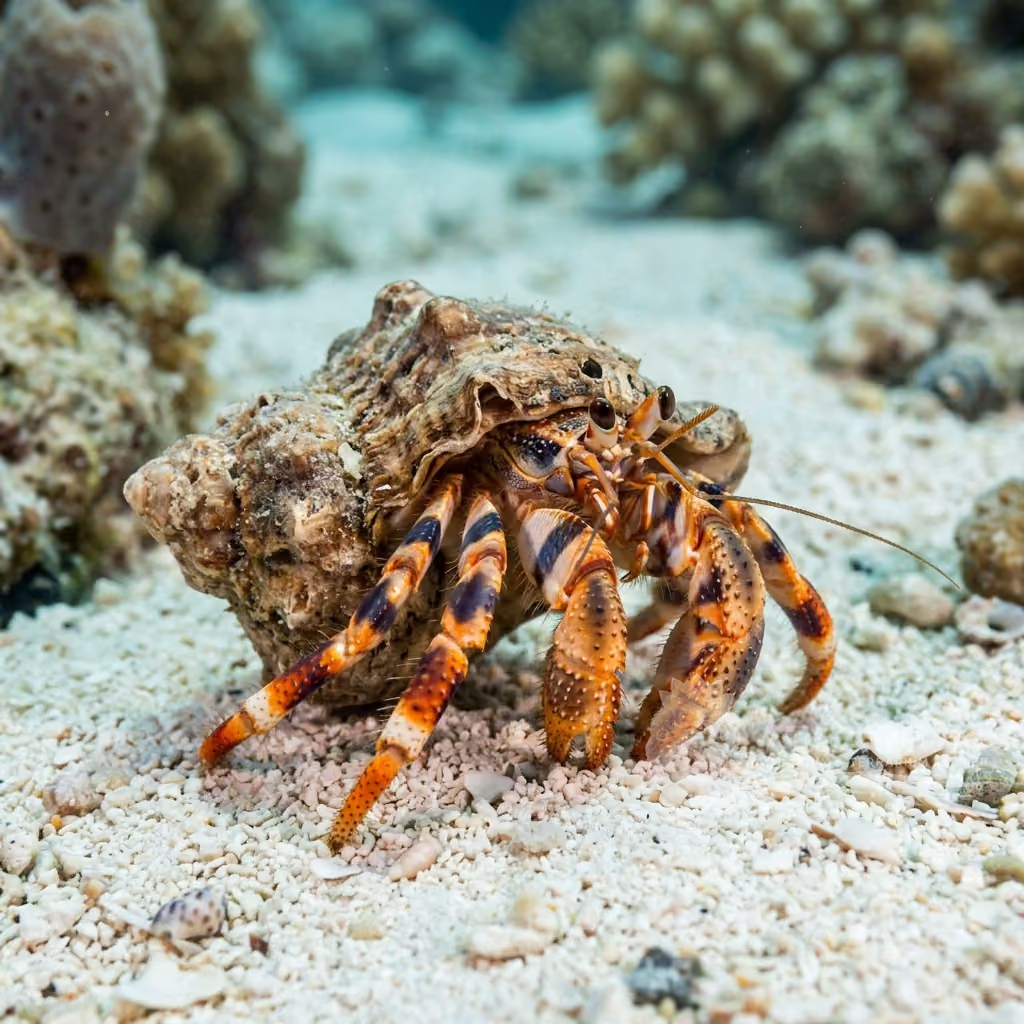
Coloration and Sexual Dimorphism: Unlike the green emerald crab, Mithraculus forceps displays a color that ranges from rusty red, orange, or pinkish-brown to uniform red shades, sometimes with striped legs. The carapace has a rounded and slightly bumpy shape. The claws terminate in broad, spoon-shaped tips adapted for scraping algae off rocks. Sexual dimorphism is clear on the ventral surface: males have a narrow, pointed abdomen, whereas females possess a wide, rounded abdomen used for brooding eggs.

Pflege, Zucht und Mitbewohner
Tank Setup: It can be housed in small reef aquariums starting from 50-60 liters. The tank must be decorated with plenty of mature live rock rich in crevices, caves, and micro-fissures where the crab can hide during daylight hours. Secure rockwork is important because this invertebrate exerts considerable force when anchoring and climbing. It does not require a specific sandy substrate but benefits from the presence of macroalgae.
Diet and Feeding: An omnivore and excellent detritivore. In captivity, it is highly valued for its ability to consume nuisance hair algae and bubble algae (Valonia sp.). However, if the tank lacks algae or if the crab is underfed, it can become opportunistic and pick at small coral polyps or small invertebrates. It is recommended to supplement its diet with sinking spirulina algae wafers or pieces of frozen food like mysis or brine shrimp.
Water Quality: Requires clean, stable marine parameters: temperature between 24°C and 28°C, pH 8.0-8.4, and salinity (specific gravity) between 1.022 and 1.026. As with all marine invertebrates, the presence of copper in the tank (often used in fish medications) is extremely toxic and lethal. Adequate calcium and magnesium levels are required to support periodic molting.
Compatibility and Tankmates: Generally considered reef-safe with caution. Coexists peacefully with community marine fish and corals. It should be monitored if housed with very slow fish that rest on the bottom or small delicate crustaceans. Avoid keeping it with natural predators such as puffers, triggerfish, octopuses, and large wrasses that could break its shell.
Aquarium Breeding: Breeding in home aquariums is rare but possible. After mating, the female carries eggs under her wide abdomen for several weeks until they hatch. The larvae are released as planktonic zoeae and require dedicated rearing tanks with specific phytoplankton feeding to survive the mechanical filtration of the main tank.
Risks and Diseases: The main risk is osmotic shock induced by rapid acclimation; a slow drip-acclimation process is mandatory. It must never be exposed to anti-parasitic fish dips. During periodic molting, the crab sheds its exoskeleton and remains soft for a few days: in this phase, it is vulnerable and will hide deep inside the rocks.

Geografische Herkunft und Verbreitung
Mithraculus forceps, commonly known as the Red Ridged Clinging Crab or Red Mithrax Crab, is native to the tropical and subtropical waters of the western Atlantic Ocean. Its extensive geographical range extends from the coasts of North Carolina through Florida, the Gulf of Mexico, and the entire Caribbean Sea (including the Lesser and Greater Antilles, and the Bahamas) down to southern Brazil. It inhabits shallow coral reefs, seagrass beds dominated by Thalassia (turtle grass), and rocky coastal environments, at depths ranging from 1 to approximately 90 meters, finding shelter under rocks and inside sponges.
Ursprung
Tropische Ozeane und RiffeExtra-Amazonas-SüdamerikaMittelamerika und KaribikNordamerika

Wirbelloses Profil
- Diät
- Omnivore
- Primarily herbivorous, focusing on algae. Will also scavenge meaty foods.
- Ökologische Rolle
- Scavenger
- Excellent at controlling bubble algae and hair algae.
- Erwachsenengröße
- 4 cm
- Sprungrisiko
- Yes
- Not known to jump. Keep the water level slightly below the rim.
- Stoßempfindlichkeit
- Medium
- Susceptible to rapid fluctuations in water chemistry. Drip acclimation is advised.
- Kalzium und Mineralien
- Medium
- Calcium is essential for building and maintaining its hard exoskeleton.
- Häutung
- Yes
- To grow, the emerald crab must periodically molt its rigid exoskeleton. Prior to molting, it will hide extensively and its shell may lighten in color. Following the molt, the crab is completely soft and highly vulnerable to predators, requiring deep, undisturbed rocky crevices to hide until its new armor hardens.
- Reproduktion
- Oviparous
- While emerald crabs will occasionally mate and carry bright orange eggs in a home aquarium, successfully raising the offspring is extraordinarily difficult. The resulting pelagic larvae are quickly consumed by corals and filtration systems, requiring a specialized kreisel setup and microscopic live foods to have any chance of survival.
- Kompatibilität & Tankkameraden
- Peaceful
- Usually reef safe. May pinch at corals or small fish if underfed.

Verwandte Arten
Empfehlungen gruppiert nach nahen Verwandten, Auswahl von Begleitern und ähnlicher Betreuung.