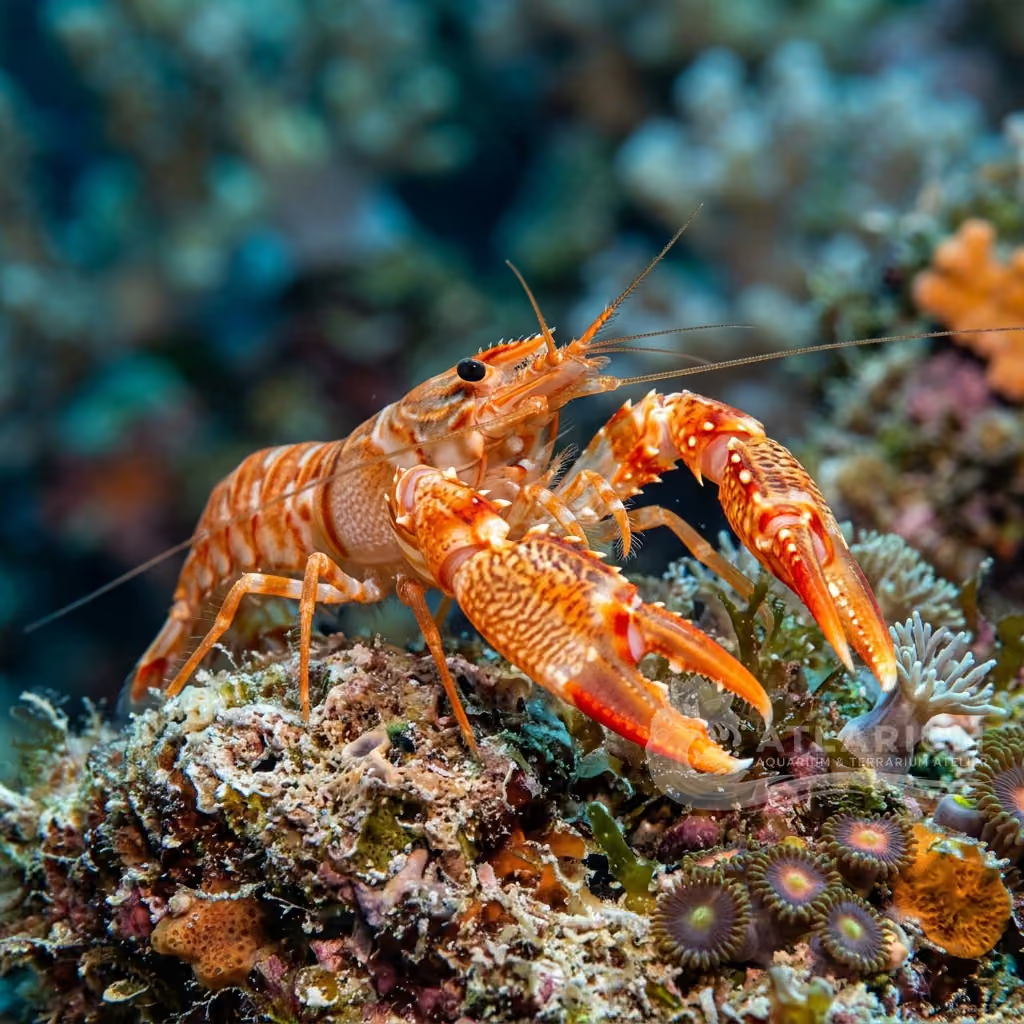
Lamarck's Pebble Crab
Xanthias lamarckii
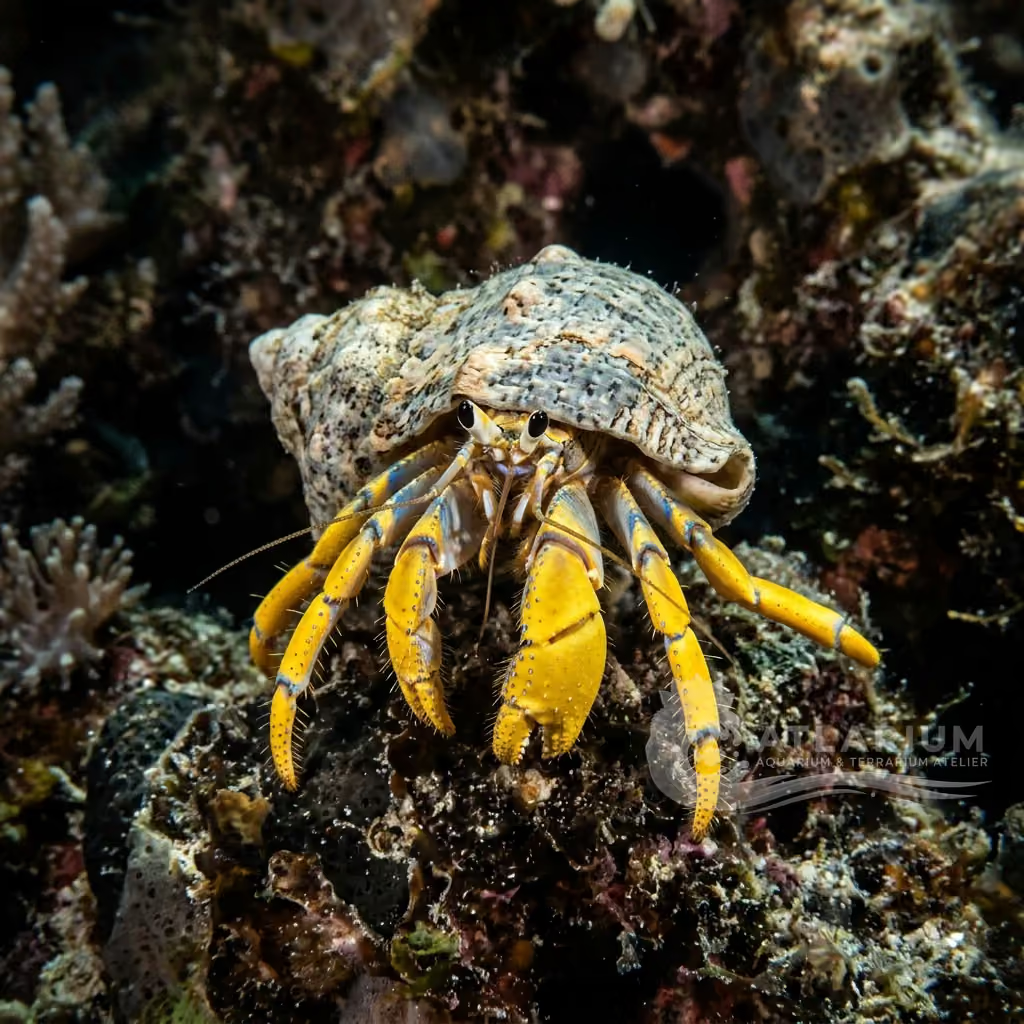
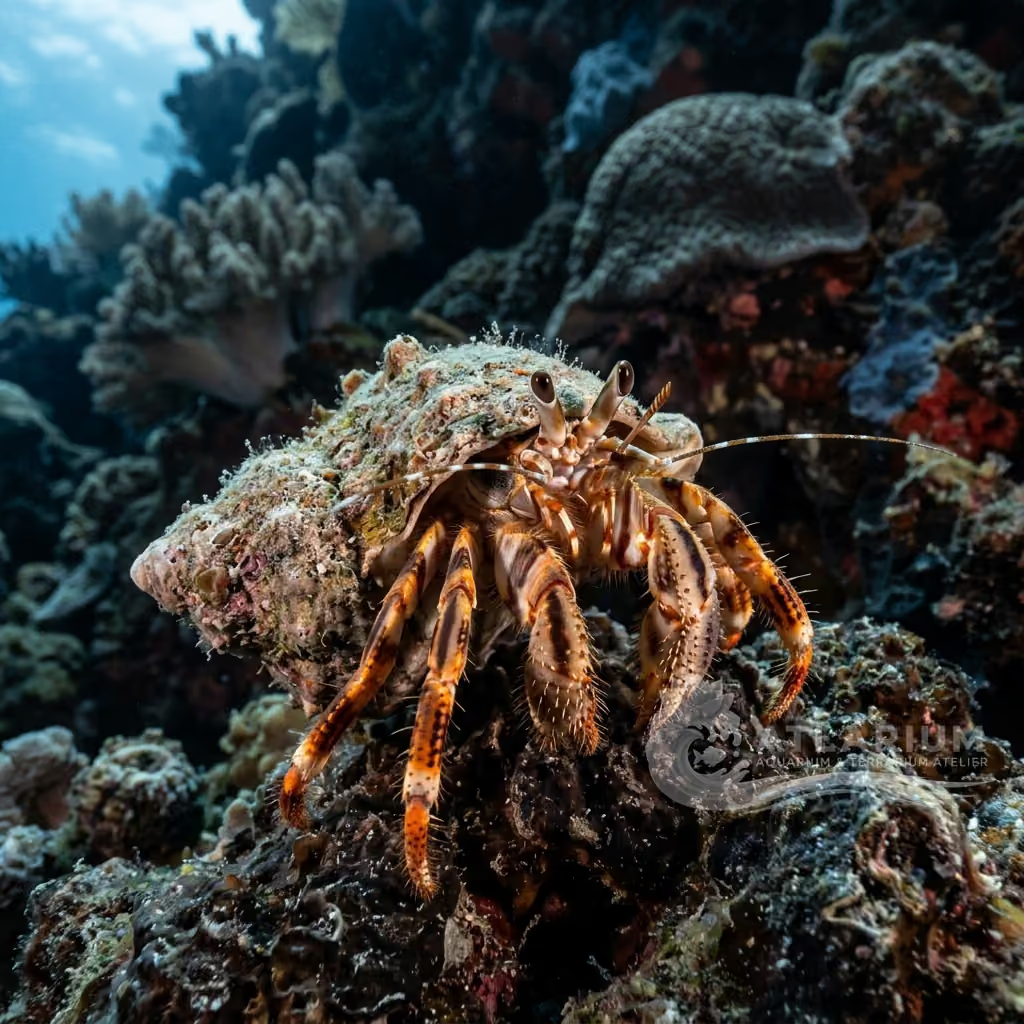
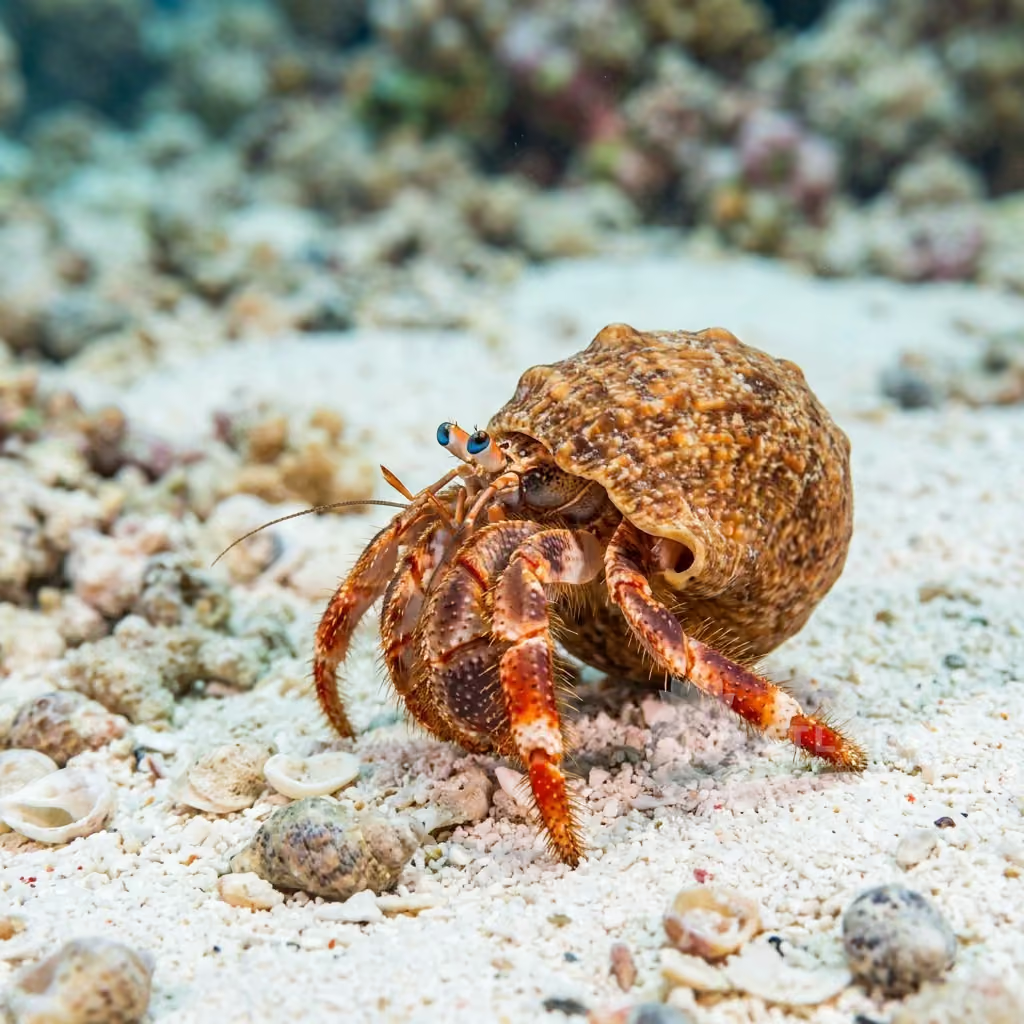
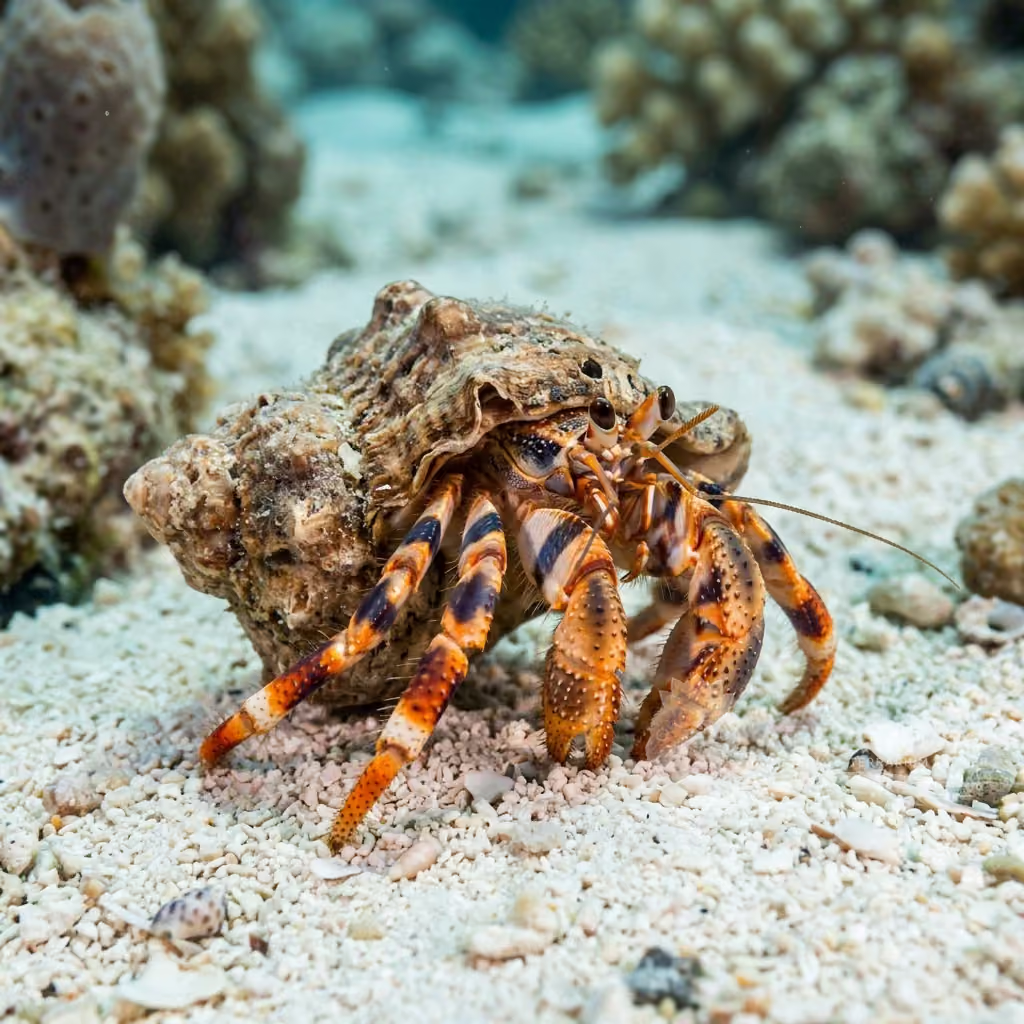
A vibrant, reef-dwelling crab that perfectly blends into coral rubble. A peaceful nocturnal scavenger, it helps keep nano reefs clean by eating detritus while safely avoiding specialized shells.
Wassertemperatur
22 - 28 °C
pH-Wert
8.1 - 8.4
Wassertyp
Meerwasser
Wirbelloser Typ
Marine crab
Erwachsenengröße
2,5 cm
Mindestgruppe
>= 1
KH
8 - 12 dKH
Ökologische Rolle
Scavenger
Kupferempfindlichkeit
High

Artbeschreibung
Geographical Origin and Habitat: Widely distributed throughout the tropical Indo-Pacific, extending from East Africa and the Red Sea to Australia, southern Japan, Hawaii, and French Polynesia. It primarily inhabits shallow rocky reefs, coral rubble zones, and intertidal flats where it can find immediate cover under stones.
Taxonomy: Belongs to the class Malacostraca, order Decapoda, family Xanthidae, and genus Xanthias. First described as Xantho lamarckii by H. Milne Edwards in 1834, it serves as the type species for the genus Xanthias. It is classified as a true crab within the diverse group of xanthid crabs.
Social Behavior: A peaceful, cryptic, and mostly nocturnal invertebrate. It spends the day hidden deep inside crevices of live rocks or among dead coral branches. It is non-aggressive towards tankmates and does not pose a threat to small fishes or other peaceful reef inhabitants.
Coloration and Sexual Dimorphism: The carapace color is variable, ranging from light brown, beige, or cream to shades of reddish or orange with irregular dark brown spots. The claw tips are dark brown or black. Sexual dimorphism is characterized by the shape of the abdomen, which is much wider in females to carry eggs.

Pflege, Zucht und Mitbewohner
Tank Setup: Can be easily housed in nano reefs starting from 40 liters (10 gallons). Requires a rockwork arrangement with plenty of small caves, crevices, and natural hiding spots. Unlike hermit crabs, they do not require empty snail shells since they grow their own rigid exoskeleton.
Diet and Feeding: An omnivorous scavenger and detritivore. It feeds on microalgae, organic detritus, small worms, and uneaten fish food. In the aquarium, it will readily accept sinking pellets, algae wafers, and frozen foods such as mysis and brine shrimp.
Water Quality: Requires stable marine parameters: specific gravity between 1.020 and 1.025, pH 8.1-8.4, and temperature 22-28°C (72-82°F). Regular monitoring of calcium, alkalinity, and magnesium is vital, along with trace iodine supplementation to ensure healthy molting.
Compatibility and Tankmates: 100% reef-safe and an excellent addition to the aquarium clean-up crew. Compatible with peaceful fish, corals, and other small invertebrates. Do not keep with large predatory species like triggerfish, puffers, or hawkfish.
Aquarium Breeding: While females frequently carry orange egg masses under their abdomens, breeding is not feasible in standard aquariums. The larvae hatch as free-swimming zoea, which are filtered out by mechanical equipment or quickly consumed by fish.
Risks and Diseases: The most common health issue is molting failure due to a lack of calcium or iodine. They are highly sensitive to sudden changes in salinity and temperature, and even trace amounts of copper-based medications will be lethal.

Geografische Herkunft und Verbreitung
Widely distributed throughout the tropical Indo-Pacific, extending from East Africa and the Red Sea to Australia, southern Japan, Hawaii, and French Polynesia. It primarily inhabits shallow rocky reefs, coral rubble zones, and intertidal flats where it can find immediate cover under stones.
Ursprung
Tropische Ozeane und RiffeAfrika und MadagaskarOstasienAustralien, Neuguinea und Ozeanien

Wirbelloses Profil
- Diät
- Omnivore
- Opportunistic omnivore. Eats meaty debris and sometimes algae.
- Ökologische Rolle
- Scavenger
- Acts as a nocturnal scavenger. Cleans up uneaten food in crevices.
- Erwachsenengröße
- 2.5 cm
- Sprungrisiko
- Yes
- It is a benthic crawler and does not jump.
- Stoßempfindlichkeit
- Medium
- Sensitive to rapid temperature and salinity swings.
- Kalzium und Mineralien
- Medium
- Adequate calcium and alkalinity are needed for molting and growth.
- Häutung
- Yes
- To achieve growth, this crab must periodically molt its restrictive exoskeleton. During this phase, it is exceptionally soft and vulnerable to predation. It absolutely requires secure rockwork, deep crevices, and hidden caves in the aquarium to retreat and hide safely while its new shell slowly mineralizes and hardens.
- Reproduktion
- Oviparous
- Captive breeding of this crab is virtually undocumented. While mature females will carry fertilized egg clutches securely beneath their abdomen, the resulting offspring hatch as complex, planktonic larvae. Larval rearing is an immense challenge and is almost never successful within the confines of a standard home aquarium.
- Kompatibilität & Tankkameraden
- Peaceful
- Use caution, as it can be predatory. May attack small sleeping fish.

Verwandte Arten
Empfehlungen gruppiert nach nahen Verwandten, Auswahl von Begleitern und ähnlicher Betreuung.