Kuekenthal's cleaner shrimp
Lysmata kuekenthali
A small marine shrimp widely valued for its ability to consume nuisance Aiptasia anemones, displaying a peaceful behavior suitable for reef aquariums.
Wassertemperatur
22 - 28 °C
pH-Wert
8.1 - 8.4
Wassertyp
Meerwasser
Wirbelloser Typ
Marine shrimp
Erwachsenengröße
4,5 cm
Mindestgruppe
>= 1
KH
8 - 12 dKH
Ökologische Rolle
Cleaner
Kupferempfindlichkeit
High

Artbeschreibung
Geographical Origin and Habitat: This species is native to the warm tropical waters of the Indo-Pacific region, spanning from the coastal waters of East Africa and Madagascar to Indonesia, the Philippines, and northern Australia. It typically inhabits shallow coral reefs, rocky crevices, and intertidal pools, where it seeks shelter during the day to avoid visual predators.
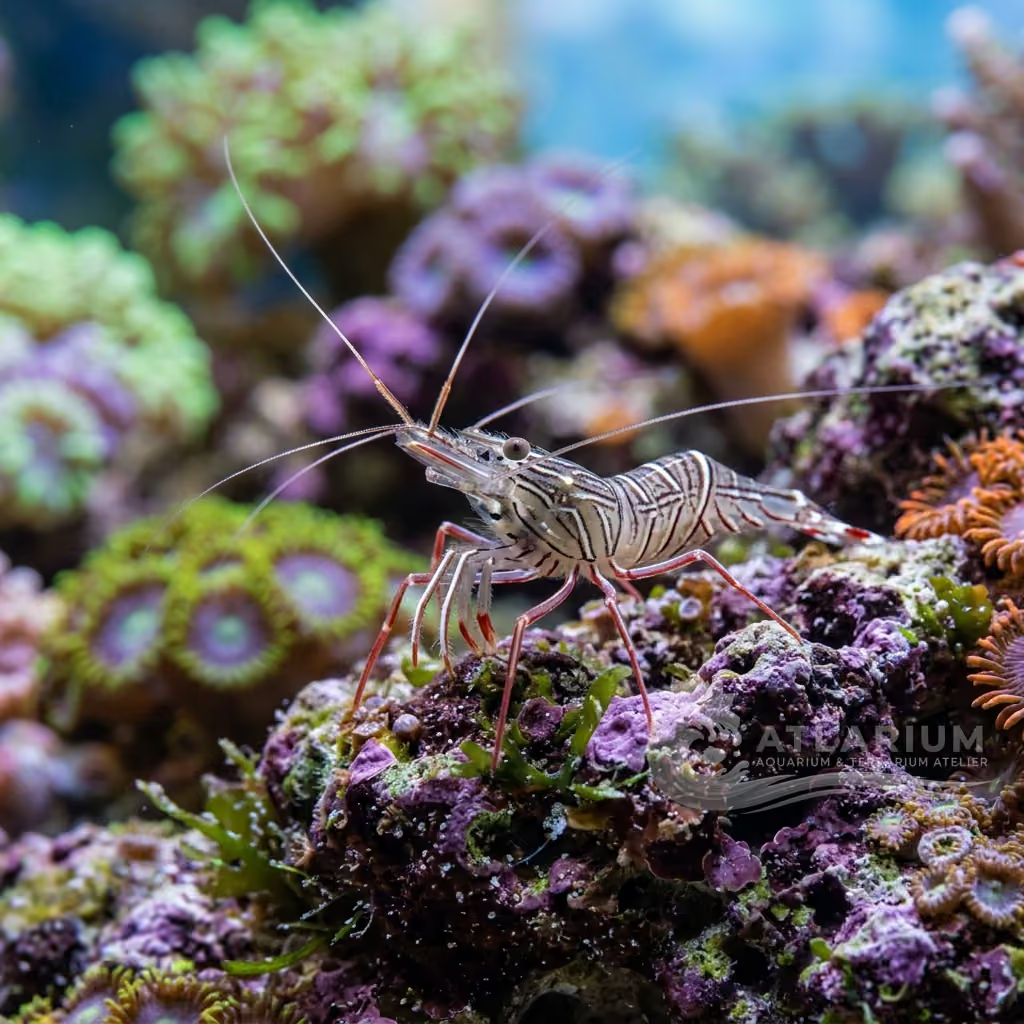
Taxonomy: Belonging to the family Lysmatidae and the genus Lysmata, it is a decapod crustacean. It is closely related to other peppermint-like shrimps such as Lysmata wurdemanni, from which it can be distinguished by subtle morphological details on its rostrum and its unique coloration. It possesses long, delicate sensory antennae.
Social Behavior: Extremely peaceful and social, this shrimp thrives when kept in small groups. Unlike some aggressive decapod species, it does not display territorial behavior toward conspecifics. It is nocturnal and shy during the daylight hours, spending time upside down under ledges, but turns active at night to scavenge for food.
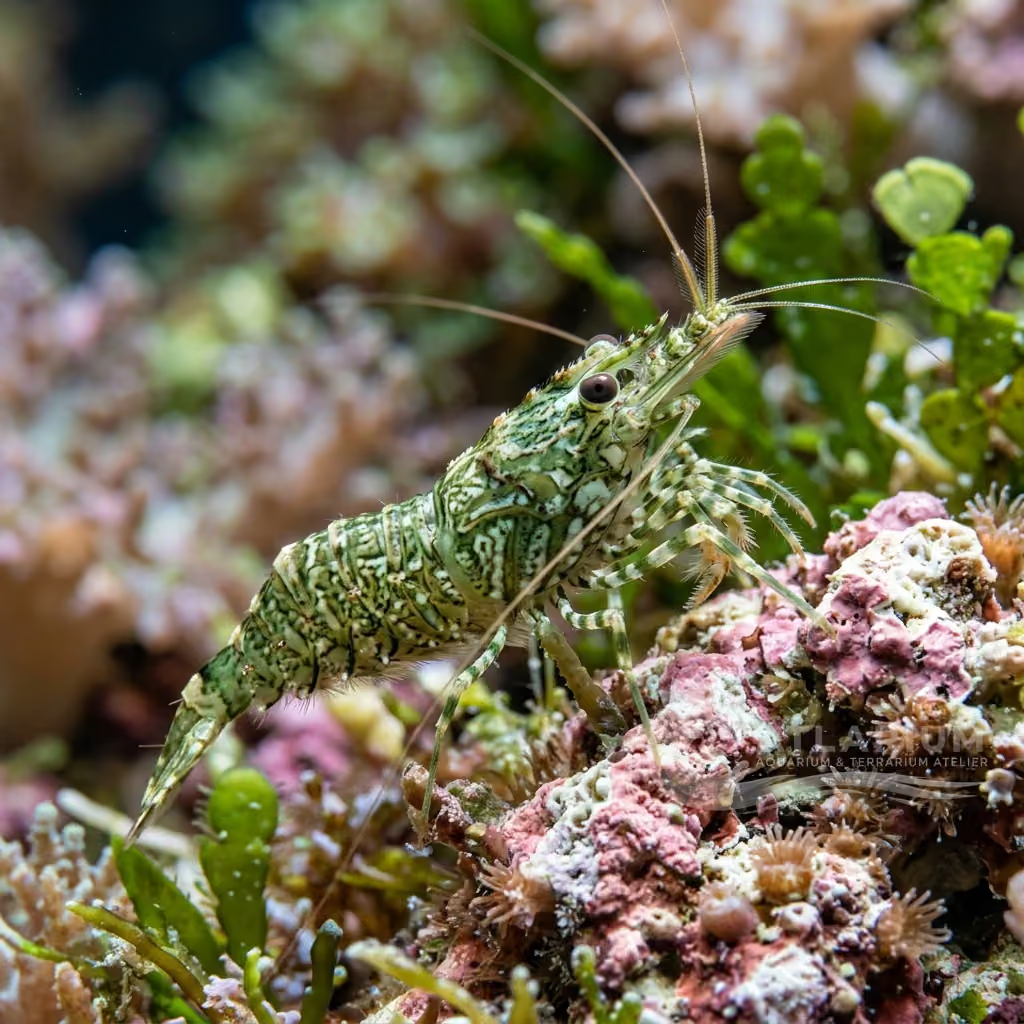
Coloration and Sexual Dimorphism: Features a semi-transparent body covered with a network of fine reddish-orange or brownish longitudinal and transverse stripes, creating a grid pattern. The tail fan often has dark markings. They are simultaneous hermaphrodites, meaning mature individuals possess both male and female reproductive organs, though cross-fertilization is required.

Pflege, Zucht und Mitbewohner
Tank Setup: Can be kept in small tanks, starting from 50 to 60 liters (approx. 15 gallons). The tank should be decorated with plenty of live rock arranged to create caves, crevices, and shady overhangs. This provides necessary cover during the day and secure hiding spots during their shedding process when their new shell is still soft.
Diet and Feeding: Omnivorous and opportunistic scavenger. It will readily consume fish food flakes, pellets, and frozen foods like mysis and brine shrimp. It is highly valued for eating nuisance Aiptasia anemones. Note that if the shrimp is overfed with easily accessible commercial foods, it may cease hunting Aiptasia.
Water Quality: Requires stable reef parameters: temperature 24-27°C (75-81°F), pH 8.1-8.4, specific gravity 1.023-1.025, and KH 8-12. Shrimps are highly sensitive to sudden changes in salinity and have zero tolerance for copper medications. Maintain trace levels of iodine in the water to support successful exoskeleton molting.
Compatibility and Tankmates: Completely reef-safe and peaceful. It will not harm corals or clams. Do not house with predatory fish such as hawkfish, lionfish, groupers, large wrasses, or triggerfish, which will quickly consume them. Excellent tankmates include peaceful reef-dwellers like gobies, firefish, and clownfish.
Aquarium Breeding: While pairs spawn regularly—carrying green eggs under their abdomen—rearing the larvae is exceptionally difficult in a home setting. The larvae pass through multiple planktonic stages, requiring specialized rearing tanks (kreisel) and precise feeding with rotifers and newly hatched brine shrimp.
Risks and Diseases: The main vulnerability is during the molting phase. Insufficient iodine levels or stress from aggressive tankmates can cause molting failure, which is fatal. Never introduce copper-based medications into an aquarium containing this shrimp, as copper is highly toxic to all marine invertebrates.

Geografische Herkunft und Verbreitung
This species is native to the warm tropical waters of the Indo-Pacific region, spanning from the coastal waters of East Africa and Madagascar to Indonesia, the Philippines, and northern Australia. It typically inhabits shallow coral reefs, rocky crevices, and intertidal pools, where it seeks shelter during the day to avoid visual predators.
Ursprung
Tropische Ozeane und RiffeAfrika und MadagaskarSüd- und SüdostasienAustralien, Neuguinea und Ozeanien

Wirbelloses Profil
- Diät
- Omnivore
- As a carnivore/aiptasia eater, Lysmata kuekenthali plays an active role in consuming various organic matters in its environment. Its diet in captivity should be varied, including specialized pellets, frozen foods, and natural algae or detritus depending on its specific preferences. Regular and balanced feeding is crucial for its health and longevity.
- Ökologische Rolle
- Cleaner
- The primary ecological role of Lysmata kuekenthali is acting as a pest control within the aquarium ecosystem. By constantly foraging, it helps manage waste, uneaten food, or pests, contributing significantly to water quality. Its presence introduces a natural balance and mimics complex biological interactions found in the wild.
- Erwachsenengröße
- 4.5 cm
- Sprungrisiko
- Yes
- The jump or escape risk for Lysmata kuekenthali is considered medium. Like many active invertebrates, it may attempt to climb out of the water if it feels stressed, threatened, or if water conditions deteriorate. A tight-fitting lid or mesh screen is highly recommended to prevent accidental escapes.
- Stoßempfindlichkeit
- High
- Lysmata kuekenthali is quite sensitive to sudden shifts in water parameters, particularly salinity, temperature, and pH. It is highly recommended to use a slow drip acclimation method over several hours when introducing it to a new tank. Maintaining stable conditions is vital to prevent stress-induced ailments or mortality.
- Kalzium und Mineralien
- Medium
- To support healthy molting and exoskeleton growth, Lysmata kuekenthali requires adequate calcium and trace elements like iodine in the water. Regular water changes with a high-quality salt mix usually provide sufficient levels, but specific supplementation may be necessary in heavily stocked reef tanks. Monitoring calcium and alkalinity ensures proper skeletal development.
- Häutung
- Yes
- During the molting process, Lysmata kuekenthali becomes extremely vulnerable to predators and aggressive tankmates. It will typically retreat to a secure hiding spot until its new exoskeleton hardens. It is important to leave the discarded molt in the tank, as the invertebrate will often consume it to reclaim valuable minerals.
- Reproduktion
- Oviparous
- Breeding Lysmata kuekenthali in a home aquarium is incredibly challenging due to its complex reproductive cycle. It typically involves a planktonic larval stage that requires highly specialized foods and precise water conditions to survive. In most standard setups, any spawned larvae will quickly become food for fish and corals.
- Kompatibilität & Tankkameraden
- Peaceful
- When considering tankmates, Lysmata kuekenthali is generally compatible with peaceful fish and other similarly sized invertebrates. Since its reef compatibility is rated as 'yes', careful observation is required if kept with delicate corals or smaller ornamental shrimp. Aggressive or large predatory fish should always be avoided to ensure its safety.

Verwandte Arten
Empfehlungen gruppiert nach nahen Verwandten, Auswahl von Begleitern und ähnlicher Betreuung.