Silver-spotted cleaner shrimp
Lysmata argentopunctata
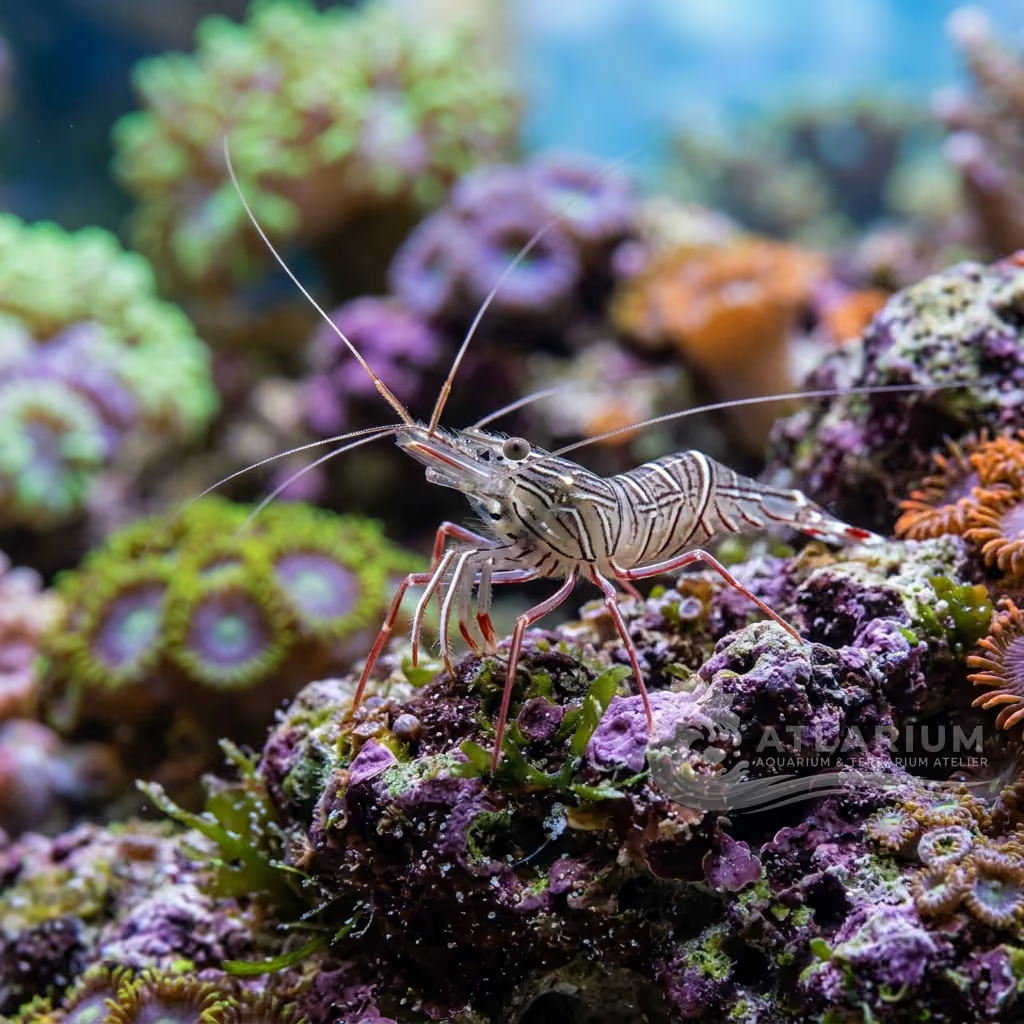
A cryptic and peaceful marine shrimp displaying delicate silver spots over a reddish-brown body. It acts as an occasional cleaner for reef aquarium fish.
Wassertemperatur
22 - 26 °C
pH-Wert
8.1 - 8.4
Wassertyp
Meerwasser
Wirbelloser Typ
Marine shrimp
Erwachsenengröße
4,5 cm
Mindestgruppe
>= 1
Ökologische Rolle
Cleaner
Kupferempfindlichkeit
High

Artbeschreibung
Geographical Origin and Habitat: Lysmata argentopunctata is native to the Western Indo-Pacific region. It inhabits tropical and temperate rocky and coral reefs, coastal reefs, and tide pools at depths of 1 to 20 meters. It is a highly cryptic species that hides deep inside rocky crevices and dark caves to avoid direct sunlight and predators.
Taxonomy: Belongs to the family Lysmatidae and the genus Lysmata. Described by Wicksten in 2000, it shares the reproductive strategy of protandric simultaneous hermaphroditism characteristic of its genus. Individuals function first as males and later transition into simultaneous hermaphrodites with both sexes.
Social Behavior: Peaceful, shy, and mostly nocturnal. During daylight hours, it remains tucked away in the shadows of the rockwork, typically only exposing its long antennae. It becomes active at night, scanning the aquarium for food. It displays facultative cleaning behaviors, occasionally cleaning ectoparasites from fish.
Coloration and Sexual Dimorphism: The body features a rich reddish-brown or deep red base color, adorned with numerous tiny, reflective silver or white spots distributed across the carapace and abdomen. Antennae are whitish-red. Because adult specimens are simultaneous hermaphrodites, there is no visible external sexual dimorphism.

Pflege, Zucht und Mitbewohner
Tank Setup: Requires an established marine or reef aquarium of at least 80-100 liters (approx. 20-25 gallons). The aquascape must include plenty of live rock arranged to create deep caves, overhangs, and shaded areas. Moderate lighting or sunset effects will encourage the shrimp to venture out more often.
Diet and Feeding: Omnivorous scavenger and detritivore. In the wild, it feeds on detritus, organic waste, and micro-parasites. In captivity, it readily accepts frozen mysis, brine shrimp, chopped clam, and sinking crustacean pellets. It is best to feed them in the evening when they naturally begin foraging.
Water Quality: Maintain stable marine conditions: temperature 23-26°C (73-79°F), pH 8.1-8.4, and specific gravity 1.023-1.025. Nitrates and phosphates should be kept at minimum levels. Copper-based medications are highly toxic and must never be used. Maintain iodine levels to ensure successful shell molting.
Compatibility and Tankmates: Peaceful and reef-safe. It does not harm corals or other sessile invertebrates. Coexists well with peaceful fish and other non-predatory invertebrates. Do not house with larger, predatory fish such as hawkfish, wrasses, triggerfish, or large crabs, which will eat the shrimp.
Aquarium Breeding: Breeding in home aquariums is extremely difficult. Any two mature individuals can mate and both will carry fertilized eggs under their tails. The larvae are planktonic and pass through multiple delicate stages, making them nearly impossible to raise without specialized plankton foods and rearing tanks.
Risks and Diseases: Prone to molting failure if calcium or iodine levels are depleted, or if heavy metals are present in the water. They are highly sensitive to osmotic shock; slow drip acclimation of at least 1 hour is mandatory when transferring them to a new aquarium.

Geografische Herkunft und Verbreitung
Lysmata argentopunctata is native to the Western Indo-Pacific region. It inhabits tropical and temperate rocky and coral reefs, coastal reefs, and tide pools at depths of 1 to 20 meters. It is a highly cryptic species that hides deep inside rocky crevices and dark caves to avoid direct sunlight and predators.
Ursprung
Tropische Ozeane und Riffe

Wirbelloses Profil
- Diät
- Omnivore
- Scavenger. Will eagerly accept most foods.
- Ökologische Rolle
- Cleaner
- Cleans up debris from the rockwork.
- Erwachsenengröße
- 4.5 cm
- Sprungrisiko
- Yes
- Will jump out of open aquariums.
- Stoßempfindlichkeit
- High
- Sensitive to osmotic shock. Drip acclimate.
- Kalzium und Mineralien
- Medium
- Calcium and iodine levels are crucial for molting.
- Häutung
- Periodic
- To grow, this shrimp must periodically molt its exoskeleton. During and immediately following this process, its new shell is exceptionally soft, leaving it highly vulnerable. It will instinctively retreat deep into the aquarium's rockwork or caves to hide from potential predators until its protective armor has fully hardened.
- Reproduktion
- Oviparous
- Like other Lysmata shrimp, this species is a simultaneous hermaphrodite. Any two individuals can pair up and mate, which typically occurs right after one shrimp molts. They are prolific egg layers, brooding large clutches of eggs beneath their abdomen before releasing the pelagic larvae into the water column.
- Kompatibilität & Tankkameraden
- Peaceful
- This shrimp is reef-safe and generally peaceful towards corals and fish, making it a great community tank inhabitant. However, it can be quite bold during feeding time. It might aggressively grab or steal meaty foods intended for corals, anemones, or slower-moving invertebrates if not target-fed adequately itself.

Verwandte Arten
Empfehlungen gruppiert nach nahen Verwandten, Auswahl von Begleitern und ähnlicher Betreuung.