Grabham's cleaner shrimp
Lysmata grabhami
A brightly colored cleaner shrimp from the Atlantic Ocean, known for its red and white longitudinal stripes and its symbiotic behavior of cleaning parasites off fish.
Wassertemperatur
22 - 27 °C
pH-Wert
8.1 - 8.4
Wassertyp
Meerwasser
Wirbelloser Typ
Marine shrimp
Erwachsenengröße
6 cm
Mindestgruppe
>= 1
KH
8 - 12 dKH
Ökologische Rolle
Cleaner
Kupferempfindlichkeit
High

Artbeschreibung
Geographical Origin and Habitat: The Atlantic cleaner shrimp, Lysmata grabhami, is native to the warm temperate and tropical waters of the Atlantic Ocean. It is widely distributed throughout the Caribbean Sea, the Gulf of Mexico, and along the coastlines of oceanic islands such as the Azores, Madeira, the Canary Islands, and Cape Verde. It primarily inhabits coral and rocky reef environments, preferring shaded areas like caves, deep crevices, and walls underneath rocky overhangs, at depths ranging from 10 to over 50 meters, where it establishes permanent cleaning stations for passing reef fish.
Taxonomy: Taxonomically, it belongs to the phylum Arthropoda, subphylum Crustacea, class Malacostraca, order Decapoda, family Lysmatidae, and genus Lysmata. For a long time, it was confused with its close Indo-Pacific relative, Lysmata amboinensis. However, Lysmata grabhami can be clearly distinguished by the coloration of its tail, where the central white longitudinal stripe continues uninterrupted along the telson and uropods, unlike amboinensis which features isolated white spots on the tail.
Social Behavior: This species is a simultaneous hermaphrodite, meaning each individual possesses both male and female reproductive organs at the same time, though self-fertilization is impossible and a partner is required to breed. It is an extremely peaceful, active, and social organism, renowned for its symbiotic cleaning behavior. It attracts fish clients by waving its long white antennae and walking on their bodies to pick off external parasites, dead skin tissue, and excess mucus, which helps lower the stress levels of the fish.
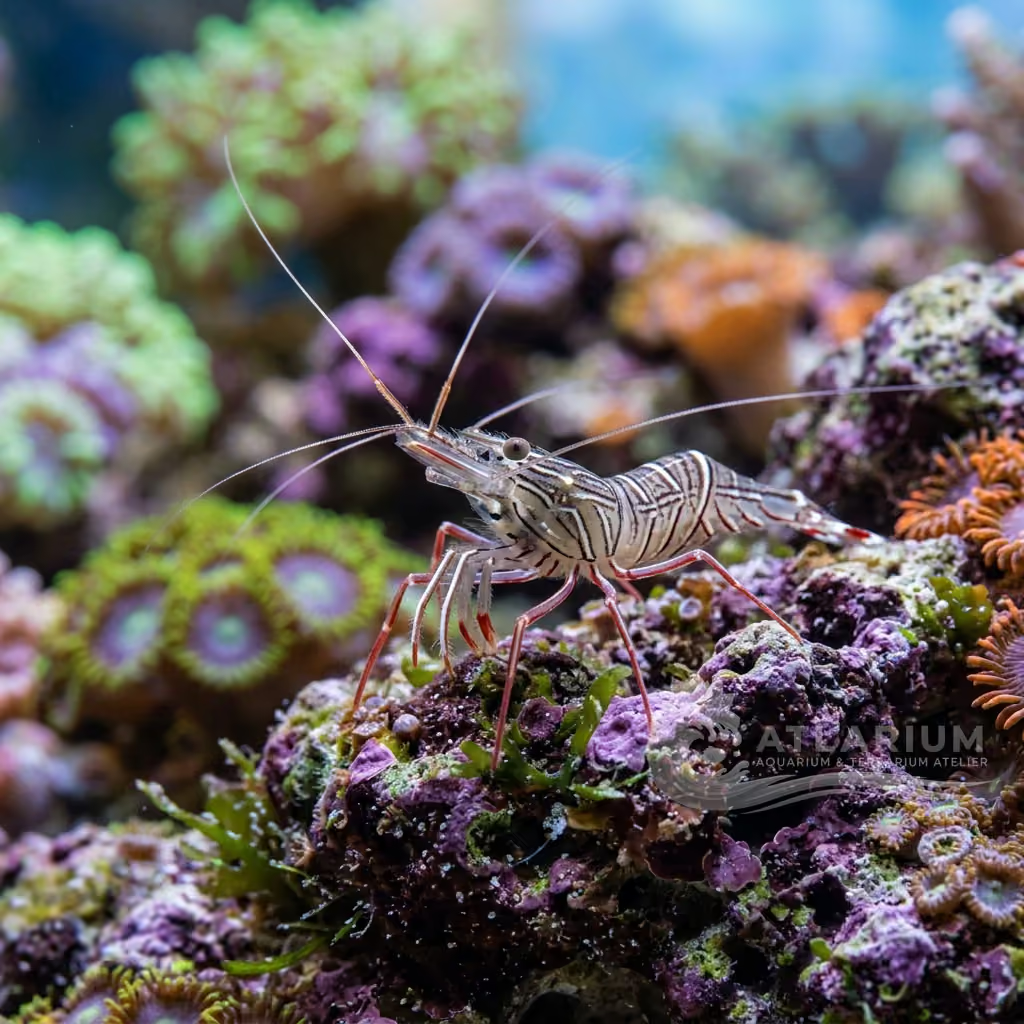
Coloration and Sexual Dimorphism: Its coloration is striking and vibrant, featuring a sharp color pattern: the back has a pure white longitudinal stripe running from the tip of the rostrum to the tail, bordered by two broad, intense scarlet red bands, while the sides are a bright golden-yellow. The antennae and long antennules are completely white. There is no externally visible sexual dimorphism since all mature adults function as both males and females simultaneously, producing both sperm and eggs.

Pflege, Zucht und Mitbewohner
Tank Setup: Requires a well-established marine reef aquarium with a minimum volume of 80 liters (approx. 20 gallons) for a pair. It is crucial to provide plenty of live rocks arranged to form caves, crevices, and shaded overhangs where the shrimp can hide during the day and feel secure. The rockwork must be stable since this species prefers to hang upside down from the roofs of caves. Acclimation must be done very slowly, preferably using the drip method, to prevent osmotic shock.
Diet and Feeding: Although it gets some nourishment from organic matter and parasites removed from fish, it requires daily supplemental feeding in the aquarium. It eagerly accepts a wide range of commercial foods such as sinking pellets for crustaceans, flakes, and frozen foods like mysis, brine shrimp, krill, and small pieces of clam or fish meat. It is an excellent scavenger that helps keep the substrate clean by consuming leftover food that other tank inhabitants miss.
Water Quality: Stable and optimal water parameters are crucial for its survival. Water temperature should be maintained between 22°C and 26°C (72°F - 79°F), pH between 8.1 and 8.4, specific gravity between 1.023 and 1.025, and carbonate hardness (dKH) between 8 and 12. Nitrate levels should be kept minimal (<10-20 ppm), while phosphates and heavy metals (especially copper, which is highly toxic to all invertebrates) must be completely absent. Regular dosing of iodine is necessary to support the molting process.
Compatibility and Tankmates: Perfectly compatible with most corals and reef fish in a community aquarium. However, it must never be introduced into tanks housing predatory fish that feed on crustaceans, such as triggerfish, lionfish, hawkfish, large wrasses, groupers, and pufferfish, which will eat it immediately. It can coexist peacefully with other shrimp of the genus Lysmata, provided there is enough space to prevent territorial disputes.
Aquarium Breeding: Breeding in captivity is frequent in terms of egg production, but raising the larvae is extremely difficult. After one of the partners molts, mating occurs, and the fertilized eggs are held under the shrimp's abdomen, supported by the pleopods, where they turn a greenish color. Hatching occurs at night, releasing microscopic planktonic larvae that require dedicated larval tanks and continuous feeding with live rotifers and microalgae.
Risks and Diseases: The main risk is related to failed molting (ecdysis), which can occur if the water is deficient in iodine, calcium, or magnesium, or if parameters fluctuate suddenly. During a molt, the shrimp is soft and defenseless, requiring secure hiding places to avoid being injured or eaten by curious fish. Other critical risks include osmotic shock from incorrect salinity adjustments and acute poisoning from copper-based medications.

Geografische Herkunft und Verbreitung
The Atlantic cleaner shrimp, Lysmata grabhami, is native to the warm temperate and tropical waters of the Atlantic Ocean. It is widely distributed throughout the Caribbean Sea, the Gulf of Mexico, and along the coastlines of oceanic islands such as the Azores, Madeira, the Canary Islands, and Cape Verde. It primarily inhabits coral and rocky reef environments, preferring shaded areas like caves, deep crevices, and walls underneath rocky overhangs, at depths ranging from 10 to over 50 meters, where it establishes permanent cleaning stations for passing reef fish.
Ursprung
Tropische Ozeane und RiffeMittelamerika und Karibik

Wirbelloses Profil
- Diät
- Omnivore
- As a carnivore/parasite eater, Lysmata grabhami plays an active role in consuming various organic matters in its environment. Its diet in captivity should be varied, including specialized pellets, frozen foods, and natural algae or detritus depending on its specific preferences. Regular and balanced feeding is crucial for its health and longevity.
- Ökologische Rolle
- Cleaner
- The primary ecological role of Lysmata grabhami is acting as a cleaner within the aquarium ecosystem. By constantly foraging, it helps manage waste, uneaten food, or pests, contributing significantly to water quality. Its presence introduces a natural balance and mimics complex biological interactions found in the wild.
- Erwachsenengröße
- 6 cm
- Sprungrisiko
- Yes
- The jump or escape risk for Lysmata grabhami is considered medium. Like many active invertebrates, it may attempt to climb out of the water if it feels stressed, threatened, or if water conditions deteriorate. A tight-fitting lid or mesh screen is highly recommended to prevent accidental escapes.
- Stoßempfindlichkeit
- High
- Lysmata grabhami is quite sensitive to sudden shifts in water parameters, particularly salinity, temperature, and pH. It is highly recommended to use a slow drip acclimation method over several hours when introducing it to a new tank. Maintaining stable conditions is vital to prevent stress-induced ailments or mortality.
- Kalzium und Mineralien
- Medium
- To support healthy molting and exoskeleton growth, Lysmata grabhami requires adequate calcium and trace elements like iodine in the water. Regular water changes with a high-quality salt mix usually provide sufficient levels, but specific supplementation may be necessary in heavily stocked reef tanks. Monitoring calcium and alkalinity ensures proper skeletal development.
- Häutung
- Regular
- During the molting process, Lysmata grabhami becomes extremely vulnerable to predators and aggressive tankmates. It will typically retreat to a secure hiding spot until its new exoskeleton hardens. It is important to leave the discarded molt in the tank, as the invertebrate will often consume it to reclaim valuable minerals.
- Reproduktion
- Oviparous
- Breeding Lysmata grabhami in a home aquarium is incredibly challenging due to its complex reproductive cycle. It typically involves a planktonic larval stage that requires highly specialized foods and precise water conditions to survive. In most standard setups, any spawned larvae will quickly become food for fish and corals.
- Kompatibilität & Tankkameraden
- Peaceful
- When considering tankmates, Lysmata grabhami is generally compatible with peaceful fish and other similarly sized invertebrates. Since its reef compatibility is rated as 'yes', careful observation is required if kept with delicate corals or smaller ornamental shrimp. Aggressive or large predatory fish should always be avoided to ensure its safety.

Verwandte Arten
Empfehlungen gruppiert nach nahen Verwandten, Auswahl von Begleitern und ähnlicher Betreuung.