Haddon carpet anemone
Stichodactyla haddoni
Haddon carpet anemone: marine anemone marino in the family Stichodactylidae, included for reef role, behavior, or aquarium utility. Geographical Origin and Habitat: Haddon's Carpet Anemone...
Wassertemperatur
24 - 28 °C
pH-Wert
8.1 - 8.4
Wassertyp
Meerwasser
Wirbelloser Typ
Anemone
Erwachsenengröße
45 cm
Mindestgruppe
>= 1
Ökologische Rolle
Symbiont
Kupferempfindlichkeit
High

Artbeschreibung
Geographical Origin and Habitat: Haddon's Carpet Anemone (*Stichodactyla haddoni*), often referred to as the Saddle Carpet Anemone, is a massive, incredibly potent marine invertebrate natively endemic to the sandy lagoon floors and shallow coastal waters of the Indo-Pacific Ocean, the Red Sea, and Australia. Their natural biotope is defined by soft, muddy, or deep sandy substrates. Unlike rock-dwelling anemones, they exclusively inhabit the ocean floor, burying their muscular foot deep into the sand and spreading their massive, flat oral disc completely flat across the bottom.
Taxonomy: Scientifically classified within the Stichodactylidae family, they are an iconic "Carpet" anemone, capable of reaching 2 to 3 feet (60-90 cm) in diameter. Morphologically, they consist of an elongated, muscular foot specifically designed for burrowing. The defining feature is their massive, flat oral disc, which is entirely covered in thousands of incredibly short, stubby, tightly packed tentacles.
Defining Feature: The tentacles of *S. haddoni* are legendary for being "super sticky." If touched, they will aggressively adhere to human skin, pulling the flesh with significant force.
Social Behavior: They are strictly sand-dwelling, mostly stationary invertebrates.
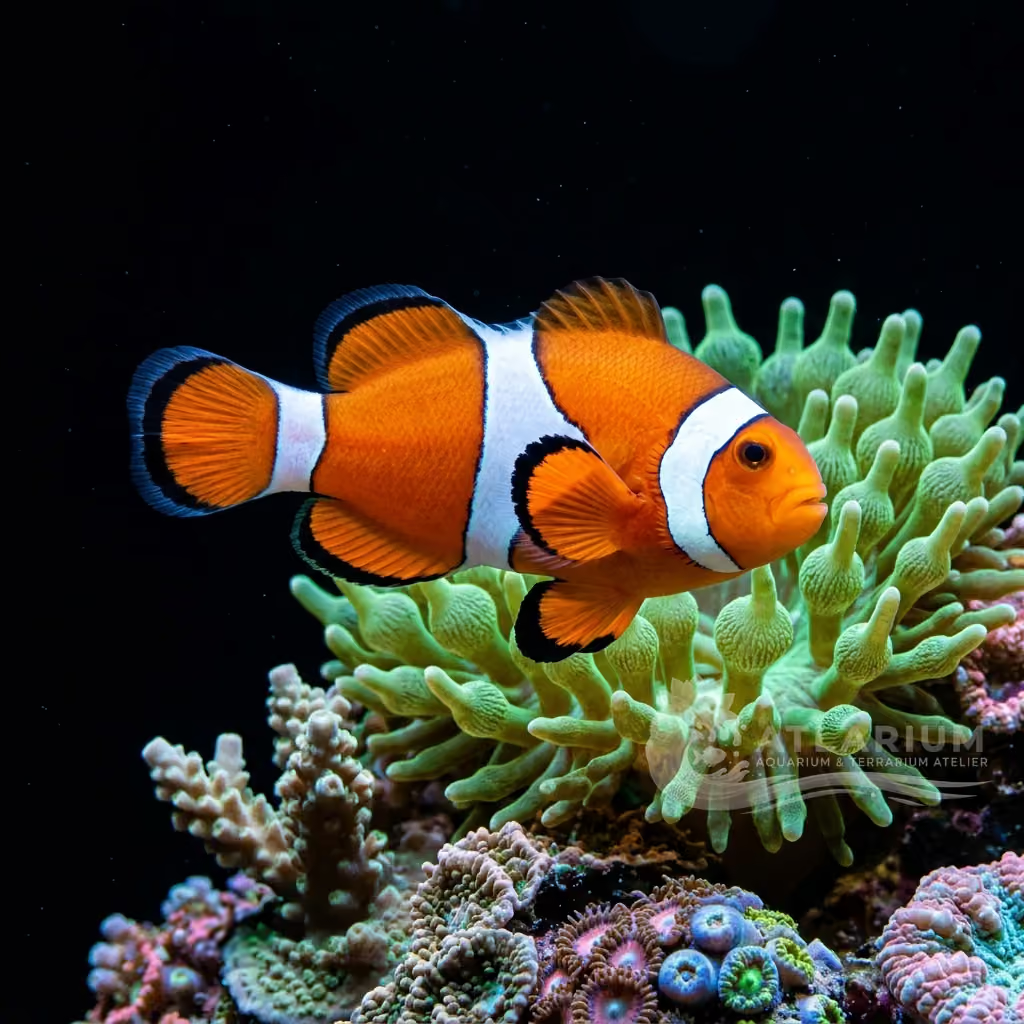
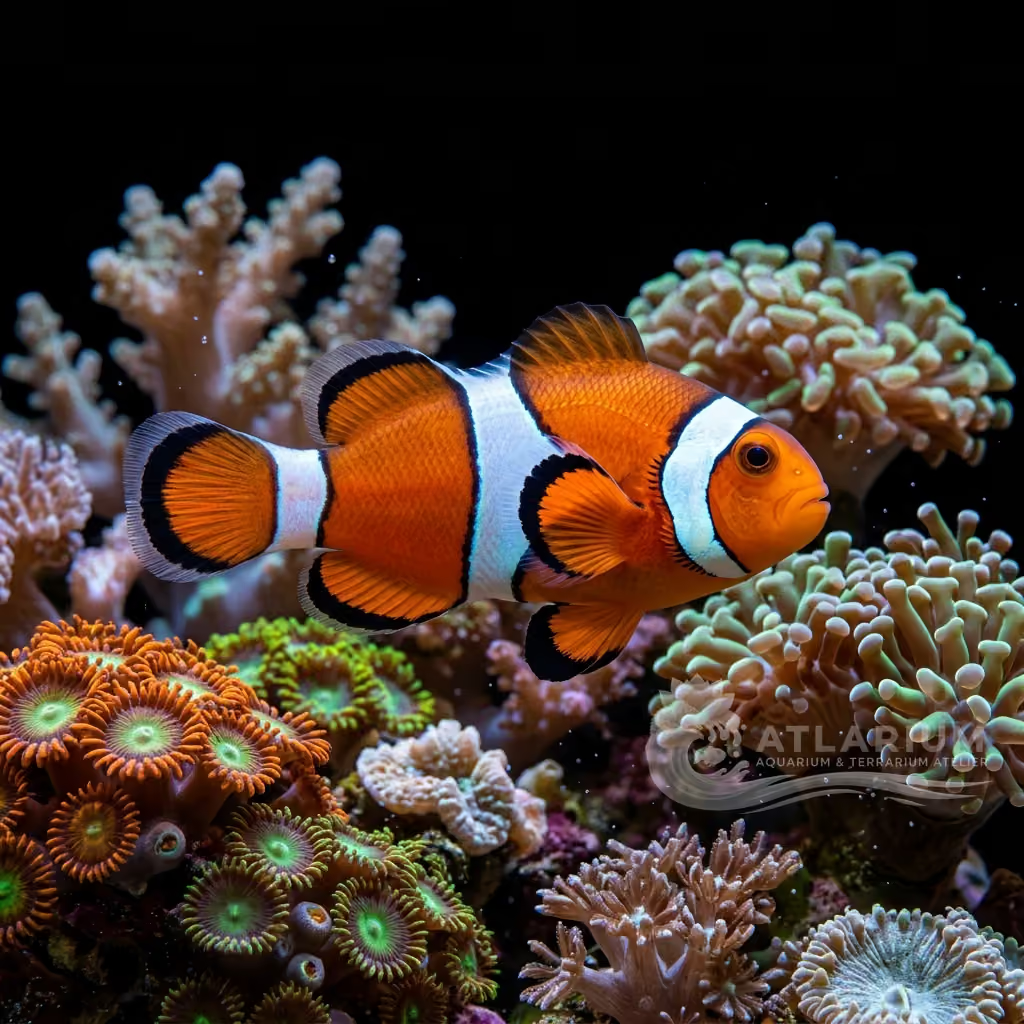
CRITICAL BEHAVIOR: They are unparalleled, ferocious predators. Unlike other anemones that capture microscopic plankton, Carpet Anemones possess an intensely powerful neurotoxin sting and are specifically designed to capture, paralyze, and consume large fish. They are the natural symbiotic host for the Saddleback (*Amphiprion polymnus*), Clarkii, and Sebae Clownfish, which dive headfirst into the aggressively sticky tentacles for protection.
Coloration and Sexual Dimorphism: Sexual dimorphism is non-existent. Their coloration is staggering and serves as a major draw for advanced hobbyists. The massive carpet of short tentacles frequently presents in blindingly solid, highly saturated colors. The "Neon Green Carpet" is the most common and intense, glowing like radioactive material under blue LEDs. Highly coveted, premium morphs include the "Blue Carpet" (deep, velvety sapphire) and the incredibly rare "Red Carpet" (blood red or fiery orange).

Pflege, Zucht und Mitbewohner
Tank Setup: This is an
EXPERT LEVEL: invertebrate. The aquarium architecture MUST feature a deep sand bed (DSB). A minimum 300-liter (75-gallon) mature reef aquarium with a wide footprint is strictly required.
CRITICAL REQUIREMENT: They MUST be placed on a deep (at least 4-6 inches / 10-15 cm) sand bed. They will bury their foot through the sand and attach to the bottom glass. They require moderate to high lighting and gentle, low water flow; strong flow will cause their massive disc to fold over upon itself.
Diet and Feeding: While they possess symbiotic zooxanthellae for photosynthesis, they are massive, aggressive carnivores that MUST be heavily fed to survive in captivity. Target feed the anemone 2-3 times a week with very large, high-quality meaty foods. They will easily and eagerly consume whole Silversides, whole raw shrimp, large pieces of squid, and fresh clam meat. Simply drop the food onto the sticky carpet; the anemone will rapidly fold the food toward its central mouth and swallow it whole.
Water Quality: They are notoriously unforgiving of poor water quality and require a highly mature, stable reef system. They demand stable tropical heat (25-27°C / 77-81°F) and specific gravity between 1.024 and 1.026.
CRITICAL REQUIREMENT: They require high-intensity reef lighting (Metal Halide or premium LEDs, PAR 250+) to maintain their vibrant coloration and internal zooxanthellae. Without intense lighting, they will bleach white, shrink, and consume their own body mass until death.
Compatibility and Tankmates: CRITICAL BIOLOGICAL HAZARD: Compatibility is the single biggest challenge. *Stichodactyla haddoni* is a notorious, ruthless fish-eater. Any fish (Tangs, Blennies, Wrasses) that accidentally brushes against the incredibly sticky carpet will be instantly paralyzed and eaten. They MUST NOT be housed with slow-moving bottom dwellers (like Mandarins or Sand-sifting Starfish). They should only be housed with their natural Clownfish hosts and top-dwelling, highly agile fish.
Aquarium Breeding: Propagation (fragging) of Carpet Anemones in the home aquarium is effectively non-existent. They do not undergo natural longitudinal fission (splitting) in captivity like Bubble Tip Anemones. Attempting to surgically cut a Carpet Anemone in half is almost universally fatal; the sheer volume of tissue and the massive, open wound almost guarantees a rapid, lethal bacterial infection before healing can occur. They must be purchased as whole specimens.
Risks and Diseases: CRITICAL MORTALITY RISK: The highest mortality occurs during the first 4 weeks of importation due to severe bacterial infections (melting). A healthy Carpet Anemone will have a tightly closed mouth, a buried foot, and tentacles that are intensely sticky to the touch. A gaping mouth, expelled intestines, or tentacles that feel "slippery" rather than sticky are signs of imminent death. The second major risk is the loss of expensive, non-symbiotic fish to the anemone's voracious appetite.

Geografische Herkunft und Verbreitung
Haddon's Carpet Anemone (*Stichodactyla haddoni*), often referred to as the Saddle Carpet Anemone, is a massive, incredibly potent marine invertebrate natively endemic to the sandy lagoon floors and shallow coastal waters of the Indo-Pacific Ocean, the Red Sea, and Australia. Their natural biotope is defined by soft, muddy, or deep sandy substrates. Unlike rock-dwelling anemones, they exclusively inhabit the ocean floor, burying their muscular foot deep into the sand and spreading their massive, flat oral disc completely flat across the bottom.
Ursprung
Tropische Ozeane und RiffeAfrika und MadagaskarEuropa, Mittelmeerraum und WestasienSüd- und SüdostasienAustralien, Neuguinea und Ozeanien

Wirbelloses Profil
- Diät
- Photosynthetic
- This anemone is a formidable, highly capable predator that requires frequent, substantial feedings to thrive and maintain its immense size. While it benefits from the photosynthesis of its symbiotic zooxanthellae, it must be fed chunks of raw seafood, such as silversides, shrimp, or squid, every few days. A well-fed anemone is less likely to wander the tank or consume expensive ornamental fish.
- Ökologische Rolle
- Symbiont
- In the wild, they are keystone species that provide essential refuge for clownfish and various symbiotic shrimp, forming complex mutualistic relationships on the reef flats. In captivity, they dominate the sandbed ecosystem, acting as a massive biological sink for nutrients while hosting their symbiotic partners. Their potent sting dictates the layout of the lower aquarium, demanding wide berths from other benthic life.
- Erwachsenengröße
- 45 cm
- Sprungrisiko
- No
- Stoßempfindlichkeit
- High
- S. haddoni is infamous for its sensitivity to shipping and abrupt changes in water chemistry, often failing to acclimate if parameters are not pristine. Sudden shifts in salinity, pH, or temperature can cause the anemone to completely deflate, detach from the substrate, and melt away over several days. A painstakingly slow drip acclimation and a deeply mature, stable aquarium are absolute prerequisites.
- Kalzium und Mineralien
- Medium
- As an anemone without a calcified skeleton, it does not actively deplete calcium levels in the manner of stony corals. However, it still requires the complex, balanced chemistry of natural seawater—including trace amounts of calcium, magnesium, and alkalinity—for basic cellular function and structural turgor. Maintaining standard reef parameters ensures the anemone can properly expand and maintain its powerful nematocysts.
- Häutung
- No
- Anemones do not possess an exoskeleton and therefore never undergo a molting process. Instead, they grow by continuously expanding their fleshy tissues, sometimes reaching over two feet in diameter under optimal conditions. They occasionally expel waste or excess zooxanthellae through their central mouth, a process that should not be confused with shedding.
- Reproduktion
- Oviparous
- While they can theoretically reproduce asexually through longitudinal fission, this is an exceedingly rare event in the home aquarium compared to other anemone species. They primarily reproduce sexually in the wild via broadcast spawning, a phenomenon that is almost impossible to replicate or raise in captivity. Consequently, most specimens in the hobby are wild-caught, emphasizing the need for expert care.
- Kompatibilität & Tankkameraden
- Verify
- Haddon's carpet anemone possesses one of the most potent, sticky stings of any commonly kept aquarium invertebrate. It will readily consume any fish—including tangs, wrasses, and blennies—that carelessly brush against its tentacles, with only clownfish being immune. It must be placed on a deep sandbed, far away from any other corals or anemones, to prevent deadly chemical and physical warfare.

Bildergalerie
Lizenzierte Bilder, die mit der Art oder, wenn markiert, mit dem nächstgelegenen repräsentativen Taxon verknüpft sind.

Verwandte Arten
Empfehlungen gruppiert nach nahen Verwandten, Auswahl von Begleitern und ähnlicher Betreuung.